Comparing shapes 2D Shapes Worksheets for 7-Year-Olds
3 filtered results
-
From - To
Discover our engaging "Comparing 2D Shapes Worksheets" specifically designed for 7-year-olds! These worksheets offer fun and interactive activities that help children learn to identify, compare, and contrast various two-dimensional shapes. Through colorful illustrations and practical exercises, kids will develop essential math skills while enhancing their shape recognition abilities. Our resources foster critical thinking and help young learners grasp concepts such as size, shape attributes, and dimension. Perfect for both classroom and home use, these worksheets make learning enjoyable, ensuring your child gains confidence in their mathematical abilities. Start exploring the world of shapes with our delightful and educational worksheets today!
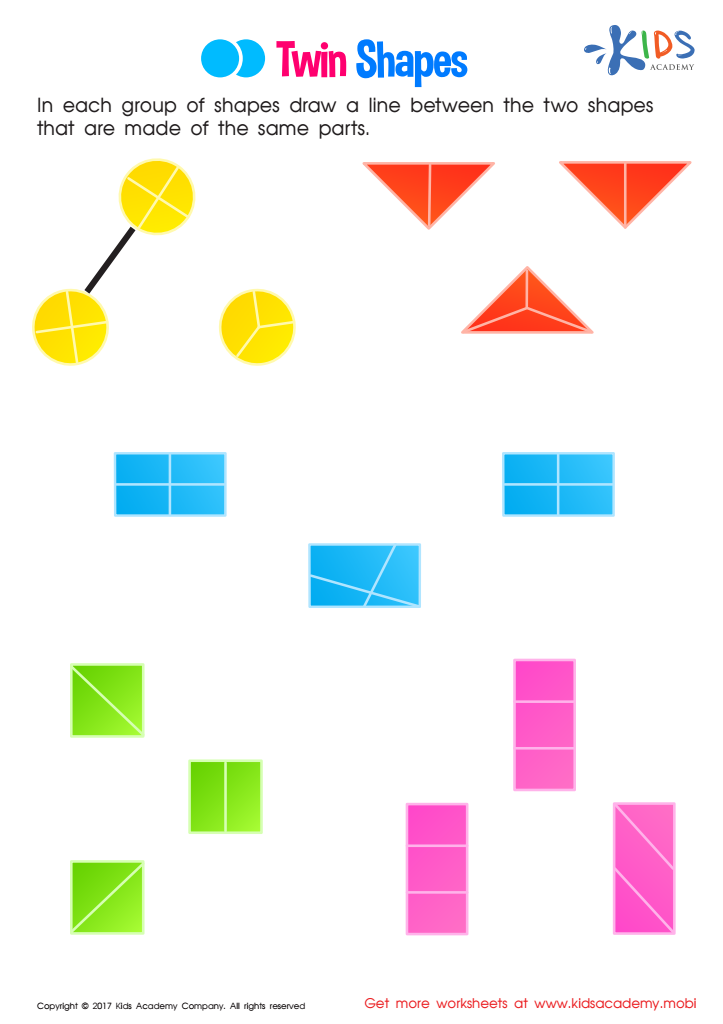
Twin Shapes Worksheet
 Assign to My Students


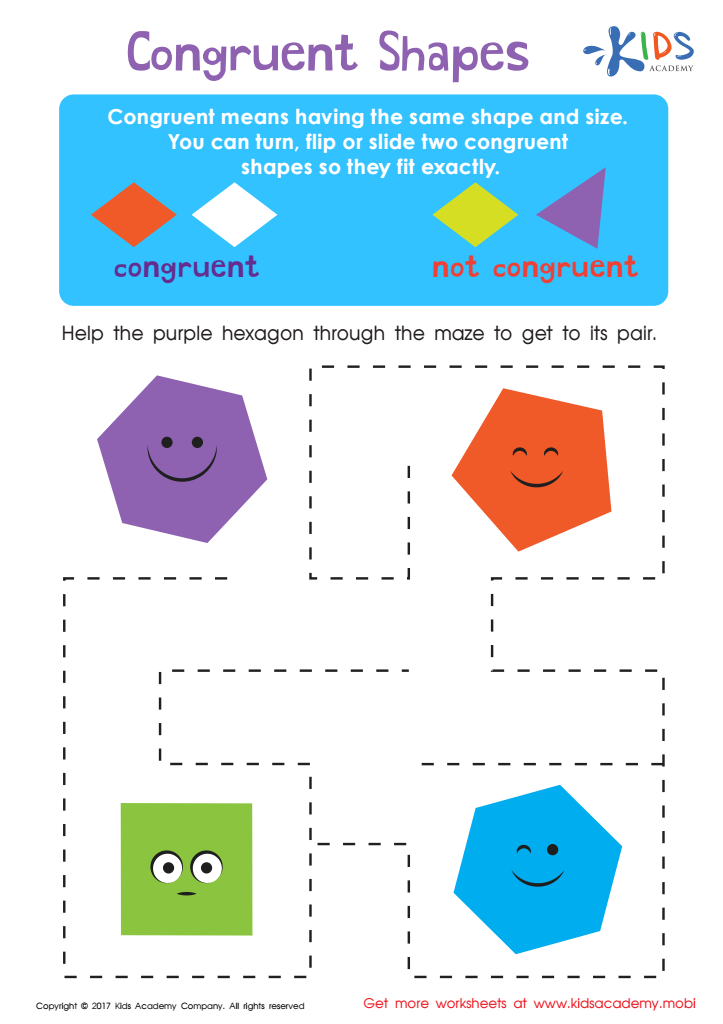
Congruent Shapes Worksheet
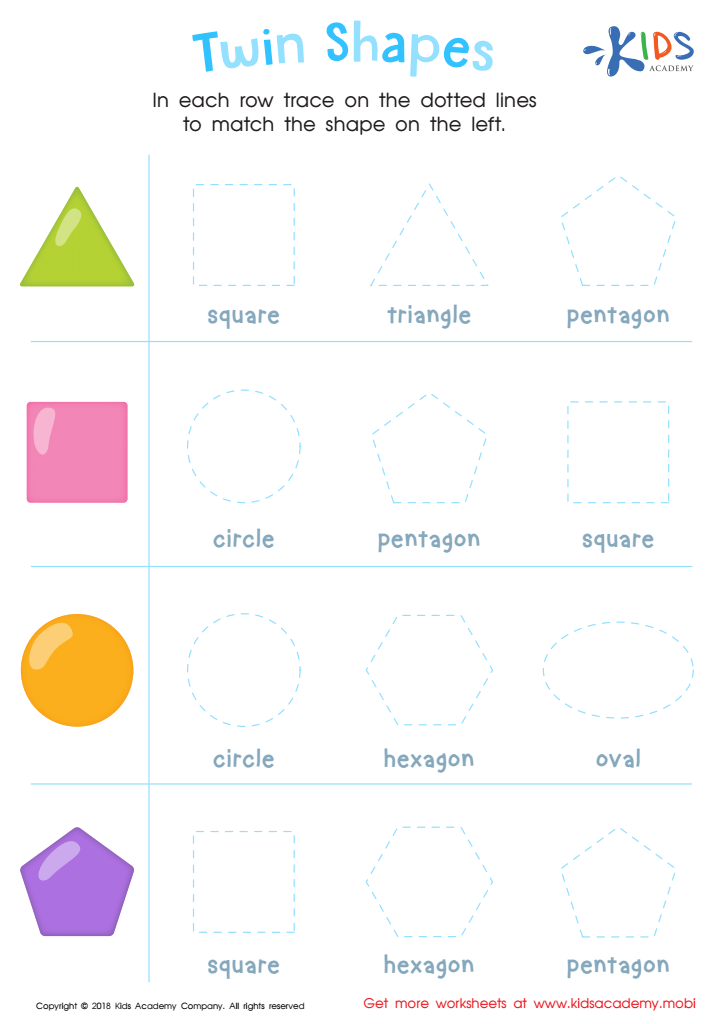
Twin Shapes Dot-to-Dot Worksheet








Understanding and comparing 2D shapes is essential for 7-year-olds as it lays the foundation for critical mathematical skills and cognitive development. At this age, children are increasingly exposed to basic geometry, and recognizing differences and similarities among shapes—such as squares, circles, and triangles—helps them develop analytical thinking. When parents or teachers prioritize this learning, they are inviting children to enhance their observation skills, enabling them to articulate why a square is different from a rectangle, for example.
Moreover, comparing shapes encourages the practice of vocabulary associated with geometry, strengthening language skills. This knowledge isn't limited to the classroom; it extends to everyday experiences, enabling children to make sense of the world around them—whether sorting objects or navigating spaces. Additionally, this foundational skill plays a significant role in advanced mathematical concepts, such as understanding symmetry, perimeter, and area, later on.
Ultimately, encouraging children to engage with 2D shapes fosters a sense of curiosity and confidence in problem-solving. It enriches their learning experience, making mathematics enjoyable rather than intimidating, which can instill a lifelong love for the subject.