Fine Motor Skills 2D Shapes Worksheets for 7-Year-Olds
4 filtered results
-
From - To
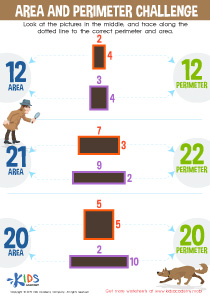
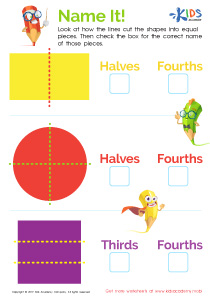
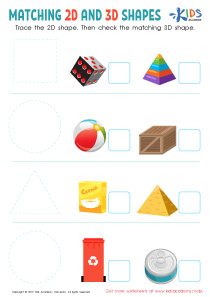
Enhance your child's fine motor skills with our engaging 2D shapes worksheets designed specifically for 7-year-olds! These printable activities combine learning and fun, providing opportunities for children to practice important skills such as cutting, drawing, and tracing various geometric shapes. Each worksheet is carefully crafted to promote hand-eye coordination and strengthen finger dexterity, essential for everyday tasks. With colorful illustrations and interactive exercises, kids will enjoy exploring the world of shapes while developing their fine motor proficiency. Equip your young learners with the tools they need for both academic success and practical skills—perfect for home or classroom use! Download now!
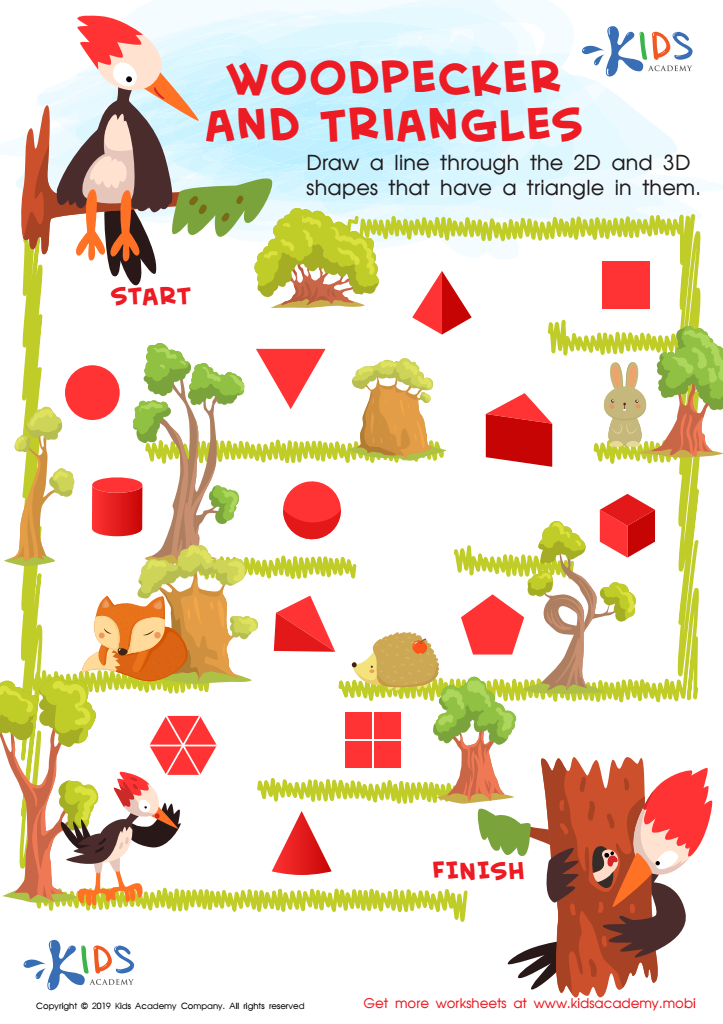
Woodpecker and Triangles Worksheet
 Assign to My Students











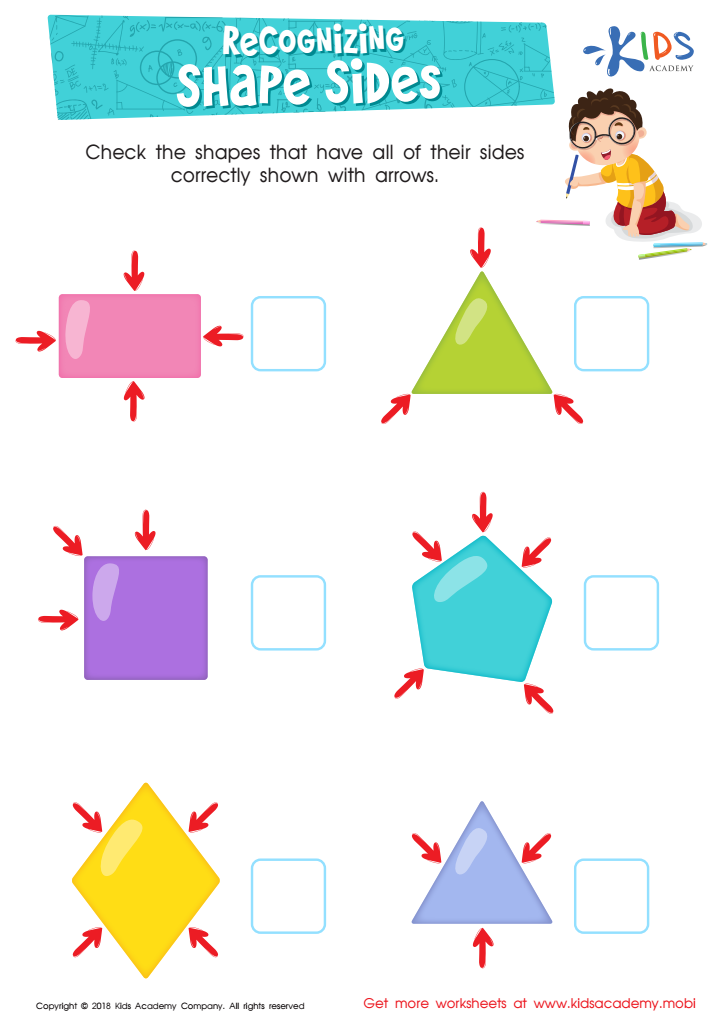
Recognizing Shape Sides Worksheet
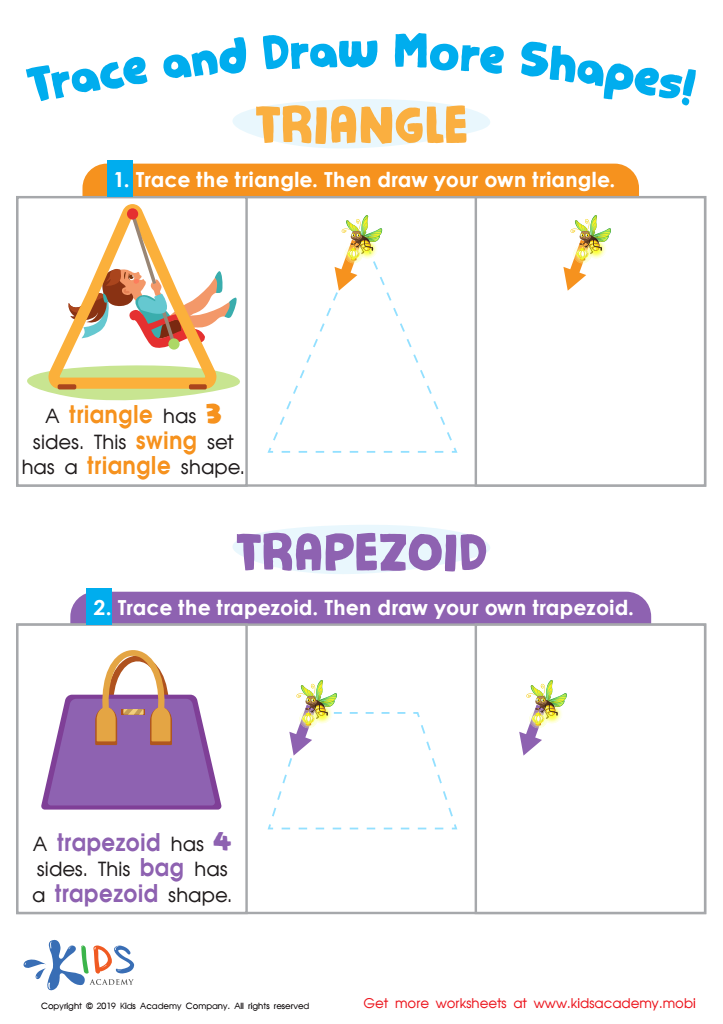
Trace and Draw More Shapes Worksheet
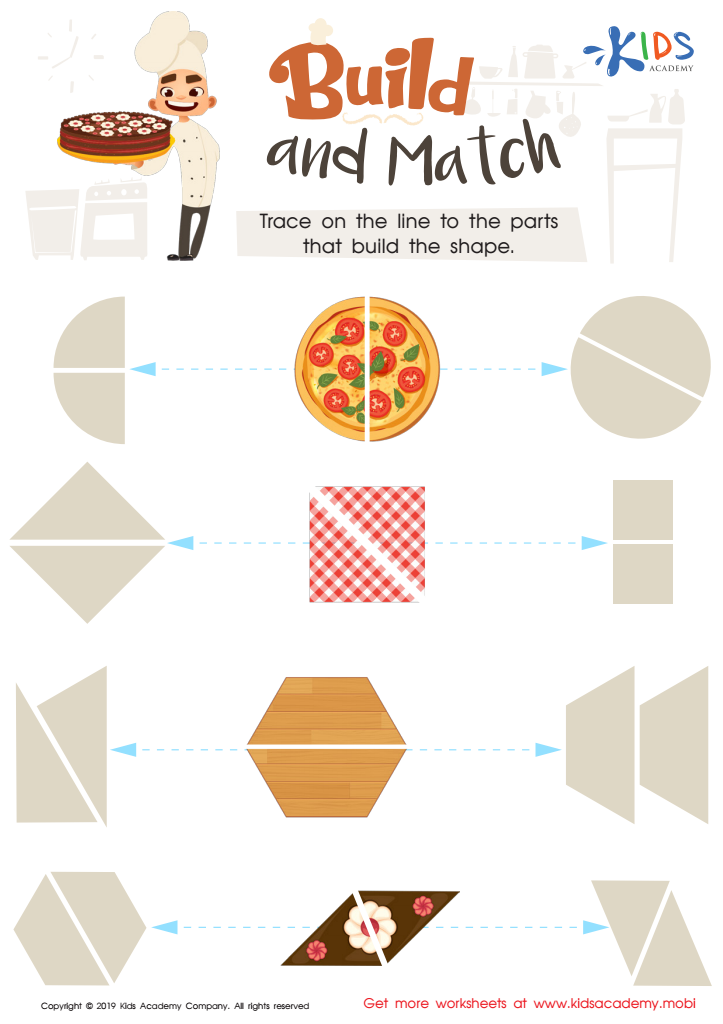
Build and Match Worksheet








Fine motor skills and the understanding of 2D shapes are crucial for 7-year-olds as they not only serve as foundational elements for academic success but also for daily life tasks. At this age, children are refining their hand-eye coordination and dexterity, allowing them to engage in activities that require precision, such as writing, drawing, and using small tools. Developing these skills enables children to express their creativity while improving their confidence in completing tasks independently.
In addition, recognizing and understanding 2D shapes is vital to children’s cognitive development. It aids in their spatial reasoning and geometric skills, which are essential in subjects like math and science. Being able to identify shapes helps them make connections with their surroundings, enhancing their observation skills and critical thinking abilities.
Engaging children in fun shape-related activities, such as arts and crafts or games, not only reinforces learning but also fosters a love for discovery. Therefore, both parents and teachers should prioritize the development of fine motor skills and shape recognition. This focus lays the groundwork for future academic ventures, promotes self-esteem, and equips children with the essential skills they need for their everyday lives. Ensuring a well-rounded approach supports lifelong learning and adaptation.