Visual discrimination 2D Shapes Worksheets for 7-Year-Olds
4 filtered results
-
From - To
Enhance your child’s visual discrimination skills with our engaging 2D Shapes Worksheets designed specifically for 7-year-olds. These worksheets focus on identifying, comparing, and contrasting various 2D shapes, aiding the development of critical thinking and attention to detail. Perfect for both classroom and home use, each activity encourages young learners to recognize shape properties, match and differentiate shapes, and understand geometric concepts visually. With vibrant illustrations and diverse exercises, our worksheets make learning both fun and effective. Strengthen foundational math skills and boost your child's confidence in geometry with these expertly crafted resources.
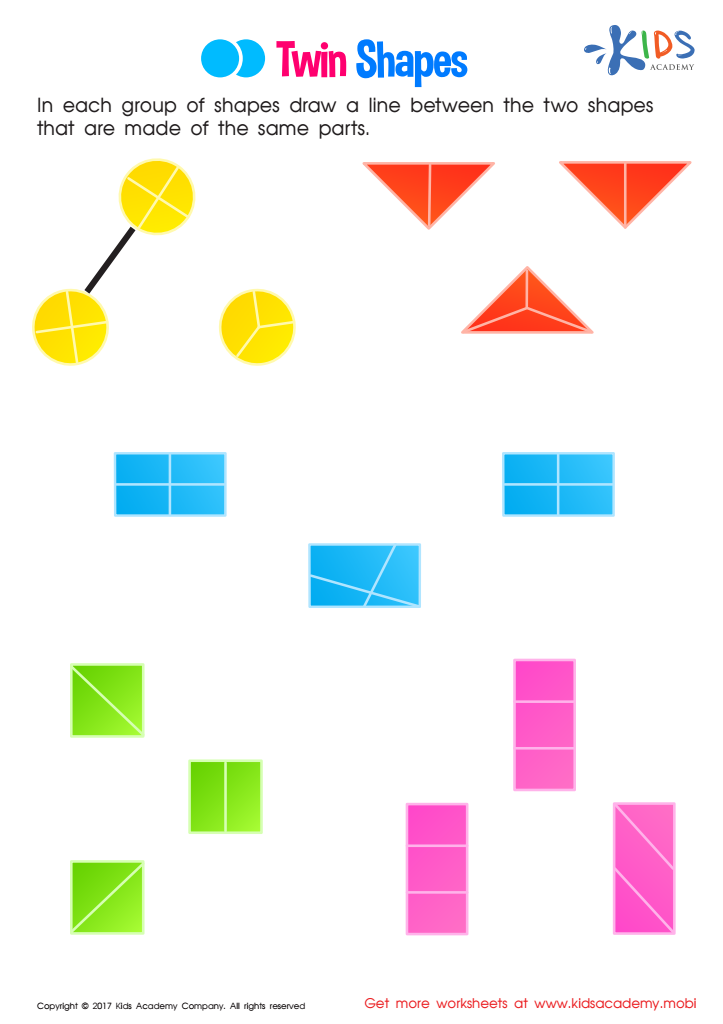
Twin Shapes Worksheet
 Assign to My Students











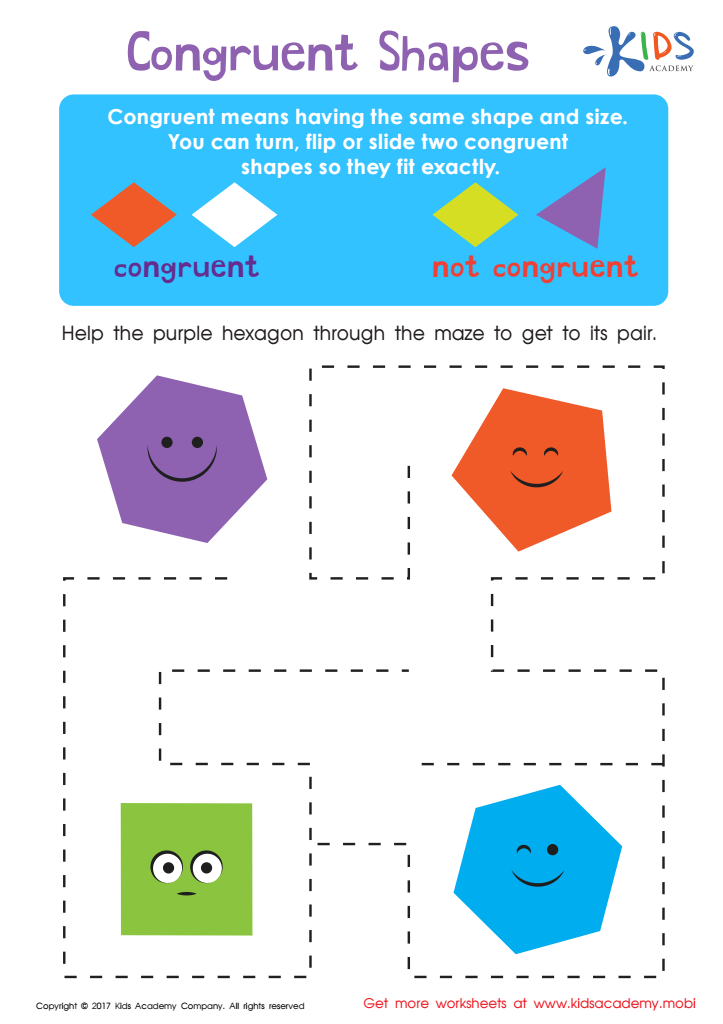
Congruent Shapes Worksheet
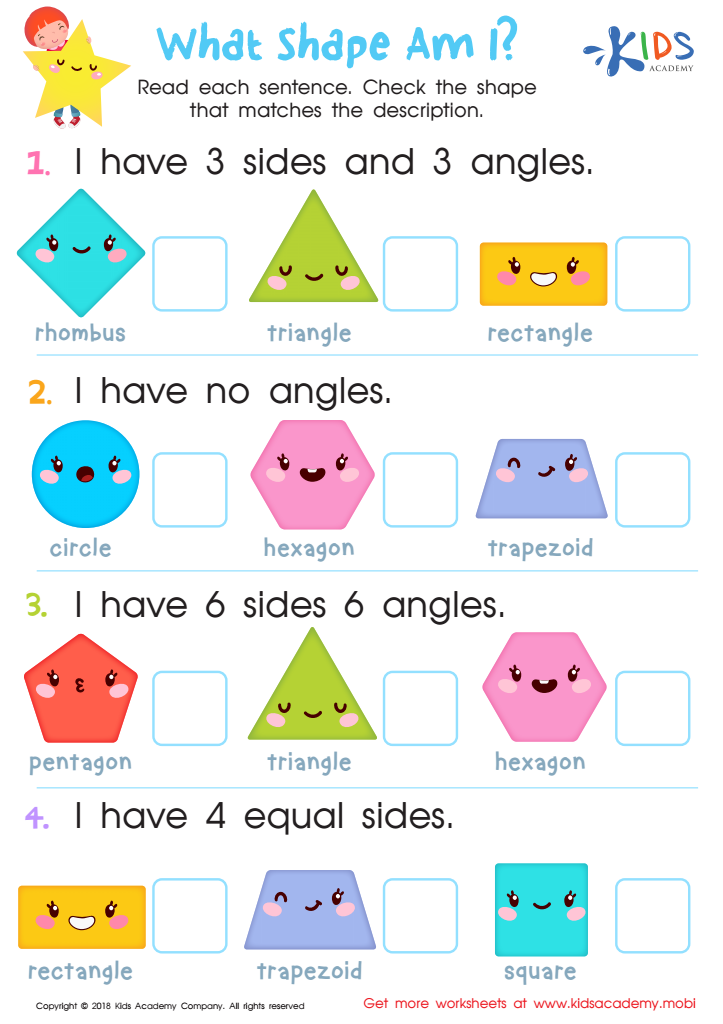
What Shape Am I? Worksheet
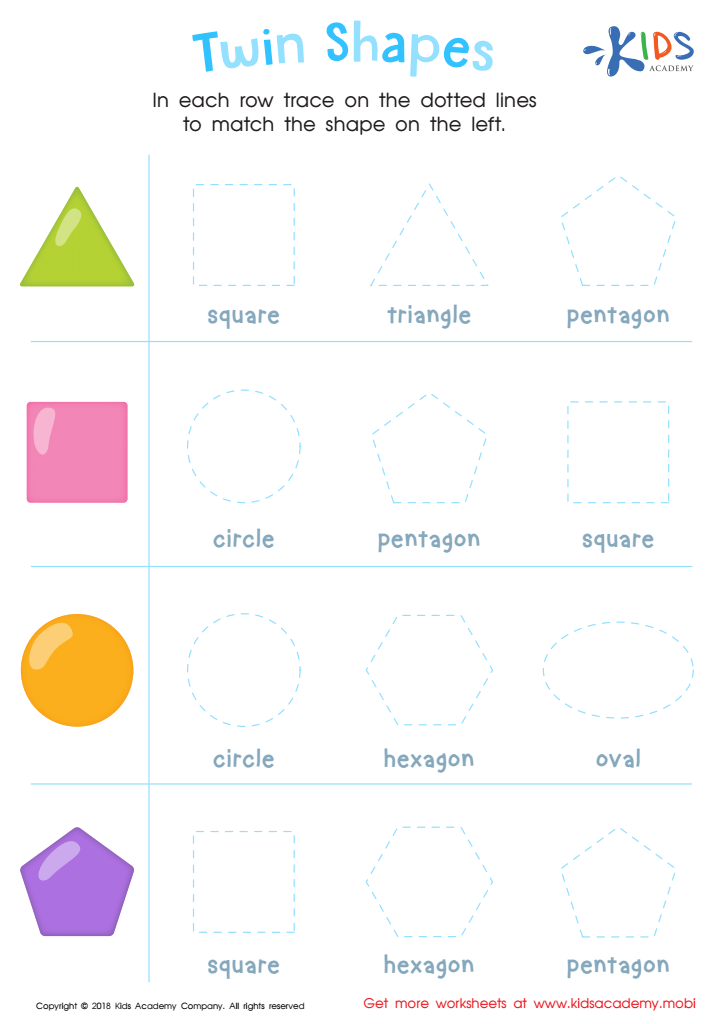
Twin Shapes Dot-to-Dot Worksheet








Visual discrimination involving 2D shapes is a crucial skill for 7-year-olds, and parents and teachers should care about its development because it lays the foundation for a child's overall cognitive and academic growth. These abilities are essentially the young learner’s ability to recognize, compare, and distinguish between different shapes, which can significantly boost their early math skills. When children work with 2D shapes, they also improve their spatial awareness, helping them understand other key mathematical concepts such as symmetry, fractions, and geometry.
In addition, enhancing visual discrimination shapes cognitive skills and enhances problem-solving abilities. For example, recognizing and categorizing circles, squares, and triangles can aid children in understanding patterns and organizing information. Moreover, these foundational skills are essential when children start learning to read, as they need to differentiate between letters and words.
Furthermore, engaging with shapes fosters creativity and artistic expression. When children use shapes in drawing or crafts, they explore their imaginative world while reinforcing their understanding of the attributes and properties of different shapes. This engagement not only boosts fine motor skills but also enhances memory retention and attention to detail. Overall, focusing on visual discrimination of 2D shapes prepares children for more complex learning and everyday tasks, ultimately supporting their success in school and beyond.