Cognitive Development Adding up to 100 Worksheets for 7-Year-Olds
4 filtered results
-
From - To
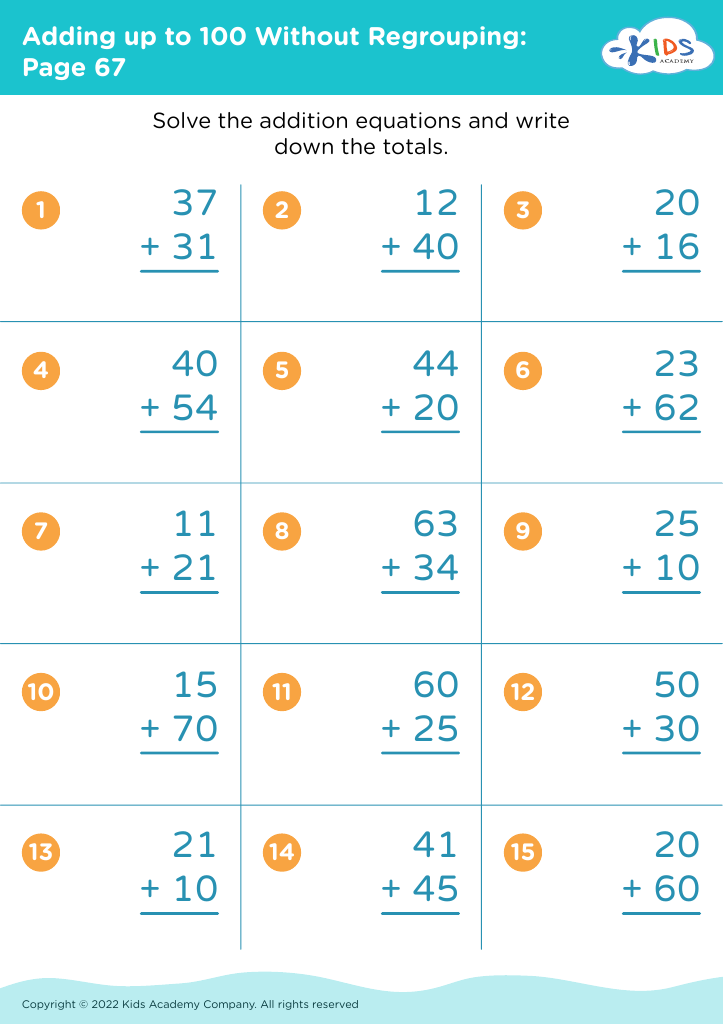
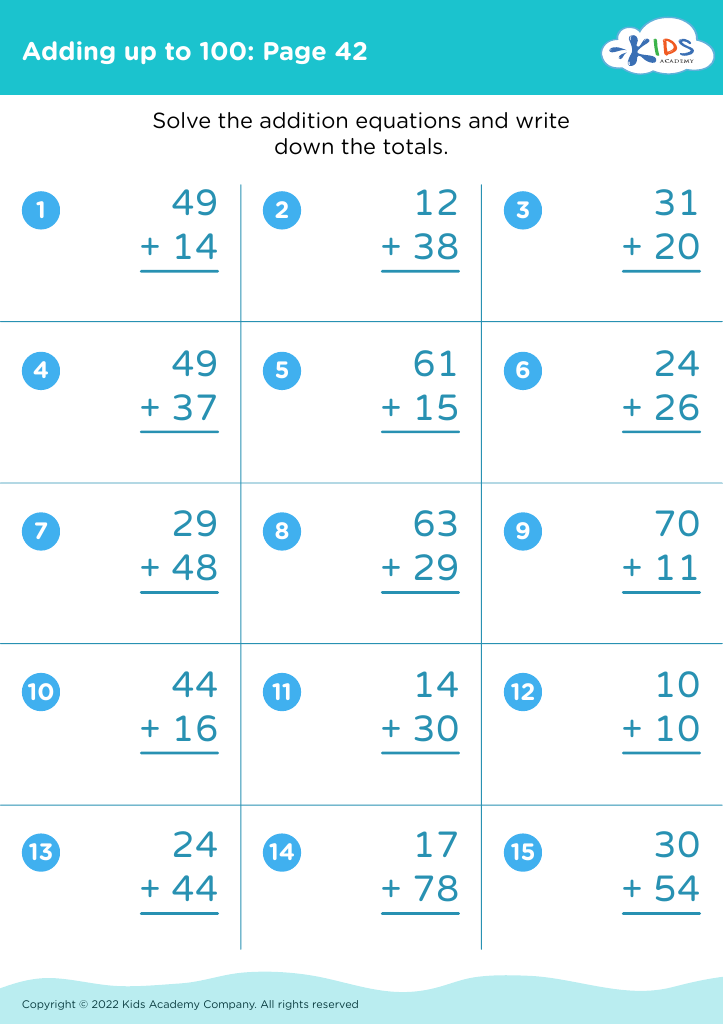
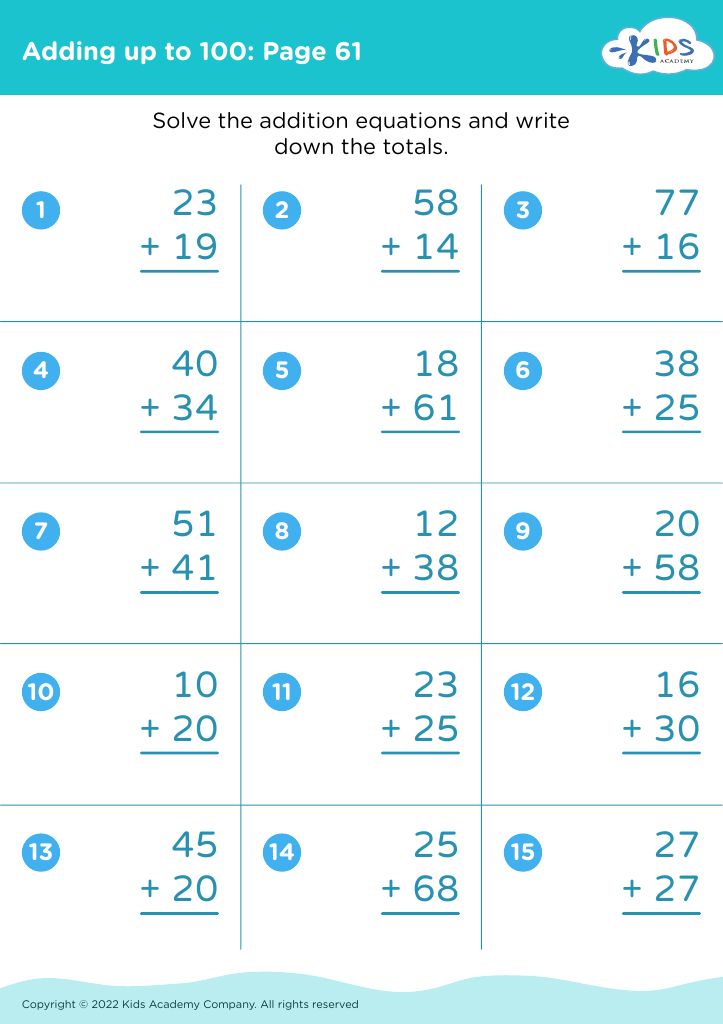
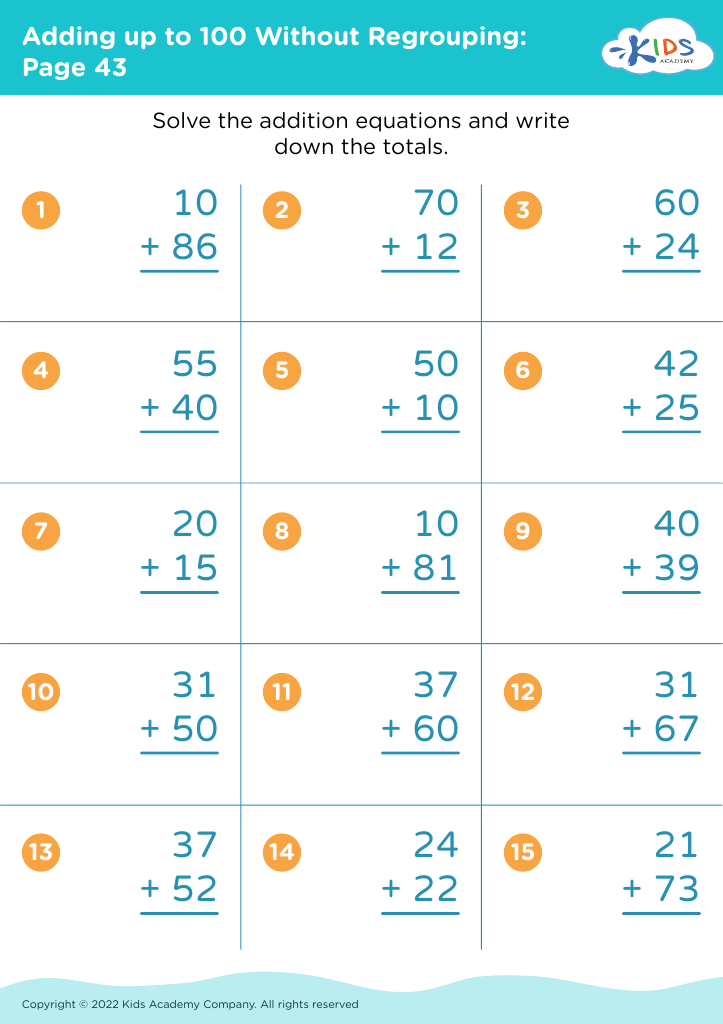
Unlock your child's potential with our "Cognitive Development Adding up to 100 Worksheets" designed specifically for 7-year-olds! These engaging worksheets not only enhance mathematical skills but also promote critical cognitive development through fun, interactive exercises. Children will practice addition techniques while improving their problem-solving abilities and understanding of number relationships. Each worksheet is crafted to keep young learners motivated and challenged as they explore various scenarios that require summing up to 100. Perfect for homeschooling or classroom activities, these resources foster essential math skills while encouraging cognitive growth. Empower your child with the tools they need for a successful educational journey!






%20(1).jpg)
Cognitive development in 7-year-olds is crucial for their overall growth and success in life. At this age, children transition from early childhood thinking to more advanced cognitive processes, including problem-solving, logical reasoning, and critical thinking. Parents and teachers should care deeply about fostering this development, as it lays the foundation for future learning and academic achievement.
One significant aspect of cognitive development is understanding numbers and mathematical concepts. For example, being able to add up to 100 enhances children's numerical literacy and confidence in mathematics, which is essential for success in school and beyond. Engaging in activities that promote counting, addition, and number sense helps strengthen their ability to work with larger numbers, essential for various subjects.
Moreover, good cognitive development during this stage impacts social skills, emotional regulation, and decision-making. By nurturing these skills, parents and teachers empower children to navigate challenges, build relationships, and develop resilience.
Ultimately, by focusing on cognitive development, adults are not just teaching children to add; they are preparing them for a lifetime of learning and adaptation in an ever-changing world, ensuring their successful transition into later educational stages and adult life.








