Critical Thinking Adding up to 100 Worksheets for 7-Year-Olds
5 filtered results
-
From - To
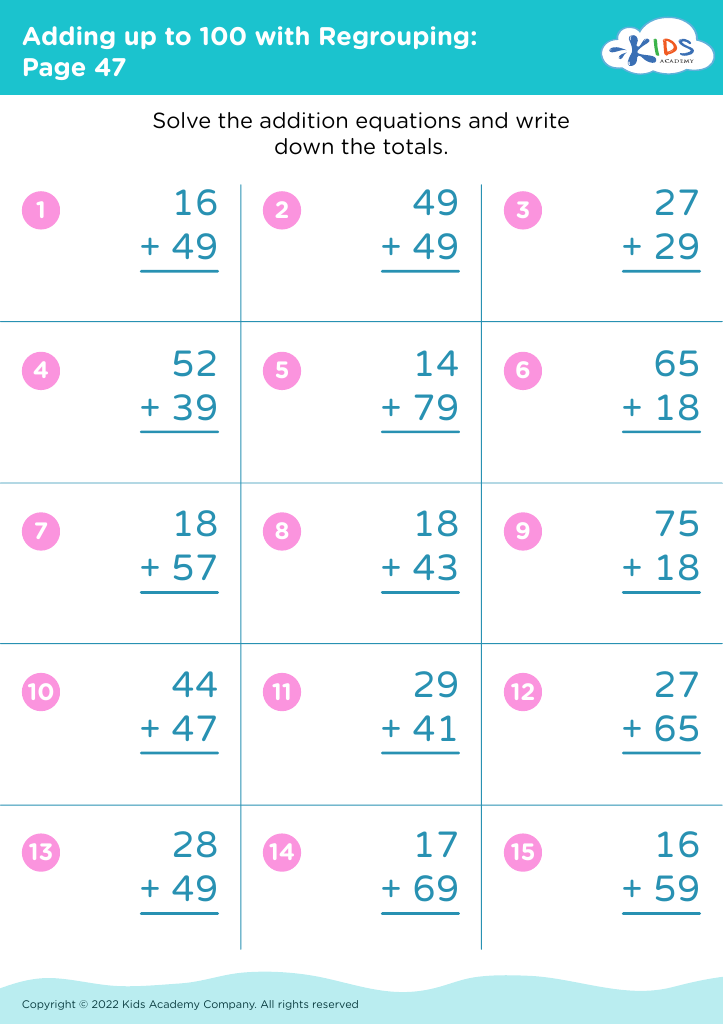
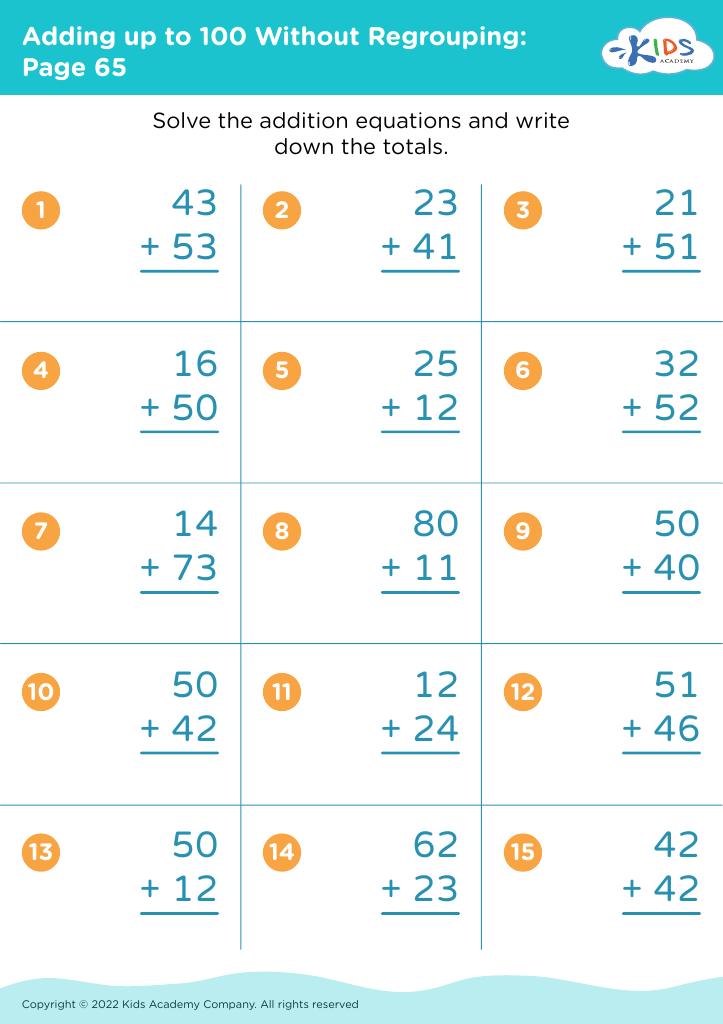
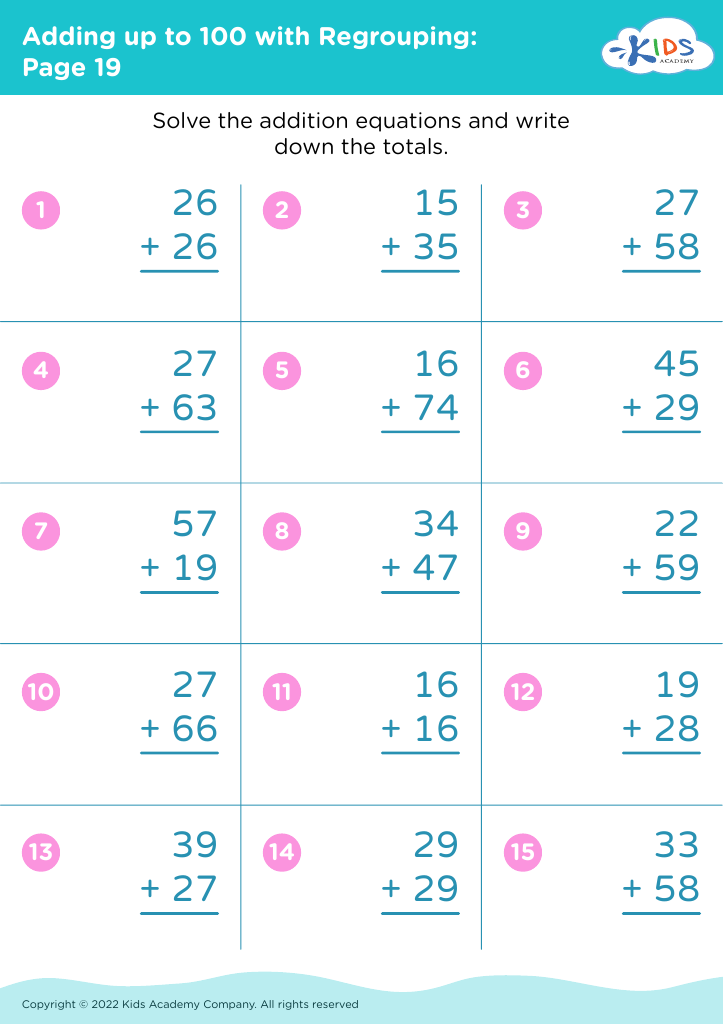
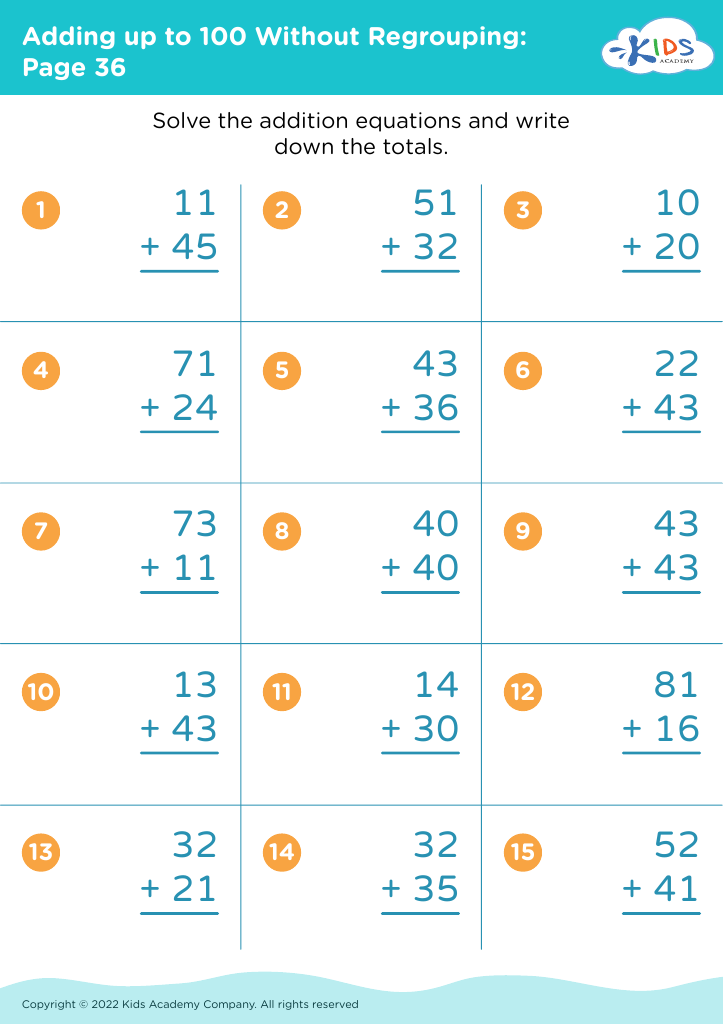
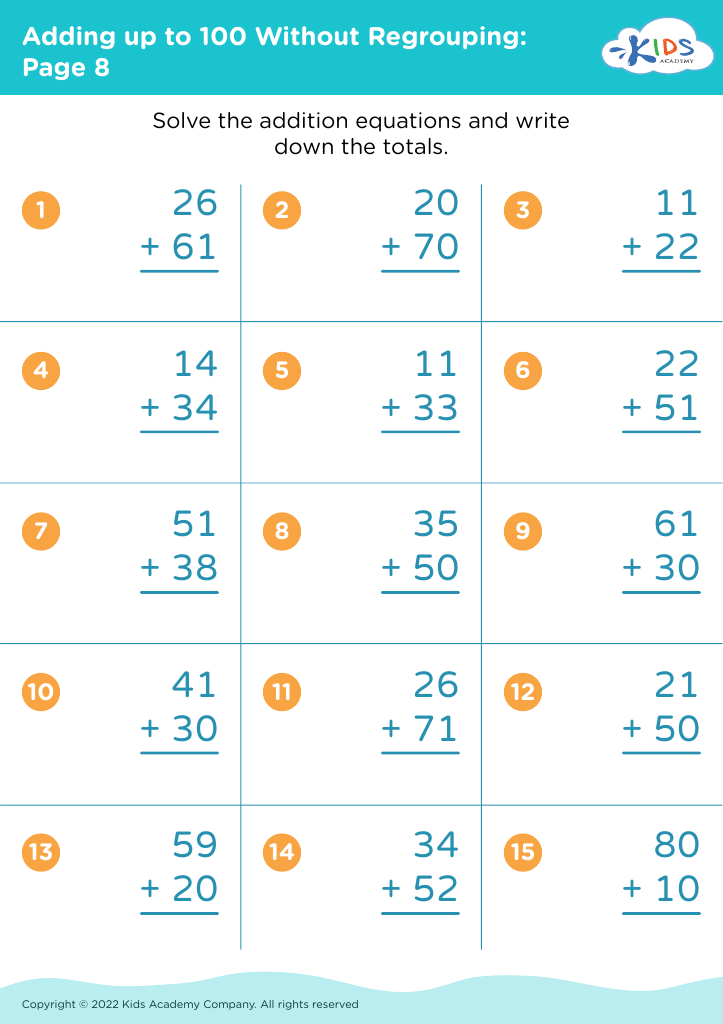
Unlock your child’s potential with our "Critical Thinking Adding up to 100 Worksheets for 7-Year-Olds" at Kids Academy. These engaging printables are designed to promote early math skills and develop critical thinking. By solving fun, interactive problems, children enhance their addition abilities while learning to think logically and strategically. Each worksheet involves colorful illustrations and varied challenges that keep 7-year-olds excited about learning. Perfect for both classroom use and homeschooling, these resources provide a foundation for math confidence and success. Visit Kids Academy to download and give your child the head start they deserve in mastering math!
Source: kidsacademy.mobi




%20(1).jpg)


Parents and teachers should place a high value on fostering critical thinking in children, including skills such as adding up to 100 in 7-year-olds, for several compelling reasons. Critical thinking involves analyzing information, solving problems, and thinking independently – capabilities essential for success in all areas of life. When children practice math problems like adding up to 100, they engage in problem-solving and decision-making processes that are foundational to critical thinking.
For a 7-year-old, achieving skills to add up to 100 isn't just about getting the right answer, but understanding the methods and reasons behind their calculations. This promotes their cognitive development, enhancing their ability to think logically and reason through different possibilities. It also helps improve their number sense, which is the intuitive understanding of number relations, a vital aspect of everyday decision-making.
Encouraging these mental processes ensures that children are not just memorizing facts, but they understand the underlying concepts, fostering a deeper intrinsic interest in learning. This can translate beyond math, influencing how they approach problems in other subjects and in real-life situations. Additionally, developing critical thinking skills early on can boost a child’s confidence and independence, enabling them to tackle more complex tasks as they grow. Thus, nurturing these capabilities at a young age sets a firm foundation for lifelong learning and practical problem-solving skills.








