Recognize patterns Adding up to 100 Worksheets for 7-Year-Olds
4 filtered results
-
From - To
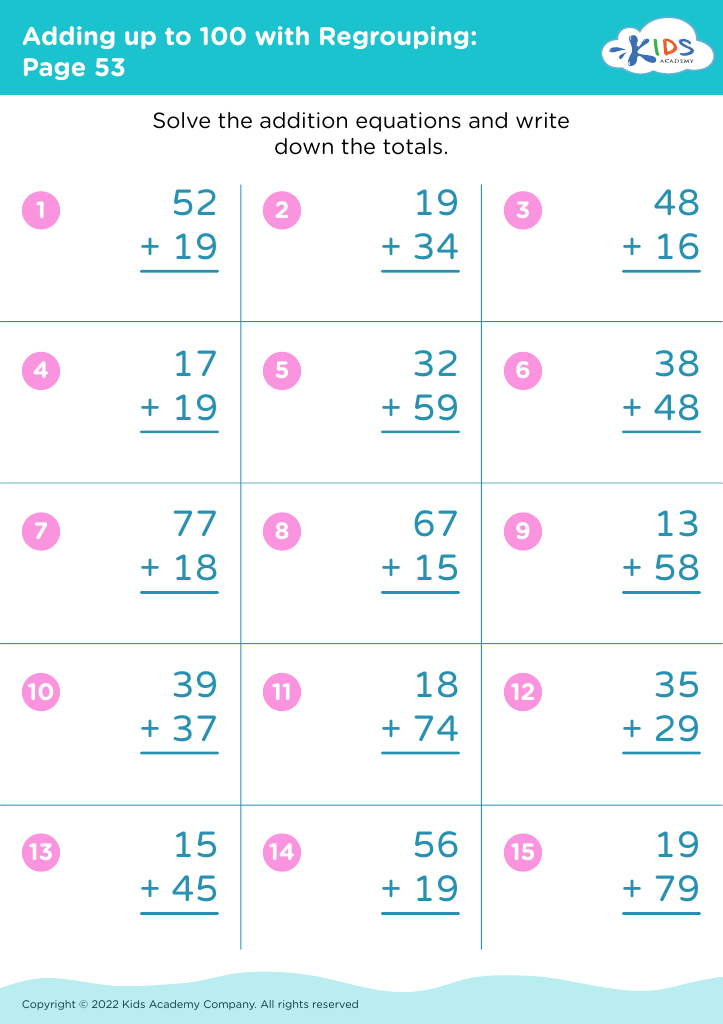
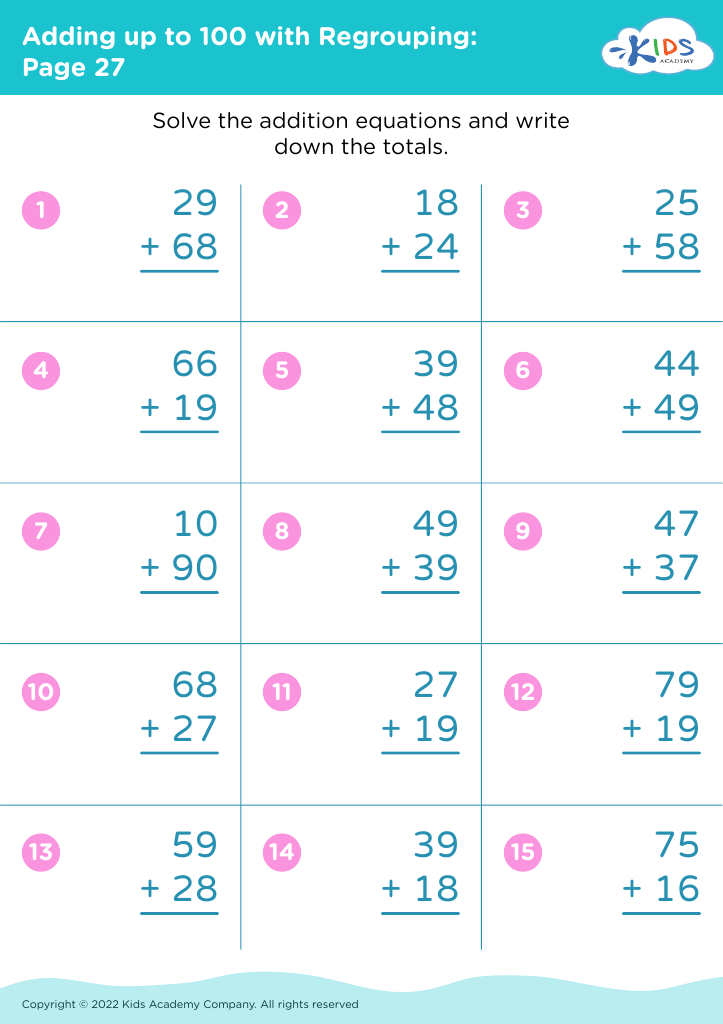
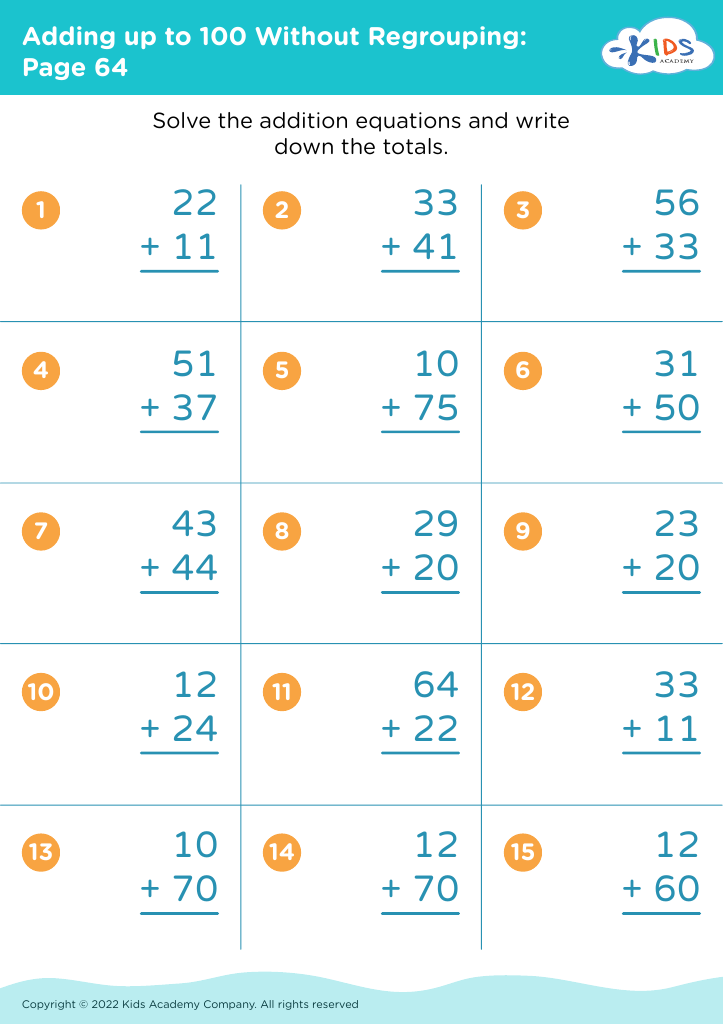
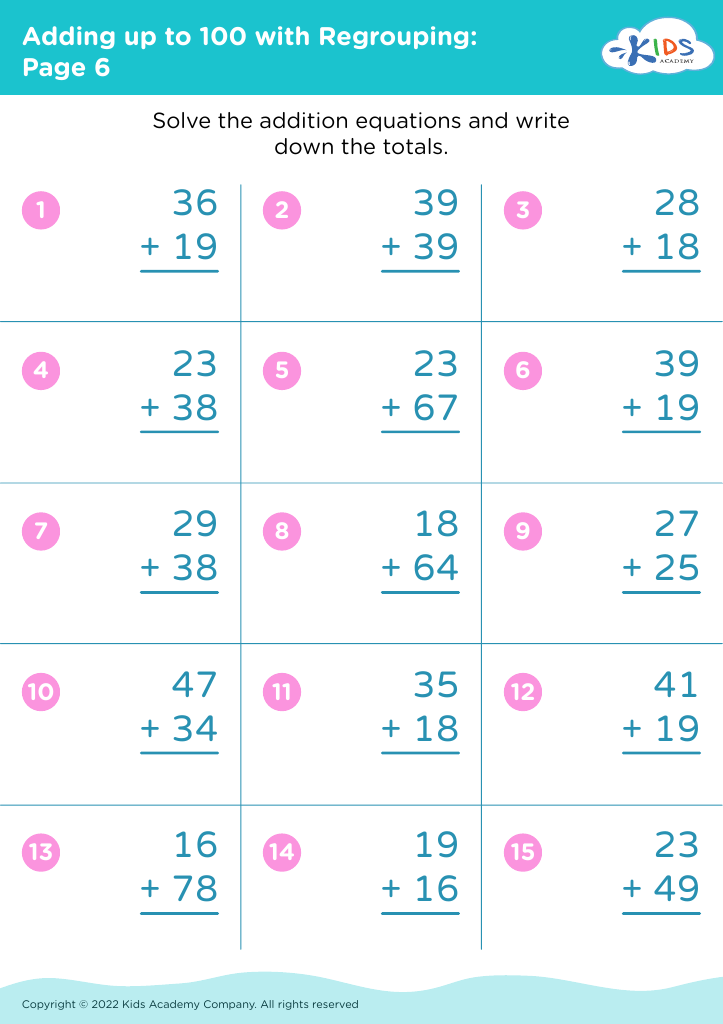
Our "Recognize Patterns: Adding Up to 100 Worksheets for 7-Year-Olds" are meticulously designed to build foundational math skills. These engaging worksheets help young learners spot and understand numerical patterns while practicing addition up to 100. Developed by education experts, they offer a variety of stimulating activities that encourage logical thinking and problem-solving. Reinforce classroom learning and promote confidence as kids explore mindfulness through math. Perfect for both homework and extra practice, these worksheets support cognitive growth and make learning fun. Give your child the tools to succeed with our comprehensive and thoughtfully-crafted resources.






%20(1).jpg)
Recognizing patterns and understanding addition up to 100 are critical skills for 7-year-olds, forming a foundation for more complex mathematical concepts. Children at this age are in the early stages of cognitive development where they are expanding their problem-solving and logical thinking skills. Recognizing numerical patterns, such as those found in sequences or the number system, supports the development of these skills and enhances their ability to make connections between different mathematical concepts.
Addition up to 100 is not only a key arithmetic skill but also a stepping stone toward mastering more advanced operations like multiplication and division. By working with these numbers, children become comfortable with mental math and develop a sense of numerical magnitude. This experience bolsters their confidence and encourages a positive attitude toward future mathematical learning.
Practicing pattern recognition and addition up to 100 also aids in the development of mathematical fluency. This fluency is essential for tackling word problems and real-world math scenarios efficiently. Furthermore, these skills are deeply aligned with educational standards and curricula, ensuring that children meet academic milestones and are prepared for future grade levels.
In summary, emphasizing these skills fosters analytical thinking, enhances mathematical foundation, and prepares children for future success in education. Teachers and parents should prioritize these learning goals to build a robust mathematical framework for young learners.








