Simplifying Fractions Adding up to 100 Worksheets for 7-Year-Olds
3 filtered results
-
From - To
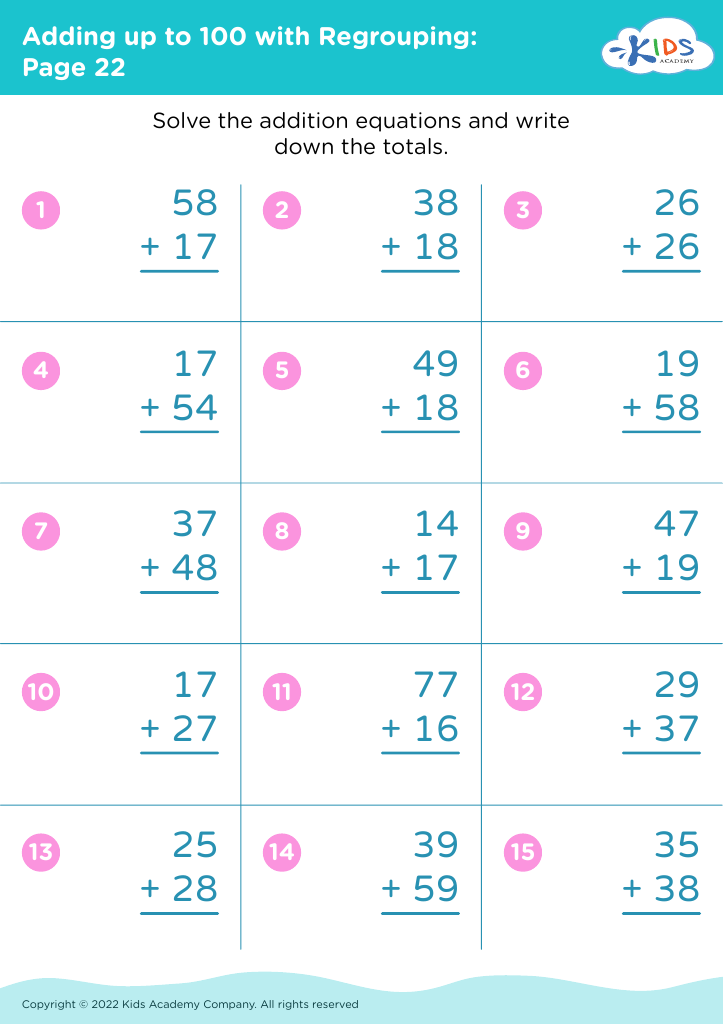
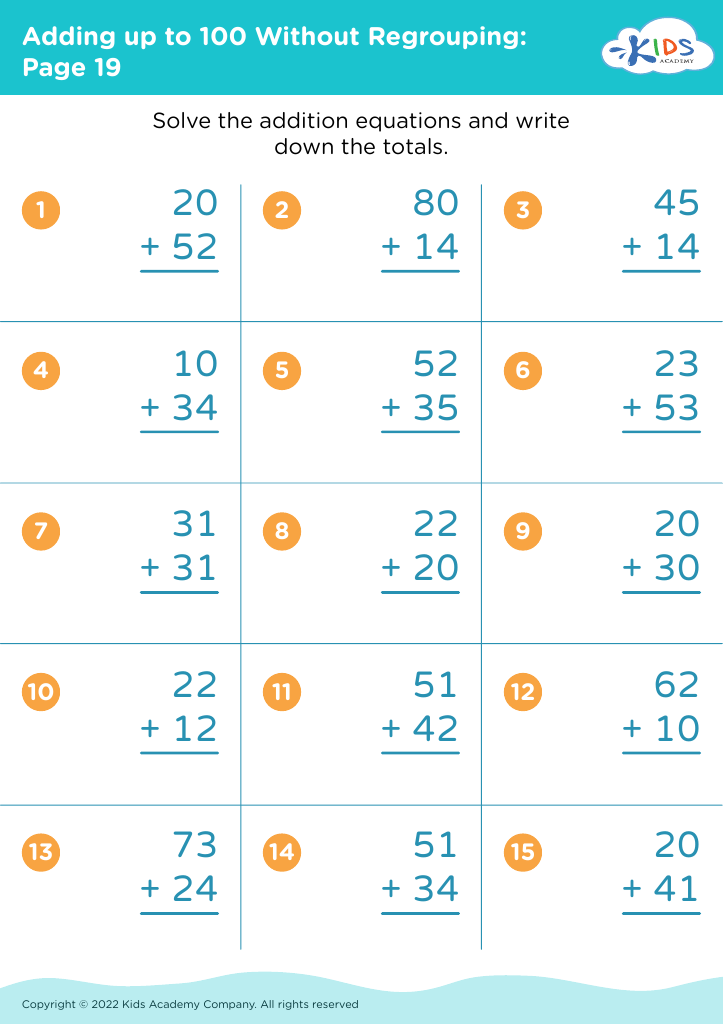
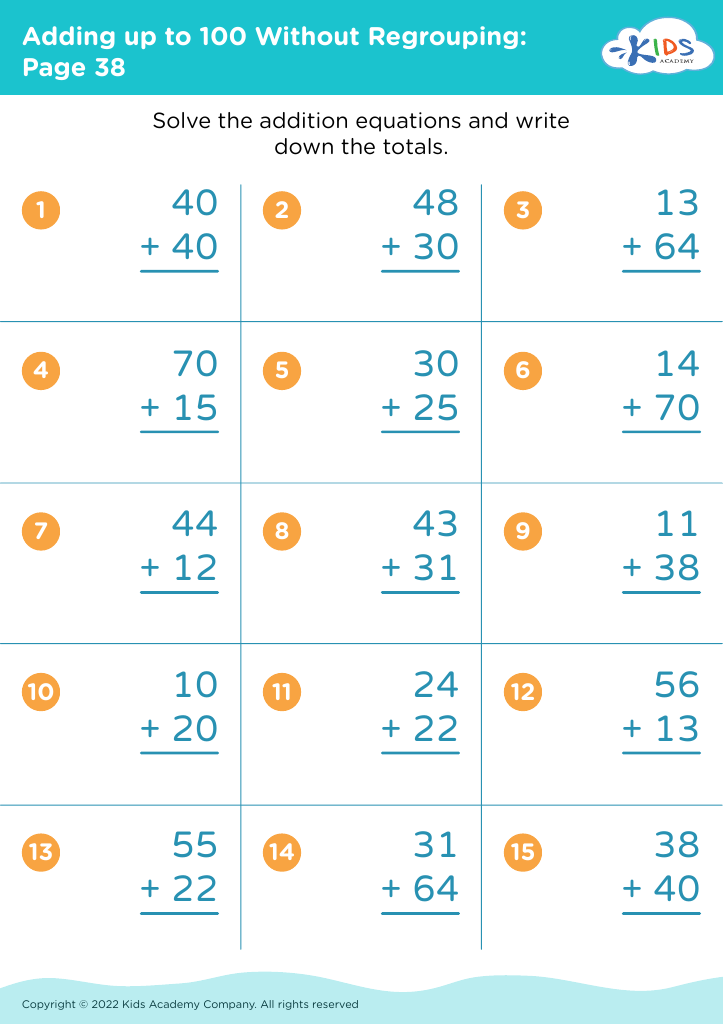
Welcome to our "Simplifying Fractions Adding up to 100 Worksheets" designed specifically for 7-year-olds! Our engaging worksheets help young learners grasp the essential concept of simplifying fractions while adding up to a total of 100. Each activity is thoughtfully crafted to enhance math skills, ensuring kids enjoy a fun and interactive learning experience. With colorful visuals and clear instructions, children will confidently practice simplifying fractions, making it easier for them to express their answers accurately. Perfect for classroom use or home learning, these worksheets provide an excellent foundation for mastering fractions while building confidence in math. Download now and watch your child excel!


%20(1).jpg)




Parents and teachers should prioritize simplifying fractions that add up to 100 for 7-year-olds because this foundational skill not only enhances mathematical understanding but also cultivates critical thinking. Understanding fractions helps children grasp the concept of part-to-whole relationships, which are essential in real-life scenarios like cooking or budgeting. Simplifying fractions can also aid in developing problem-solving skills, as students learn to identify and reduce numbers—skills they will use well beyond their early education.
Engaging with this concept encourages perseverance and boosts confidence as children discover that complex problems can often be made simpler. Moreover, fostering a strong grasp of fractions lays the groundwork for more advanced concepts, such as ratios and division, which they will encounter in later grades.
Additionally, attending to their learning at this stage creates a positive attitude toward mathematics, crucial for shaping future performance. Through fun activities, hands-on experiences, or integration with everyday life, parents and teachers can make fractions enjoyable and relatable. As they work together on this math concept, strong parent-teacher collaboration can further enhance the students’ motivation and success in mathematics, helping to form a supportive learning environment.








