Filters

51 filtered results

Clear all filters
Favorites
With answer key
Interactive

51 filtered results

Difficulty Level

Grade


Check out this FREE Trial Lesson on Adding up to 100 for age 7!

Exactly the Same, or Not

Favorites
With answer key
Interactive
  • 7
  • Understanding fractions
  • Adding up to 100
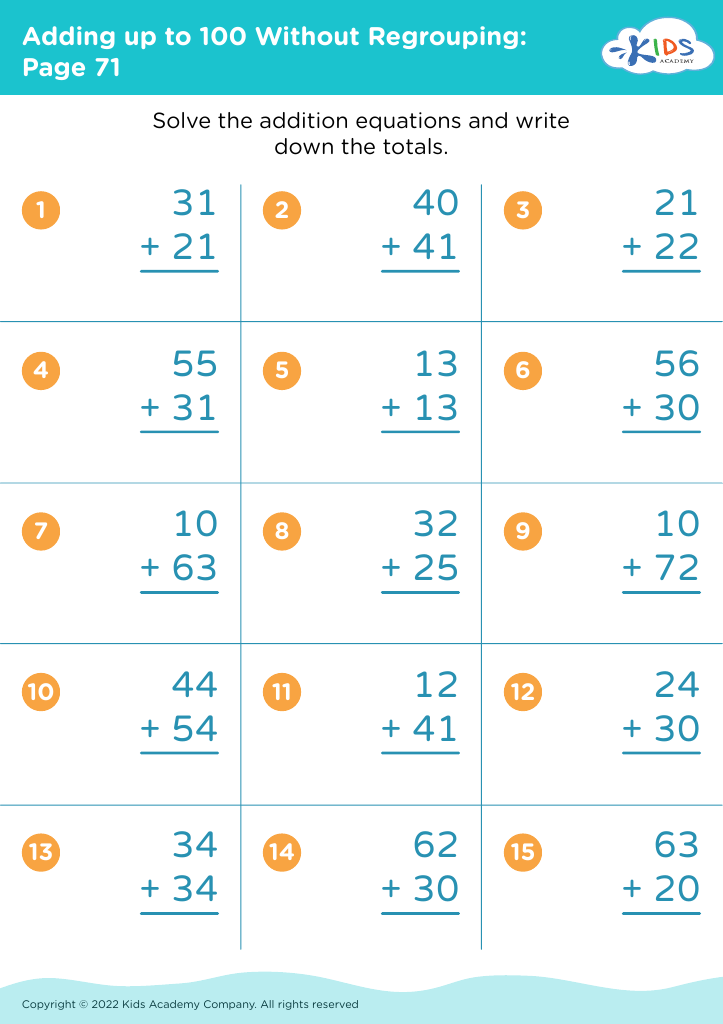
Adding up to 100 Without Regrouping: Page 71
Worksheet
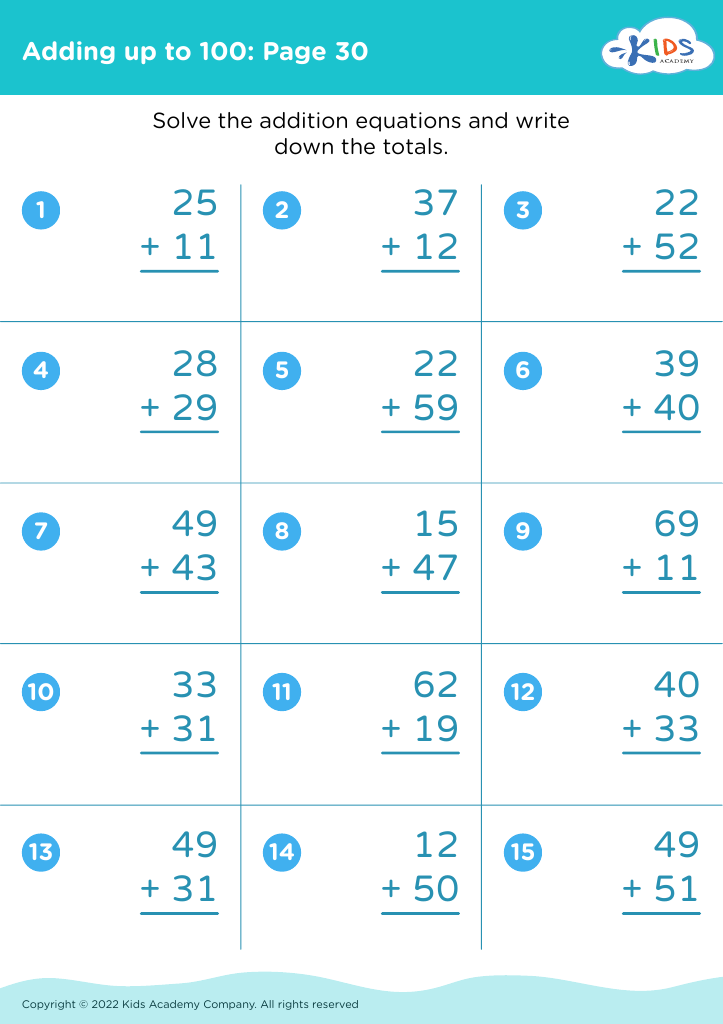
Adding up to 100: Page 30

Adding up to 100: Page 30

Adding up to 100: Page 30
Worksheet
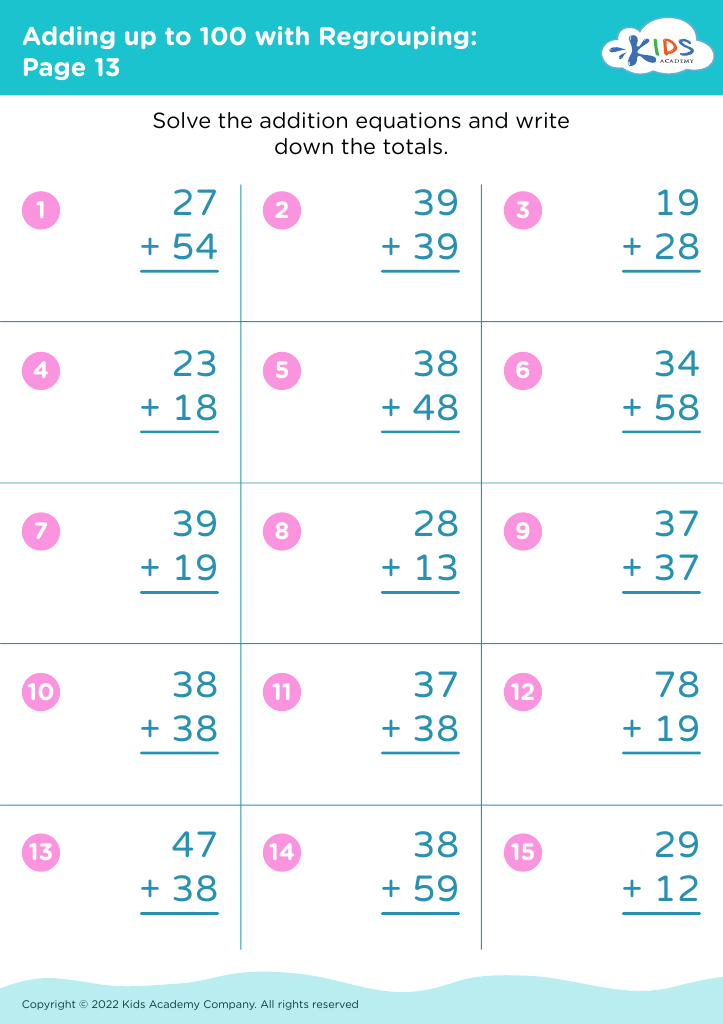
Adding up to 100 with Regrouping: Page 13
Worksheet
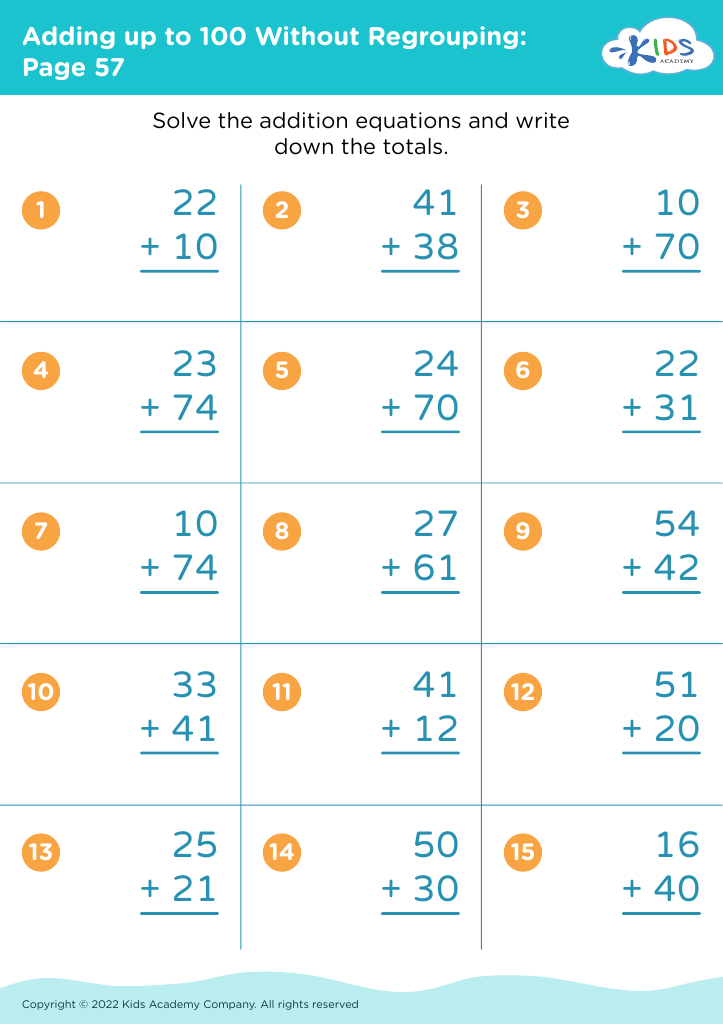
Adding up to 100 Without Regrouping: Page 57
Worksheet
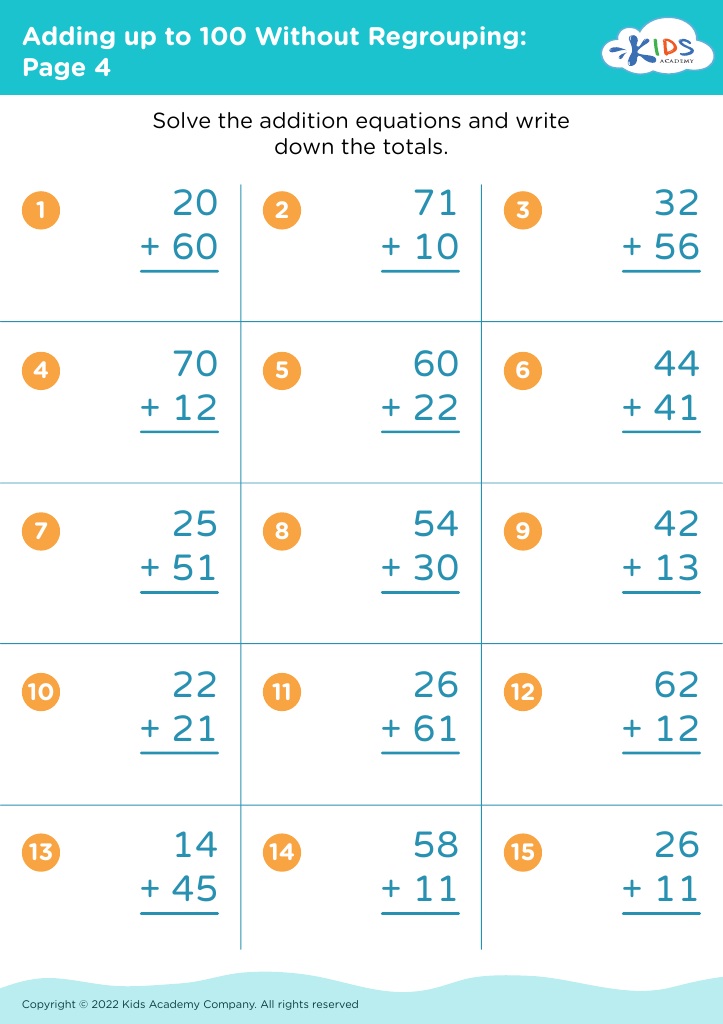
Adding up to 100 Without Regrouping: Page 4
Worksheet
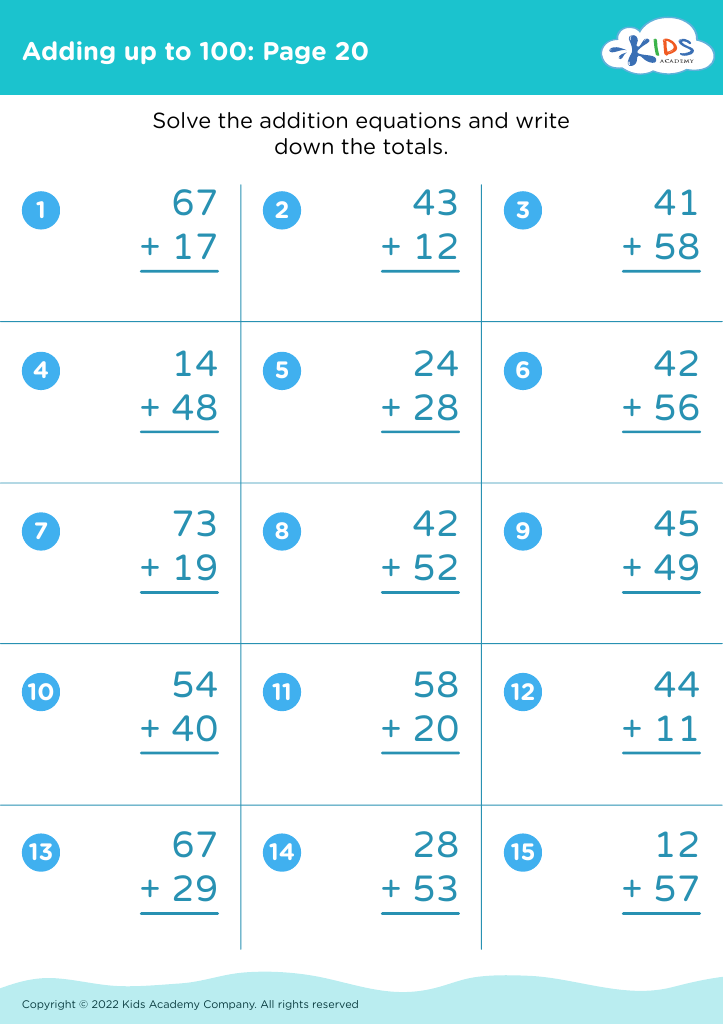
Adding up to 100: Page 20

Adding up to 100: Page 20

Adding up to 100: Page 20
Worksheet
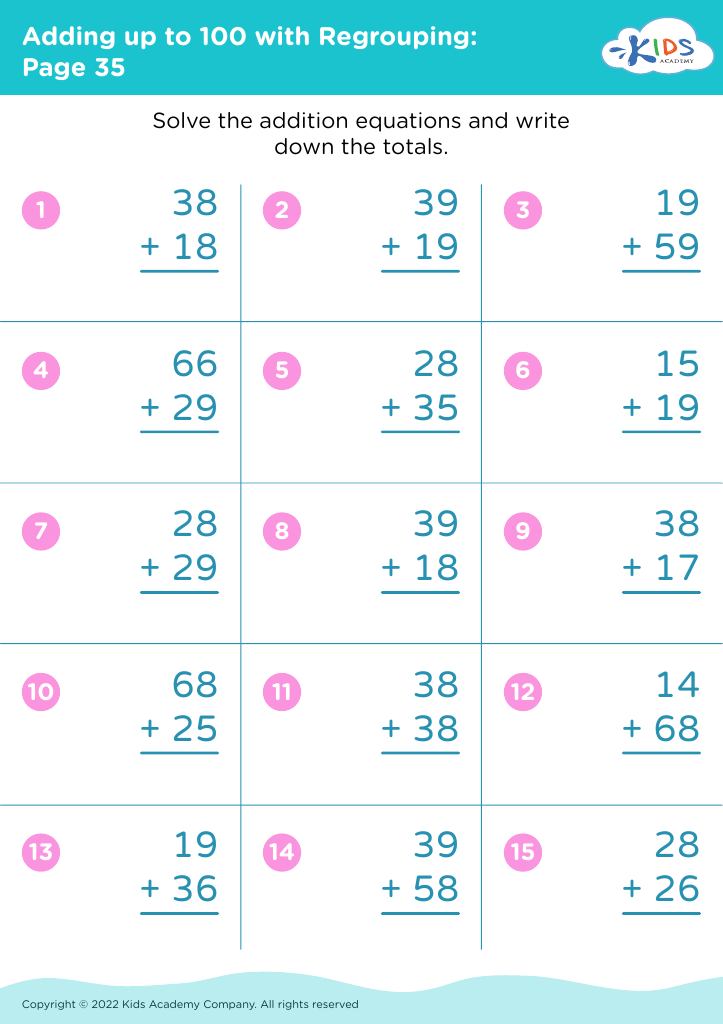
Adding up to 100 with Regrouping: Page 35
Worksheet
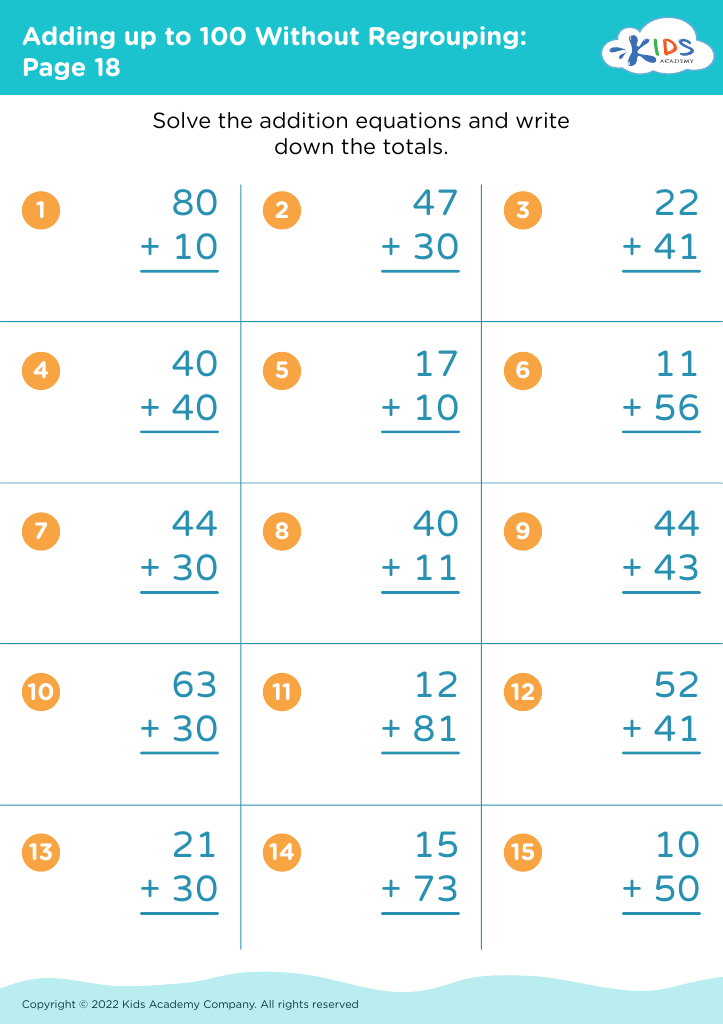
Adding up to 100 Without Regrouping: Page 18
Worksheet
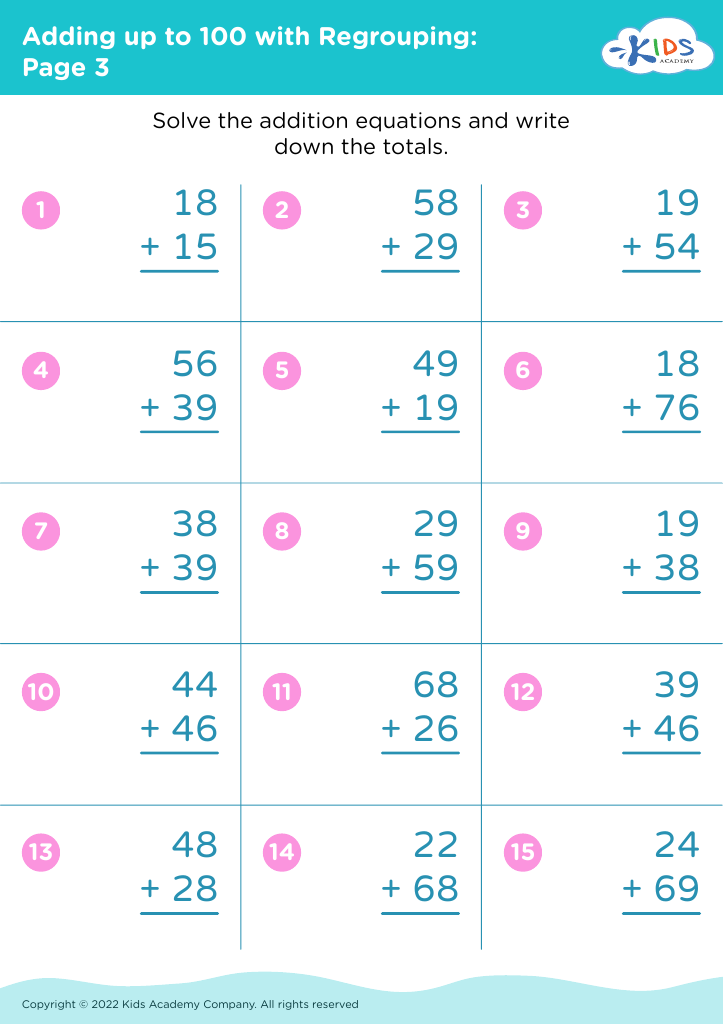
Adding up to 100 with Regrouping: Page 3
Worksheet
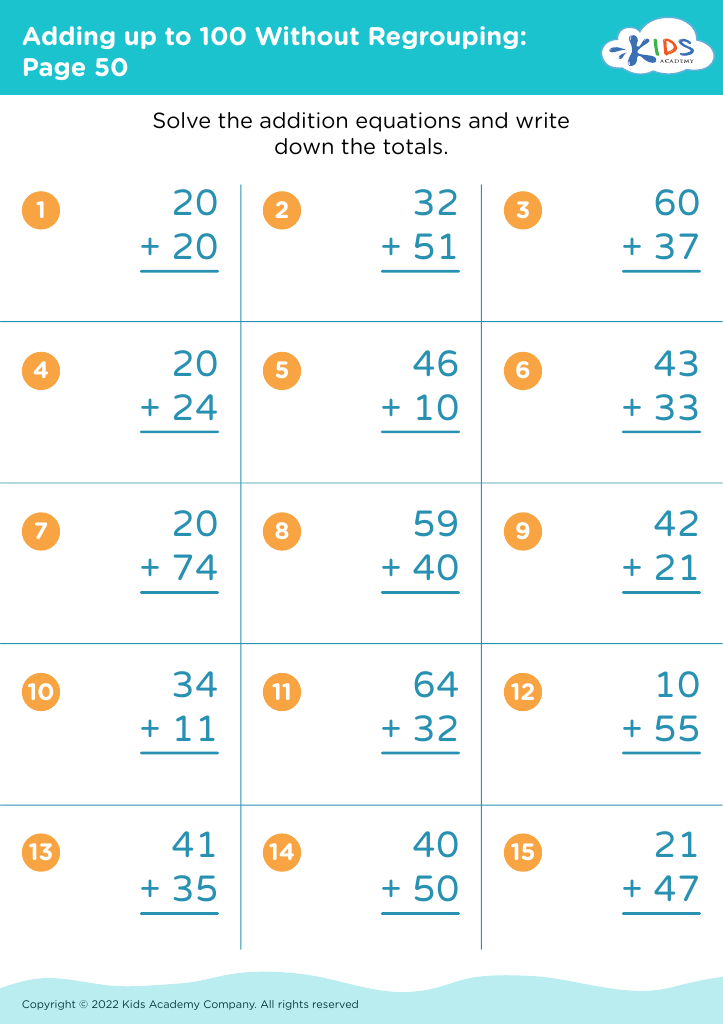
Adding up to 100 Without Regrouping: Page 50
Worksheet
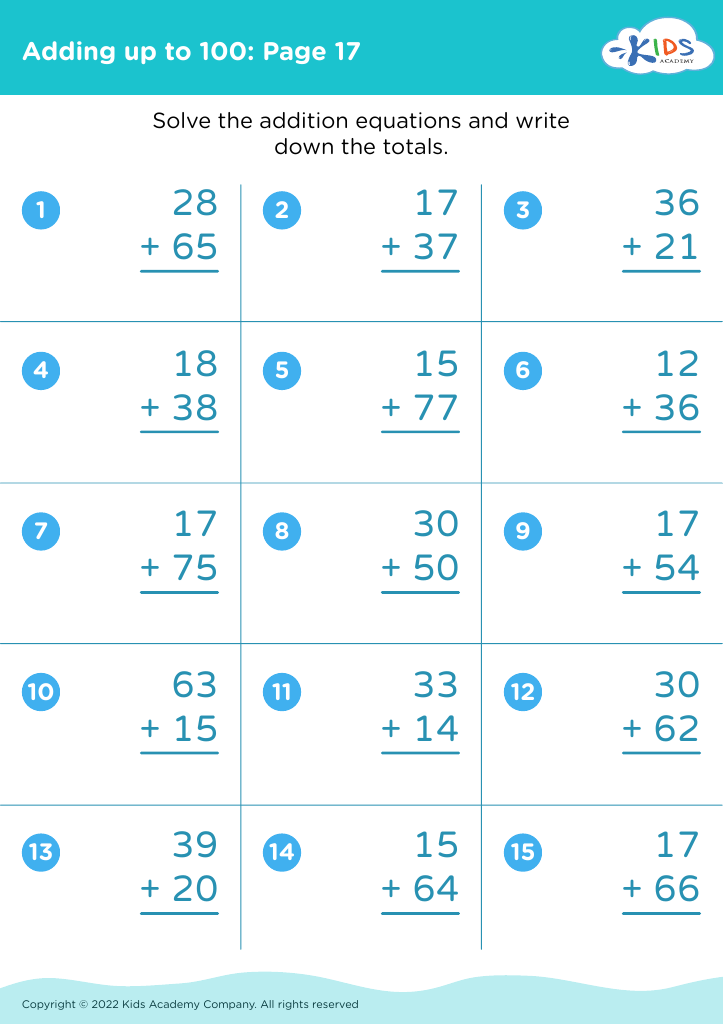
Adding up to 100: Page 17

Adding up to 100: Page 17

Adding up to 100: Page 17
Worksheet
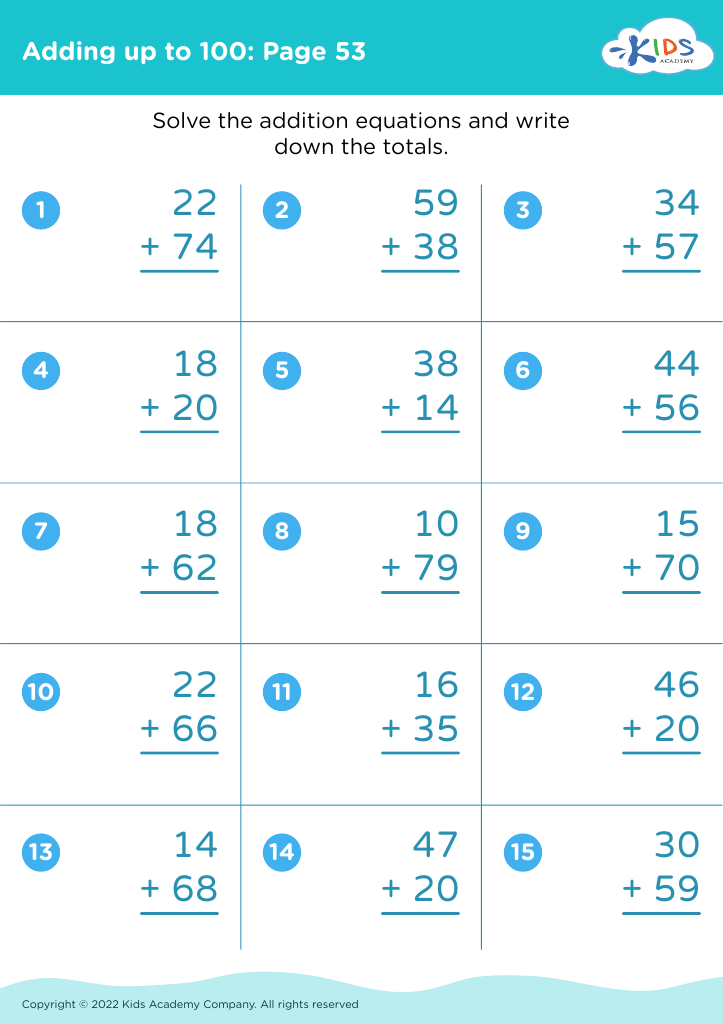
Adding up to 100: Page 53

Adding up to 100: Page 53

Adding up to 100: Page 53
Worksheet
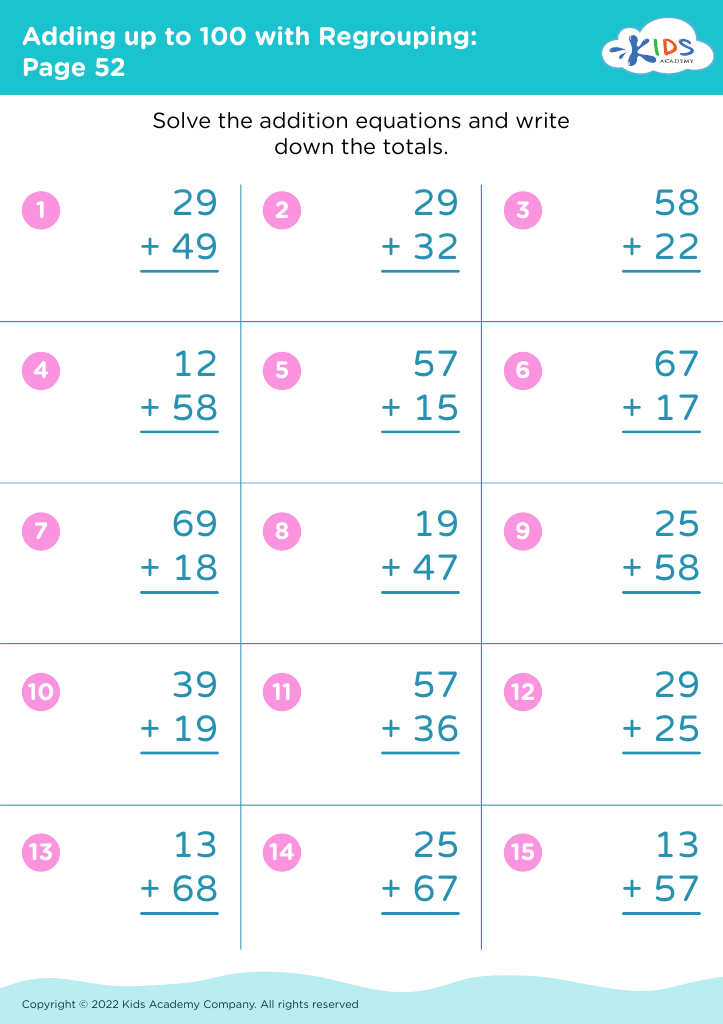
Adding up to 100 with Regrouping: Page 52
Worksheet
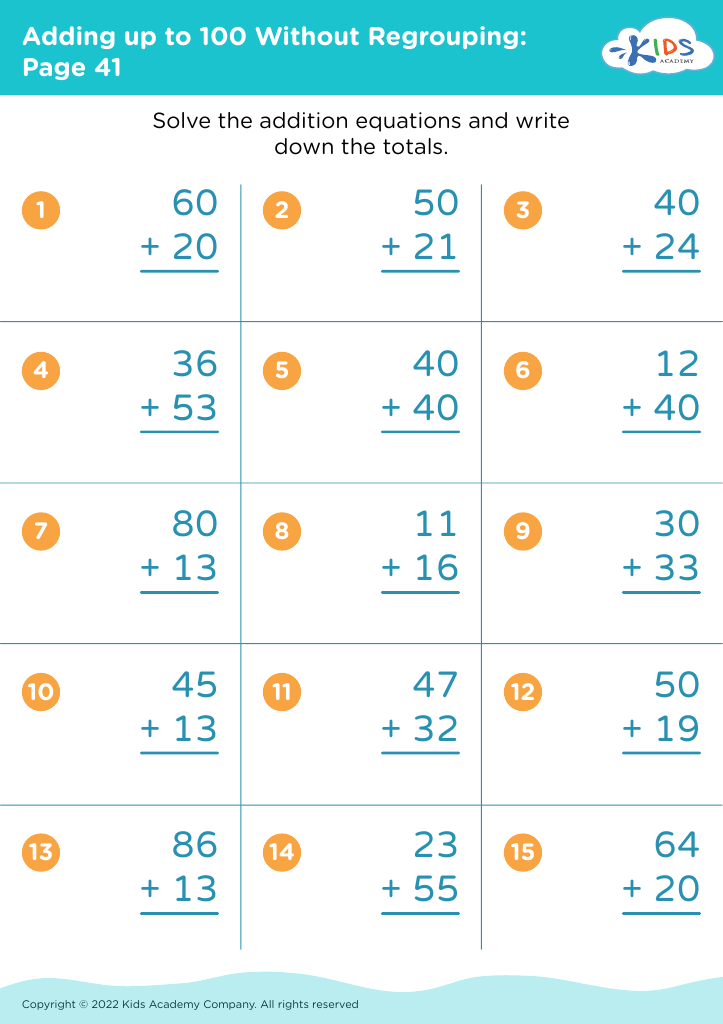
Adding up to 100 Without Regrouping: Page 41
Worksheet
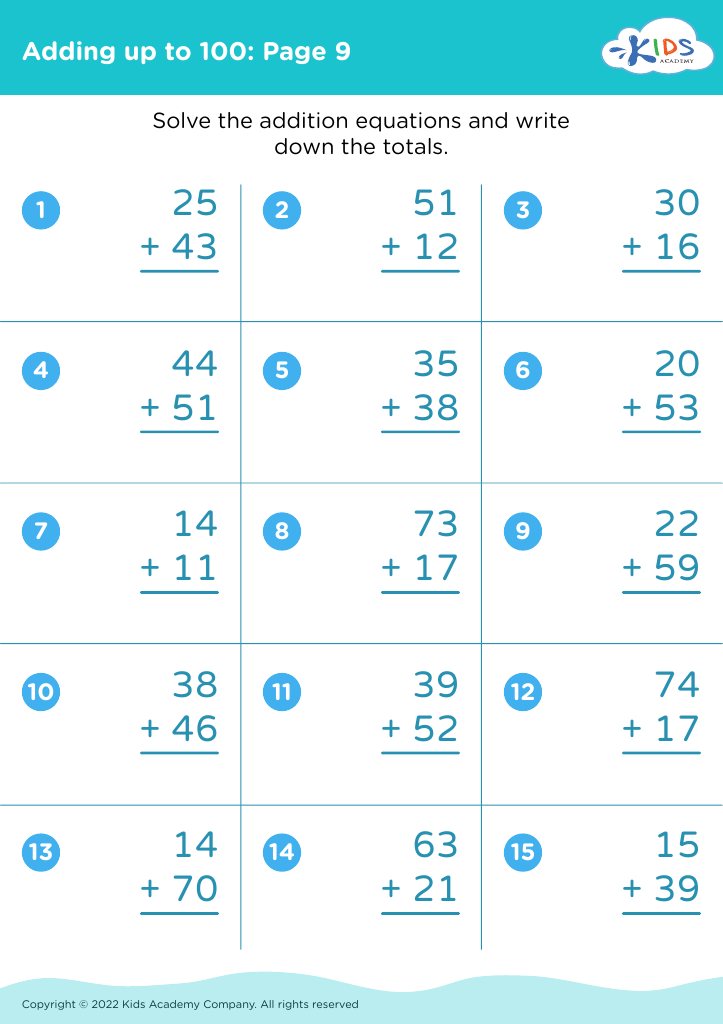
Adding up to 100: Page 9

Adding up to 100: Page 9

Adding up to 100: Page 9
Worksheet
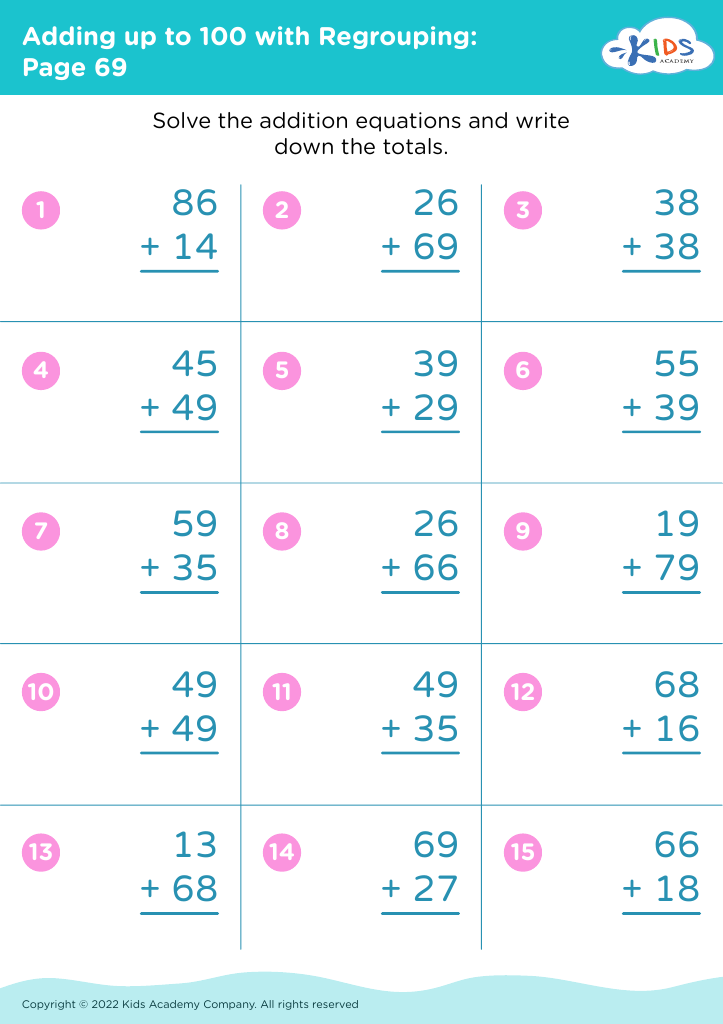
Adding up to 100 with Regrouping: Page 69
Worksheet
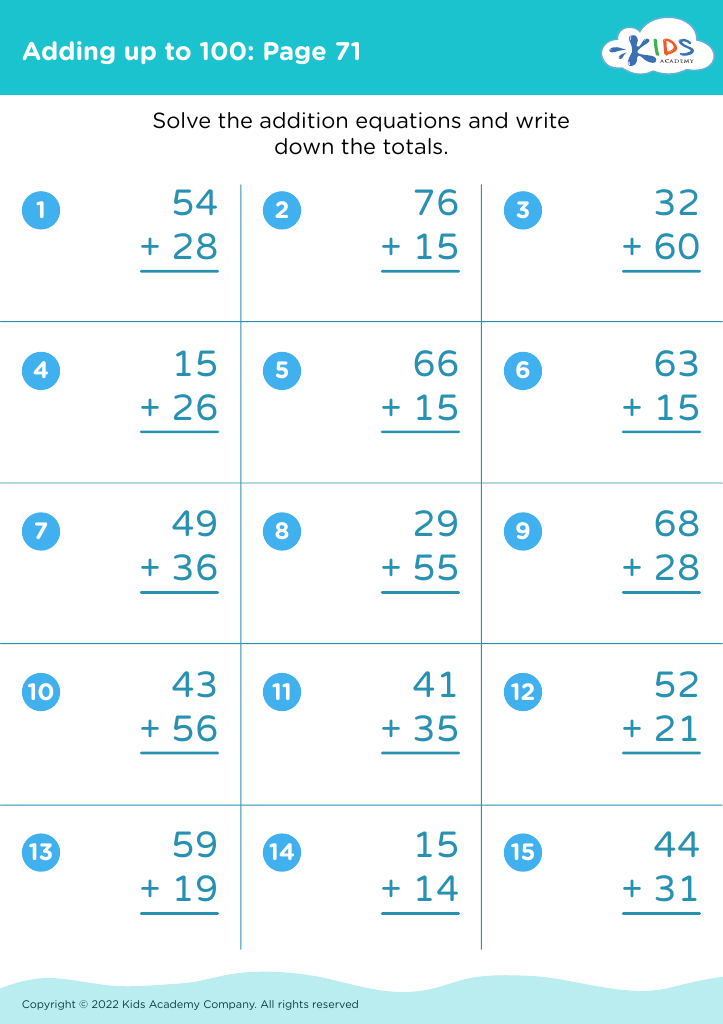
Adding up to 100: Page 71

Adding up to 100: Page 71

Adding up to 100: Page 71
Worksheet
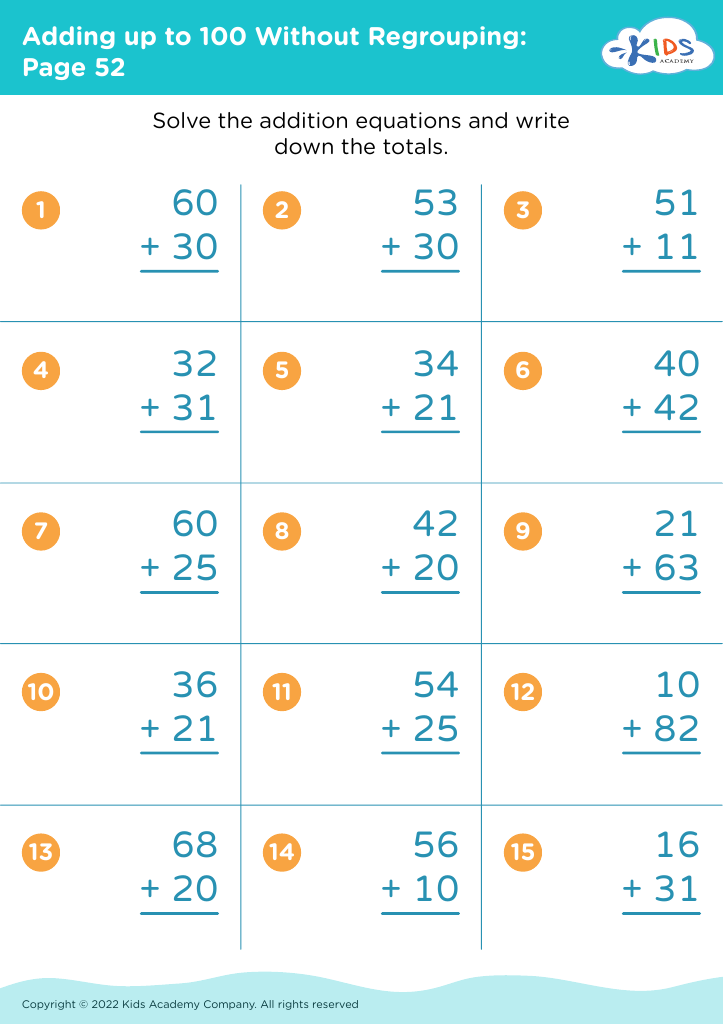
Adding up to 100 Without Regrouping: Page 52
Worksheet
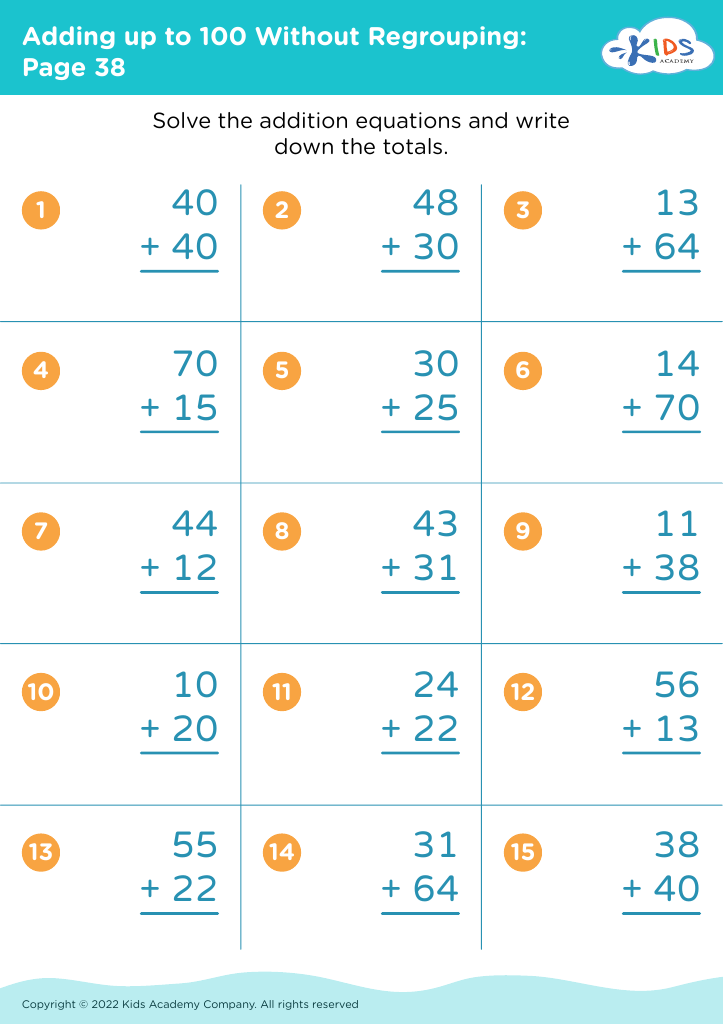
Adding up to 100 Without Regrouping: Page 38
Worksheet
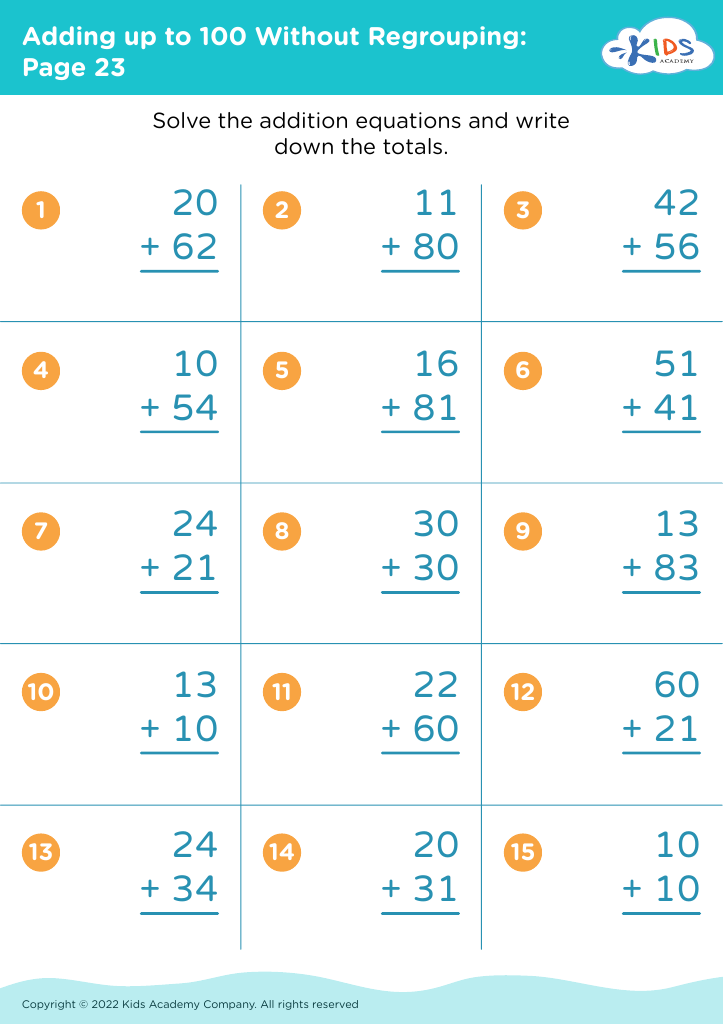
Adding up to 100 Without Regrouping: Page 23
Worksheet
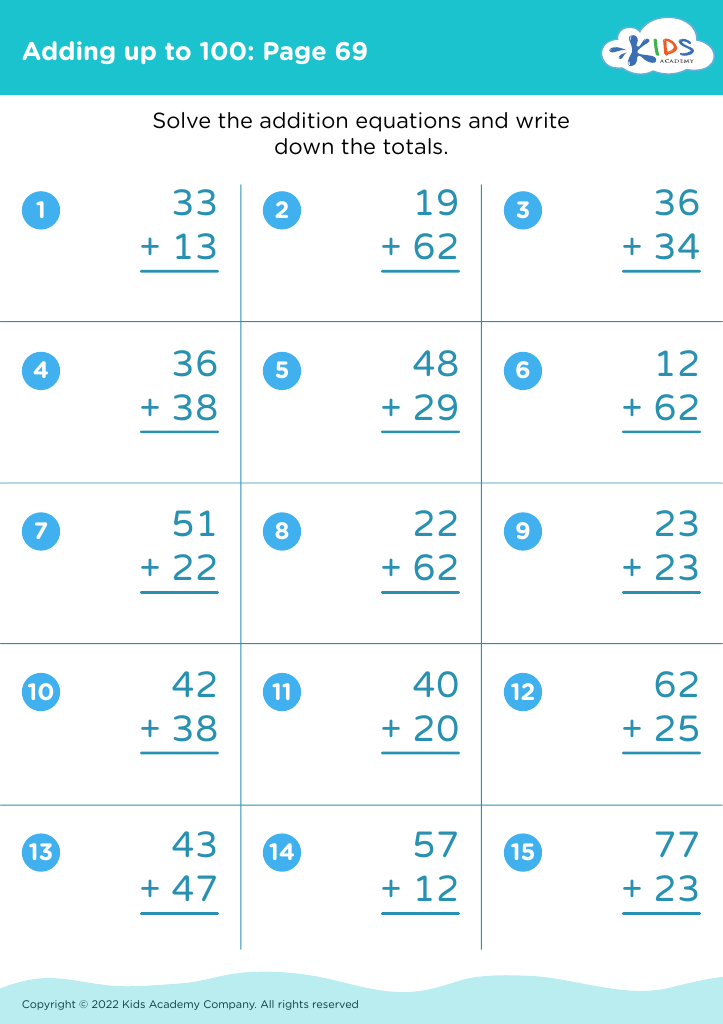
Adding up to 100: Page 69

Adding up to 100: Page 69

Adding up to 100: Page 69
Worksheet
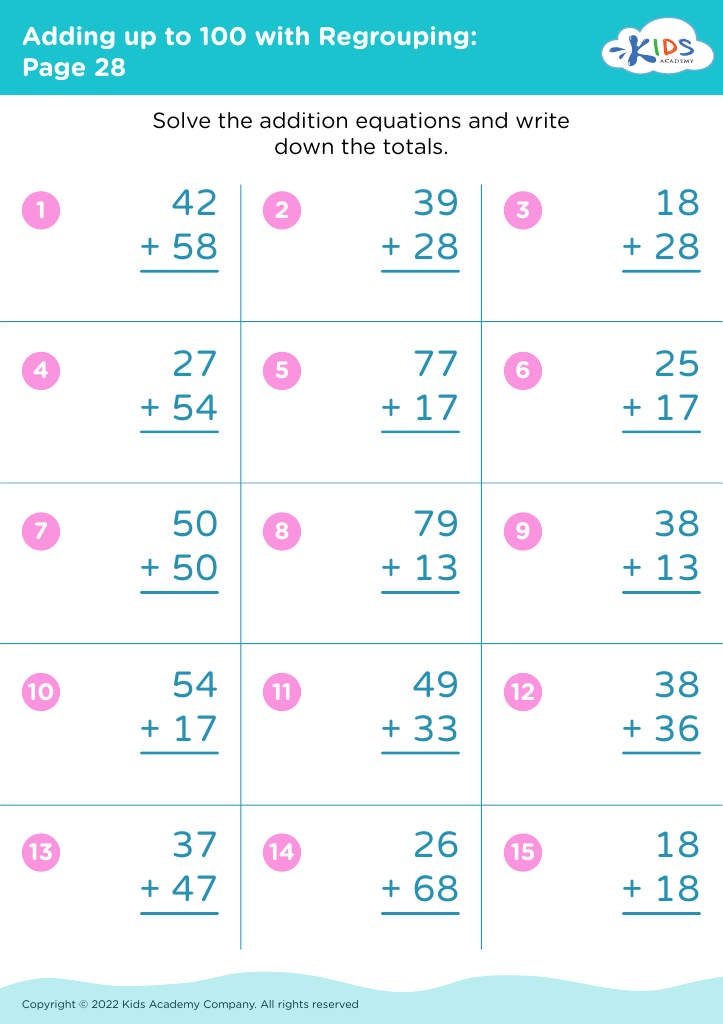
Adding up to 100 with Regrouping: Page 28
Worksheet
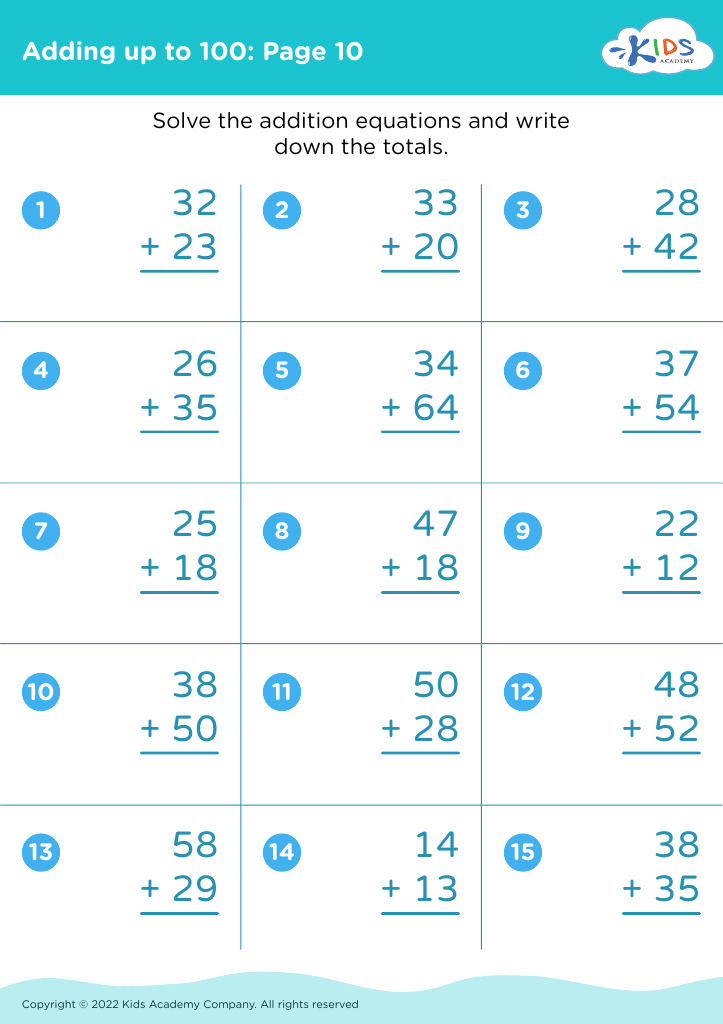
Adding up to 100: Page 10

Adding up to 100: Page 10

Adding up to 100: Page 10
Worksheet
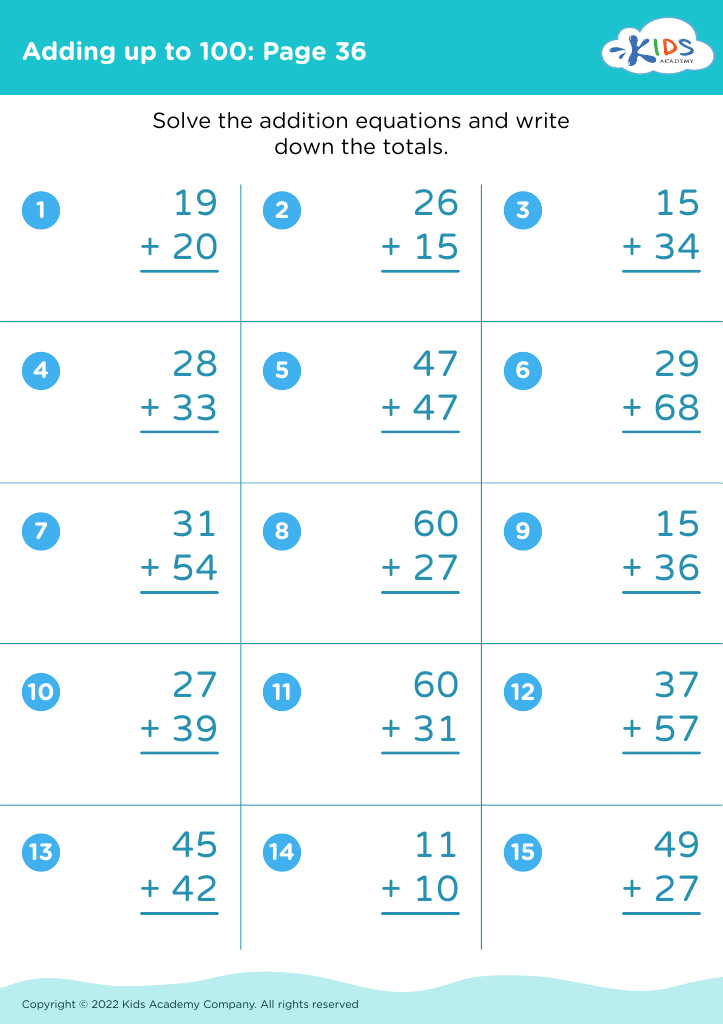
Adding up to 100: Page 36

Adding up to 100: Page 36

Adding up to 100: Page 36
Worksheet


Understanding fractions and adding up to 100 are foundational skills that hold significant importance for 7-year-olds. Early grasp of fractions helps children comprehend parts of a whole, which is critical not only in advanced math but also in everyday activities like measuring ingredients in cooking or dividing items among friends. It fosters logical thinking and enhances problem-solving abilities, essential skills for academic achievement.

Adding up to 100 builds a strong numerical foundation. Familiarity with numbers up to 100 strengthens mental arithmetic, enabling children to tackle more complex mathematical problems with confidence as they progress in school. It enhances their ability to estimate, recognize patterns, and understand place value, all of which are crucial for more advanced arithmetic operations like multiplication and division.

Moreover, these skills extend beyond the classroom into everyday life. They empower children to make sense of the world around them, from understanding percentages in discounts to managing small sums of money. Nurturing a robust understanding of these concepts at an early age supports academic success and builds confidence in their mathematical abilities, paving the way for a lifetime of numeracy. Therefore, parents and teachers must prioritize these foundational mathematical concepts to ensure holistic cognitive development.