Filters

16 filtered results

Clear all filters
Favorites
With answer key
Interactive

16 filtered results

Difficulty Level

Grade


Welcome to our Counting Practice Worksheets designed specifically for 7-year-olds! These engaging resources focus on mastering addition skills up to 50, helping young learners gain confidence in their math abilities. With a variety of fun and interactive exercises, students will enjoy counting, adding, and enhancing their problem-solving skills. Our worksheets foster a deeper understanding of numbers through practical examples and visual aids. Ideal for classroom use or at-home practice, these materials are perfect for reinforcing important math concepts while keeping learning enjoyable. Get your child started on their journey to math mastery today with our thoughtful and targeted counting practice!
Check out this FREE Trial Lesson on Adding up to 50 for age 7!

Short and Long Vowel Sort

Favorites
With answer key
Interactive
  • 7
  • Counting practice
  • Adding up to 50
Adding up to 50 Without Regrouping: Page 71
Worksheet
Adding up to 50: Page 41

Adding up to 50: Page 41

Adding up to 50: Page 41
Worksheet
Adding up to 50 Without Regrouping: Page 35
Worksheet
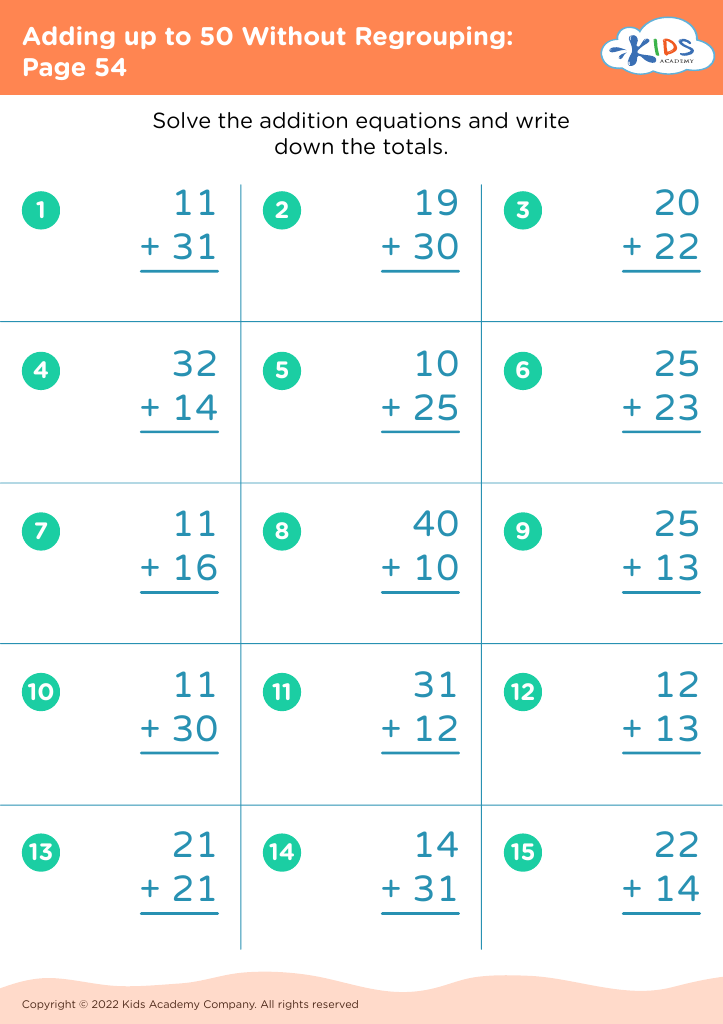
Adding up to 50 Without Regrouping: Page 54
Worksheet
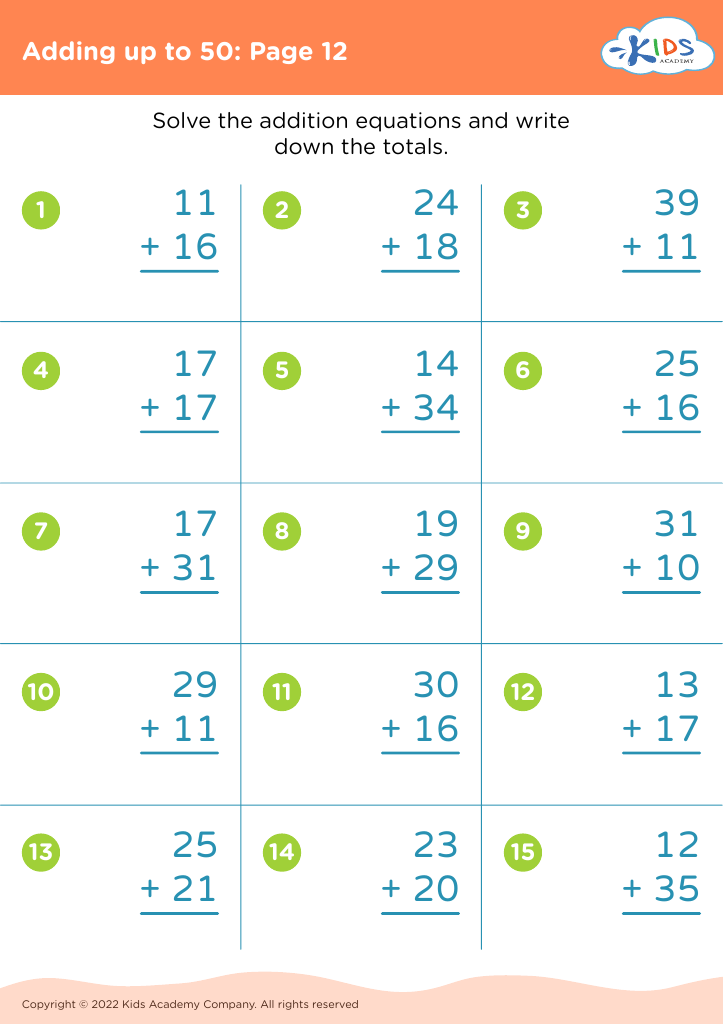
Adding up to 50: Page 12

Adding up to 50: Page 12

Adding up to 50: Page 12
Worksheet
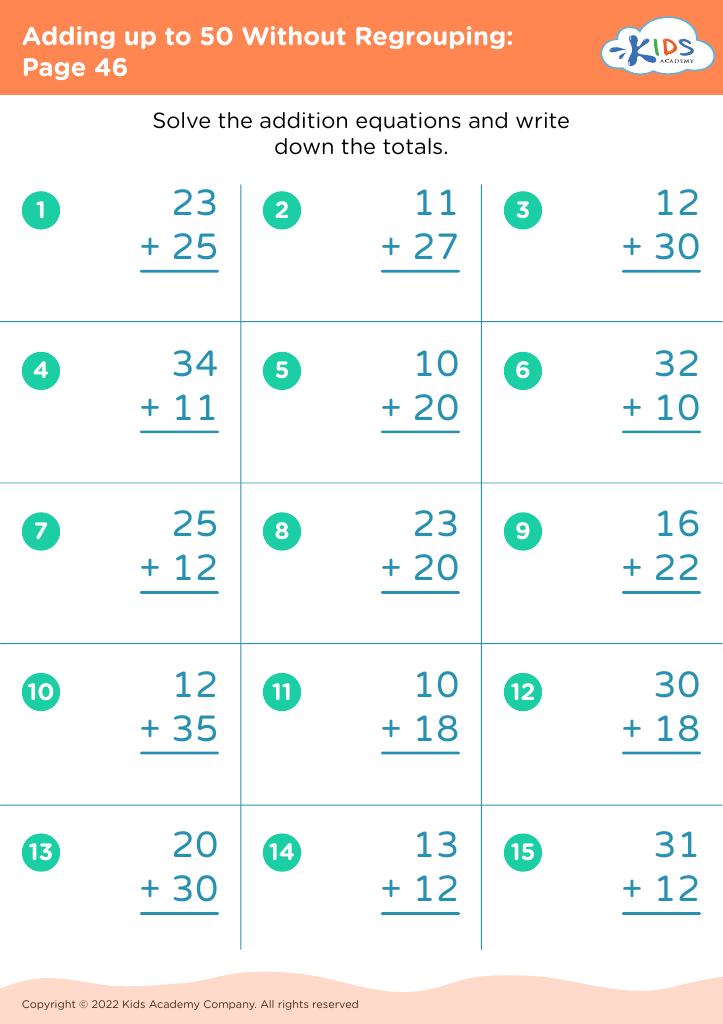
Adding up to 50 Without Regrouping: Page 46
Worksheet
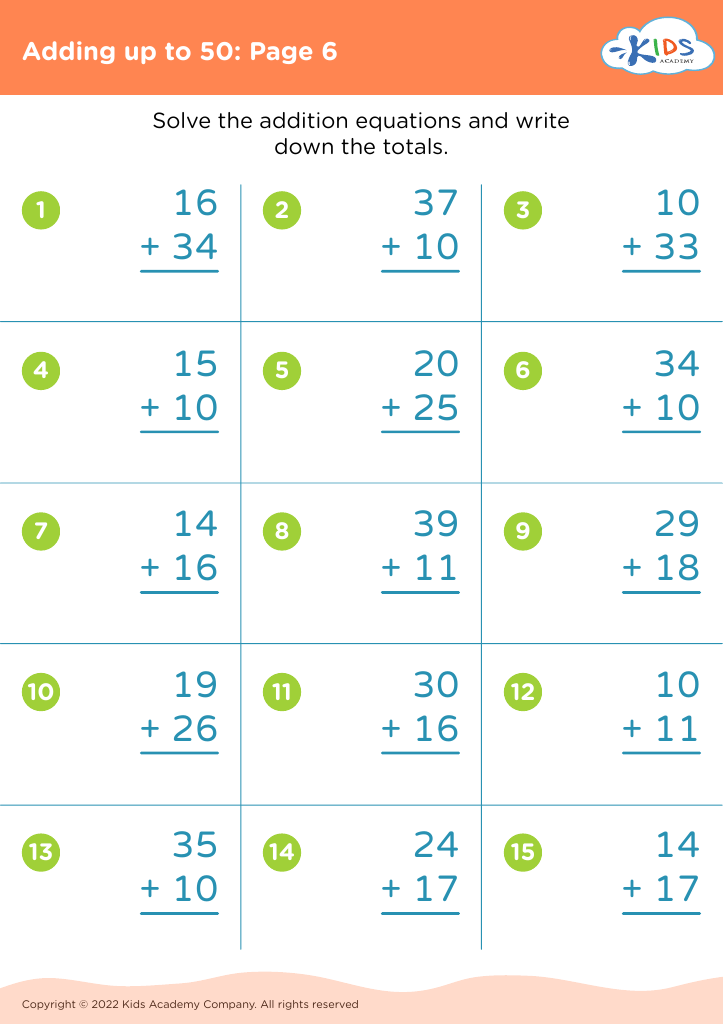
Adding up to 50: Page 6

Adding up to 50: Page 6

Adding up to 50: Page 6
Worksheet
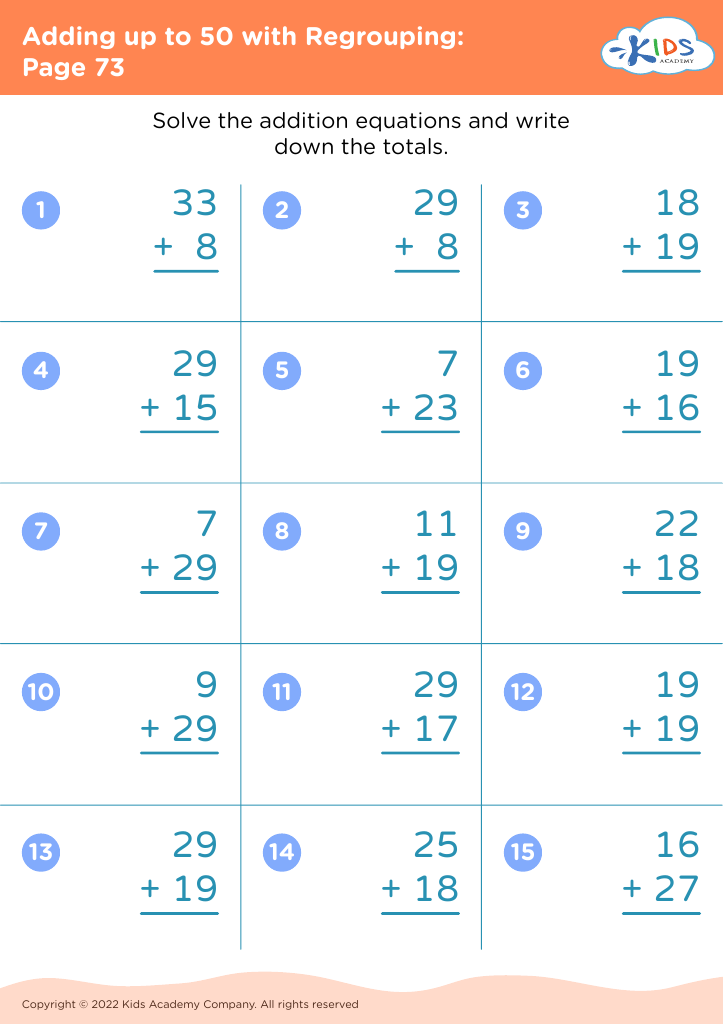
Adding up to 50 with Regrouping: Page 73
Worksheet
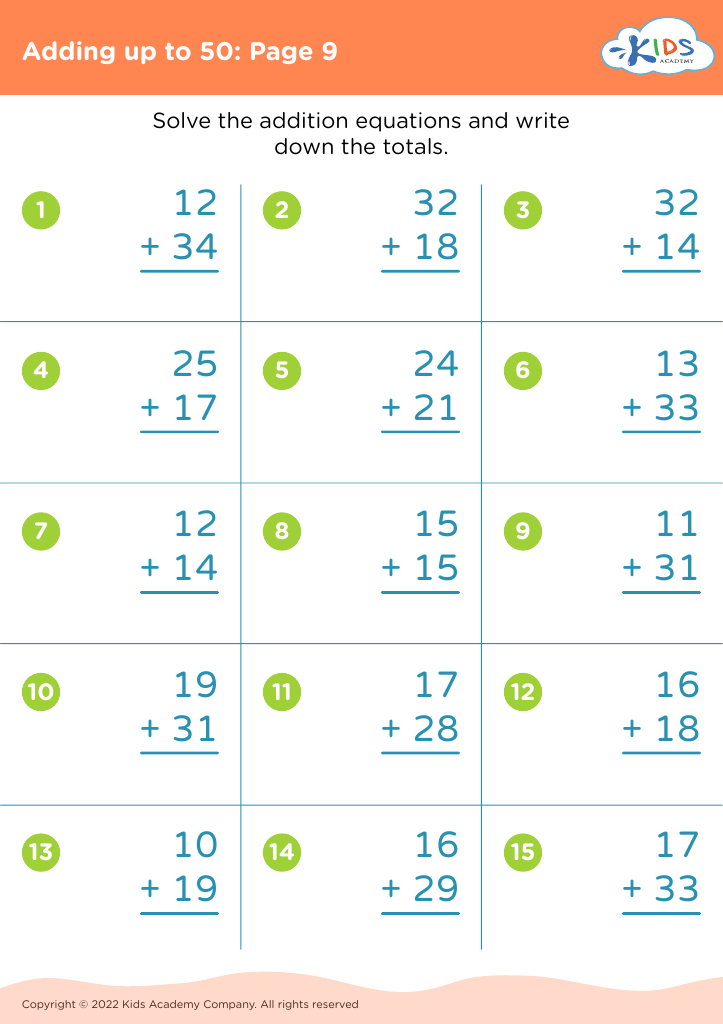
Adding up to 50: Page 9

Adding up to 50: Page 9

Adding up to 50: Page 9
Worksheet
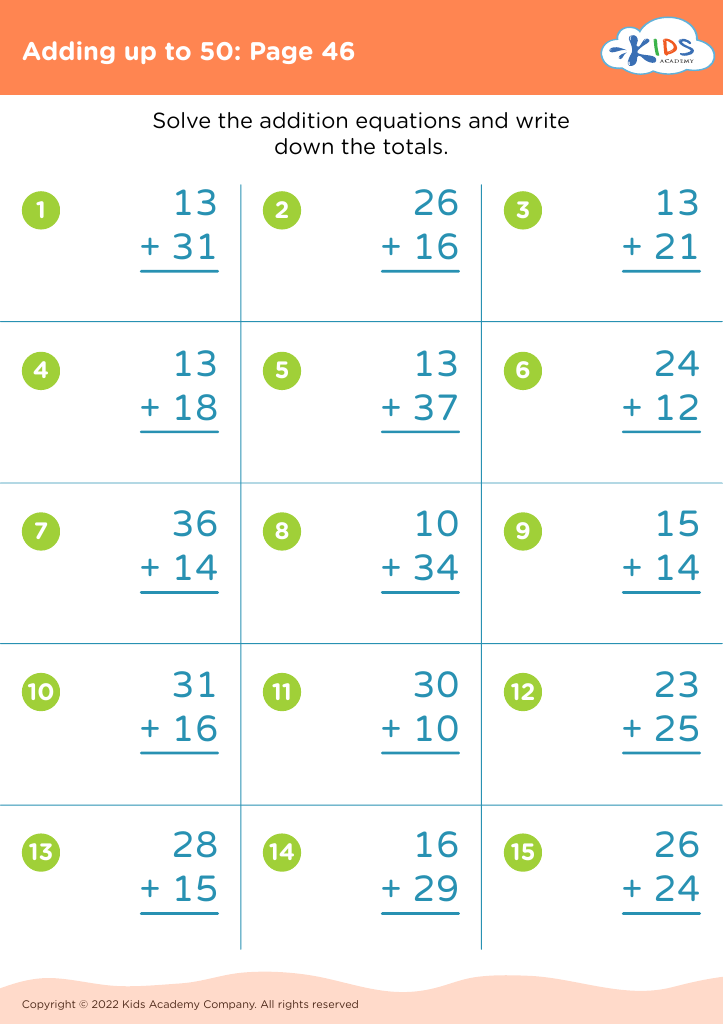
Adding up to 50: Page 46

Adding up to 50: Page 46

Adding up to 50: Page 46
Worksheet
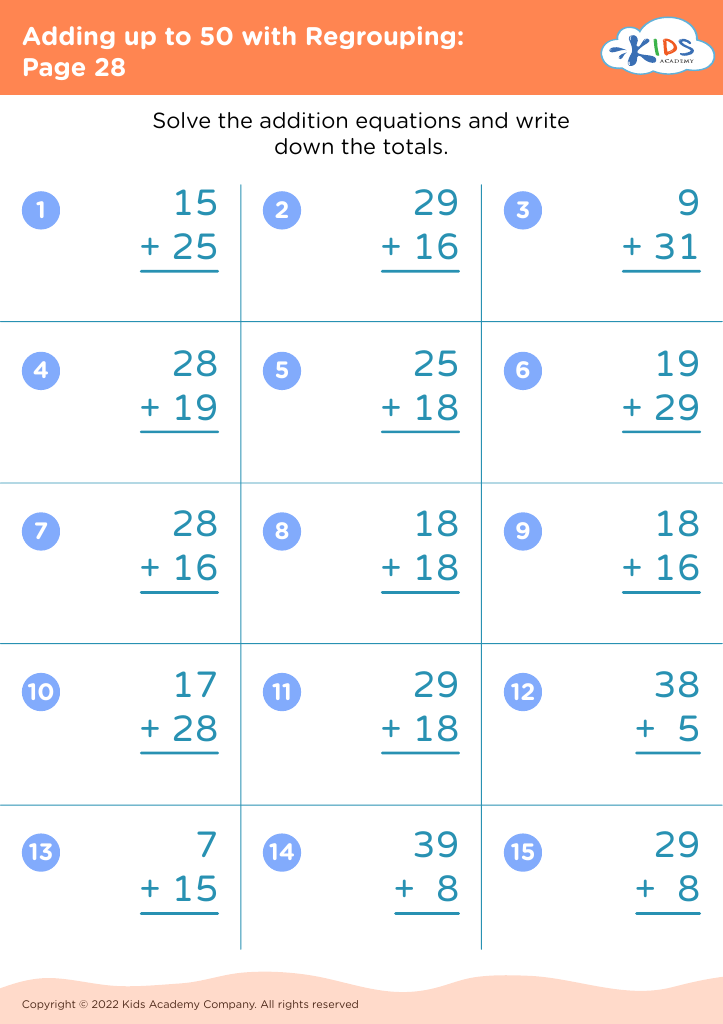
Adding up to 50 with Regrouping: Page 28
Worksheet
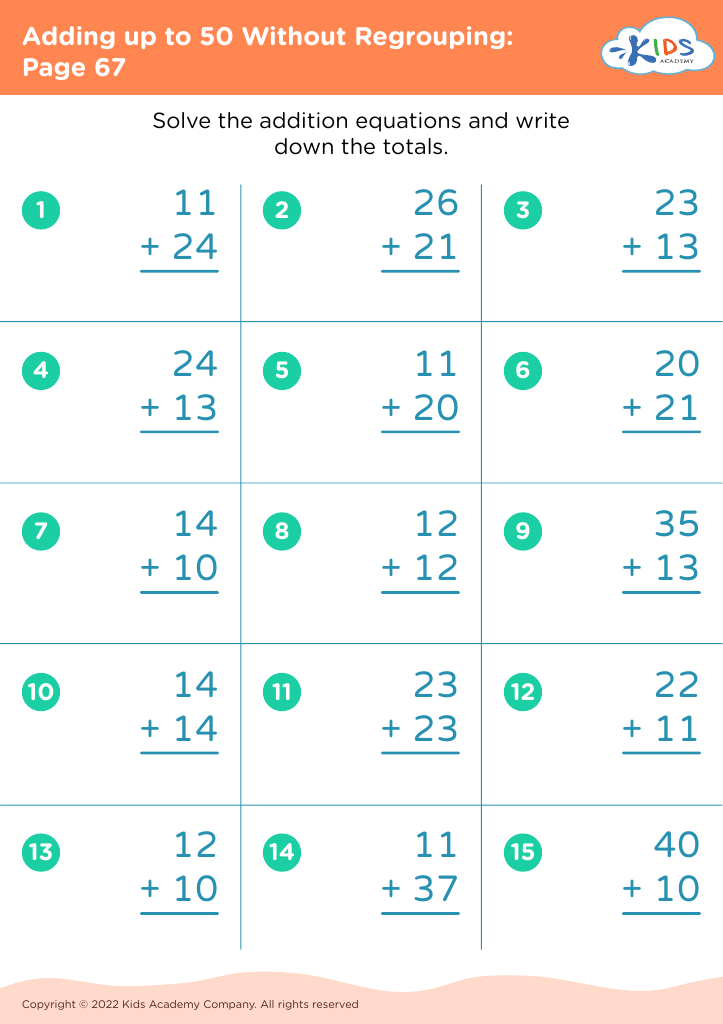
Adding up to 50 Without Regrouping: Page 67
Worksheet
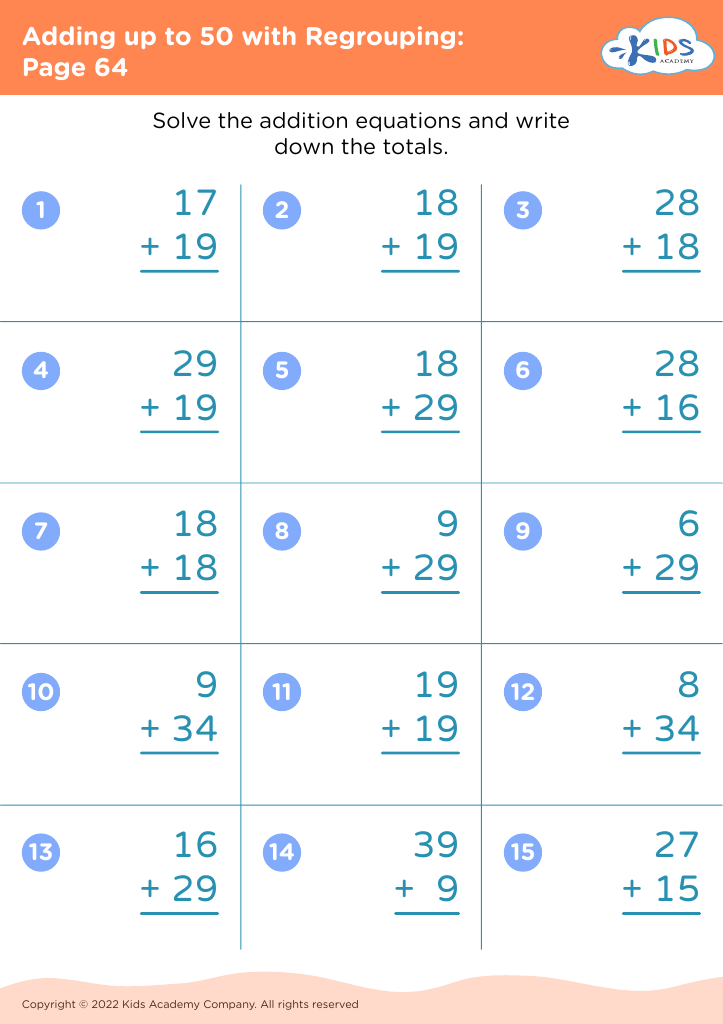
Adding up to 50 with Regrouping: Page 64
Worksheet
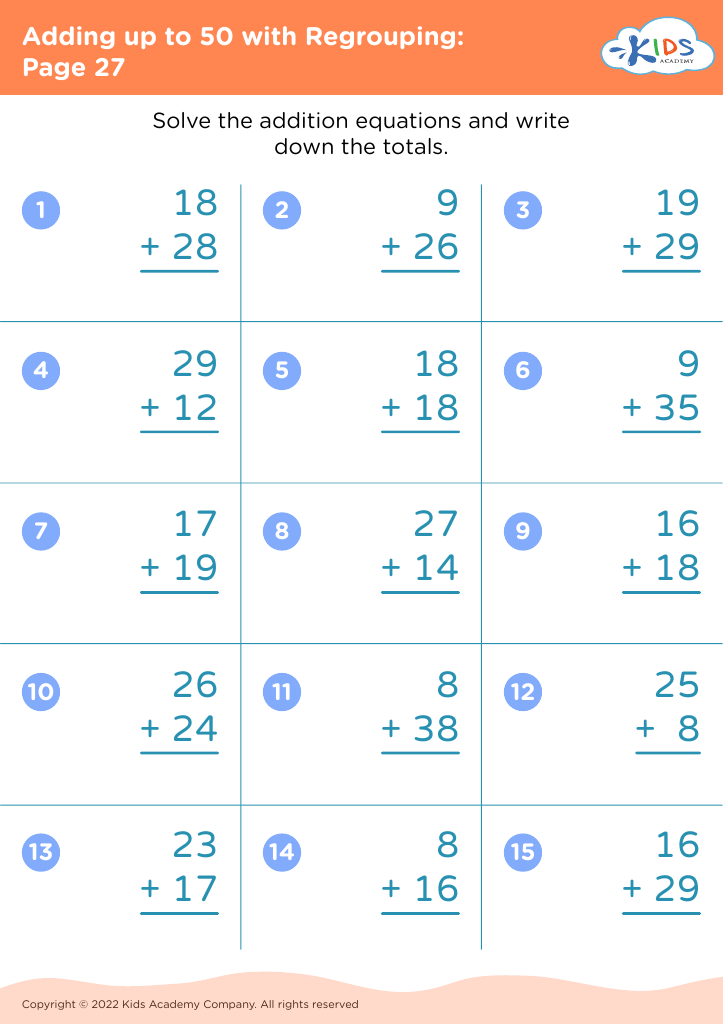
Adding up to 50 with Regrouping: Page 27
Worksheet
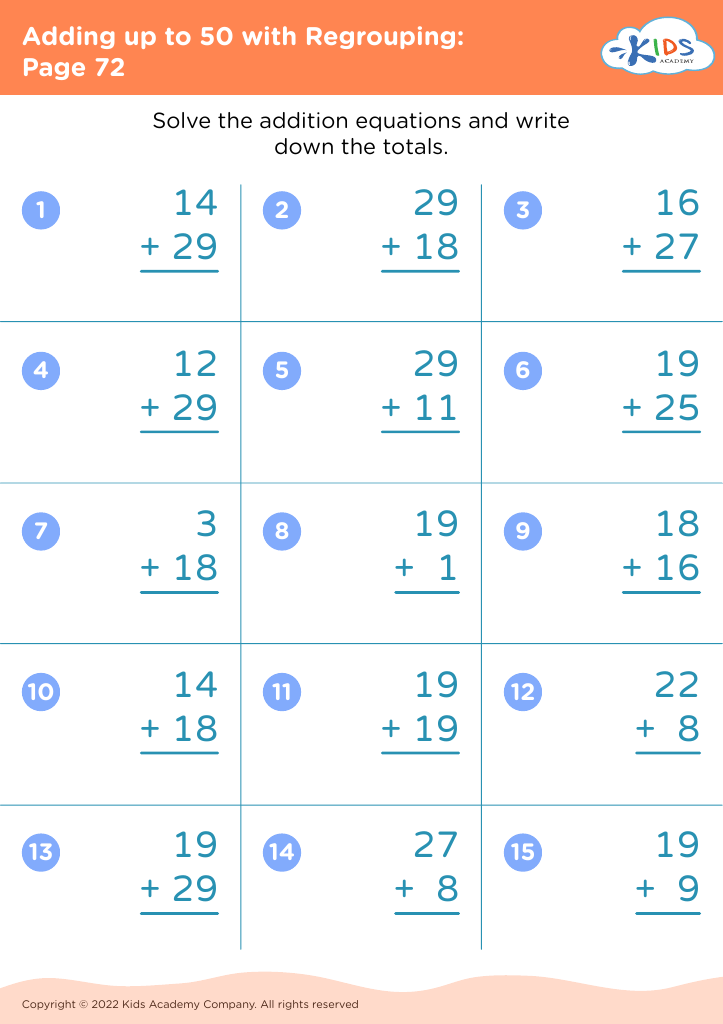
Adding up to 50 with Regrouping: Page 72
Worksheet
Adding up to 50 with Regrouping: Page 41
Worksheet


Counting practice, especially adding up to 50, is crucial for 7-year-olds as it lays the foundation for their mathematical understanding and confidence. At this age, children are transitioning from basic counting to more complex arithmetic, making it essential for parents and teachers to engage them in counting activities.

First, mastering addition up to 50 develops number sense, which helps children recognize patterns, understand relationships between numbers, and enhance their problem-solving skills. This knowledge is not only foundational for more advanced math concepts but also for everyday situations, such as managing money or measuring quantities.

Furthermore, counting activities promote cognitive development. Engaging tasks, such as counting objects or solving simple word problems, boost critical thinking and analytical skills. These practices also foster perseverance, as children learn to tackle challenges, enhancing their resilience.

Moreover, reinforcing math concepts at home can greatly complement classroom learning. When parents actively participate in counting games or homework, they create a supportive learning environment that encourages curiosity and exploration.

In essence, investing time in counting practice ensures that children not only perform well in school but also embrace a lifelong love for learning, preparing them for future academic success.