Problem-Solving Skills Addition Facts Worksheets for 7-Year-Olds
5 filtered results
-
From - To
Boost your 7-year-old's math confidence with our engaging Problem-Solving Skills Addition Facts Worksheets! Designed to enhance critical thinking, these worksheets focus on developing essential problem-solving abilities while reinforcing foundational addition skills. Each activity encourages children to apply their knowledge in real-world scenarios, making learning both practical and fun. With colorful illustrations and varied tasks, these worksheets cater to diverse learning styles, ensuring every child can thrive. Whether used at home or in the classroom, our resources will equip young learners with the tools they need to tackle math challenges with ease and excitement. Let’s make math an adventure in problem-solving!
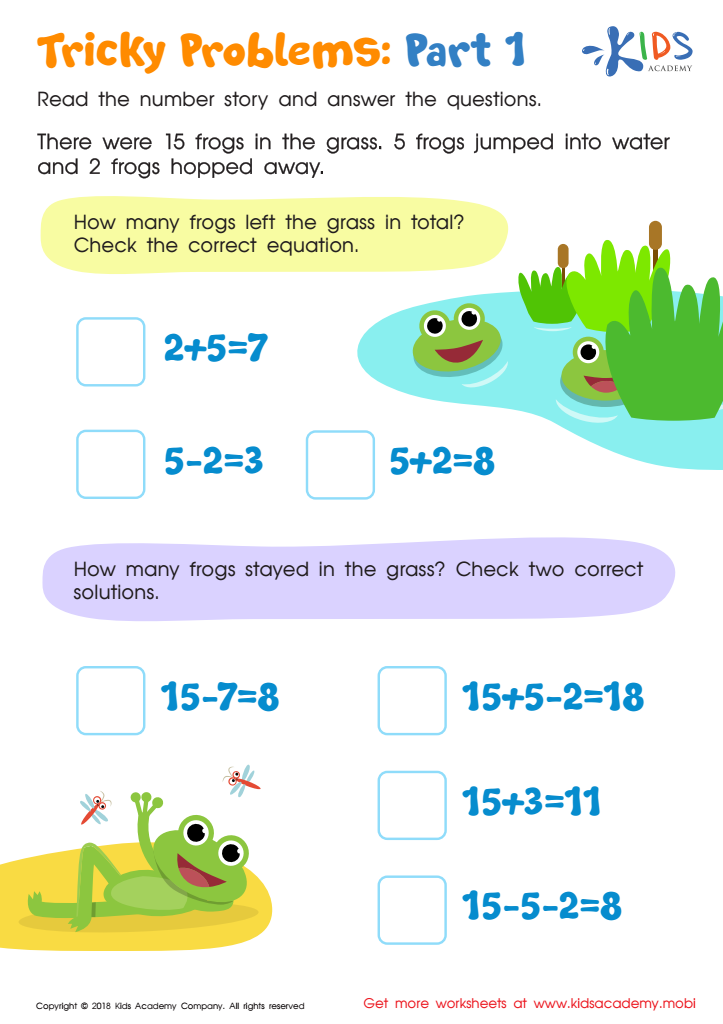
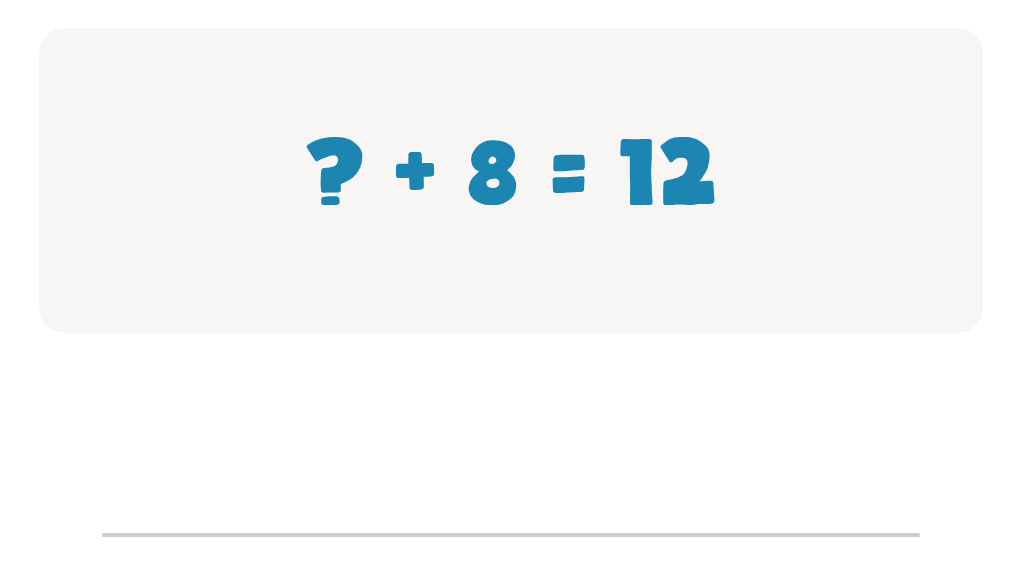
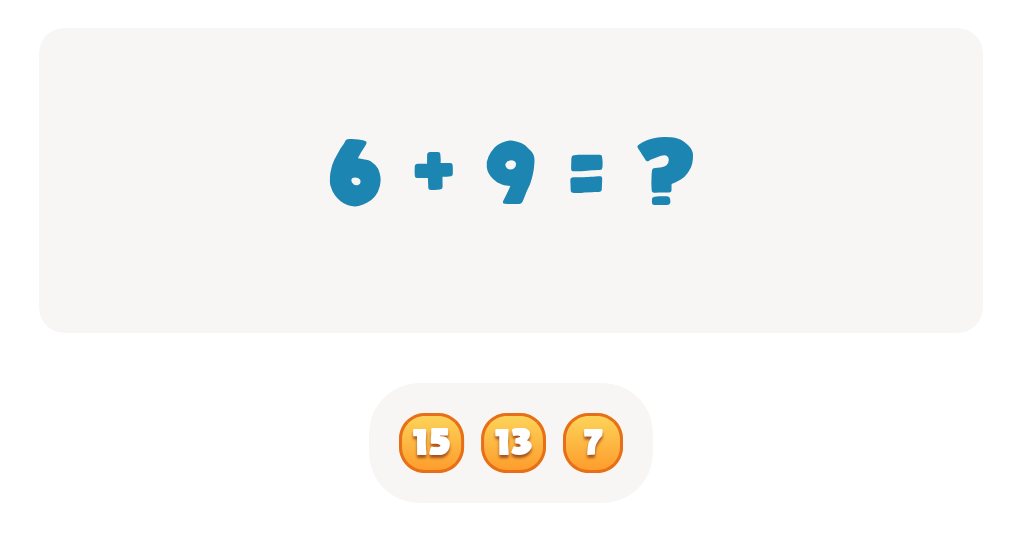
Tricky Problems Worksheet: Part 1
 Assign to My Students




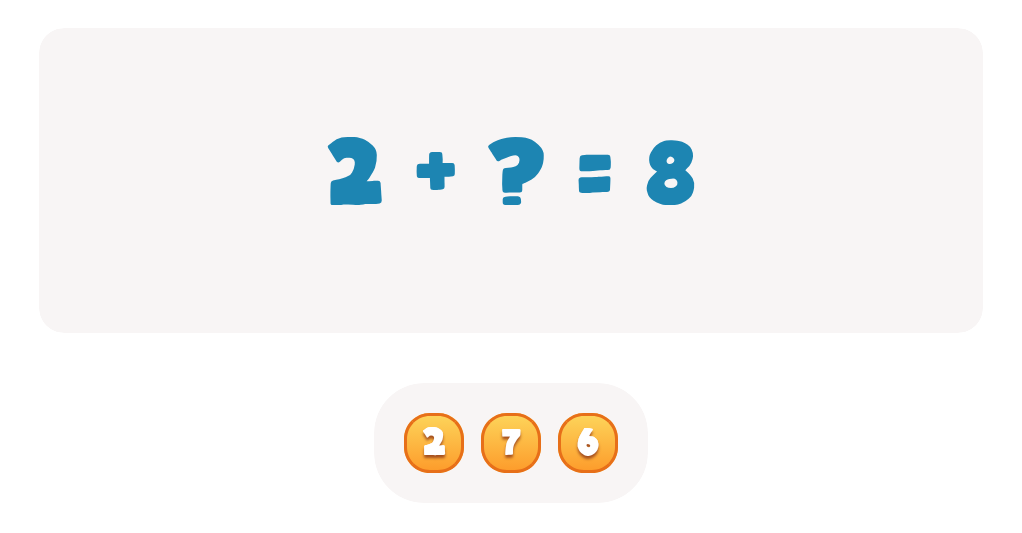

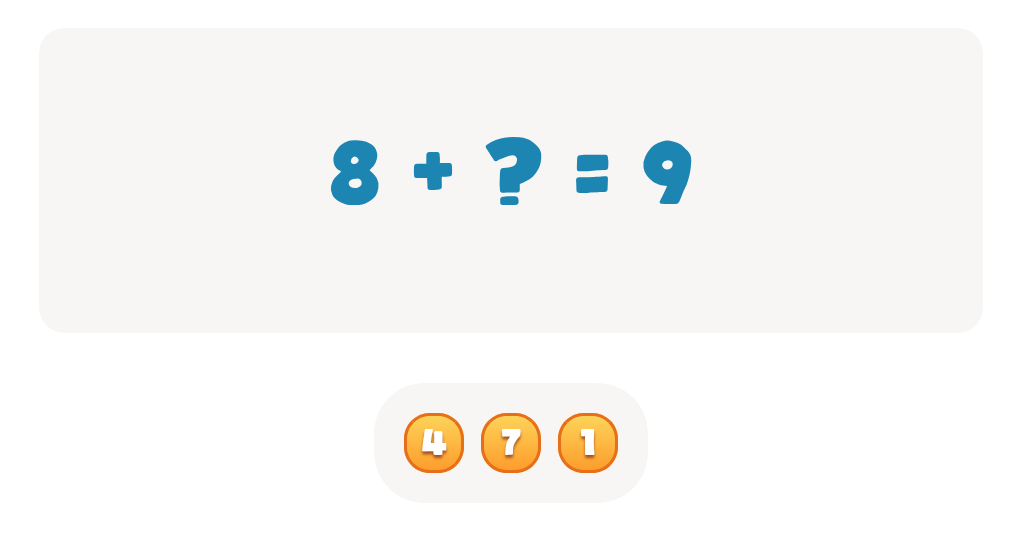

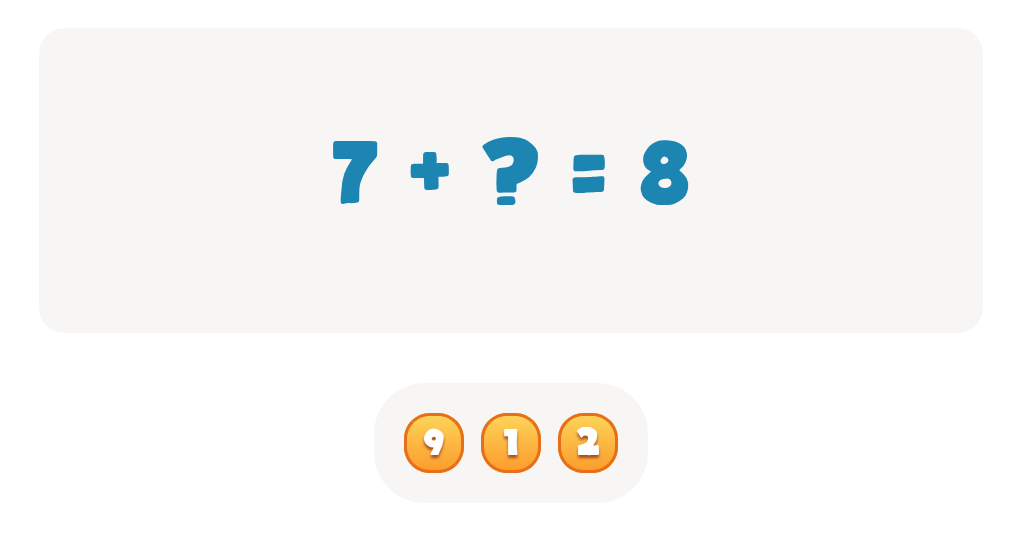
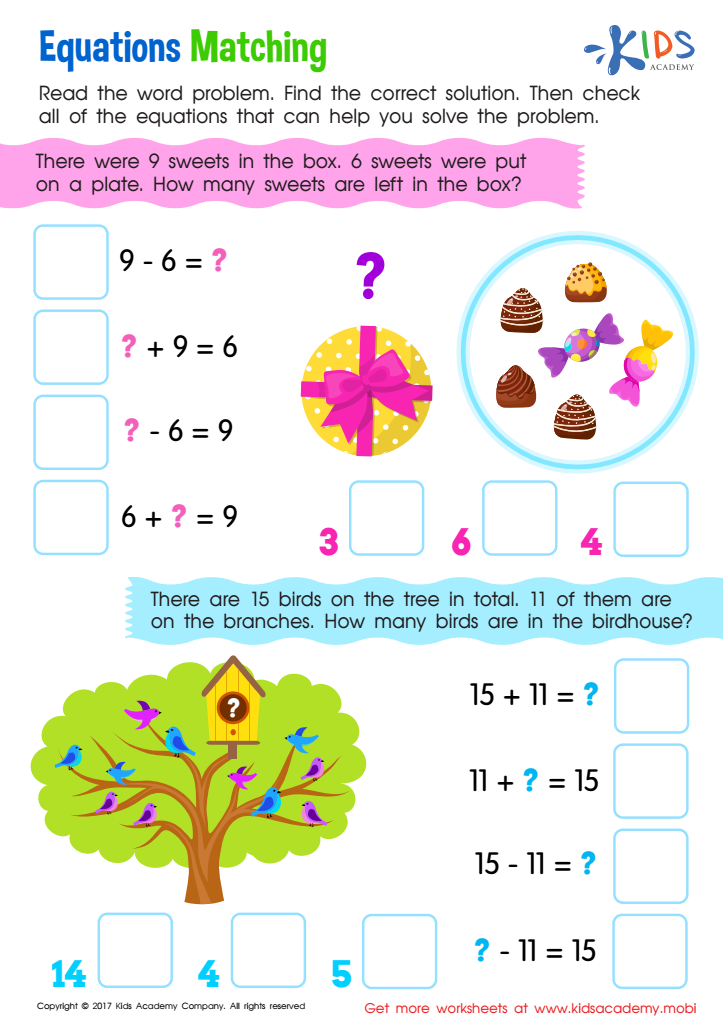
Equations Matching Word Problems Worksheet
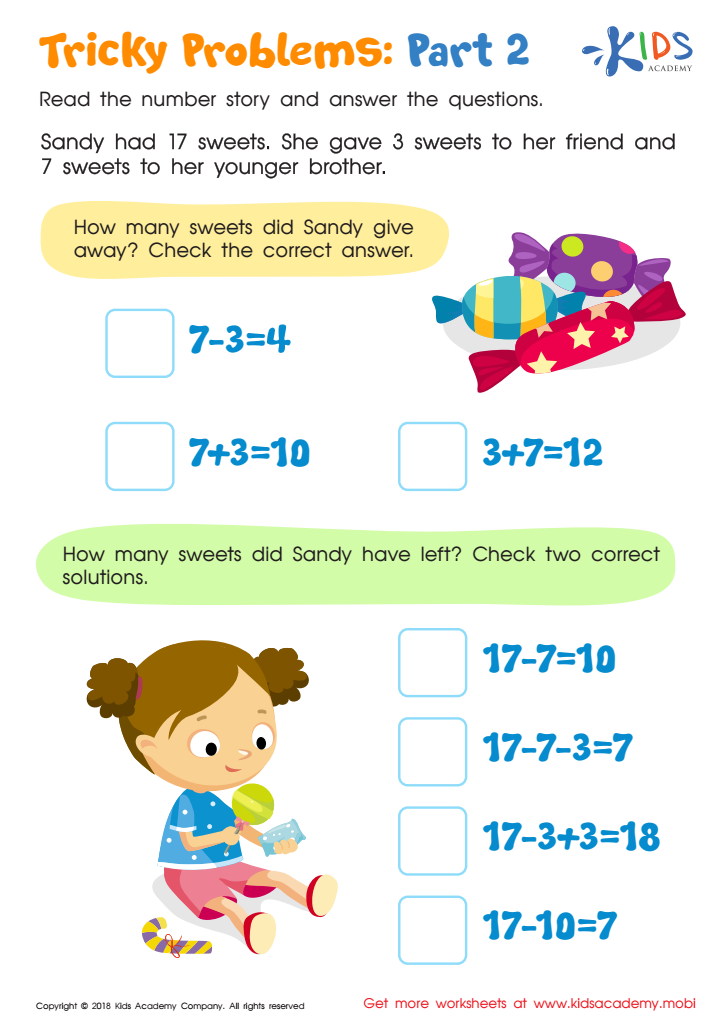
Tricky Problems Worksheet: Part 2
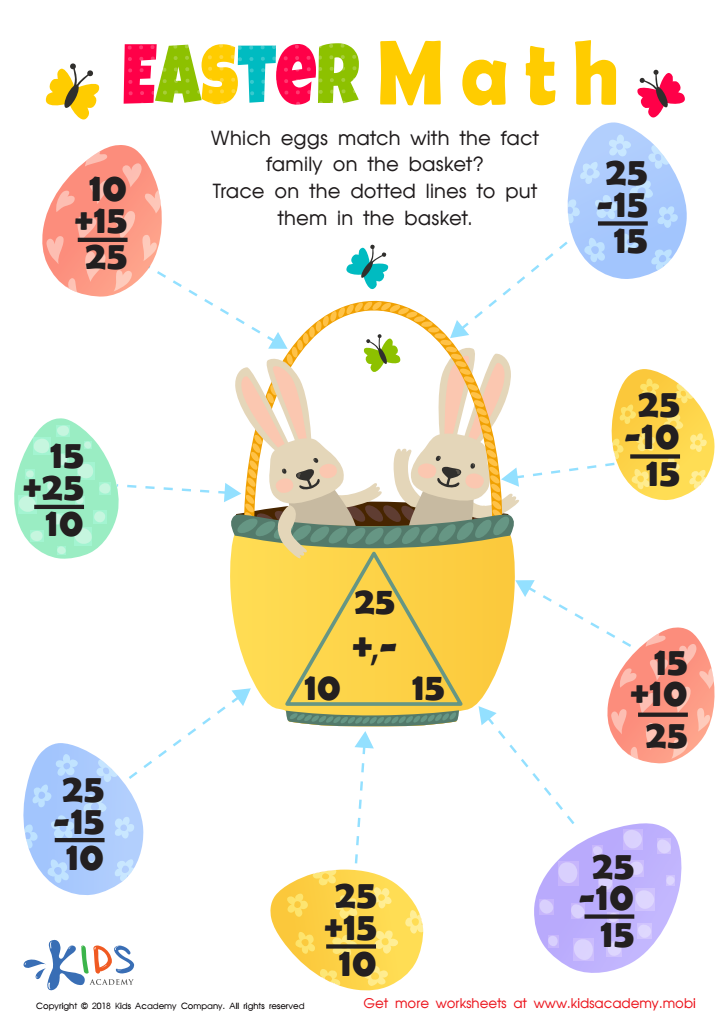
Fact Families: Easter Math Worksheet
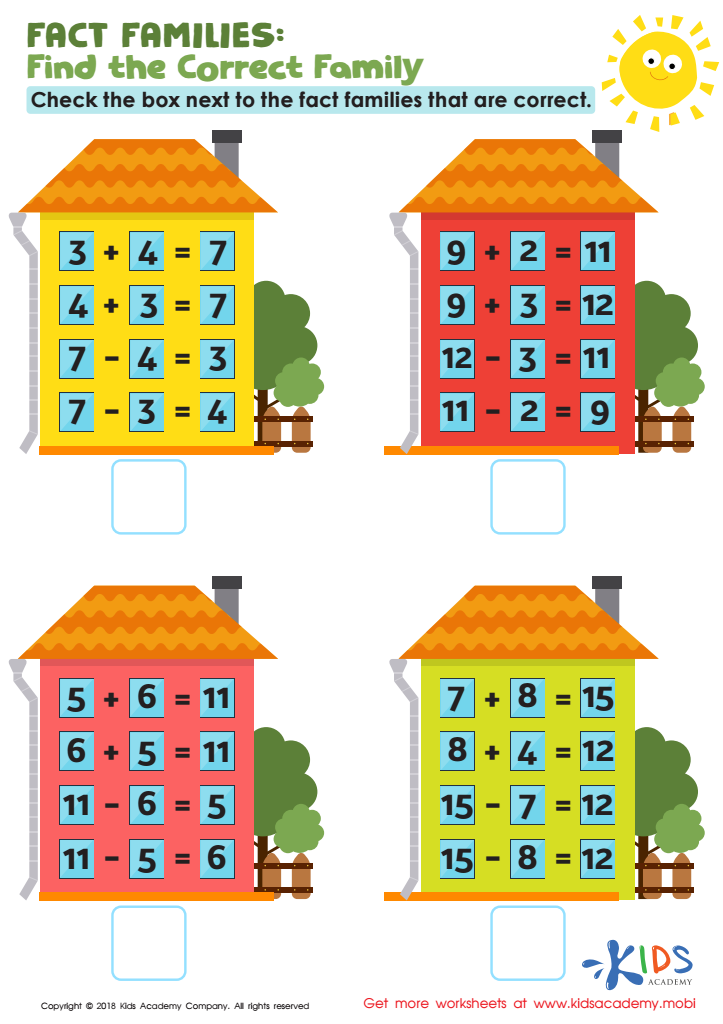
Fact Families: Find Correct Family Worksheet








Problem-solving skills, particularly in the context of addition facts, are critical for 7-year-olds as they lay the foundation for future mathematical understanding. At this age, children transition from concrete manipulation of numbers to more abstract reasoning. Mastering addition facts helps children build number sense, enabling them to tackle more complex math problems with confidence.
Moreover, problem-solving fosters critical thinking and analytical skills. When children learn to approach addition problems creatively, they develop resilience and adaptability, which are valuable life skills beyond mathematics. Parents and teachers should emphasize these skills to encourage a positive attitude towards learning and to enhance cognitive development.
Additionally, early mastery of addition facts aids in reducing math anxiety, as children gain confidence in their abilities. This early exposure creates a smooth transition into other subjects, such as science and engineering, where problem-solving is equally essential.
Involving parents in this learning process also enhances the child's motivation and engagement, creating a supportive environment for exploration and inquiry. Together, educators and parents can cultivate not only math proficiency but also a lifelong love for learning and a proactive mindset in children.








