Filters

59 filtered results

Clear all filters
Favorites
With answer key
Interactive

59 filtered results

Difficulty Level

Grade


Boost your child’s math skills with our Counting Practice Addition & Subtraction Worksheets designed for 7-year-olds! At Kids Academy, these engaging printable worksheets provide an excellent foundation for young learners to master basic arithmetic. Through fun and interactive activities, children will develop essential counting skills and enhance their understanding of addition and subtraction. Perfect for both classroom and at-home learning, these worksheets aim to make math enjoyable and boost confidence in problem-solving. Prepare your child for future math success with our expertly crafted resources, tailored specifically for their age and learning needs.
Check out this FREE Trial Lesson on Addition & Subtraction for age 7!

D

Favorites
With answer key
Interactive
  • 7
  • Counting practice
  • Addition & Subtraction
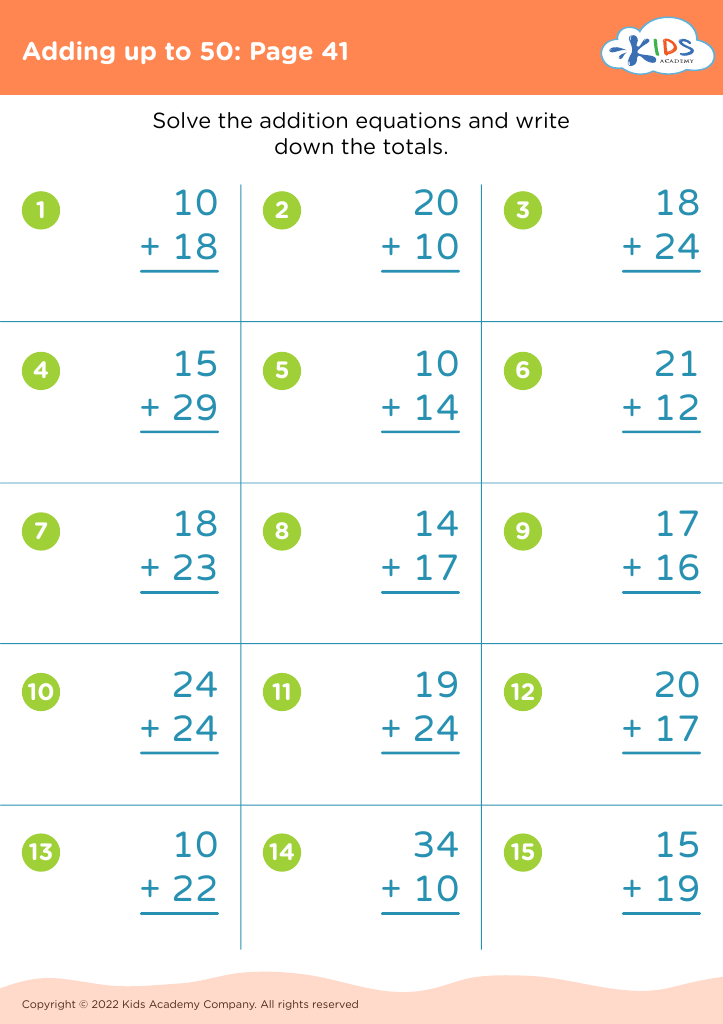
Adding up to 50: Page 41

Adding up to 50: Page 41

Adding up to 50: Page 41
Worksheet
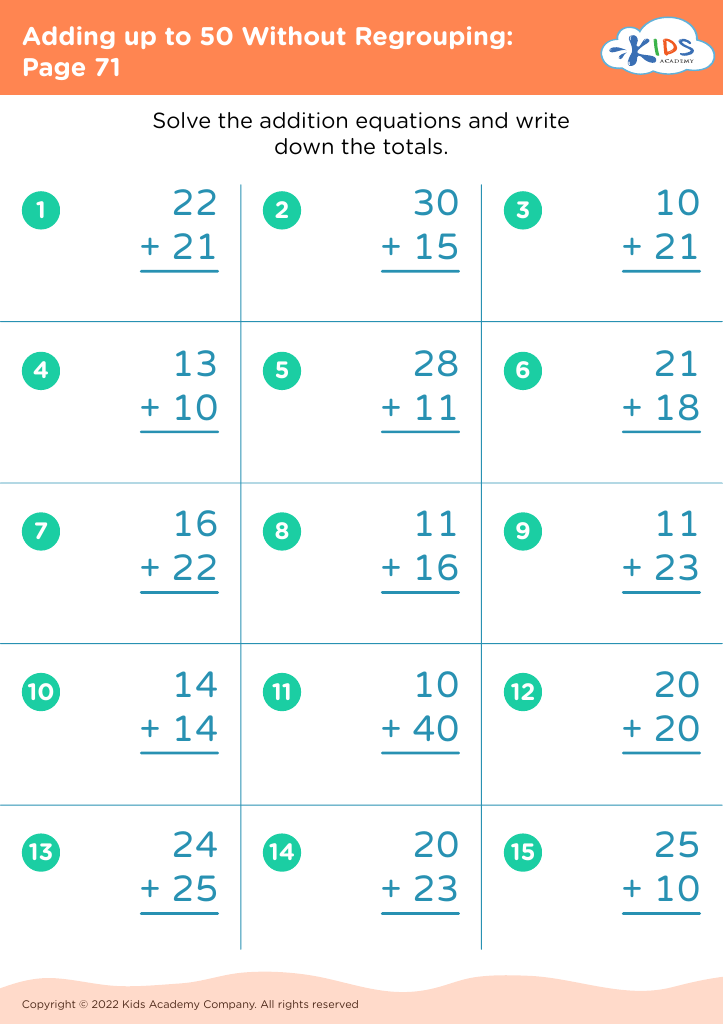
Adding up to 50 Without Regrouping: Page 71
Worksheet
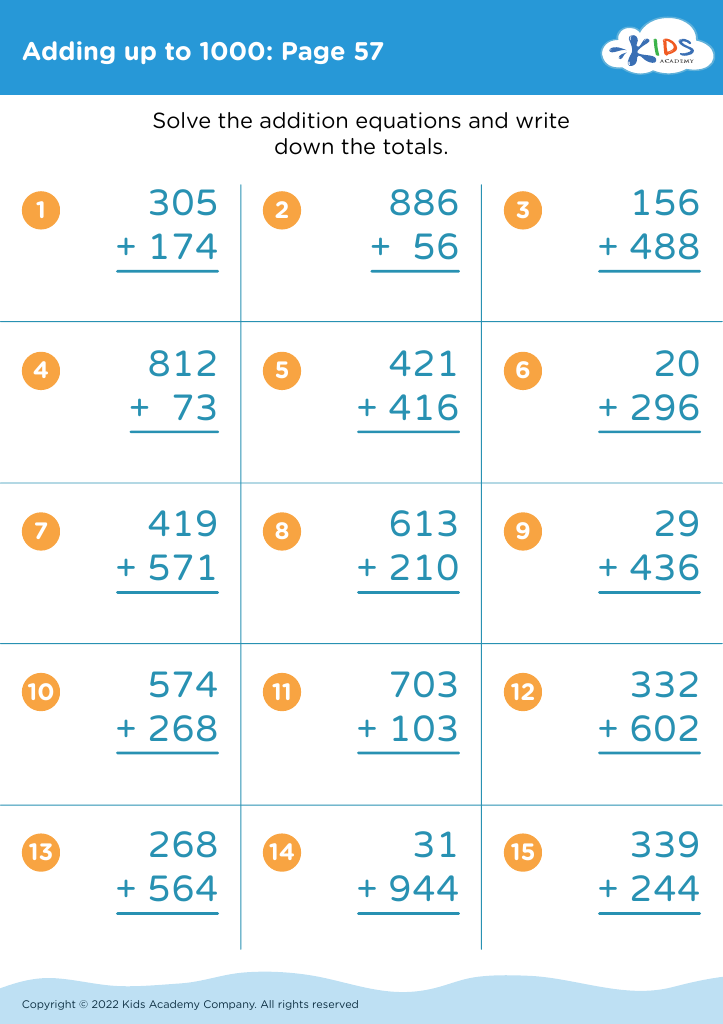
Adding up to 1000: Page 57

Adding up to 1000: Page 57

Adding up to 1000: Page 57
Worksheet
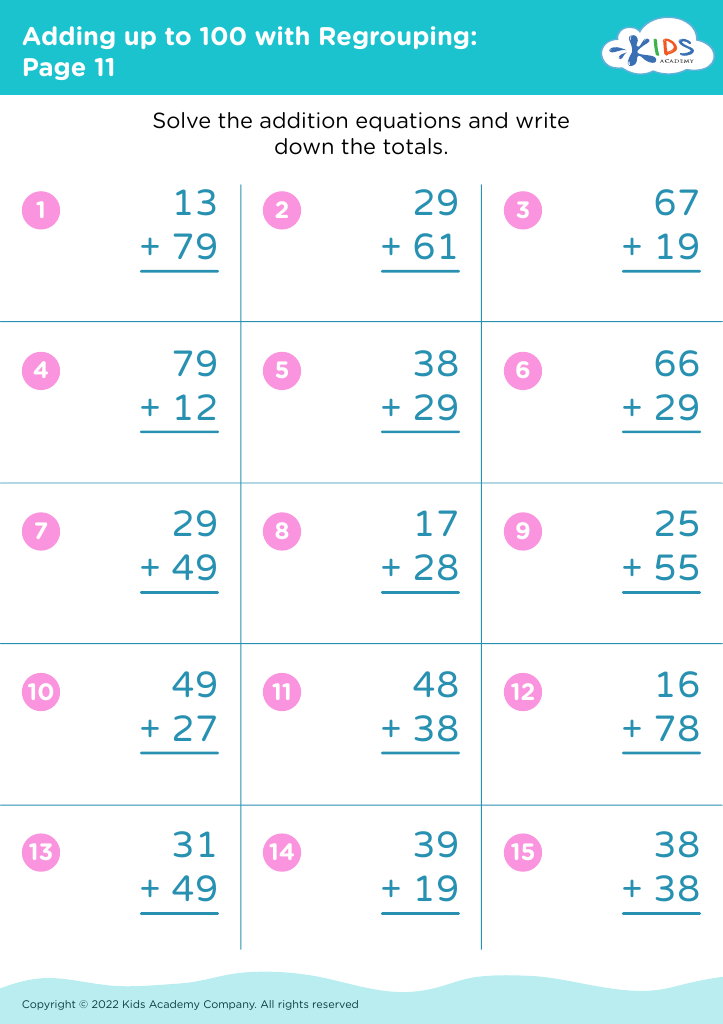
Adding up to 100 with Regrouping: Page 11
Worksheet
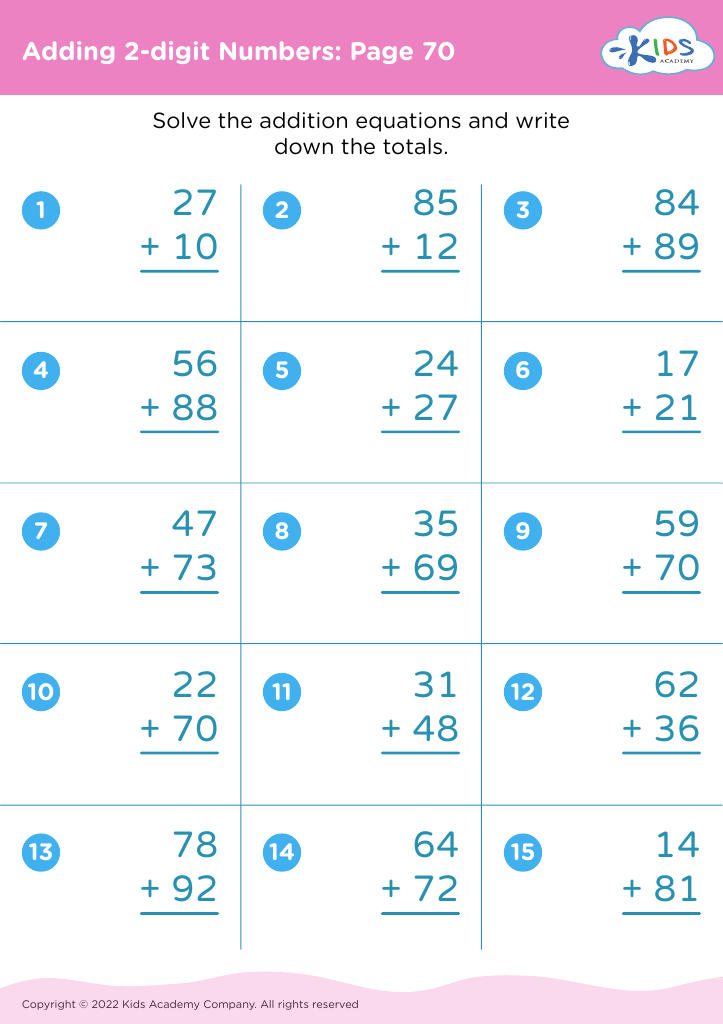
Adding 2-digit Numbers: Page 70

Adding 2-digit Numbers: Page 70

Adding 2-digit Numbers: Page 70
Worksheet
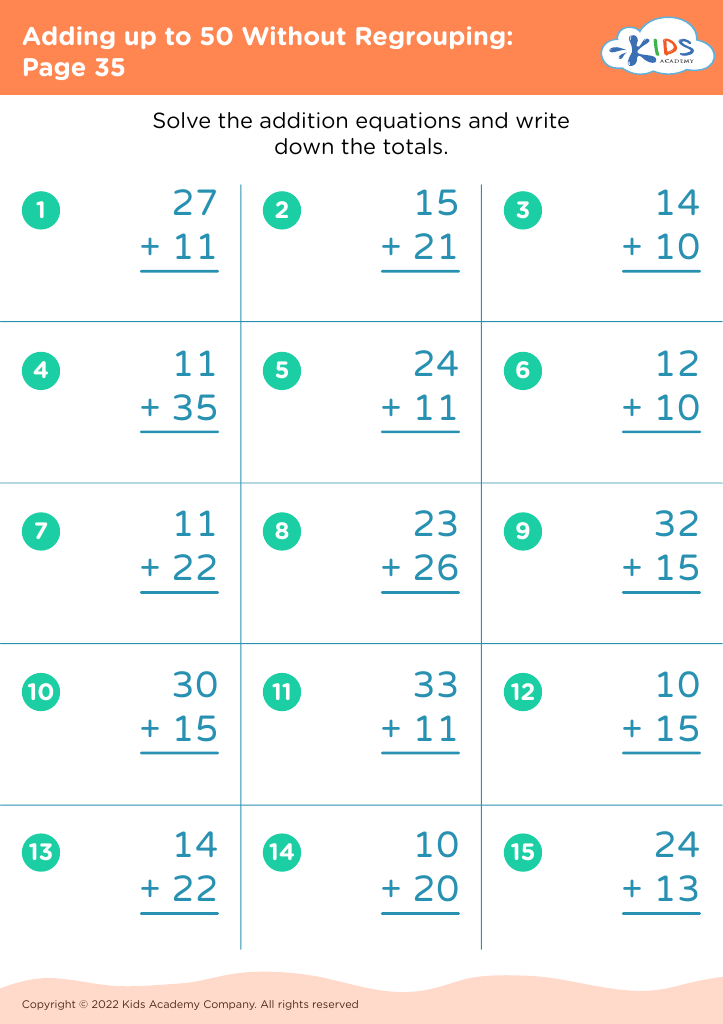
Adding up to 50 Without Regrouping: Page 35
Worksheet
Simple Addition PDF Worksheet

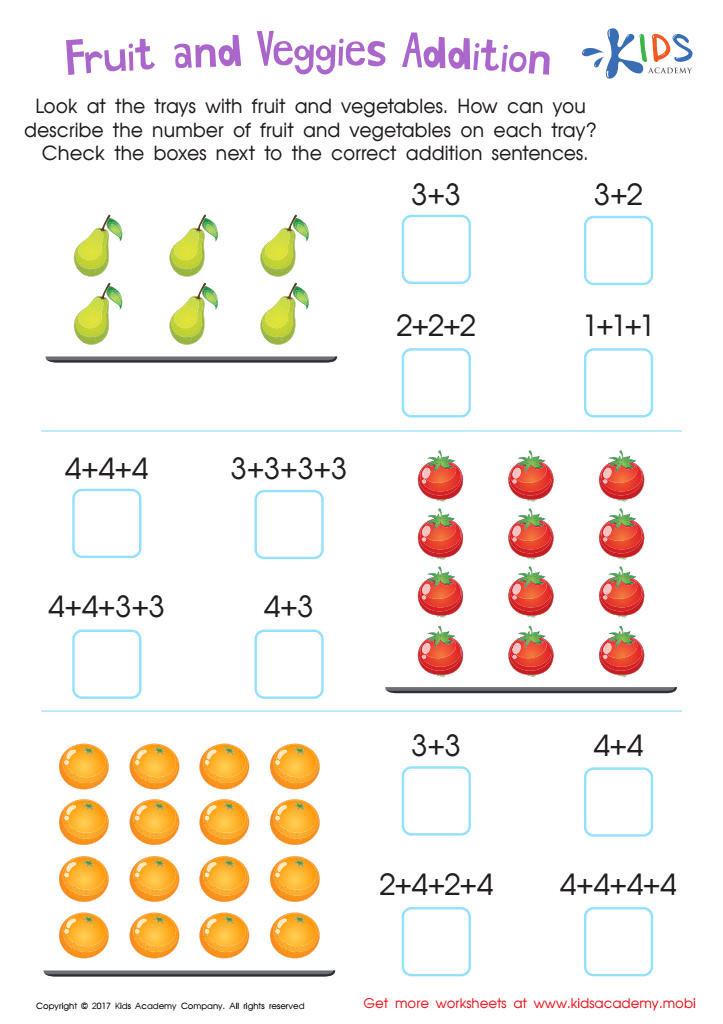
Fruit and Veggies Worksheet

It promotes problem-solving and analytical skills as kids match pictures to correct addition sentences. Help your child go beyond simple addition with this PDF worksheet!
Fruit and Veggies Worksheet
Worksheet
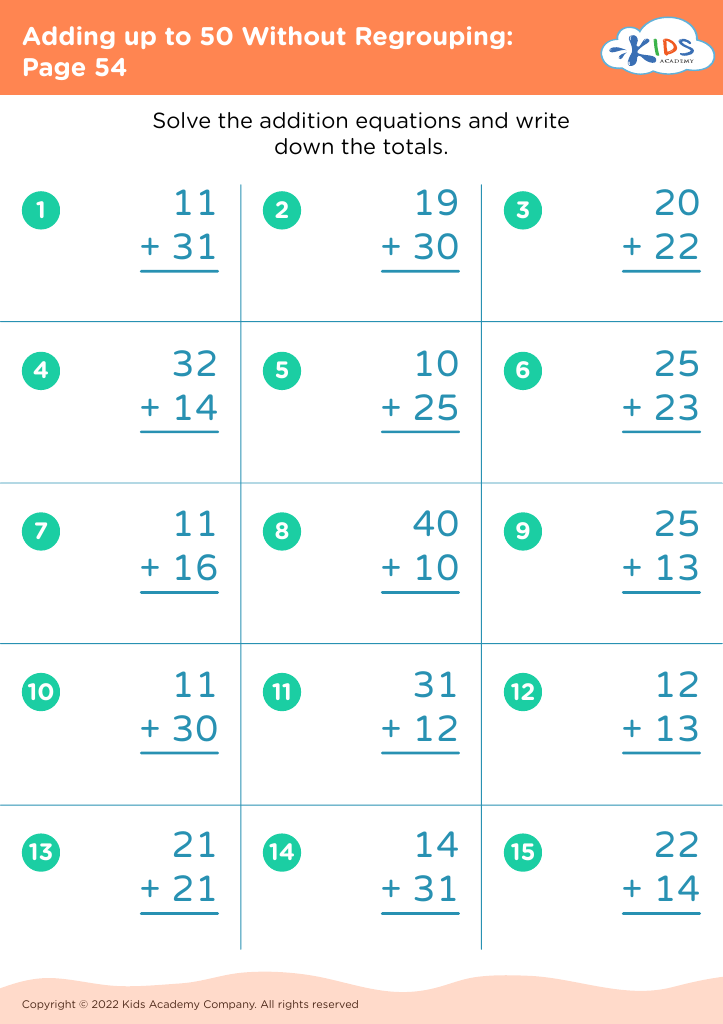
Adding up to 50 Without Regrouping: Page 54
Worksheet
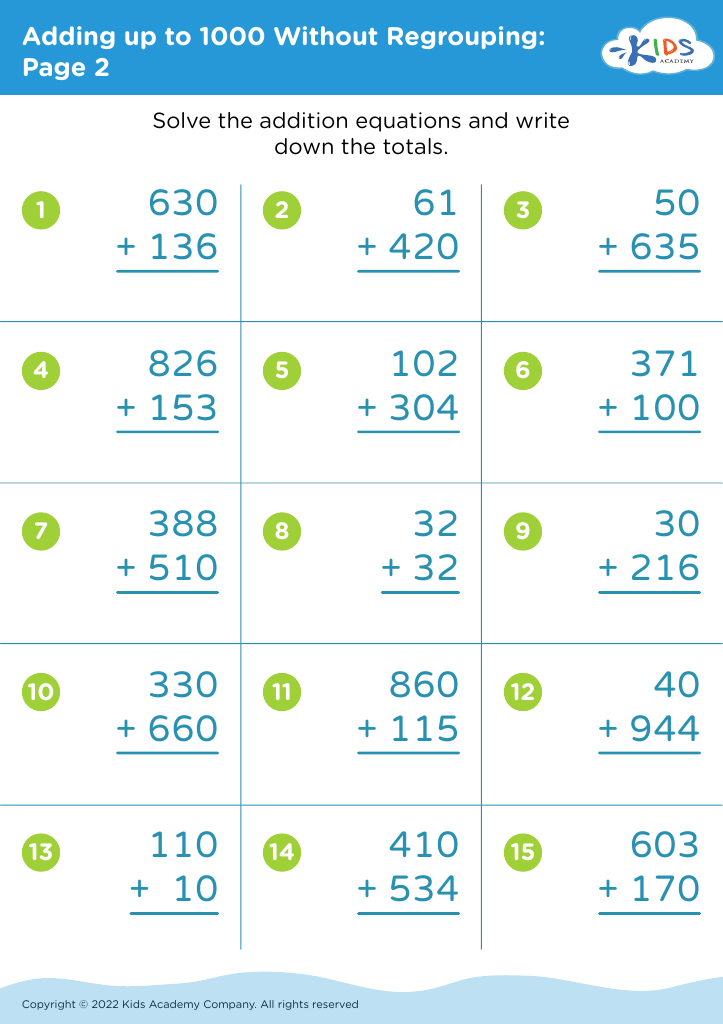
Adding up to 1000 Without Regrouping: Page 2
Worksheet
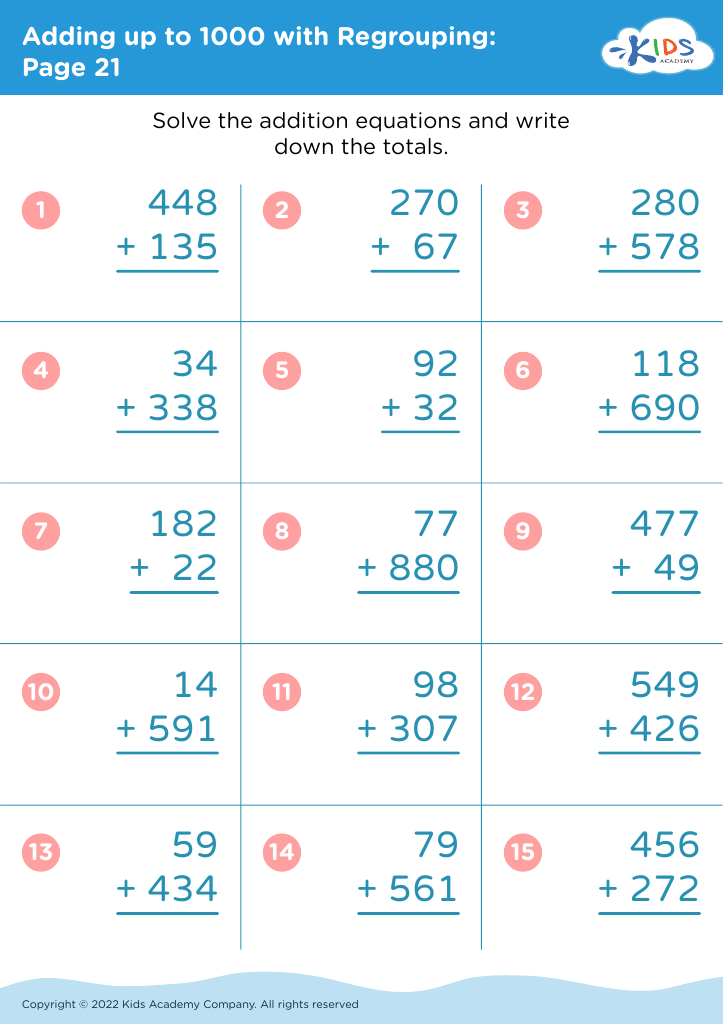
Adding up to 1000 with Regrouping: Page 21
Worksheet
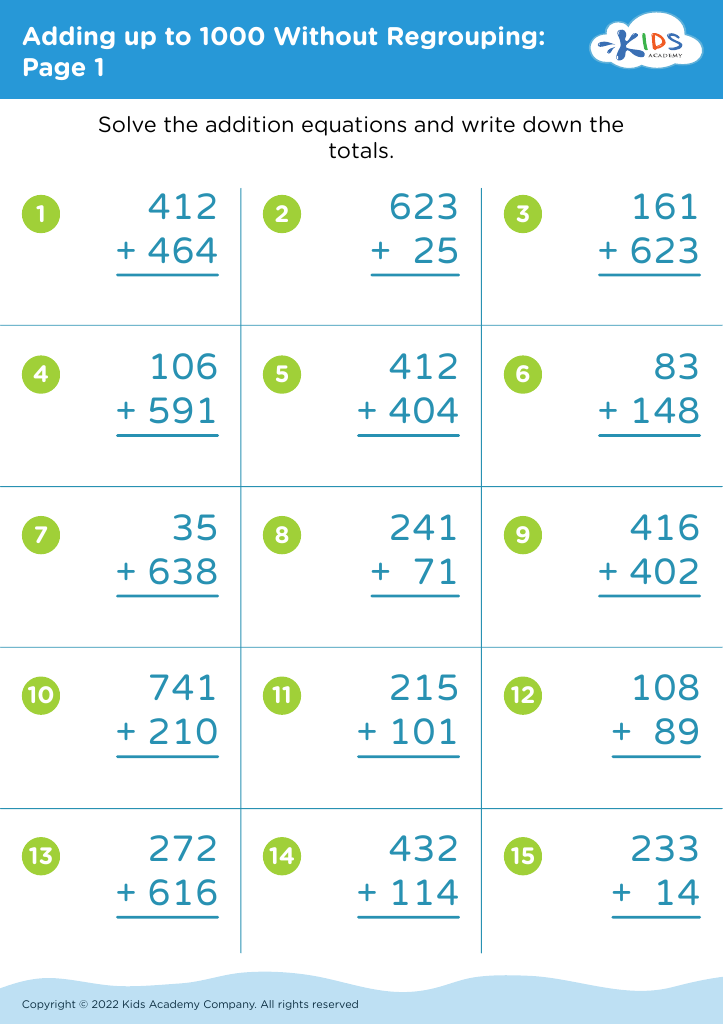
Adding up to 1000 Without Regrouping: Page 1
Worksheet
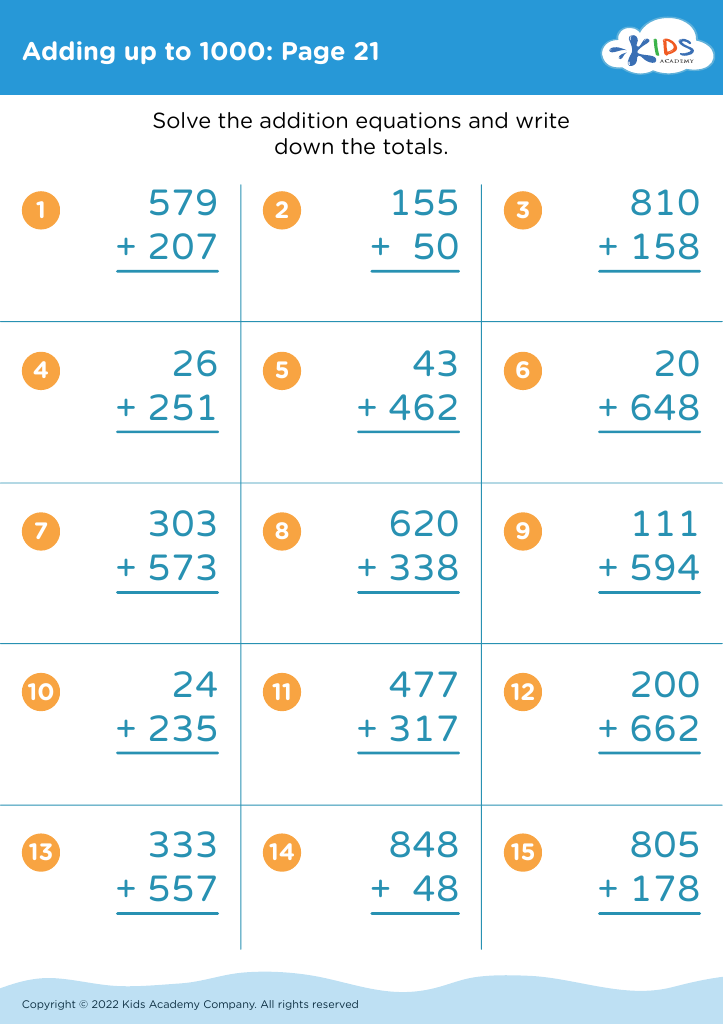
Adding up to 1000: Page 21

Adding up to 1000: Page 21

Adding up to 1000: Page 21
Worksheet
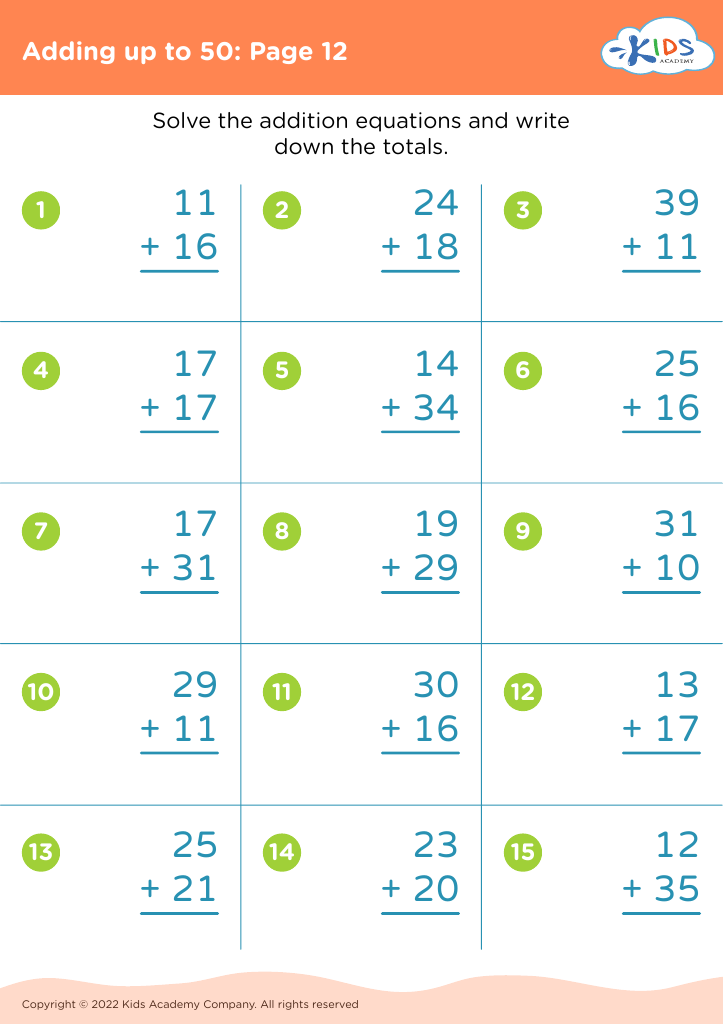
Adding up to 50: Page 12

Adding up to 50: Page 12

Adding up to 50: Page 12
Worksheet
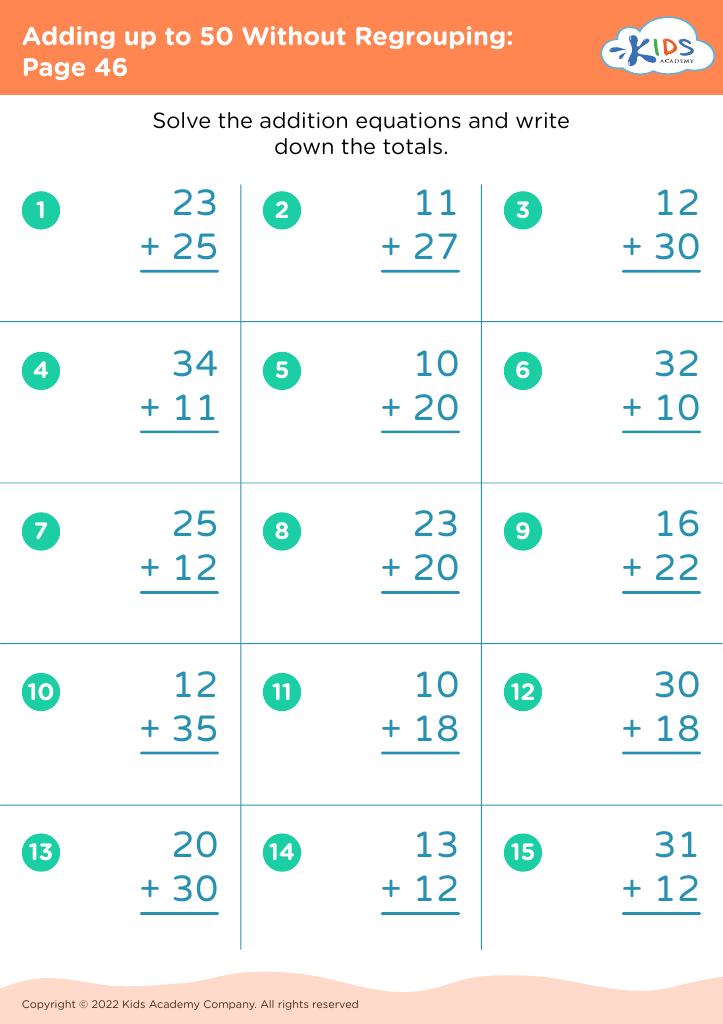
Adding up to 50 Without Regrouping: Page 46
Worksheet
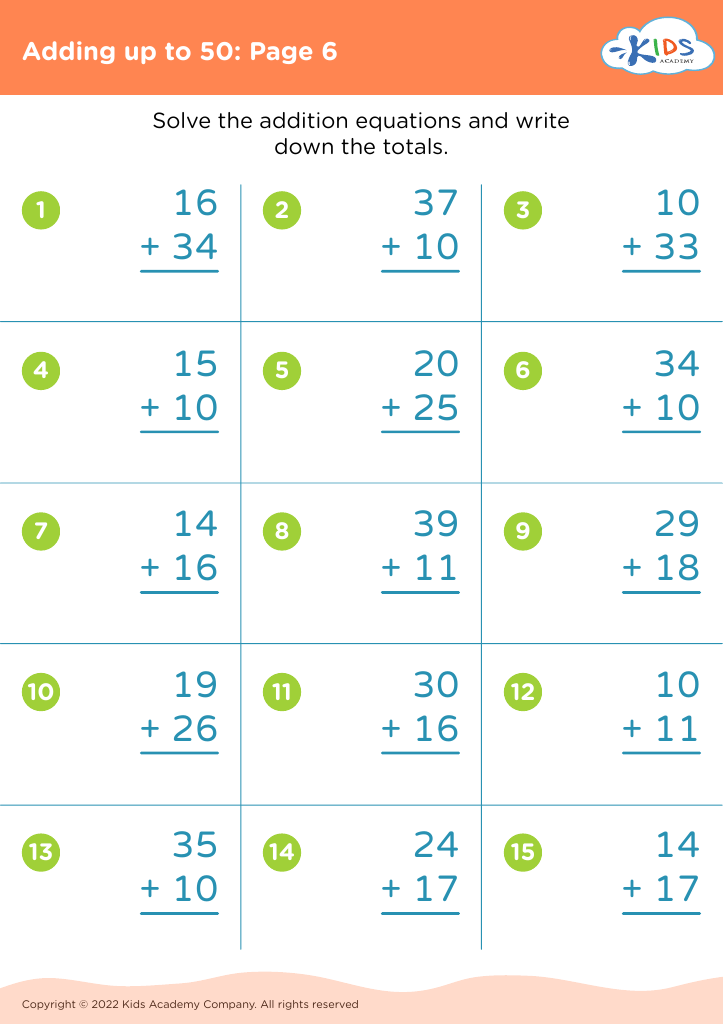
Adding up to 50: Page 6

Adding up to 50: Page 6

Adding up to 50: Page 6
Worksheet
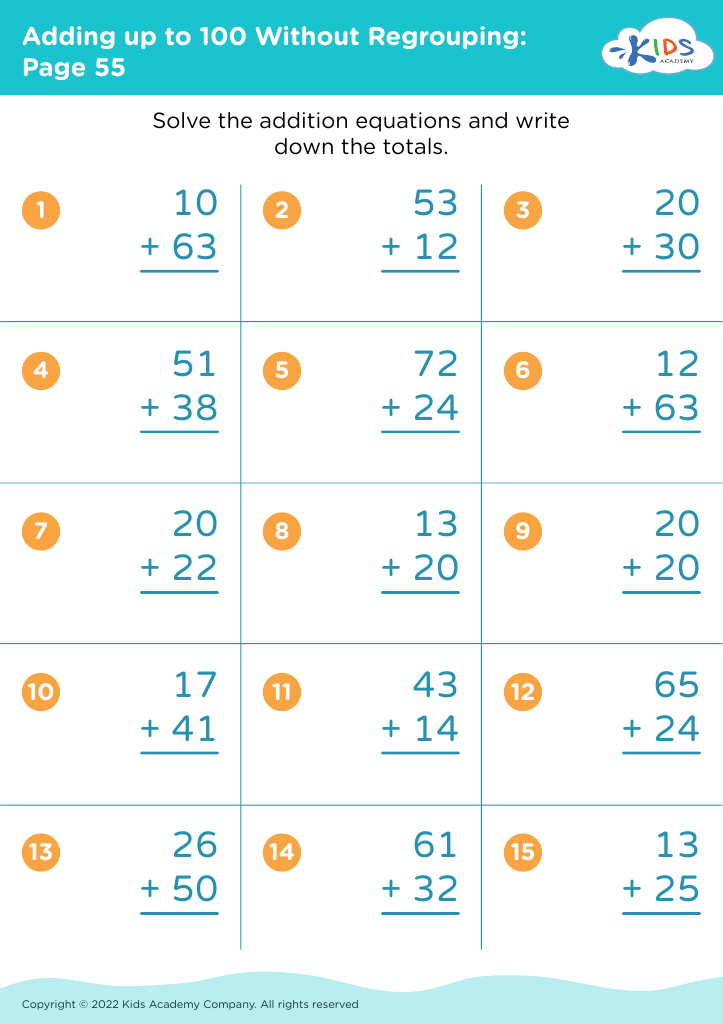
Adding up to 100 Without Regrouping: Page 55
Worksheet
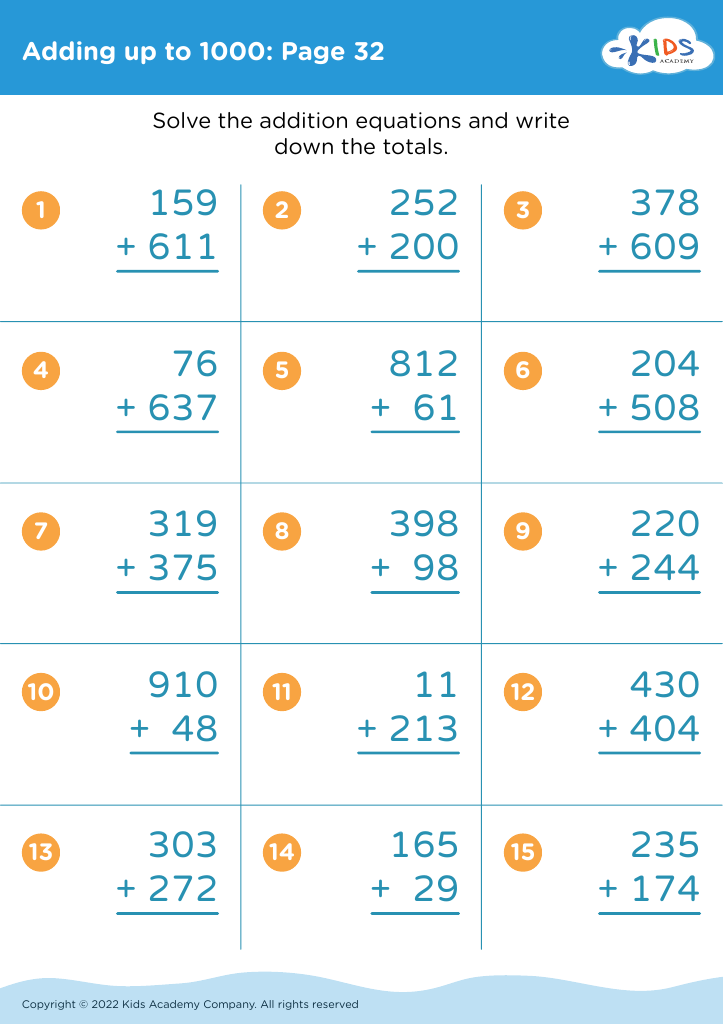
Adding up to 1000: Page 32

Adding up to 1000: Page 32

Adding up to 1000: Page 32
Worksheet
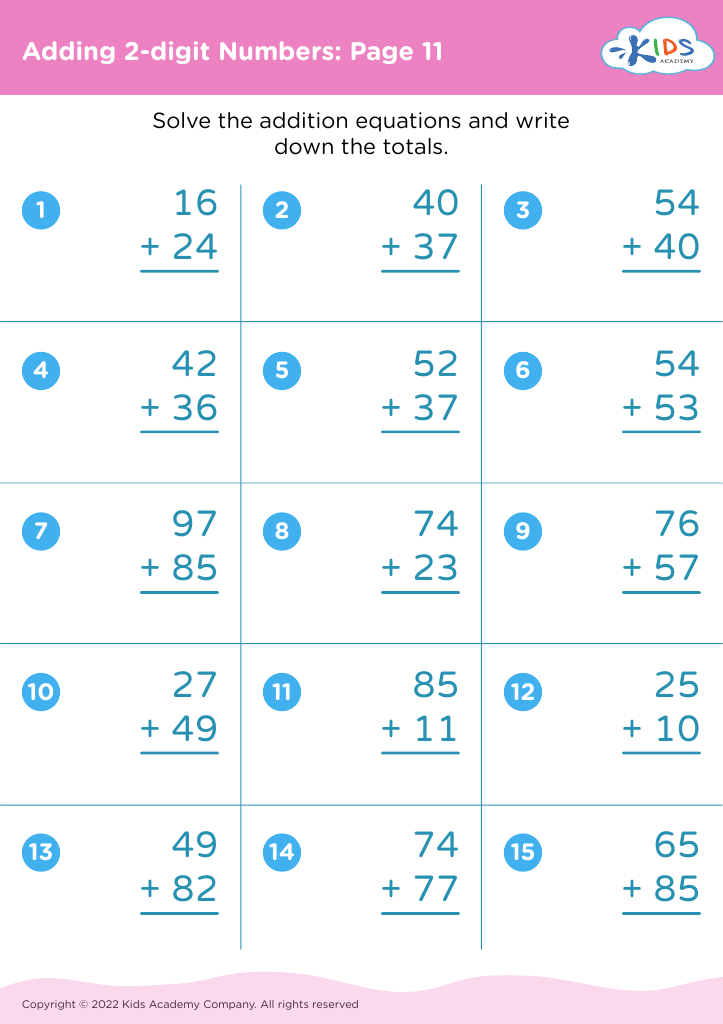
Adding 2-digit Numbers: Page 11

Adding 2-digit Numbers: Page 11

Adding 2-digit Numbers: Page 11
Worksheet
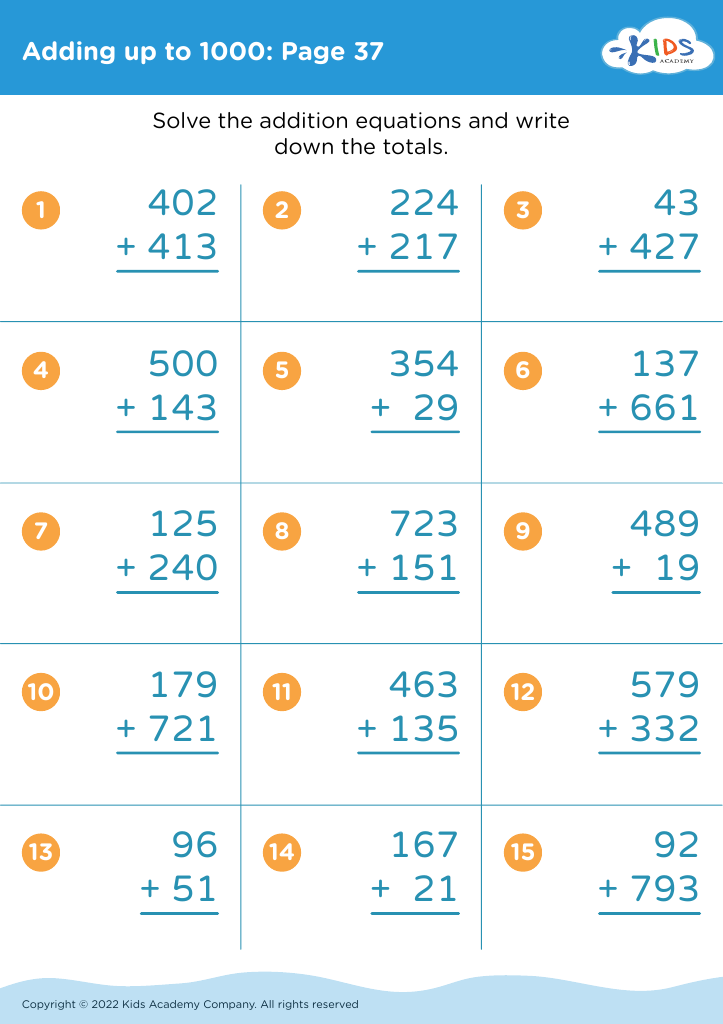
Adding up to 1000: Page 37

Adding up to 1000: Page 37

Adding up to 1000: Page 37
Worksheet
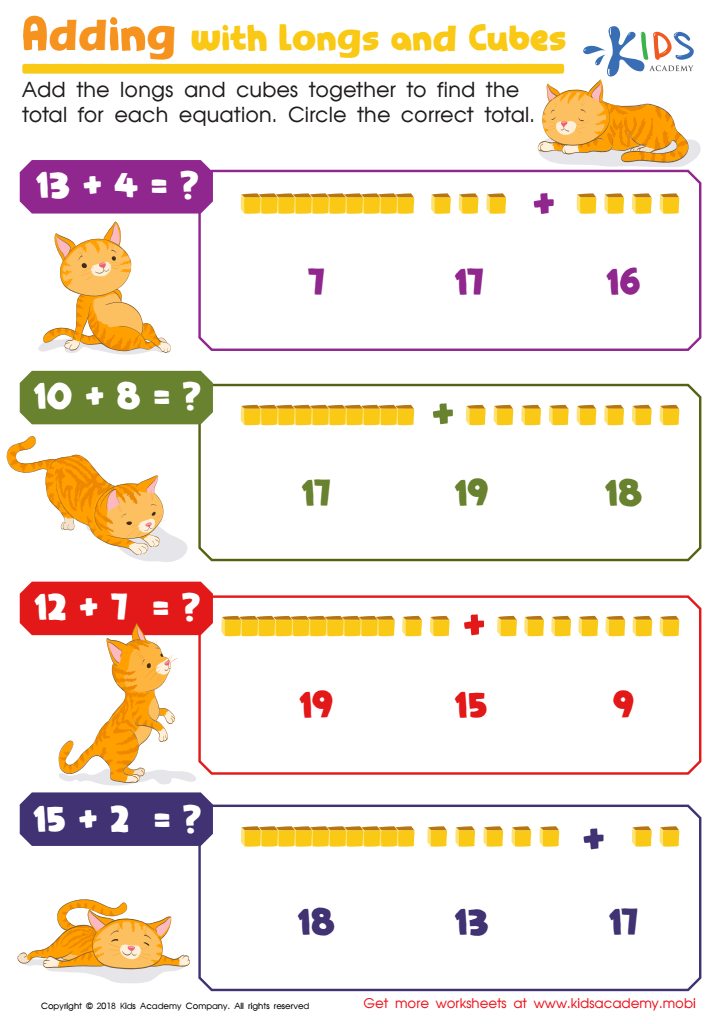
Adding With Longs and Cubes Worksheet

Adding With Longs and Cubes Worksheet

Math might not be your child's favorite, but they must master it to advance. If they're having difficulties or don't like it, use this worksheet to make it easier. Have them add longs and cubes together to find the total for each question, then circle the correct answer. This exercise can help make math experiences better.
Adding With Longs and Cubes Worksheet
Worksheet
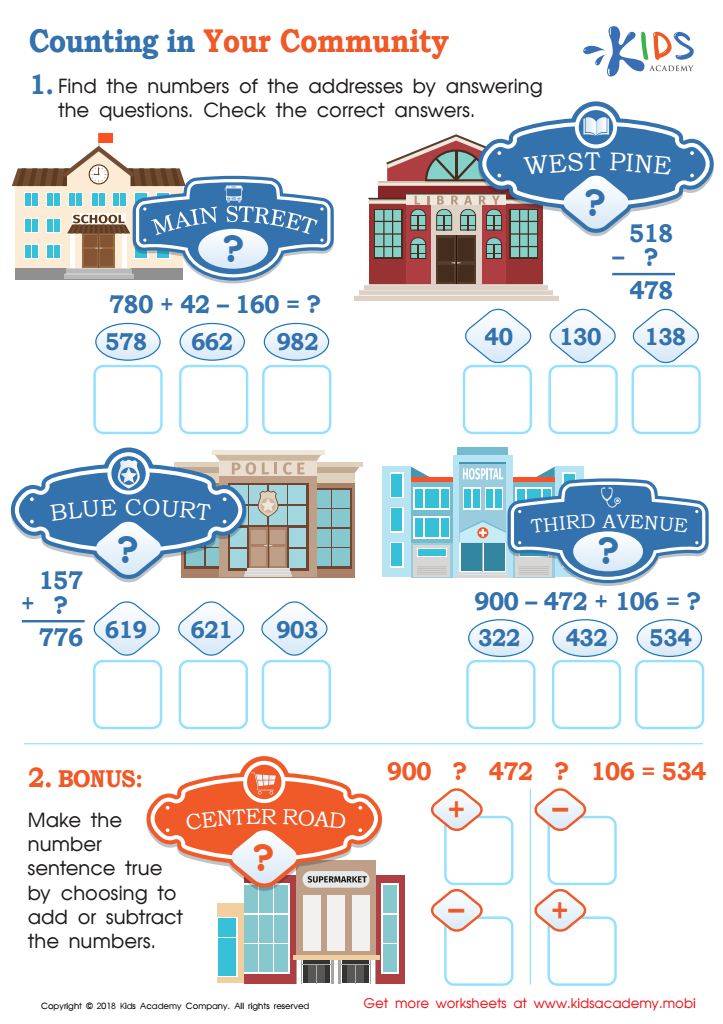
Counting in Your Community Worksheet
Counting in Your Community Worksheet
Introduce your kids to the idea of a community, where different people and buildings co-exist, each playing their part for the community's progress. Ask them to name the buildings they see in their community. Then work through this worksheet to find the numbers of the addresses by answering the questions. Check the answers once they've solved the equations.
Counting in Your Community Worksheet

Worksheet
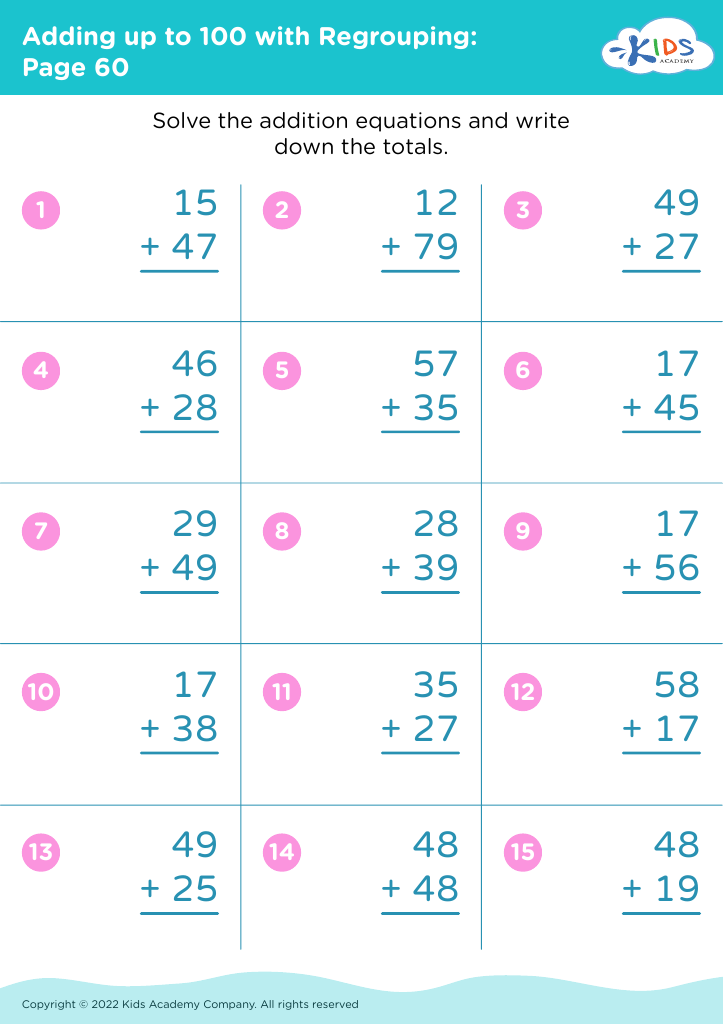
Adding up to 100 with Regrouping: Page 60
Worksheet
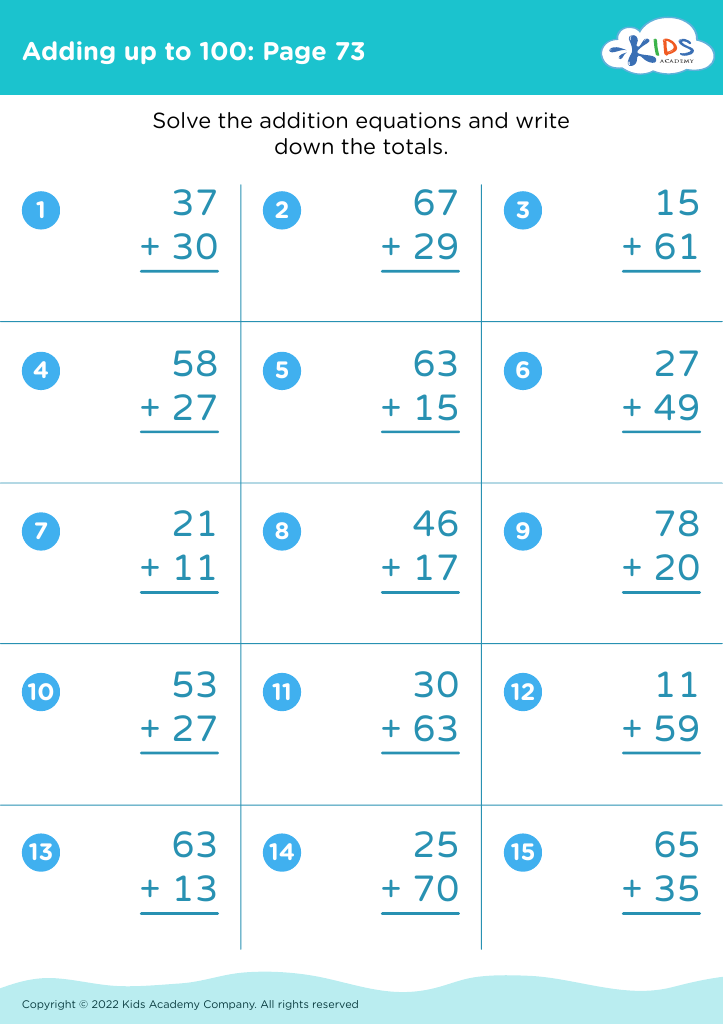
Adding up to 100: Page 73

Adding up to 100: Page 73

Adding up to 100: Page 73
Worksheet
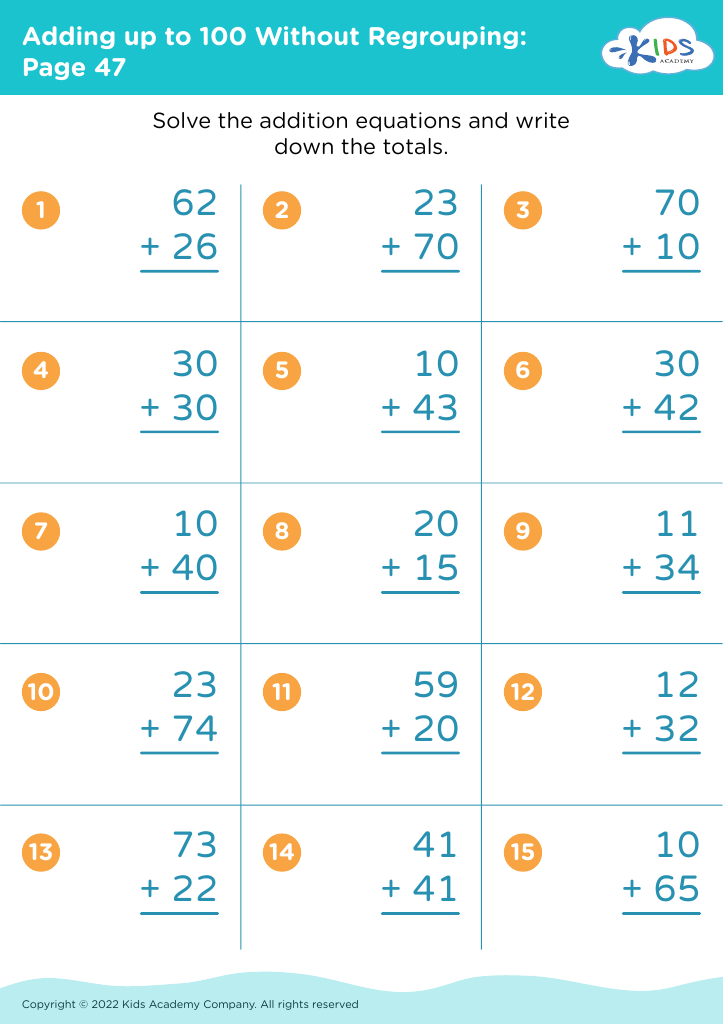
Adding up to 100 Without Regrouping: Page 47
Worksheet


Counting practice, including addition and subtraction, is crucial for 7-year-olds as it lays the foundation for their future mathematical understanding and success. At this age, children are developing cognitive skills that are essential for grasping basic arithmetic concepts. Engaging in counting practice helps solidify number recognition, sequence, and the relationship between numbers, which are vital for more complex mathematical operations.

Parents and teachers play a pivotal role in fostering this growth as they can create supportive learning environments that encourage curiosity and enjoyment in mathematics. Early mastery in addition and subtraction not only builds confidence but also enhances problem-solving skills and logical thinking. These skills transcend mathematics, benefiting children in other subjects and daily life situations.

Moreover, consistent practice in counting and basic arithmetic helps children improve their memory and attention to detail. It also sets the stage for developing financial literacy, understanding time, measurement, and data interpretation. A strong mathematical foundation ensures children won't struggle with more advanced concepts later on, which can affect their academic self-esteem and performance.

In summary, prioritizing counting practice in early education is essential. It equips 7-year-olds with critical arithmetic skills, promotes overall cognitive development, and sets them on a path to academic success and confidence.