Filters

40 filtered results

Clear all filters
Favorites
With answer key
Interactive

40 filtered results

Difficulty Level

Grade


Check out this FREE Trial Lesson on Addition & Subtraction for age 7!

X

Favorites
With answer key
Interactive
  • 7
  • Fine Motor Skills
  • Addition & Subtraction
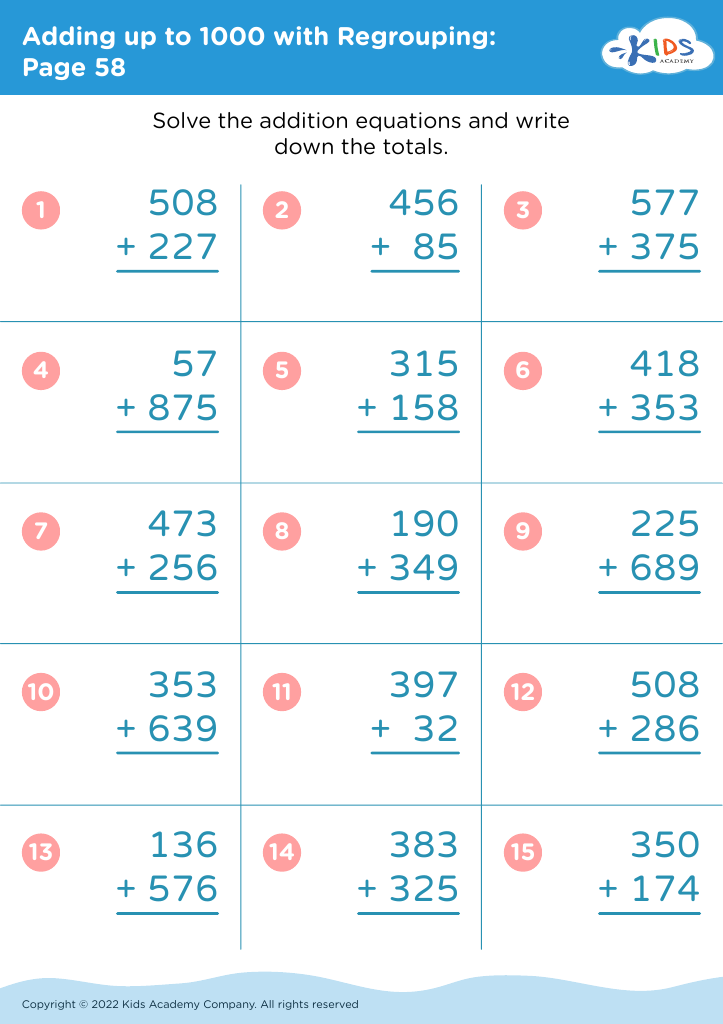
Adding up to 1000 with Regrouping: Page 58
Worksheet
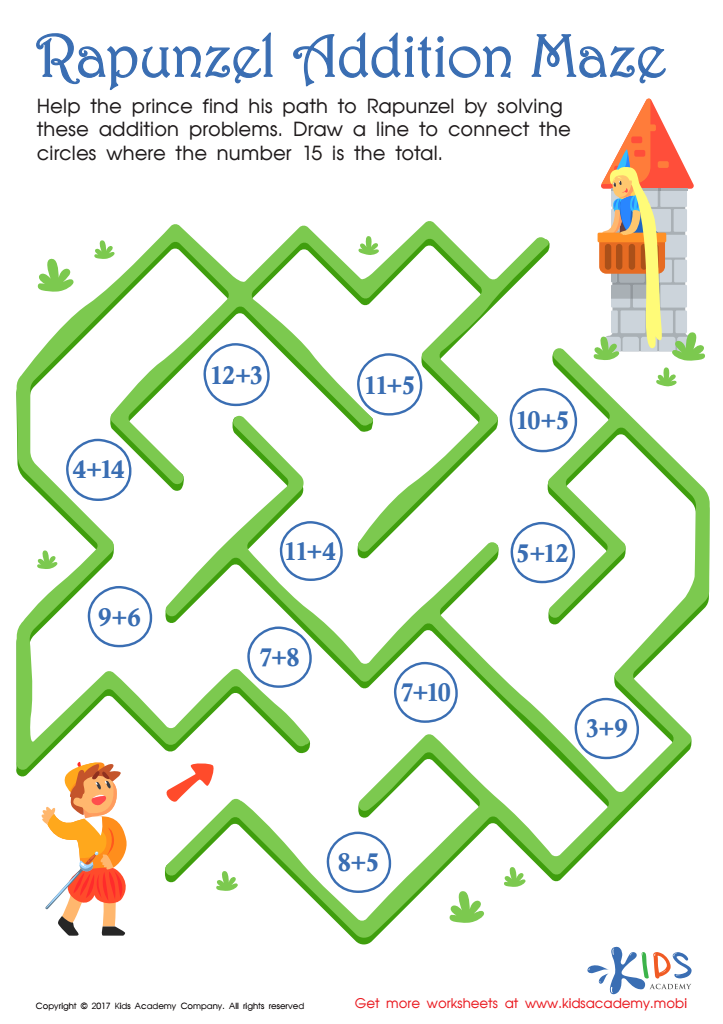
Rapunzel Addition Maze

Rapunzel Addition Maze Worksheet

Motivate your child to practice math with a fun and meaningful Rapunzel addition maze! They'll learn single and double digit addition, problem solving, and gain confidence as they complete the maze and help the prince reach Rapunzel. They'll feel proud of their accomplishment when they finish!
Rapunzel Addition Maze Worksheet
Worksheet
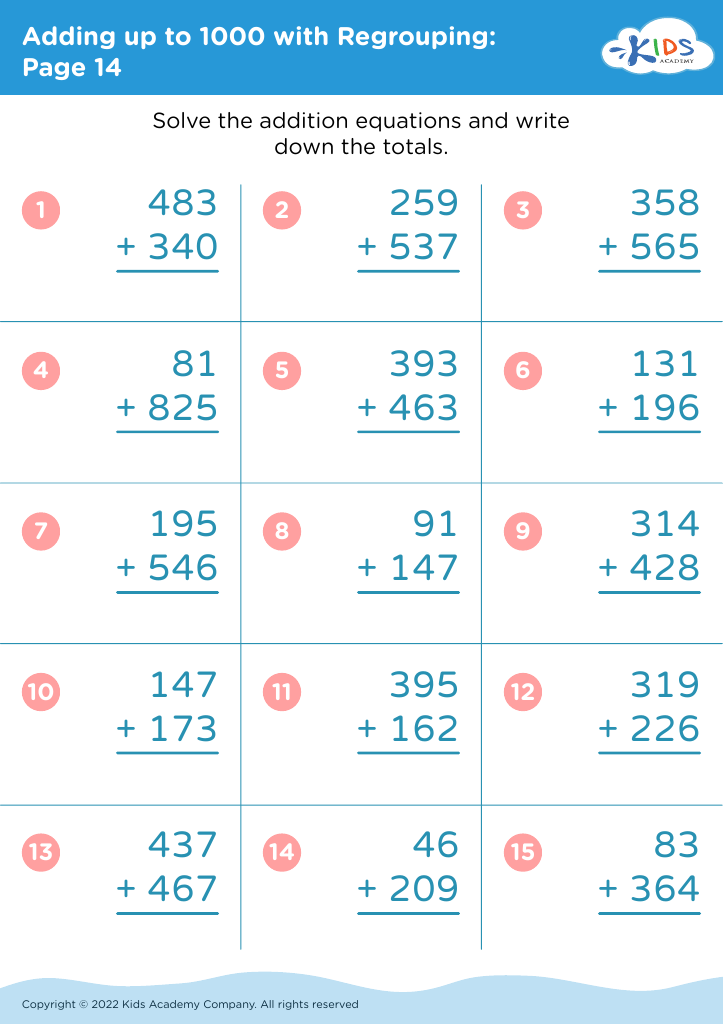
Adding up to 1000 with Regrouping: Page 14
Worksheet
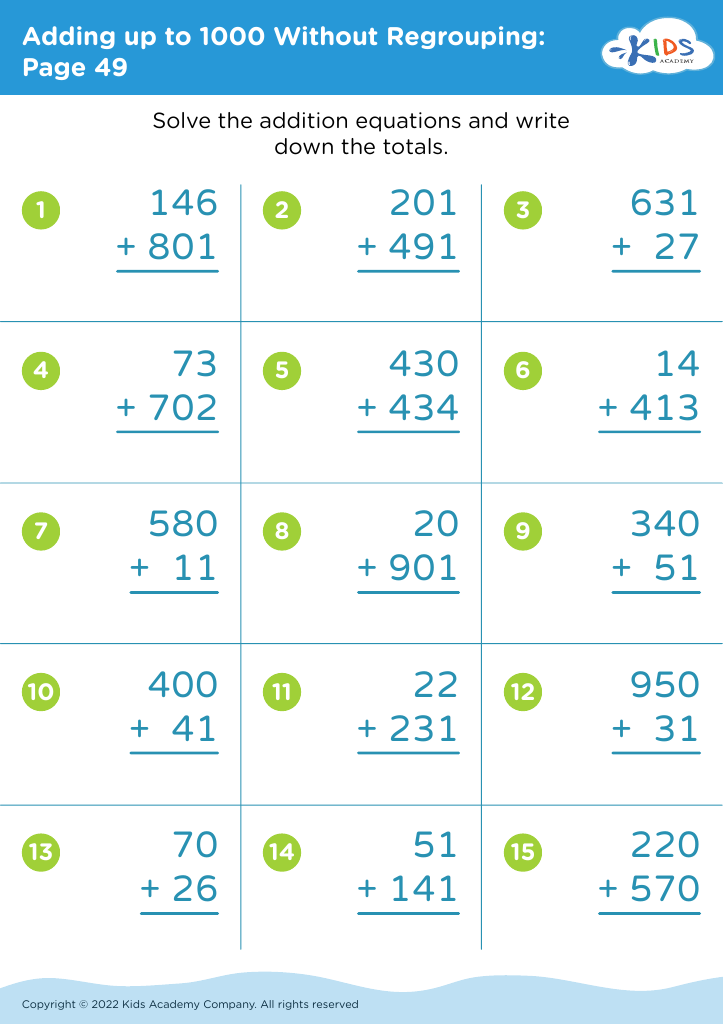
Adding up to 1000 Without Regrouping: Page 49
Worksheet
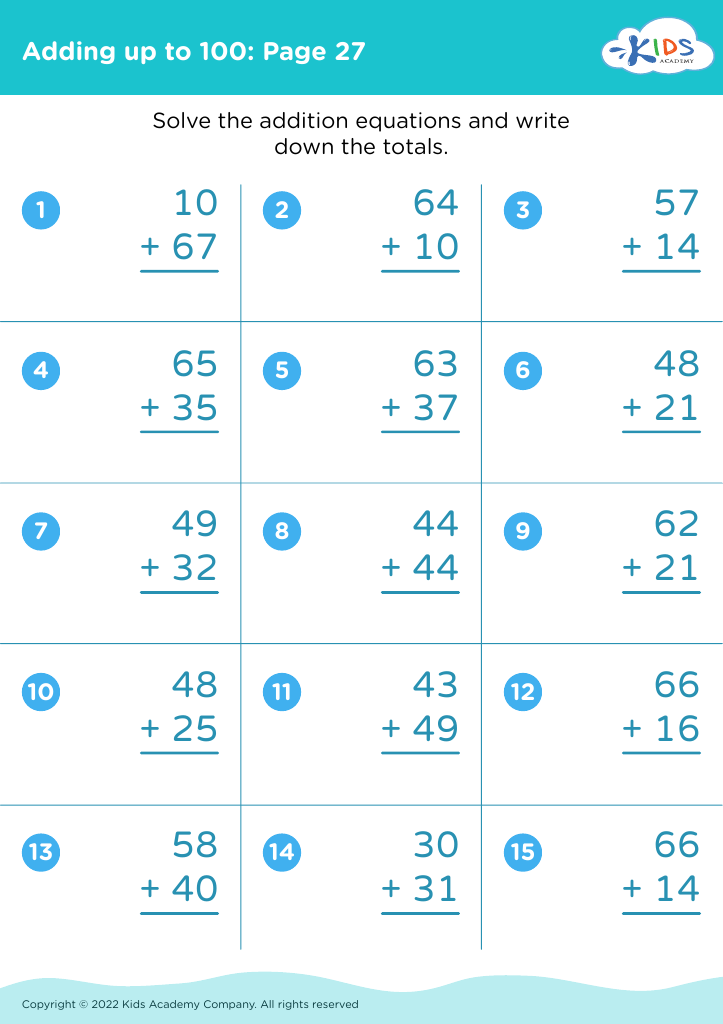
Adding up to 100: Page 27

Adding up to 100: Page 27

Adding up to 100: Page 27
Worksheet
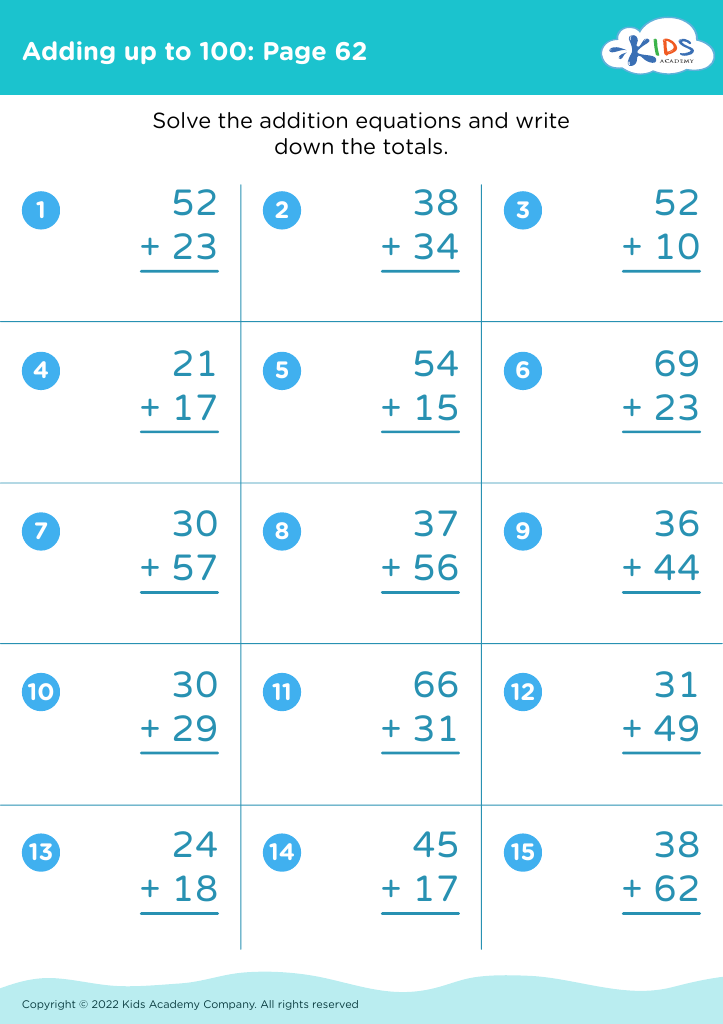
Adding up to 100: Page 62

Adding up to 100: Page 62

Adding up to 100: Page 62
Worksheet
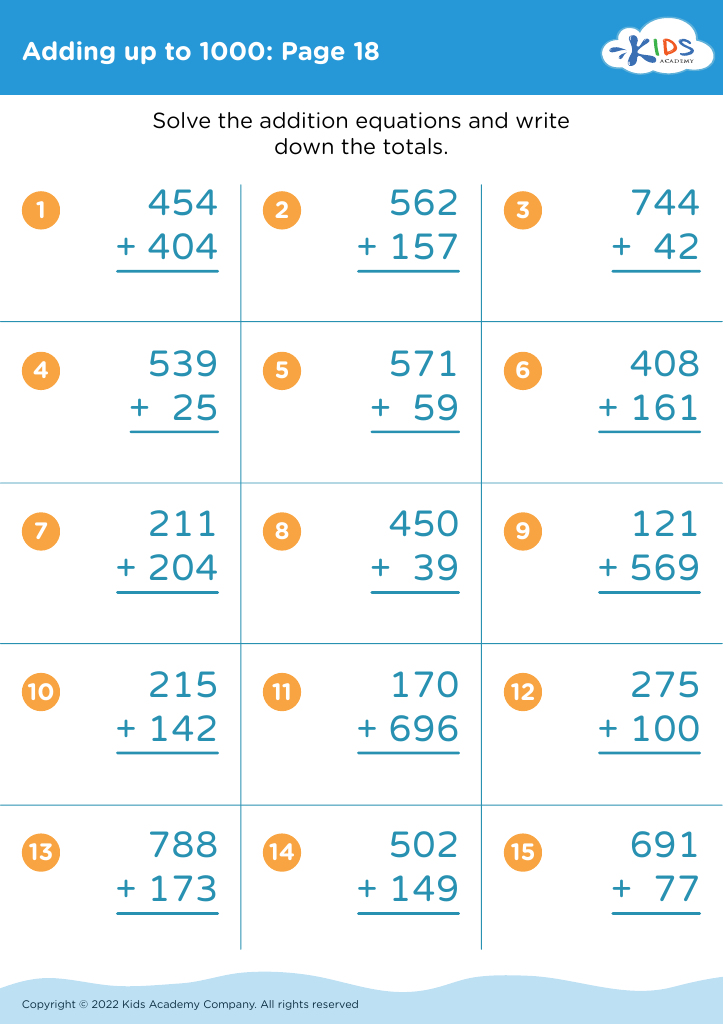
Adding up to 1000: Page 18

Adding up to 1000: Page 18

Adding up to 1000: Page 18
Worksheet
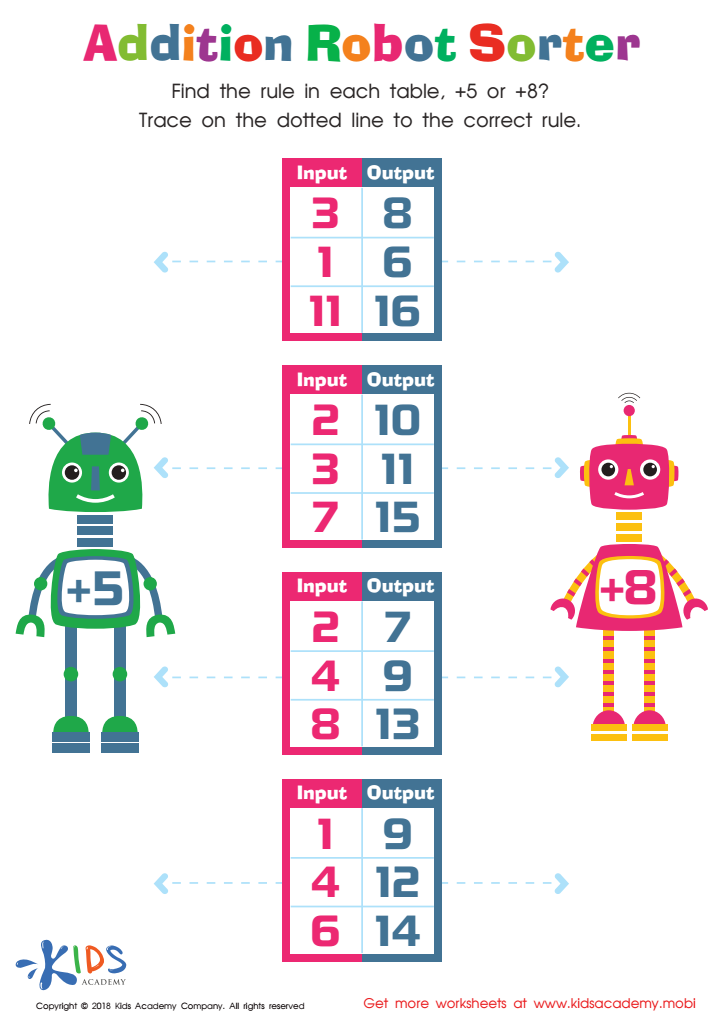
Addition Robot Sorter Worksheet
Addition Robot Sorter Worksheet
This worksheet helps your child understand addition. Have them trace the dotted lines to the correct equations: +8 and +5. It's a great way to aid their mathematical comprehension and get them comfortable with adding equations.
Addition Robot Sorter Worksheet
Worksheet
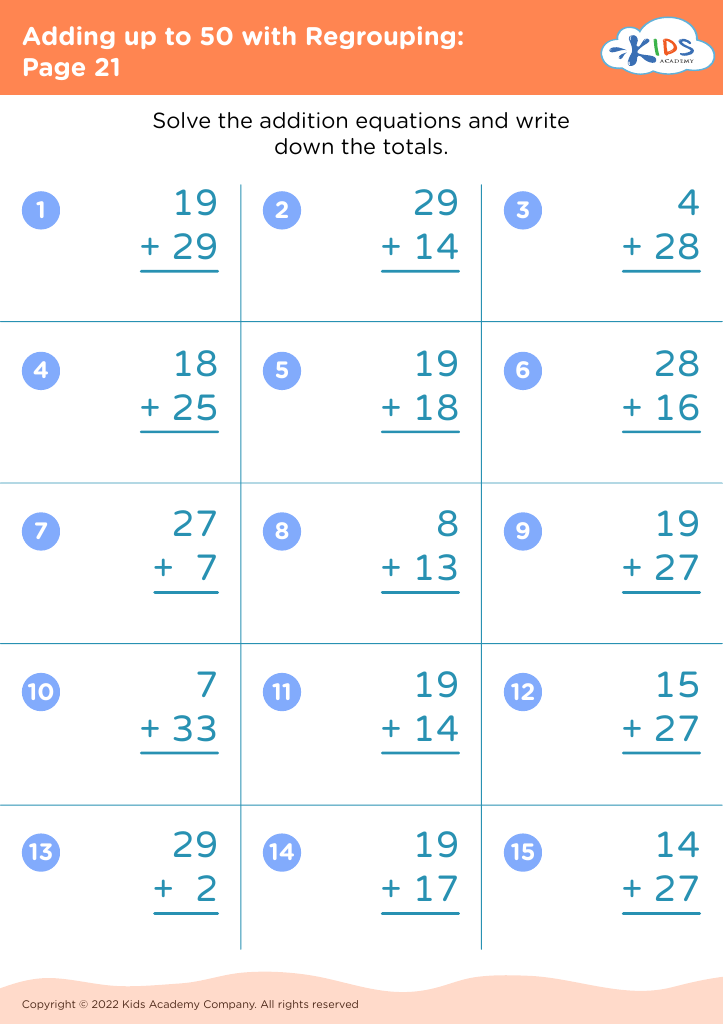
Adding up to 50 with Regrouping: Page 21
Worksheet
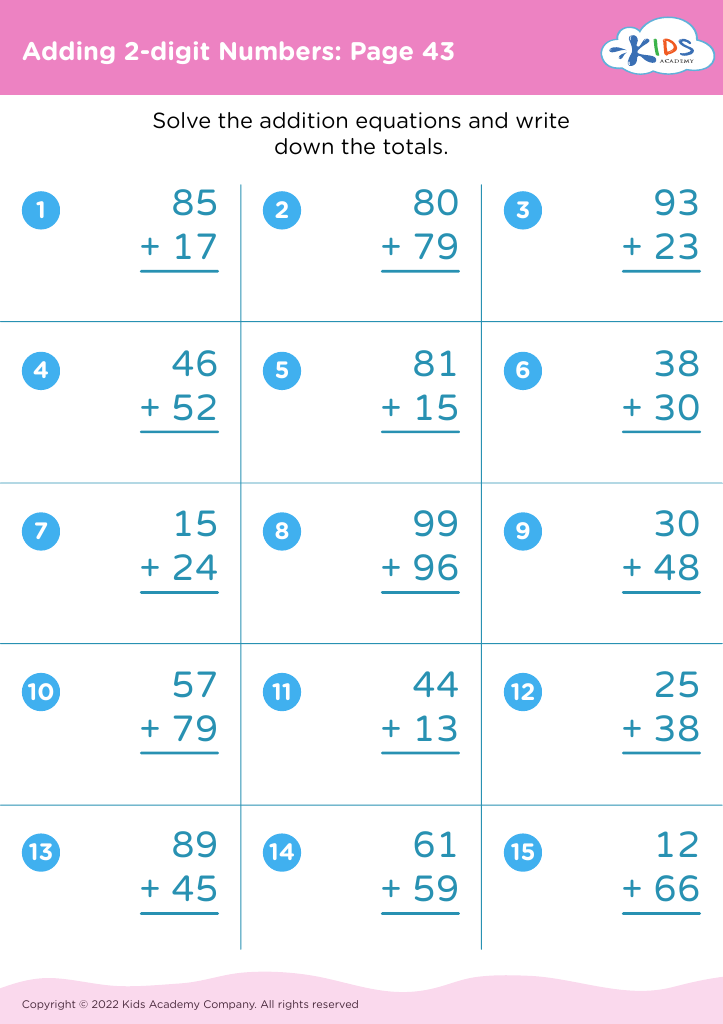
Adding 2-digit Numbers: Page 43

Adding 2-digit Numbers: Page 43

Adding 2-digit Numbers: Page 43
Worksheet
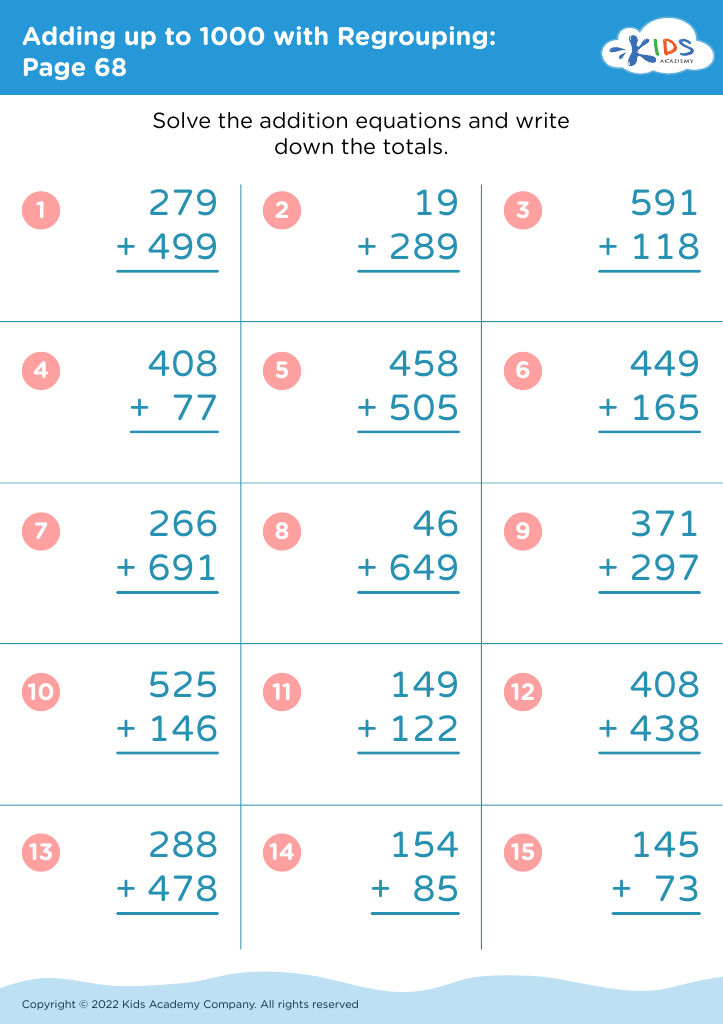
Adding up to 1000 with Regrouping: Page 68
Worksheet
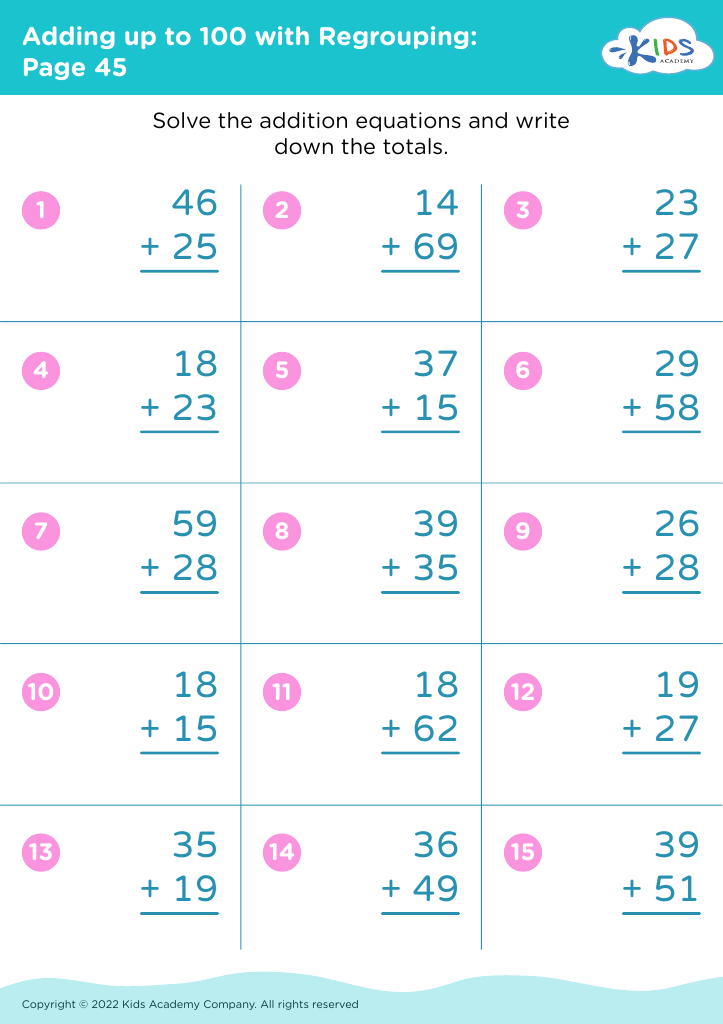
Adding up to 100 with Regrouping: Page 45
Worksheet
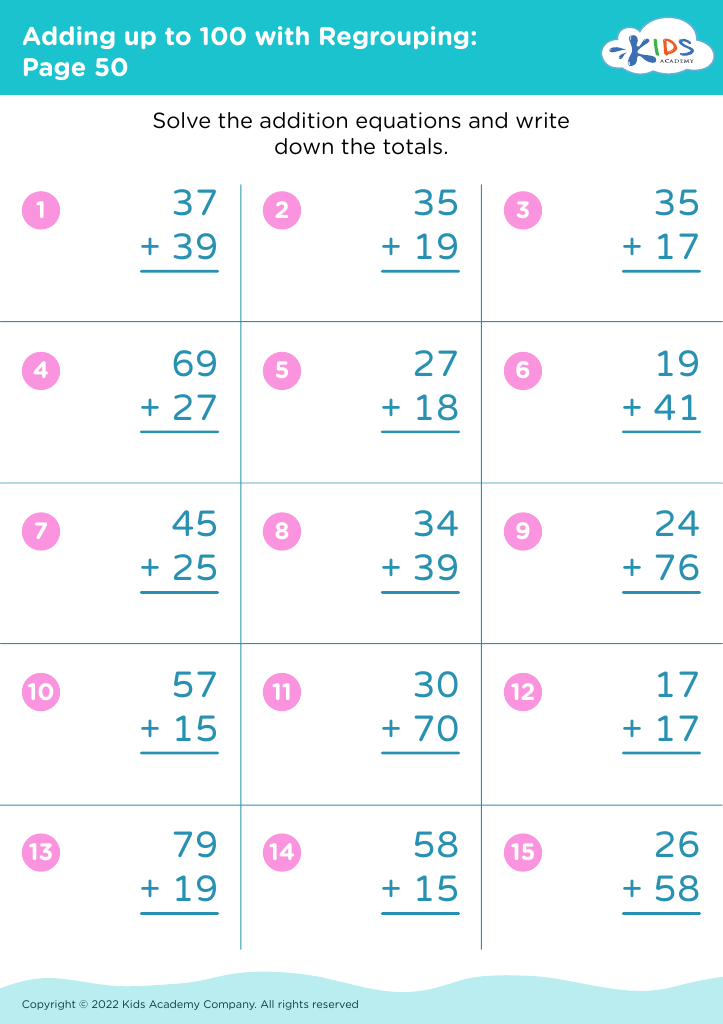
Adding up to 100 with Regrouping: Page 50
Worksheet
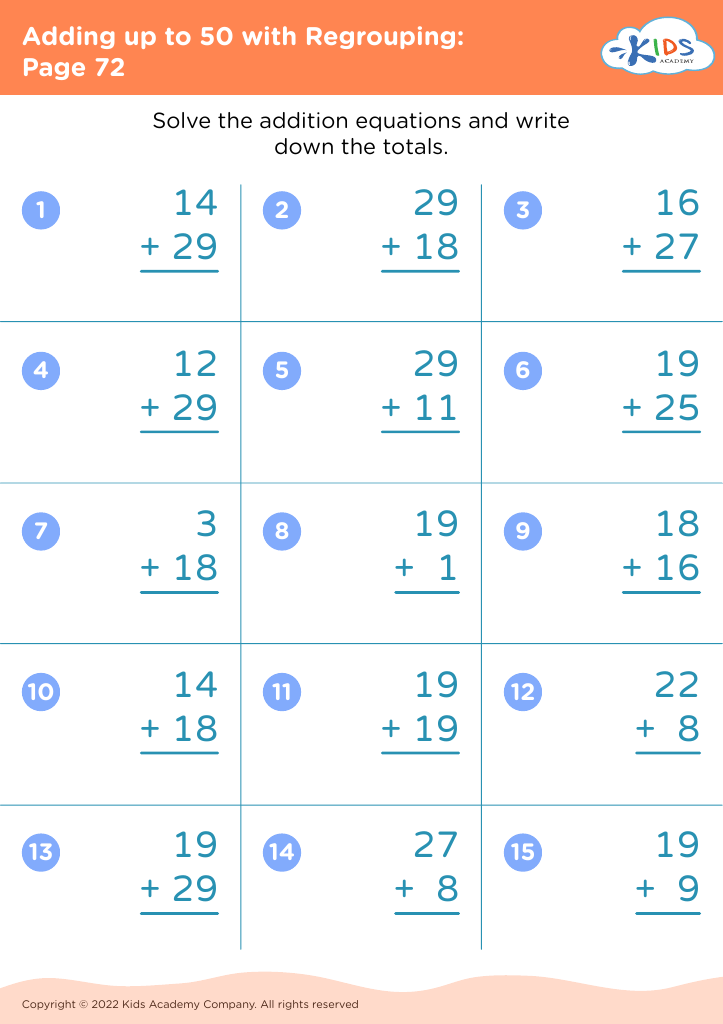
Adding up to 50 with Regrouping: Page 72
Worksheet
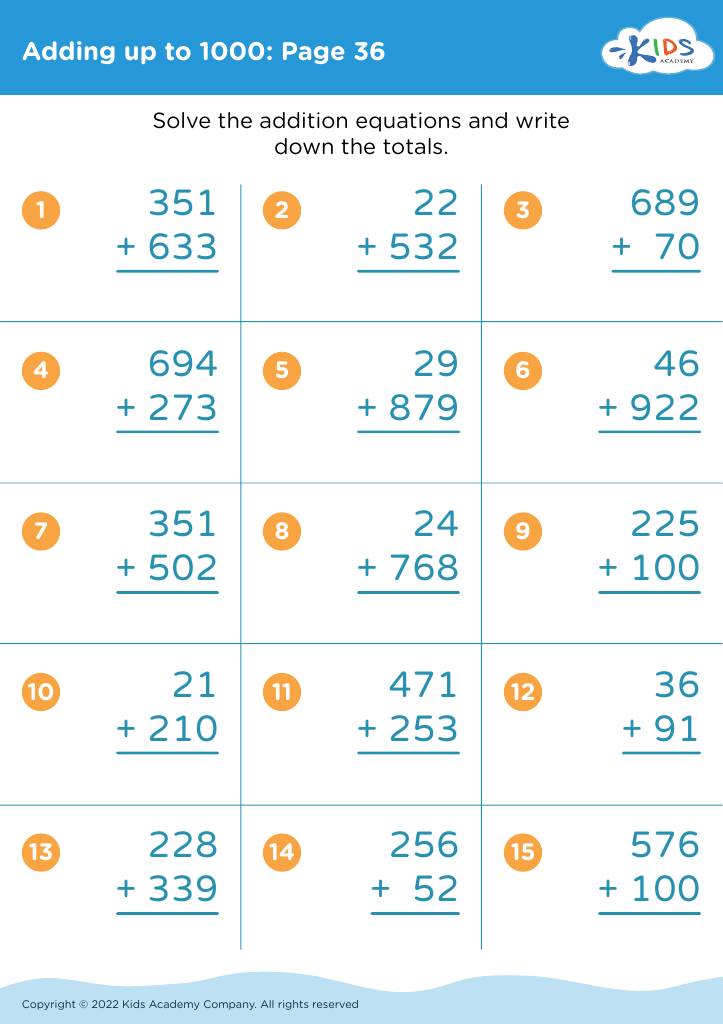
Adding up to 1000: Page 36

Adding up to 1000: Page 36

Adding up to 1000: Page 36
Worksheet
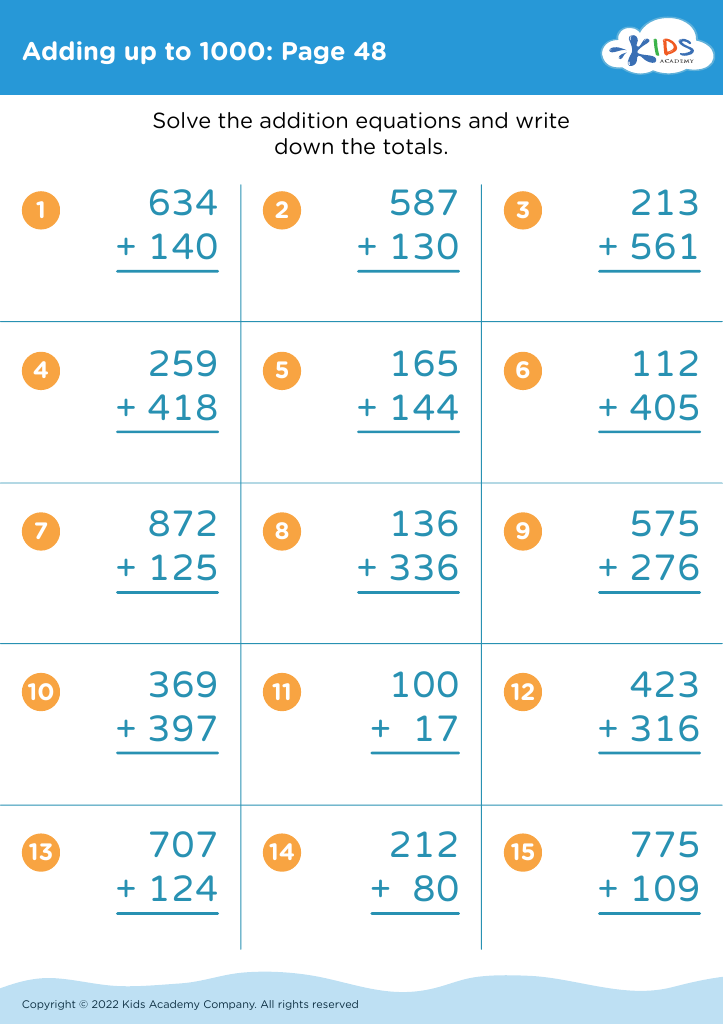
Adding up to 1000: Page 48

Adding up to 1000: Page 48

Adding up to 1000: Page 48
Worksheet


Parents and teachers should care deeply about fine motor skills, in addition to robust mathematical foundations like addition and subtraction, for 7-year-olds because these foundational skills are integral to the child's overall development. Fine motor skills involve the coordination of small muscles, especially in the hands and fingers, enabling children to perform crucial tasks such as writing, cutting with scissors, buttoning clothes, and more. Mastering these skills not only boosts a child's independence and self-esteem but also underpins their ability to learn effectively in later stages.

Simultaneously, instilling strong addition and subtraction skills at this age lays the groundwork for more complex mathematical understanding. Proficiency in real-life numeracy builds confidence and directly impacts their ability to cope with future academic challenges. From counting money and measuring ingredients to solving problems, these basic mathematical operations become essential in everyday life.

By intertwining the development of fine motor skills with addition and subtraction exercises—such as using manipulatives or writing out problems by hand—children gain dual benefits. They enhance their muscle control and dexterity while simultaneously improving their mathematical abilities. Thus, focusing on both areas ensures a balanced approach that fosters holistic growth, preparing children not just for academic success, but a well-rounded, skilled future.