Practice problem-solving Addition & Subtraction Worksheets for 7-Year-Olds
4 filtered results
-
From - To
Welcome to our Practice Problem-Solving Addition & Subtraction Worksheets for 7-Year-Olds! Designed to enhance critical math skills, these worksheets engage young learners in solving real-life problems using addition and subtraction. With a variety of fun and relatable scenarios, children will strengthen their problem-solving abilities while enjoying the learning process. Our carefully crafted exercises encourage children to think critically and apply methods to find solutions. Perfect for classwork or at-home practice, these worksheets foster confidence in young mathematicians and support their growth in foundational math concepts. Discover the joy of learning while building essential skills today!
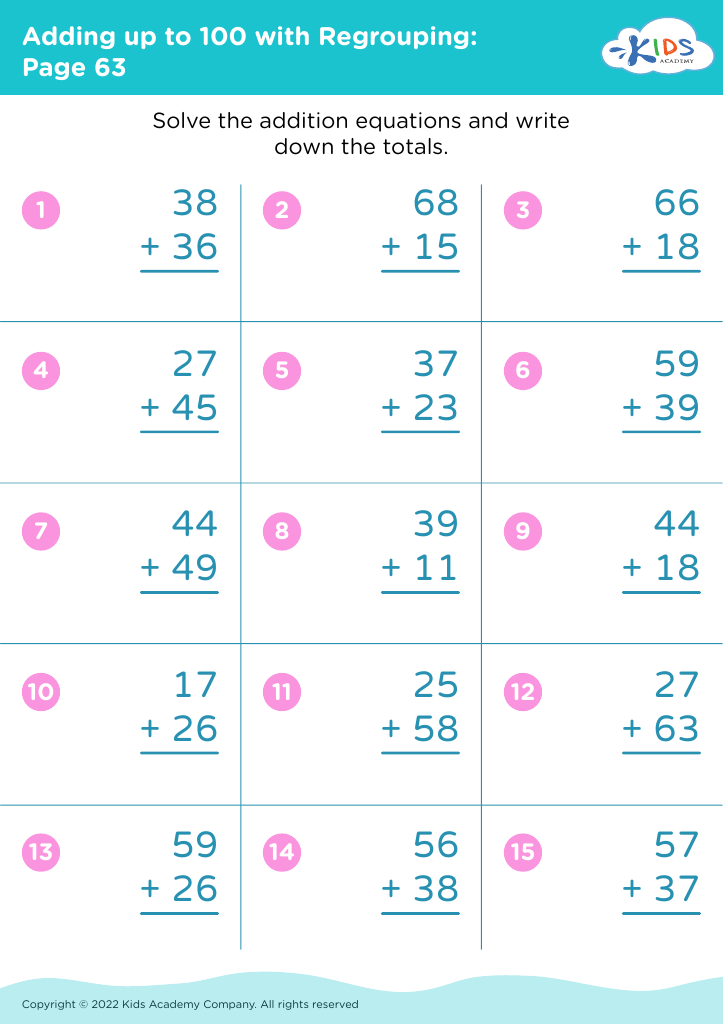
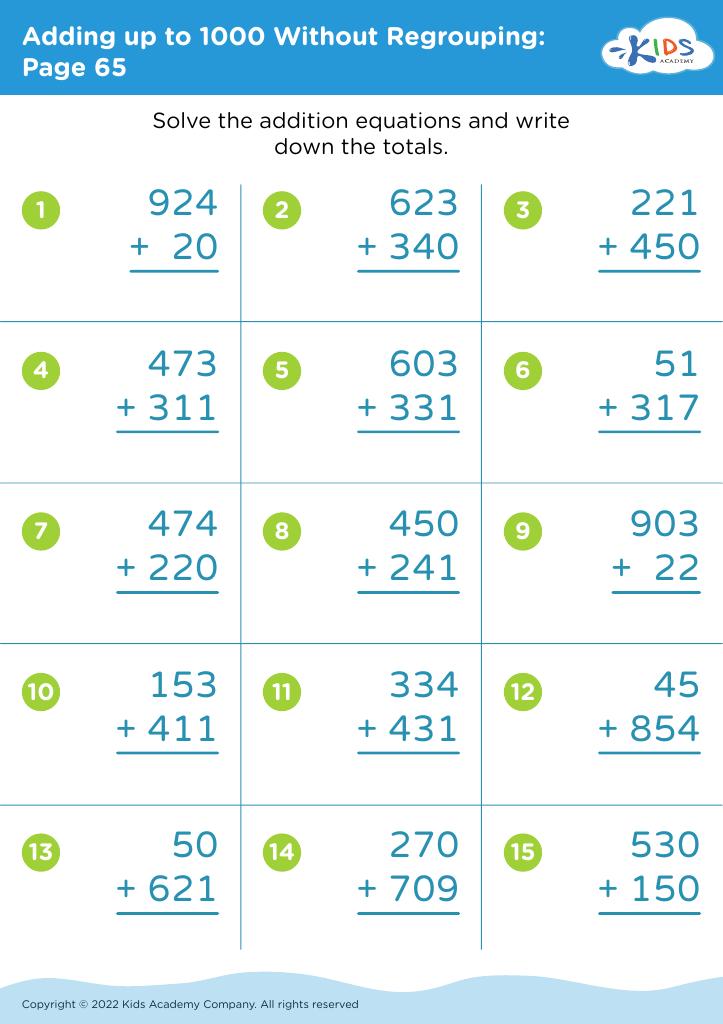
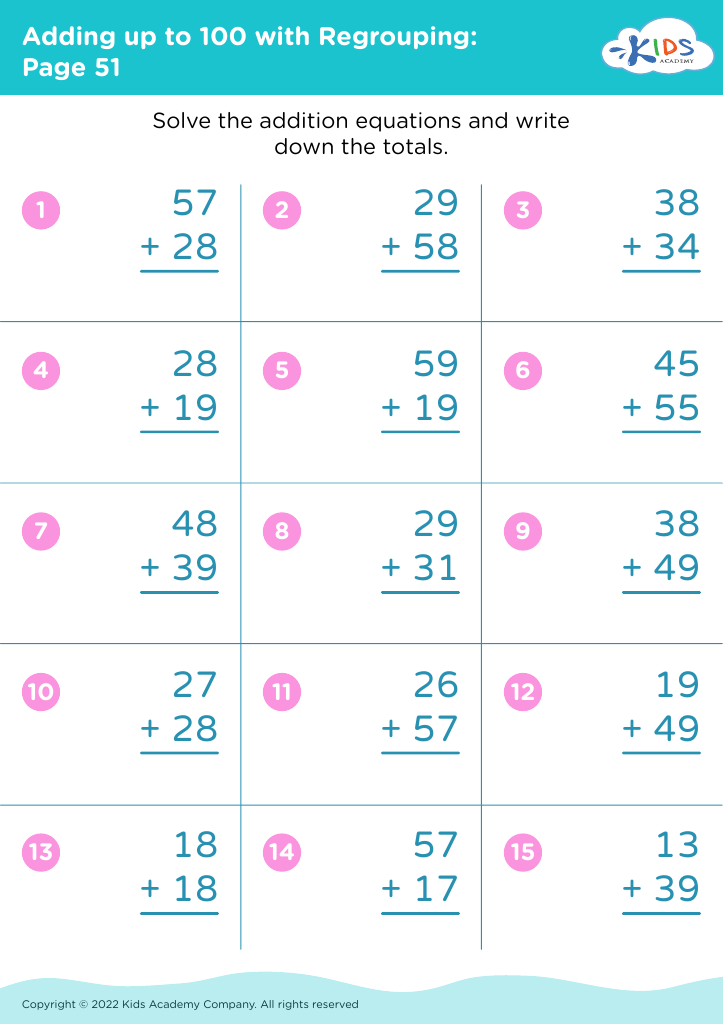
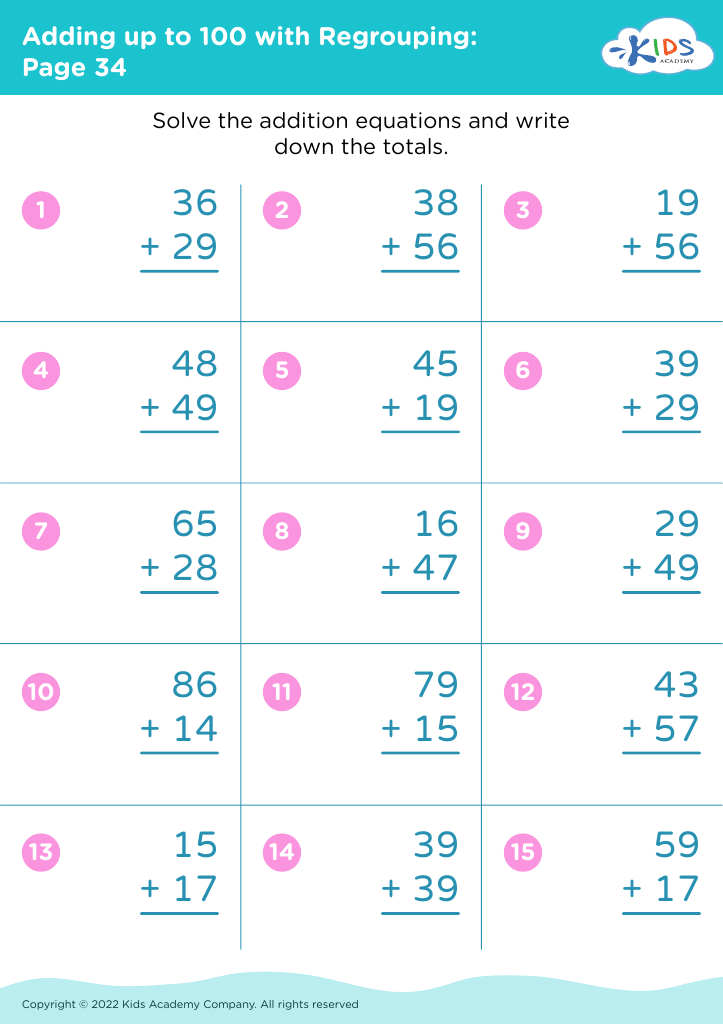








Parents and teachers should prioritize problem-solving in addition and subtraction for 7-year-olds because it lays the foundation for critical math skills. At this age, children are transitioning from basic arithmetic to more complex mathematical concepts, making it crucial to develop their ability to think critically about numbers. Practice in problem-solving encourages logical reasoning, creativity, and persistence—invaluable skills that extend beyond mathematics.
Additionally, engaging in practice problems fosters a deeper understanding of mathematical concepts rather than rote memorization. When children work on specific scenarios, they learn to apply addition and subtraction in practical contexts, which boosts their confidence and increases their interest in learning.
Moreover, strengthening these skills supports overall academic success. Math resilience at an early age positively influences performance in later math learning and even across subjects. Collaborative problem-solving activities enhance social skills as children learn to communicate their thought processes and strategies.
Ultimately, providing opportunities for children to practice and solve problems in addition and subtraction not only enhances their numeracy but nurtures a growth mindset, empowering them to tackle challenges with enthusiasm and resilience throughout their educational journey. Thus, parents and teachers play a critical role in fostering comprehension and enthusiasm for math in young learners.








