Reading clocks Addition & Subtraction Worksheets for 7-Year-Olds
3 filtered results
-
From - To
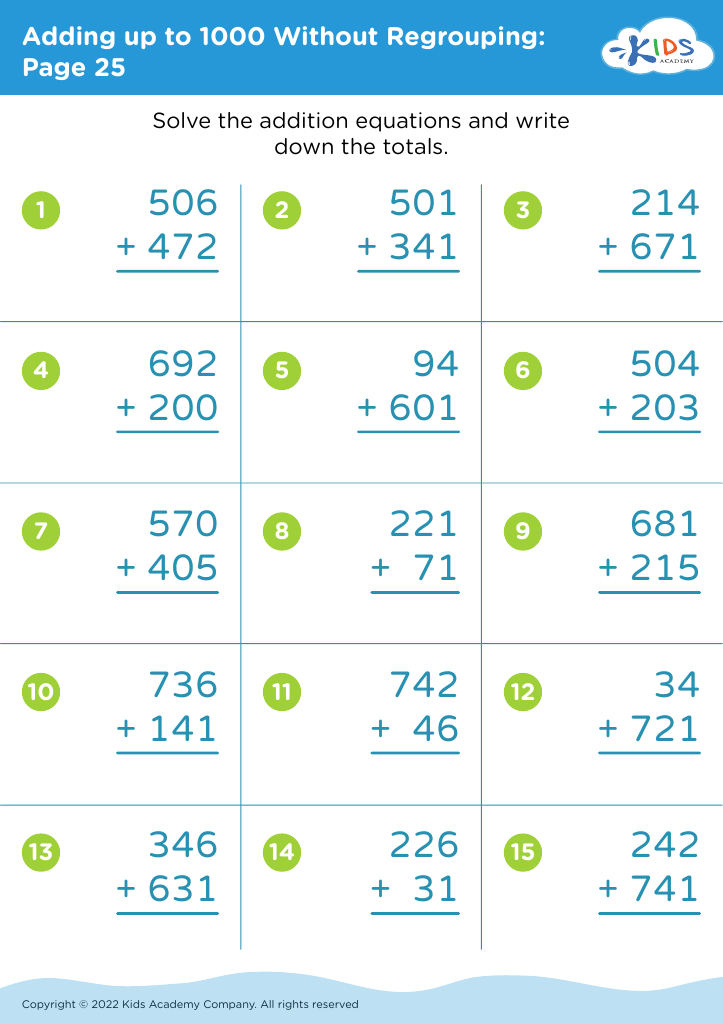
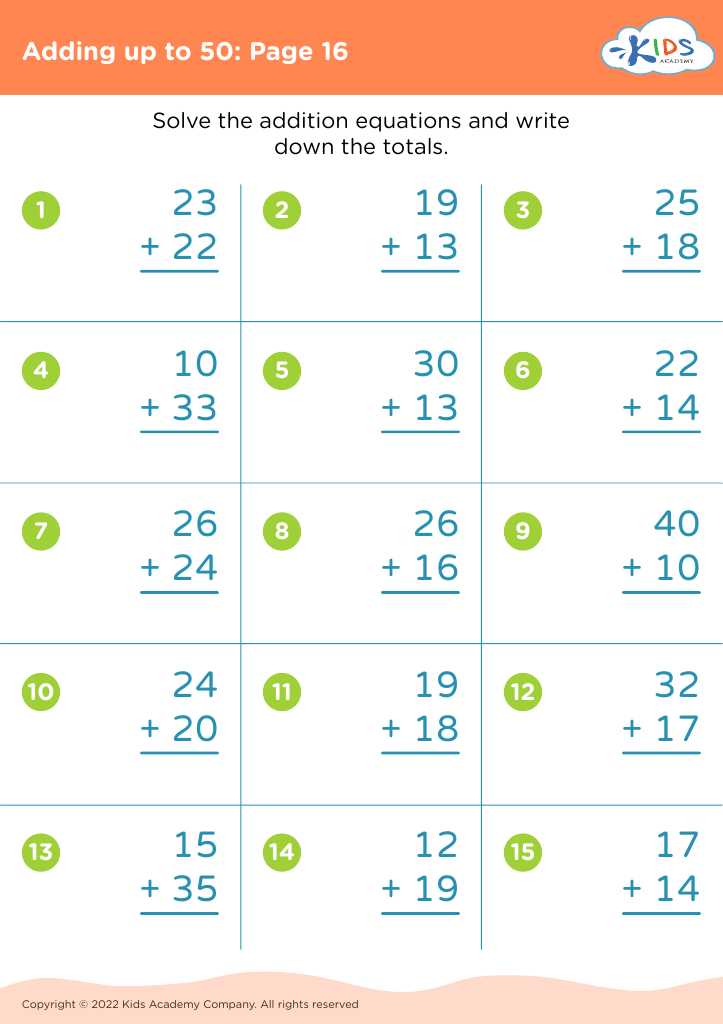
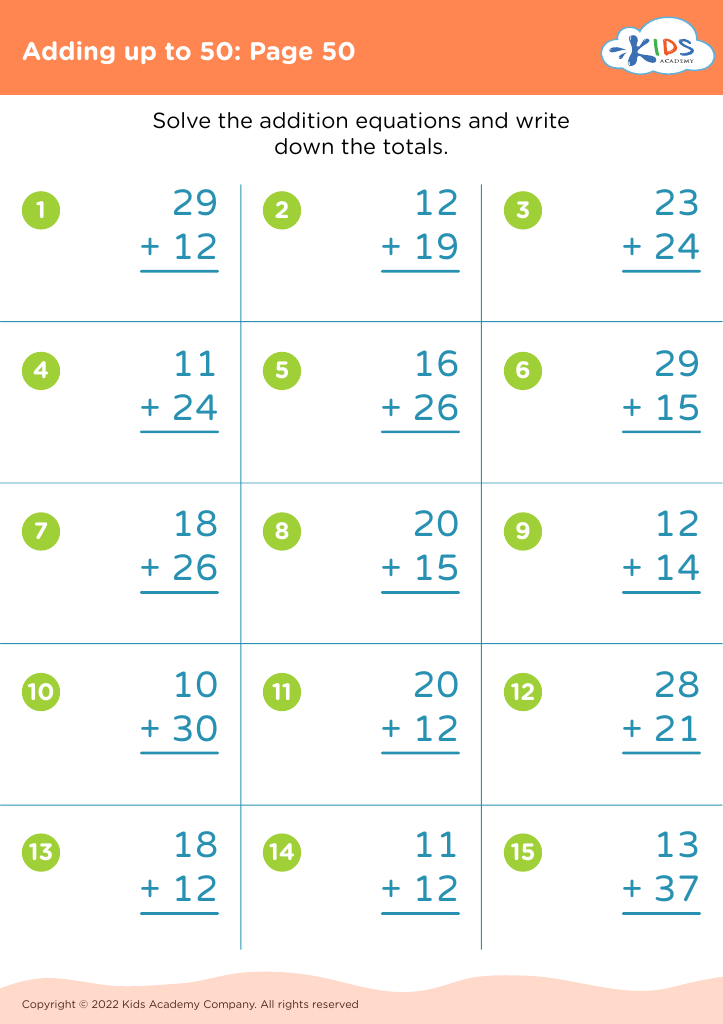
Unlock your child's mathematical potential with our engaging "Reading Clocks Addition & Subtraction Worksheets" designed specifically for 7-year-olds. These interactive worksheets introduce kids to the concept of telling time while strengthening their skills in addition and subtraction. Each activity encourages young learners to use clock visuals to solve practical math problems, reinforcing the connection between time and arithmetic. Ideal for classroom or at-home practice, our resources cater to various learning styles, making math fun and accessible. Help your child master telling time and basic calculations simultaneously. Dive into our worksheets and watch their confidence grow in both reading clocks and math!








Parents and teachers should care about teaching reading clocks and addition & subtraction to 7-year-olds because these skills serve as foundational elements in a child's mathematical and life education. At this age, children are developing critical thinking skills and the ability to solve problems, which are essential for their academic future.
Understanding how to read a clock not only enhances a child's numeracy skills, but it also promotes time management, helping them appreciate the concept of time and its role in daily activities. These skills are essential as children navigate their schedules, whether for school, extracurricular activities, or family time.
Similarly, mastering addition and subtraction establishes a base for all future mathematics learning. These operations are widely used in various real-life scenarios, from handling money to sharing and measuring. An ability to solve these problems boosts a child’s confidence, enhances concentration, and lays the groundwork for more complex math concepts in later years.
Lastly, skills like reading a clock and basic arithmetic intertwine with social skills, fostering the ability to collaborate and communicate effectively—skills vital for lifelong success. Hence, emphasizing these skills supports not only academic success but also personal development in young learners.








