Understanding symmetry Addition & Subtraction Worksheets for 7-Year-Olds
25 filtered results
-
From - To
Discover engaging "Understanding Symmetry Addition & Subtraction Worksheets for 7-Year-Olds" to enhance math skills with Kids Academy. By integrating symmetry into addition and subtraction exercises, these worksheets promote critical thinking, problem-solving, and spatial awareness. Perfect for young learners, each worksheet features fun, colorful activities designed to support mastery of basic math concepts while introducing symmetrical patterns and shapes. Ideal for home or classroom use, these printable resources ensure that learning is both educational and enjoyable. Unlock a world of symmetrical math fun and boost your child's confidence in arithmetic with our expertly crafted worksheets today!
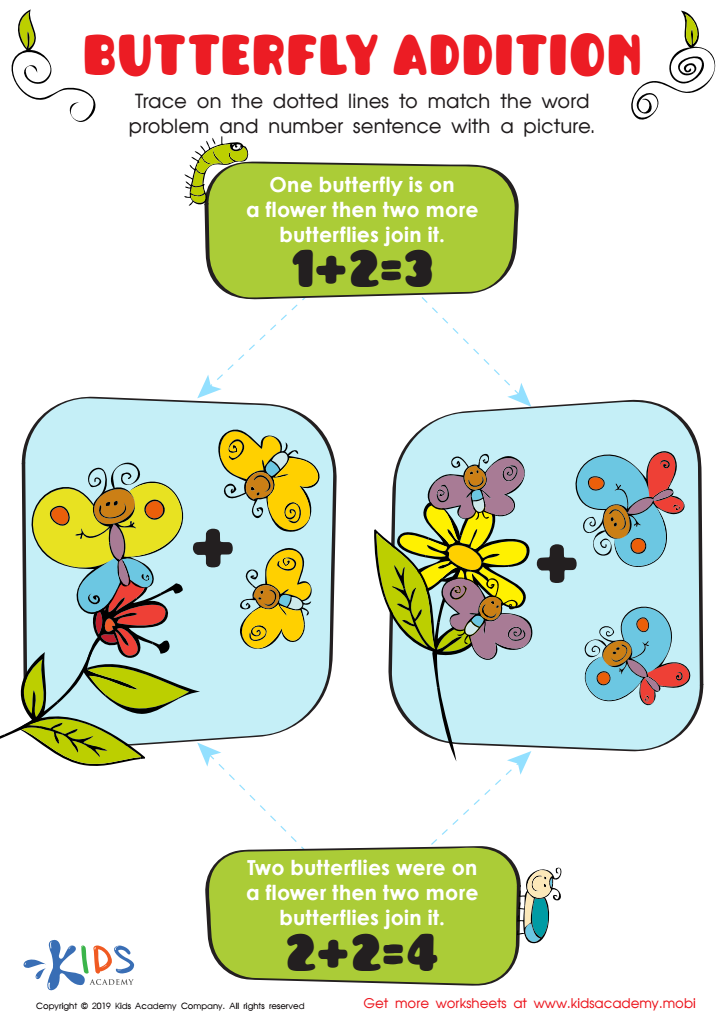
Butterfly Addition Worksheet
 Assign to My Students
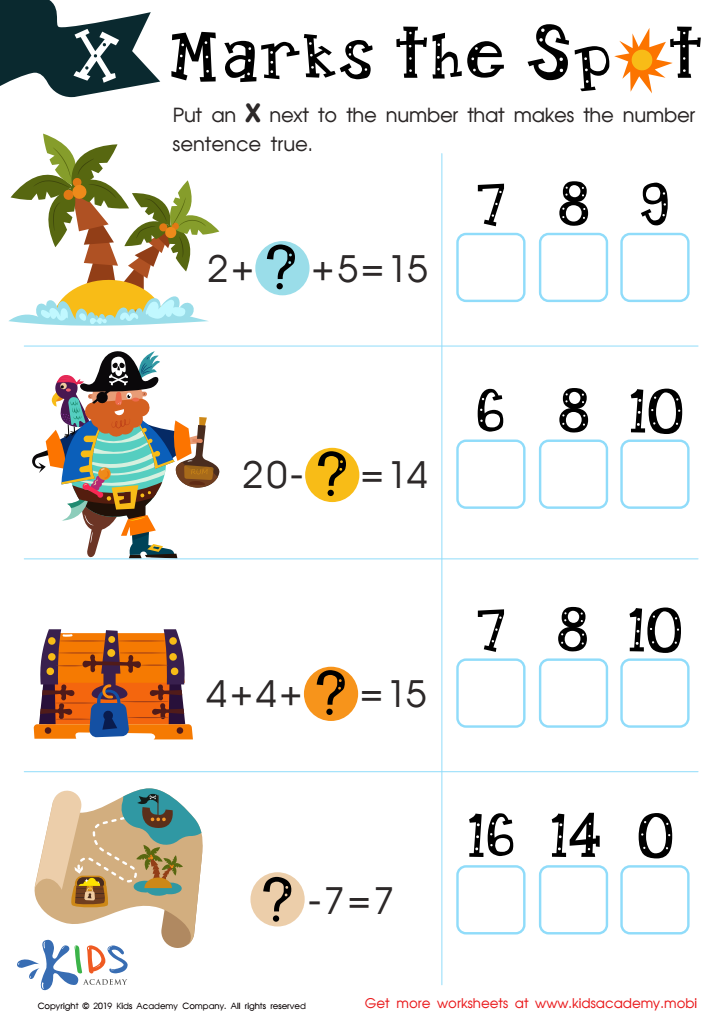
X Marks the Spot Worksheet
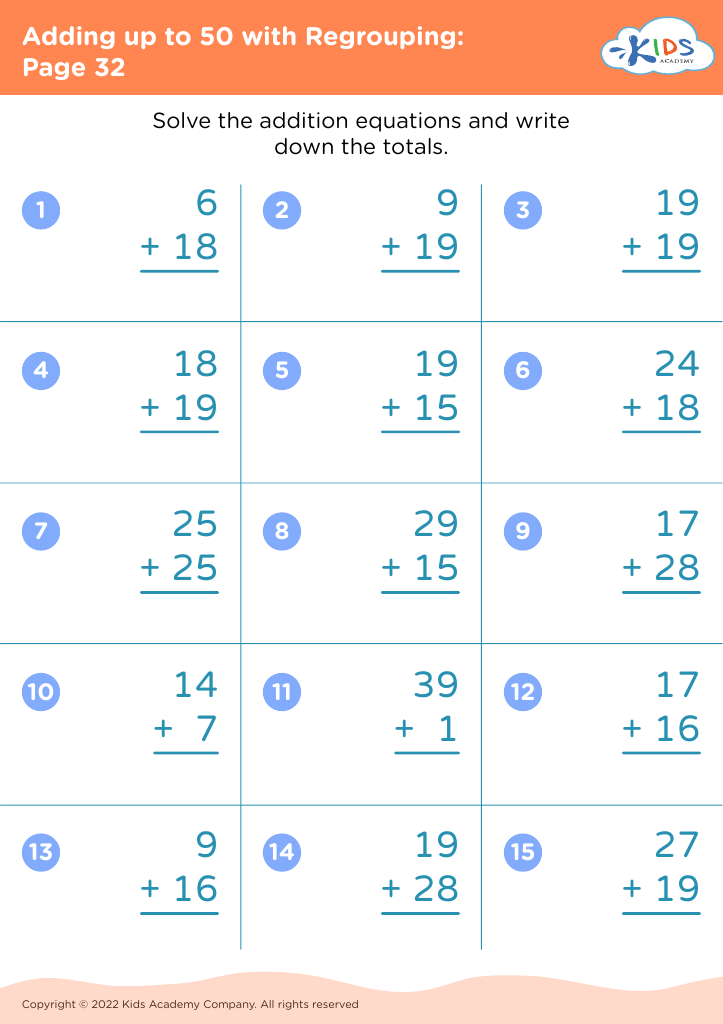
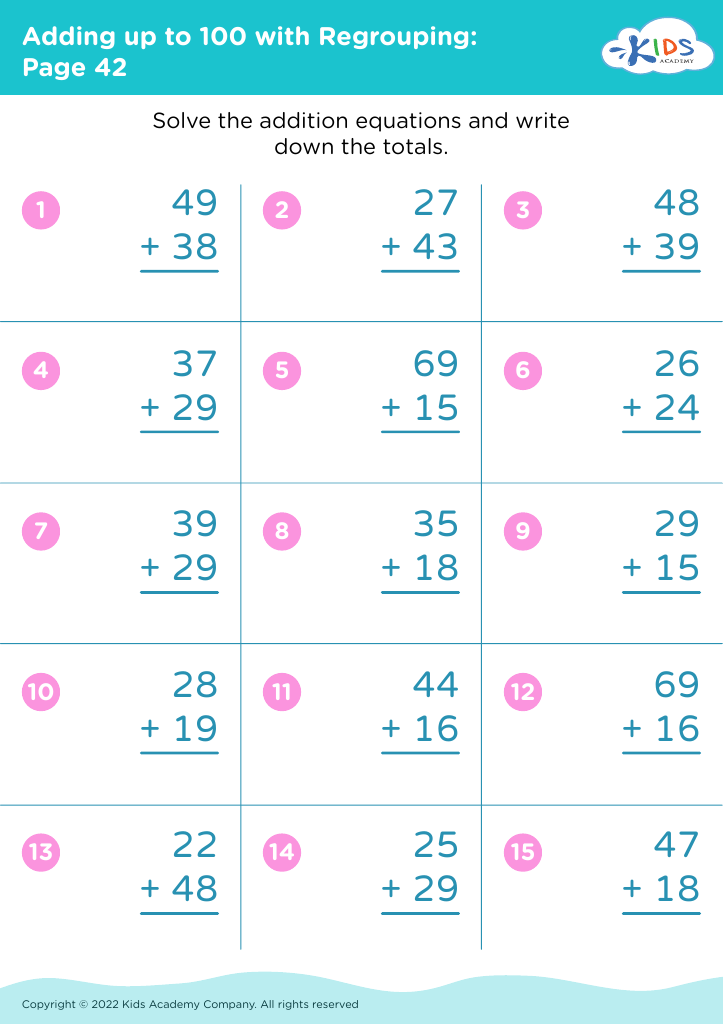
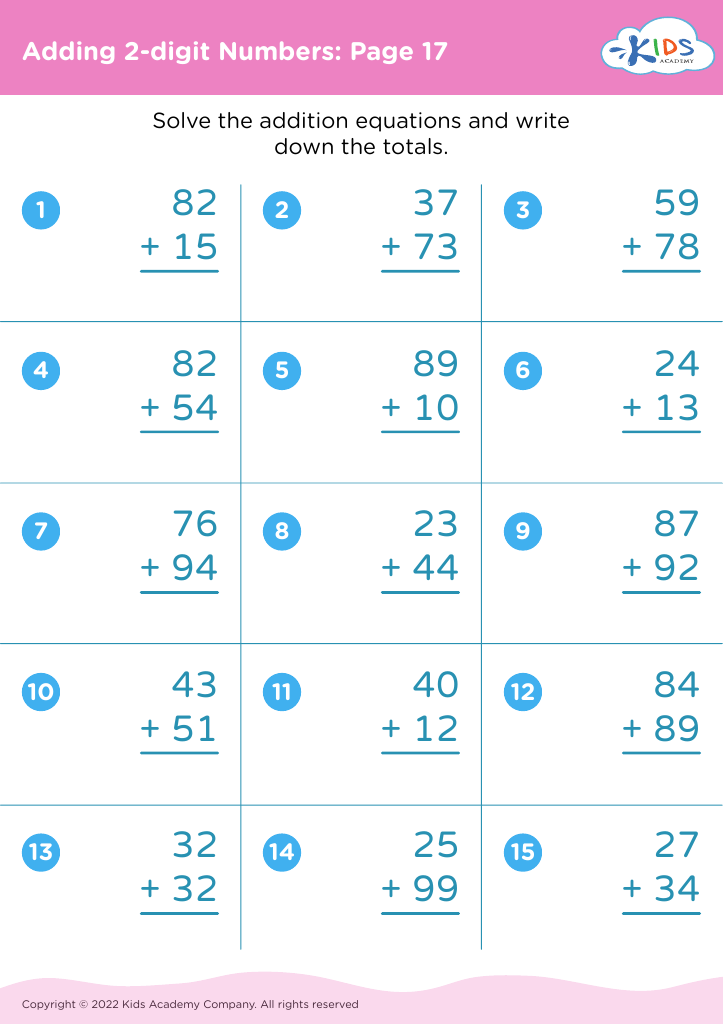
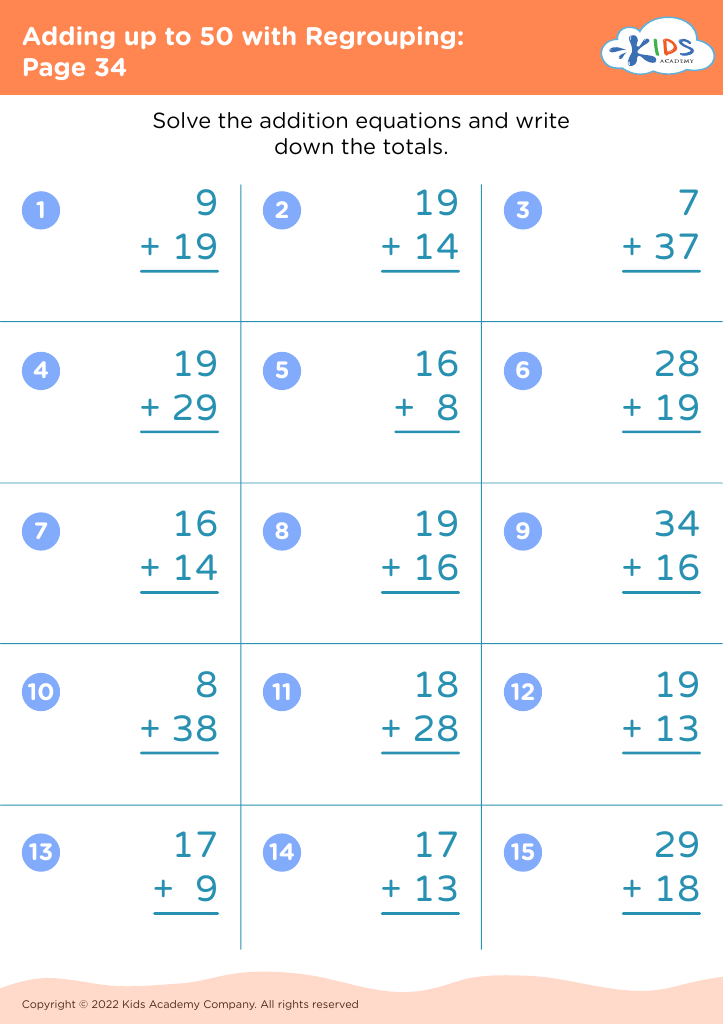








Understanding symmetry in addition to subtraction is crucial for 7-year-olds and merits the attention of parents and teachers for several reasons.
Firstly, symmetry in mathematics promotes a foundational grasp of balance and equality. In the context of addition and subtraction, symmetry helps children to see numbers as flexible and interchangeable. For example, understanding that 3 + 2 equals 5 is structurally similar to knowing that 5 - 2 returns to 3. This conceptual symmetry helps kids see patterns and develop mental math skills, making more complex arithmetic tasks easier in the future.
Secondly, learning addition and subtraction isn’t just about rote memorization; it establishes critical thinking and problem-solving skills. Through these operations, children also hone their ability to manipulate numbers, preparing them for advanced concepts such as multiplication and division. When children see this mirrored relationship between operations, they engage more creatively and flexibly with math problems.
Lastly, this understanding boosts confidence. Early academic successes in tasks perceived as challenging, like math, positively impact a child's self-esteem. When children successfully grasp and apply these symmetrical relationships, they feel confident in their abilities, fostering a lifelong positive relationship with learning and mathematical thinking.
Hence, dedicating energy to teaching symmetry in addition and subtraction at an early age builds crucial cognitive skills and a deep, lasting mathematical understanding.








