Boost your 7-year-old's math skills with our Enhance Number Recognition Addition Worksheets! These engaging, printable resources are designed to help young learners master number recognition while practicing addition. Our worksheets combine fun illustrations and interactive activities, making math enjoyable and easier to grasp. Your child will develop essential problem-solving skills as they work with various addition problems, reinforcing their understanding of numbers. Perfect for at-home learning or in the classroom, these worksheets will captivate your child's interest and promote a love for math. Watch their confidence soar as they enhance their number recognition and addition abilities!
Check out this FREE Trial Lesson on Addition for age 7!

D

Favorites
With answer key
Interactive
  • 7
  • Enhance number recognition
  • Addition
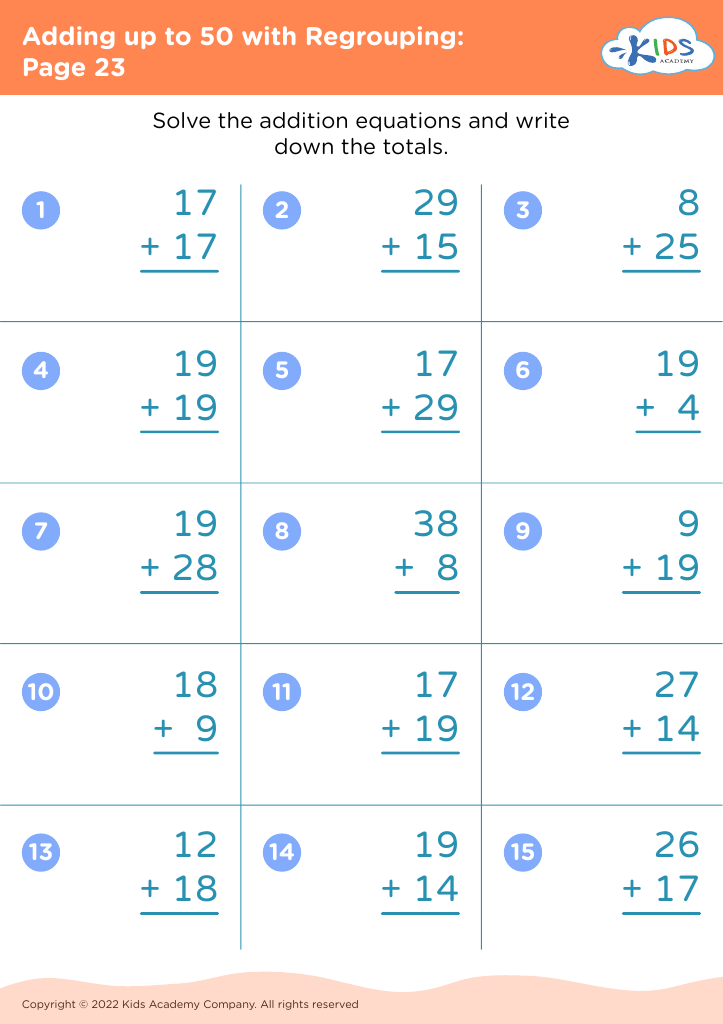
Adding up to 50 with Regrouping: Page 23
Worksheet
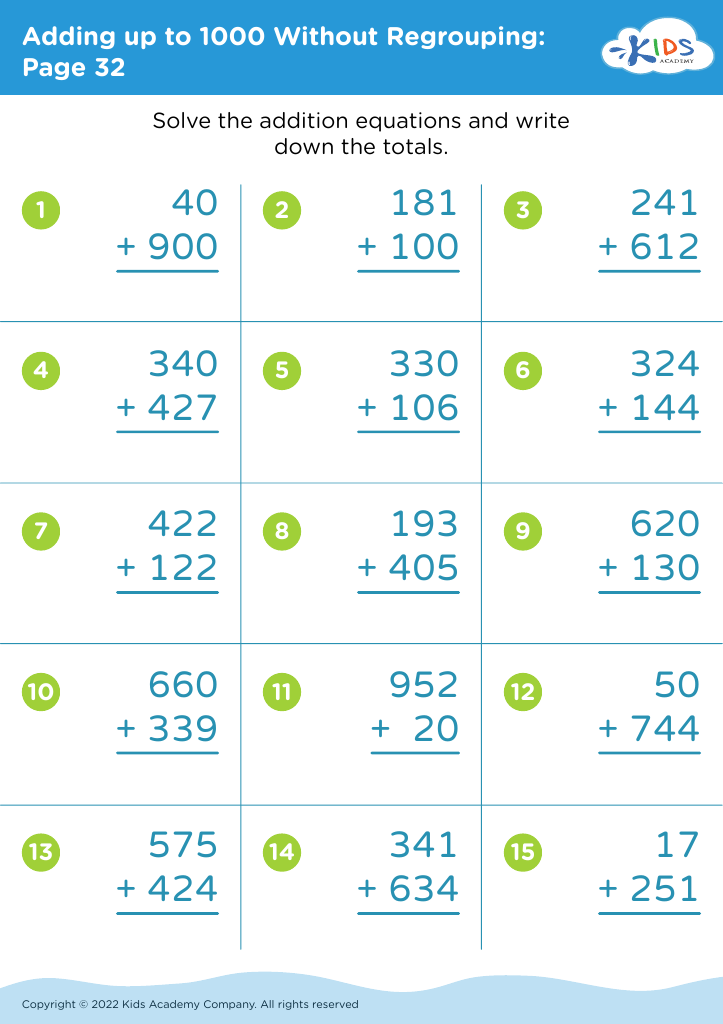
Adding up to 1000 Without Regrouping: Page 32
Worksheet
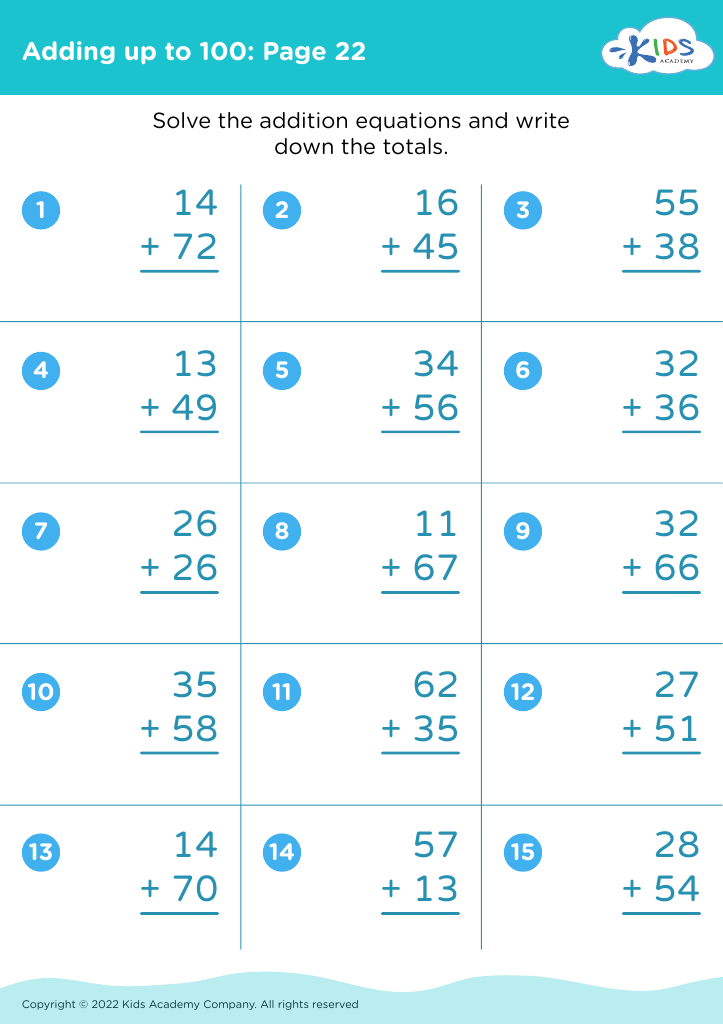
Adding up to 100: Page 22

Adding up to 100: Page 22

Adding up to 100: Page 22
Worksheet
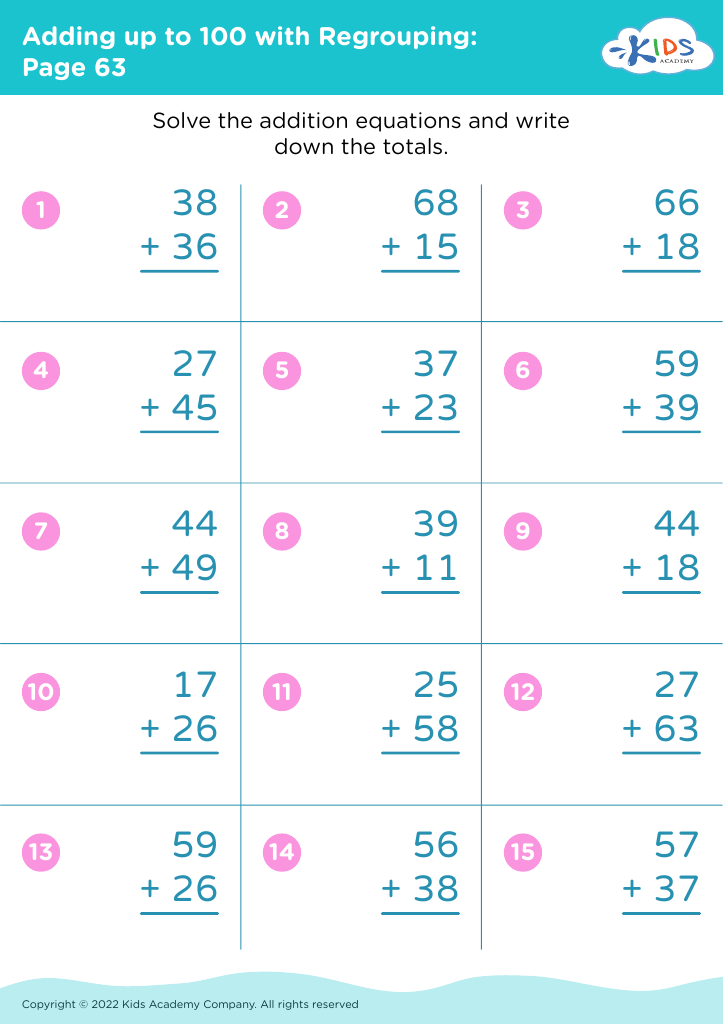
Adding up to 100 with Regrouping: Page 63
Worksheet
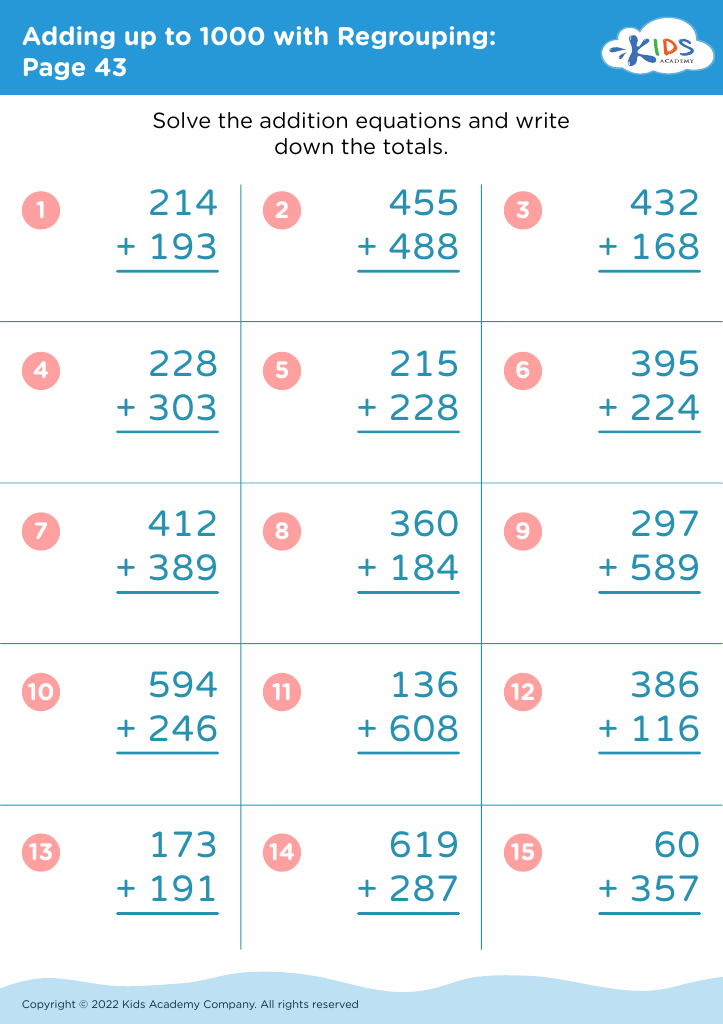
Adding up to 1000 with Regrouping: Page 43
Worksheet
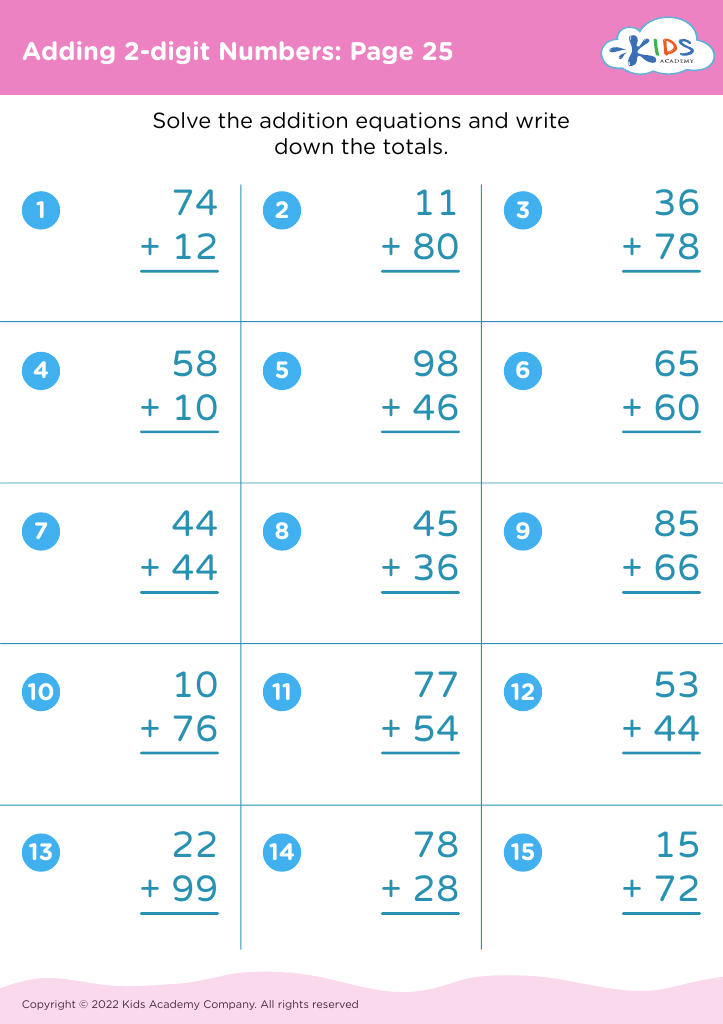
Adding 2-digit Numbers: Page 25

Adding 2-digit Numbers: Page 25

Adding 2-digit Numbers: Page 25
Worksheet
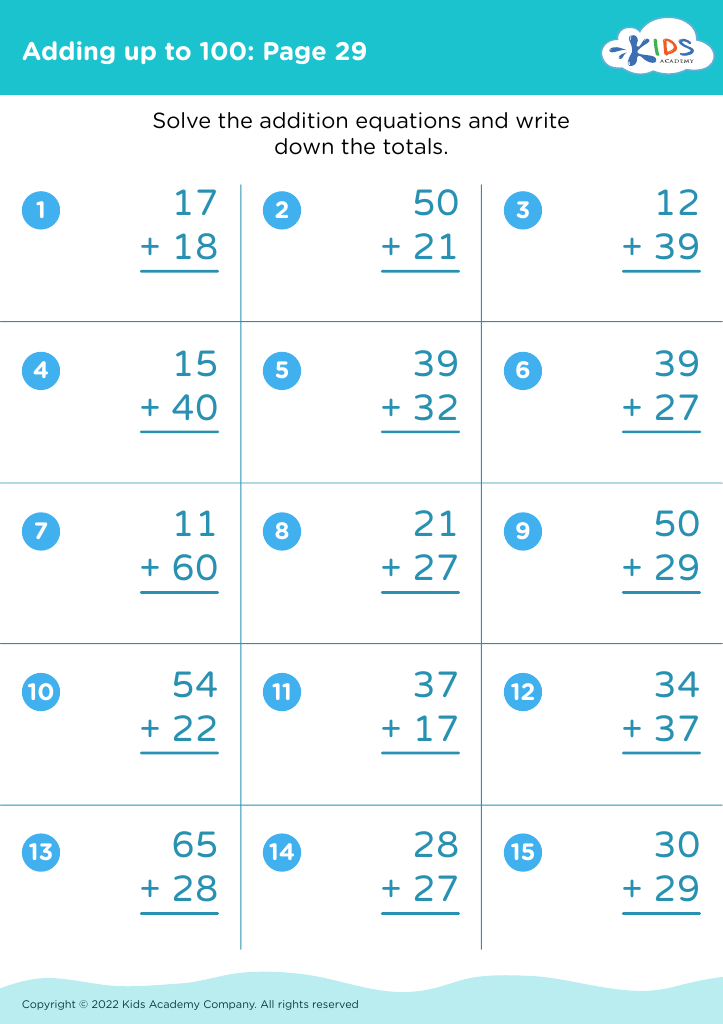
Adding up to 100: Page 29

Adding up to 100: Page 29

Adding up to 100: Page 29
Worksheet
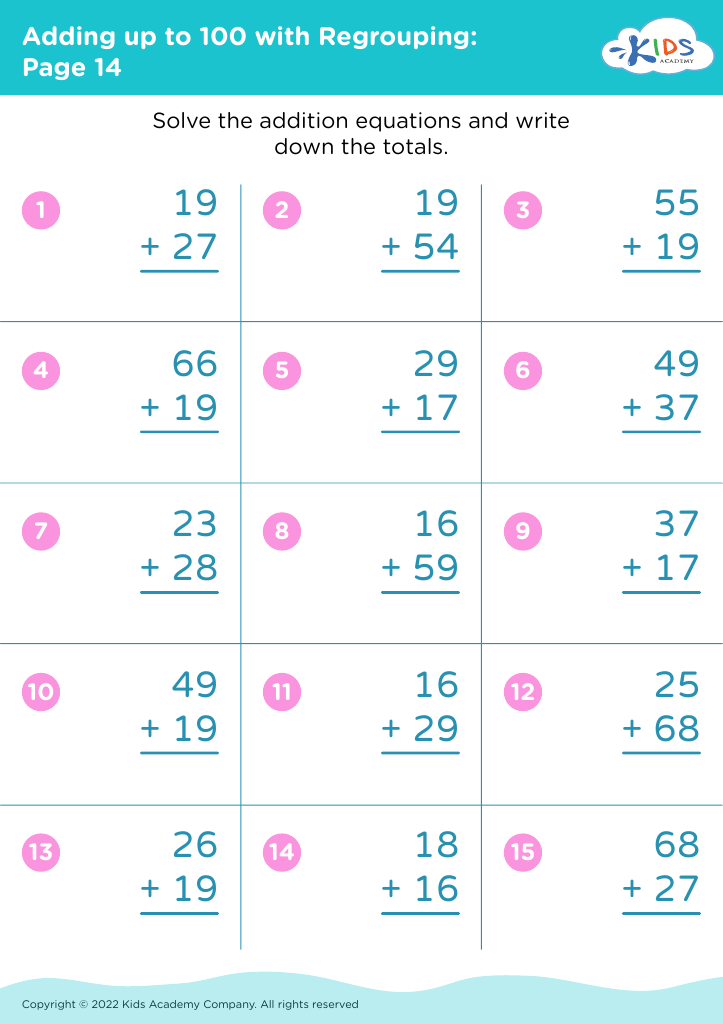
Adding up to 100 with Regrouping: Page 14
Worksheet
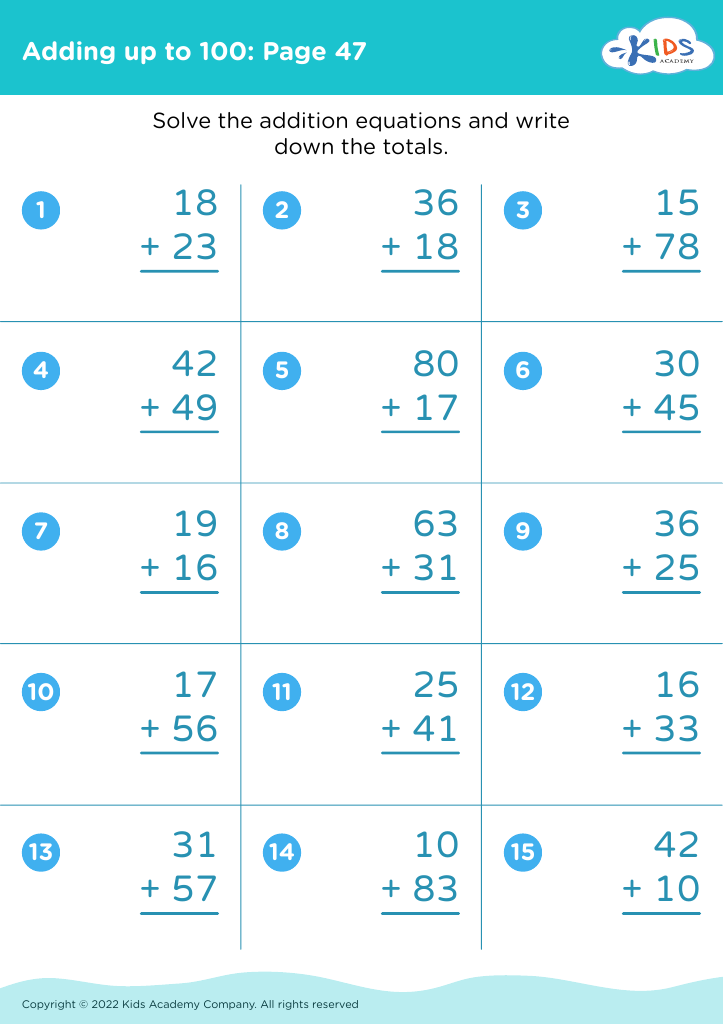
Adding up to 100: Page 47

Adding up to 100: Page 47

Adding up to 100: Page 47
Worksheet
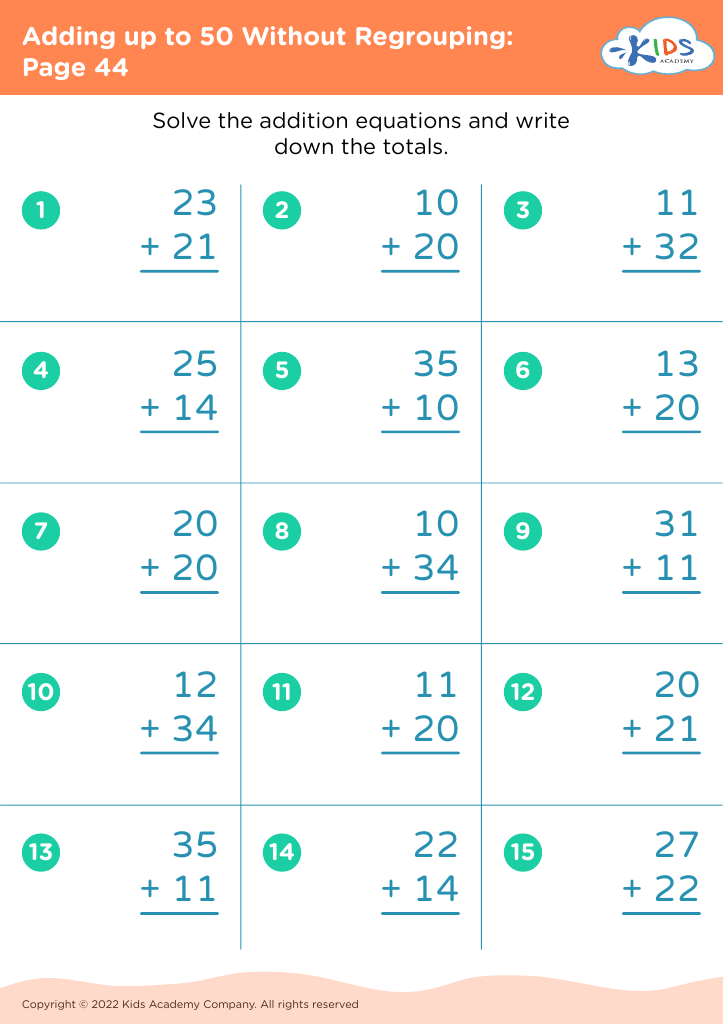
Adding up to 50 Without Regrouping: Page 44
Worksheet
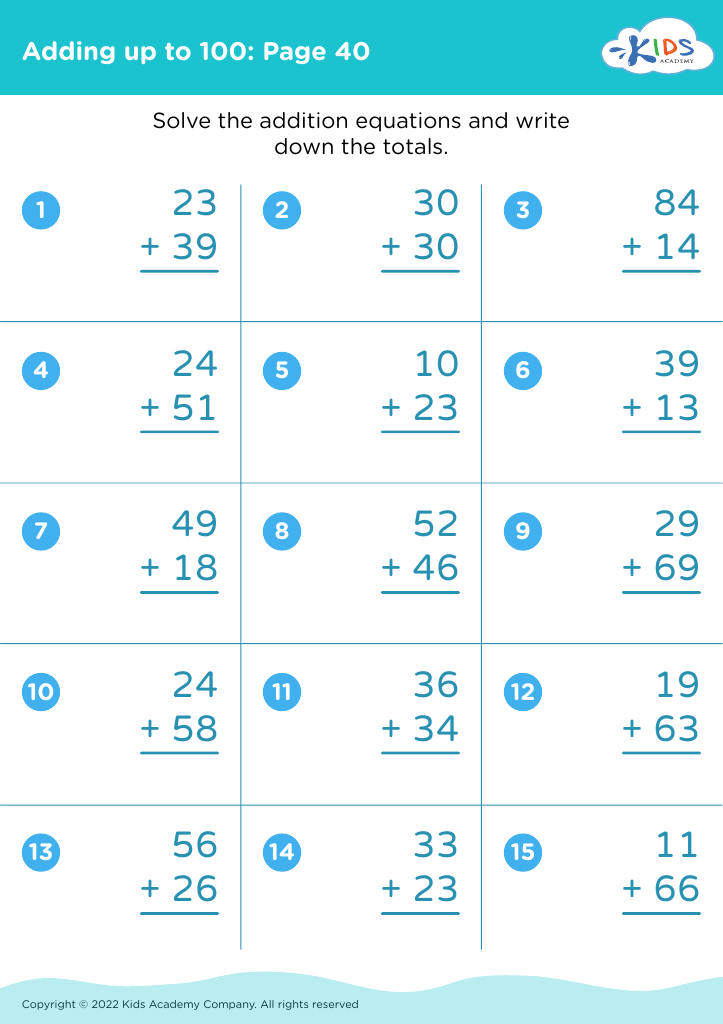
Adding up to 100: Page 40

Adding up to 100: Page 40

Adding up to 100: Page 40
Worksheet
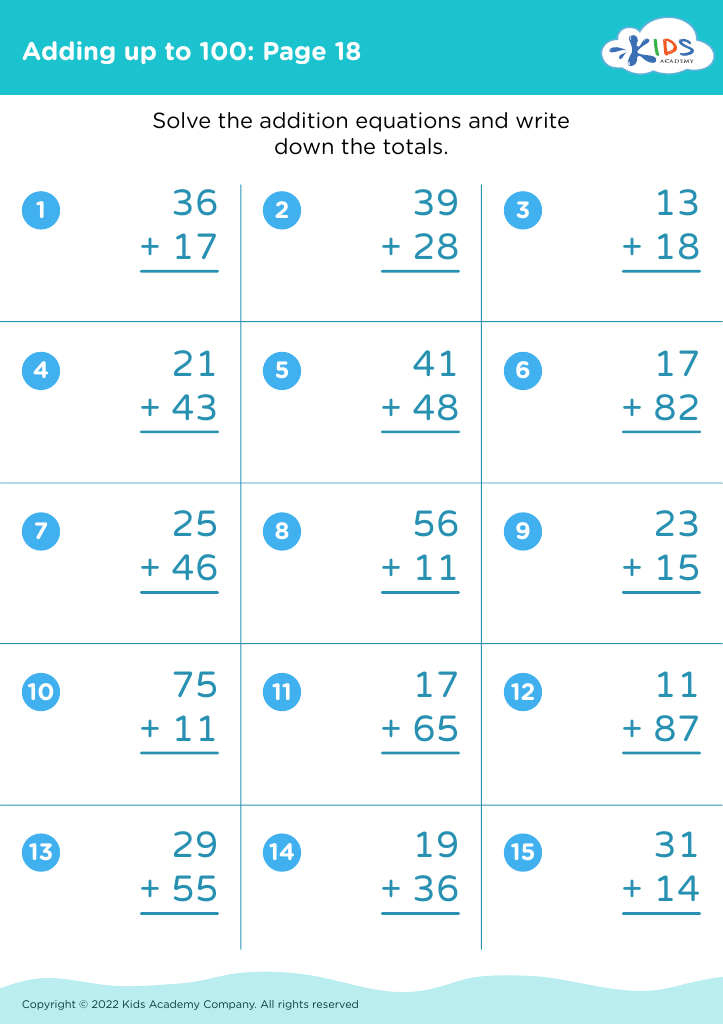
Adding up to 100: Page 18

Adding up to 100: Page 18

Adding up to 100: Page 18
Worksheet
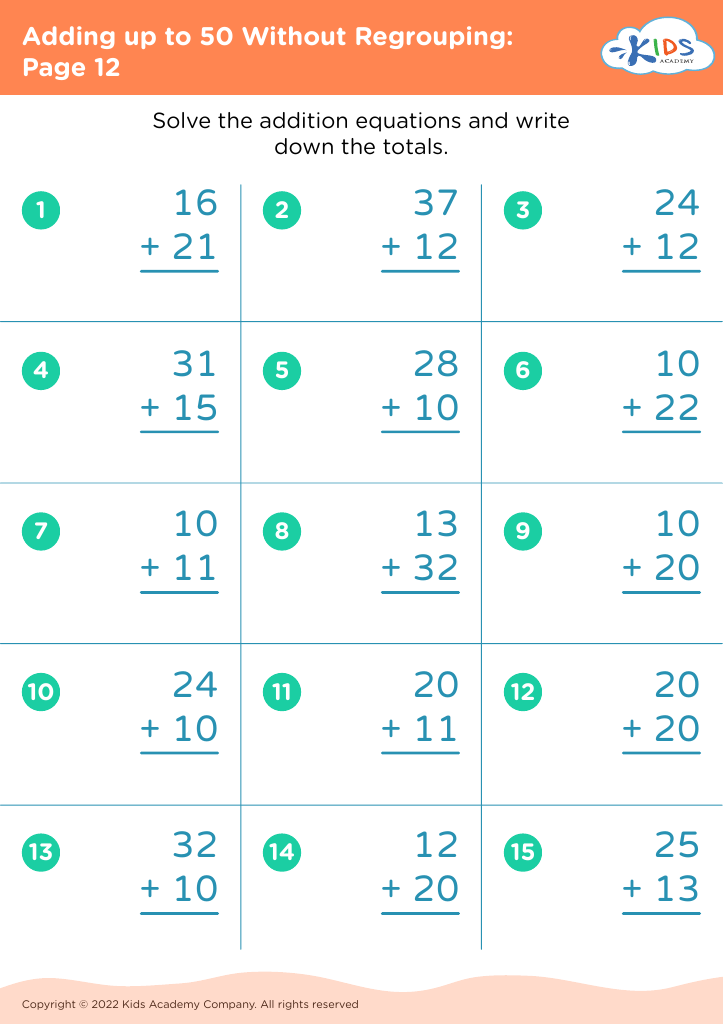
Adding up to 50 Without Regrouping: Page 12
Worksheet
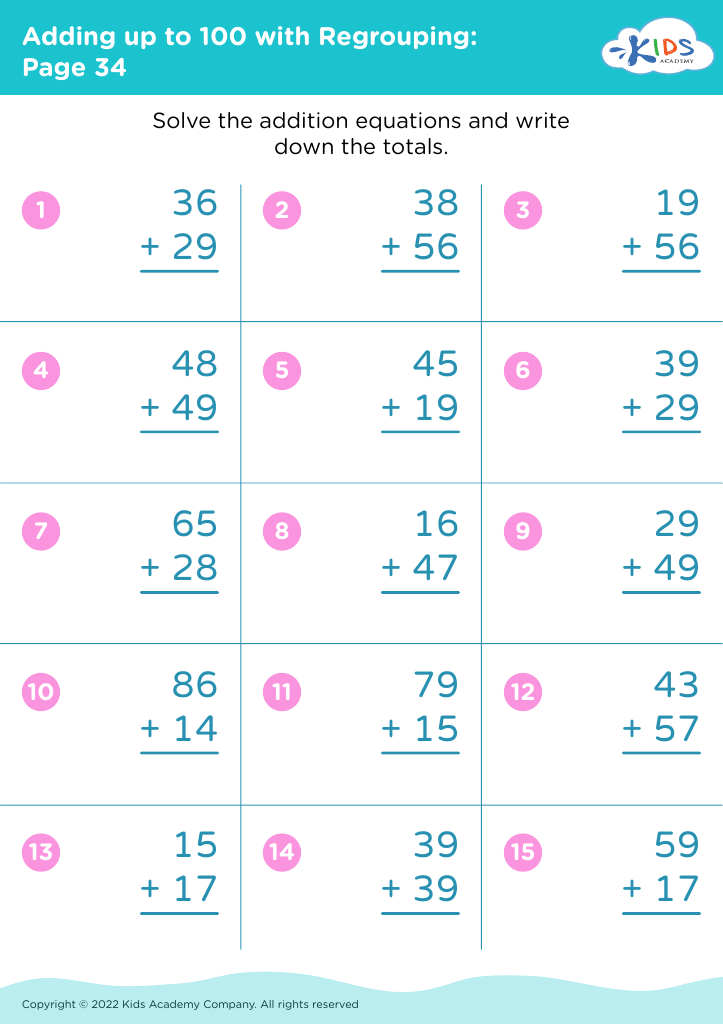
Adding up to 100 with Regrouping: Page 34
Worksheet
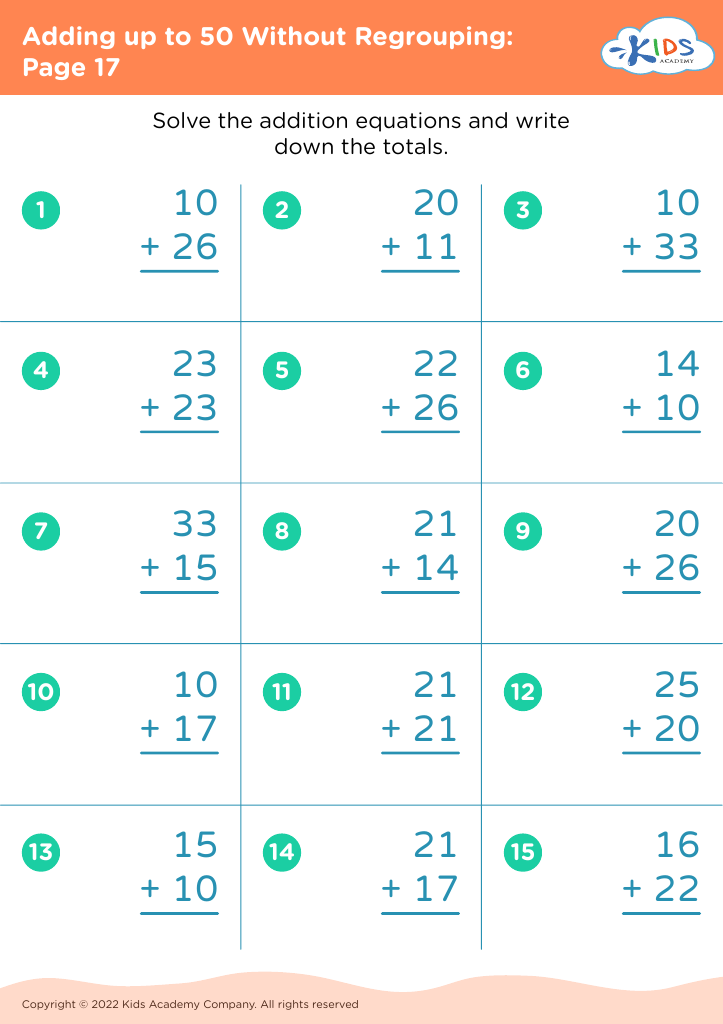
Adding up to 50 Without Regrouping: Page 17
Worksheet
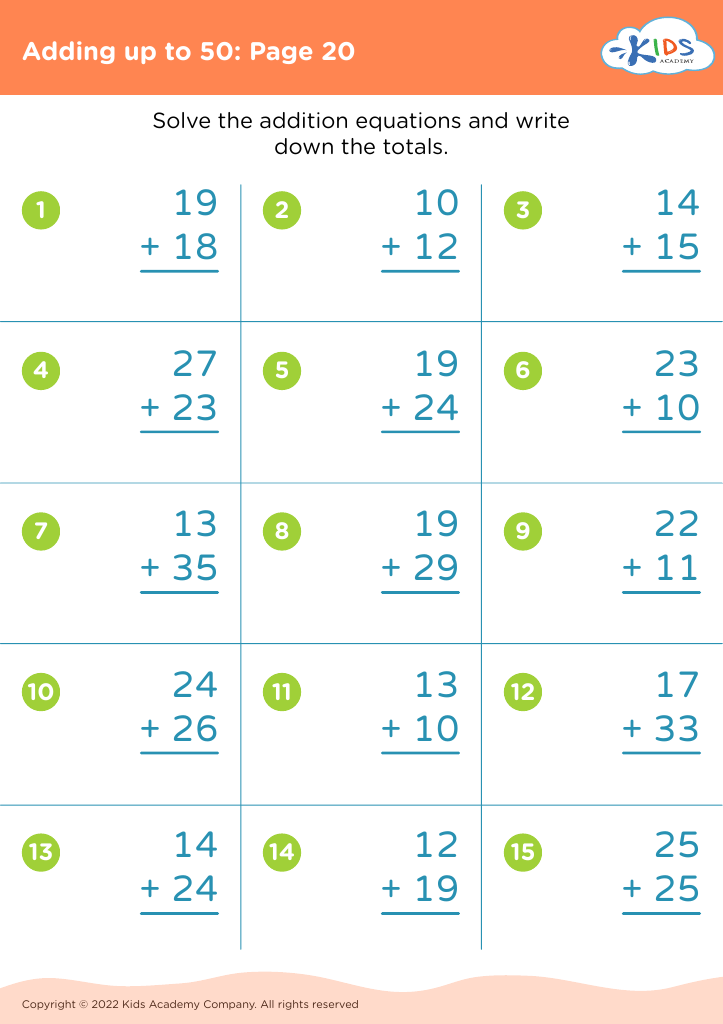
Adding up to 50: Page 20

Adding up to 50: Page 20

Adding up to 50: Page 20
Worksheet
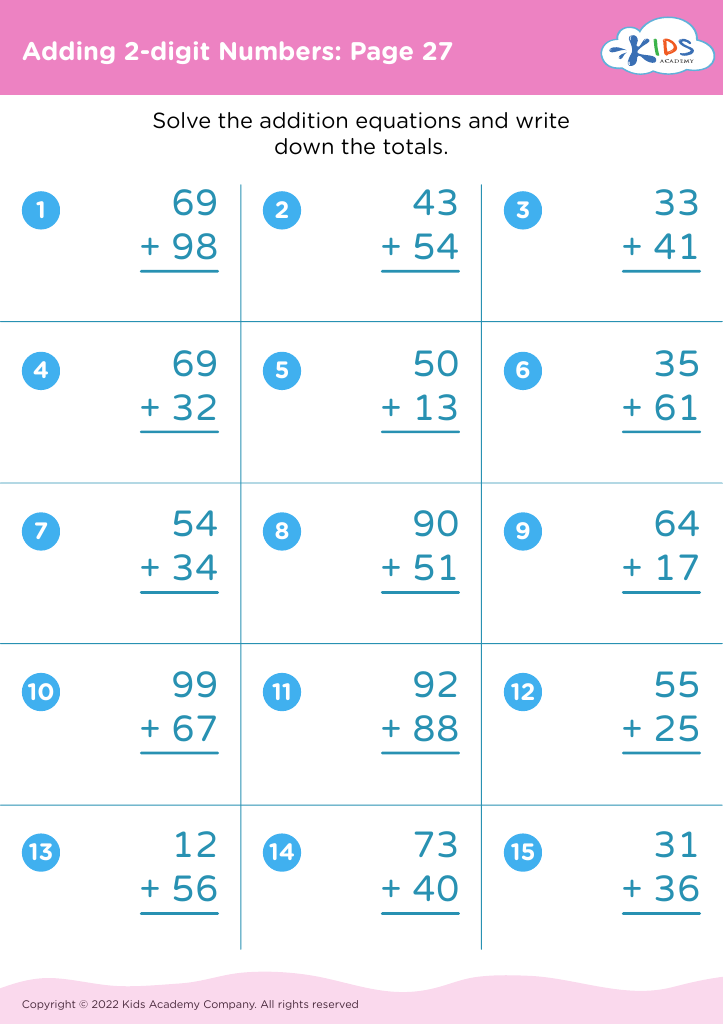
Adding 2-digit Numbers: Page 27

Adding 2-digit Numbers: Page 27

Adding 2-digit Numbers: Page 27
Worksheet


Enhancing number recognition and addition skills in 7-year-olds is vital for their cognitive development and overall academic success. At this age, children are transitioning from basic numeracy to more complex mathematical concepts, making strong foundational skills essential.

Parents and teachers should care because number recognition is not just about identifying numbers; it lays the groundwork for problem-solving and critical thinking. When children can quickly recognize numbers, they build confidence in tackling addition problems, which is crucial as equations become more complex with time.

Additionally, strong addition skills facilitate improvements in daily life interactions, such as managing money or telling time, making math feel relevant and engaging. Encouraging practice through games and interactive activities fosters a positive attitude towards math, dispelling common anxieties related to the subject.

Furthermore, a solid grasp of these concepts positively influences performance in subsequent grades, setting the stage for success in subjects that rely heavily on math. Establishing early proficiency leads to a love for learning and curiosity that extends beyond numbers, nurturing lifelong learners. Ultimately, when parents and teachers prioritize these skills, they contribute to children's comprehensive development and preparedness for future educational challenges.