Fraction simplification Addition Worksheets for 7-Year-Olds - Page 3
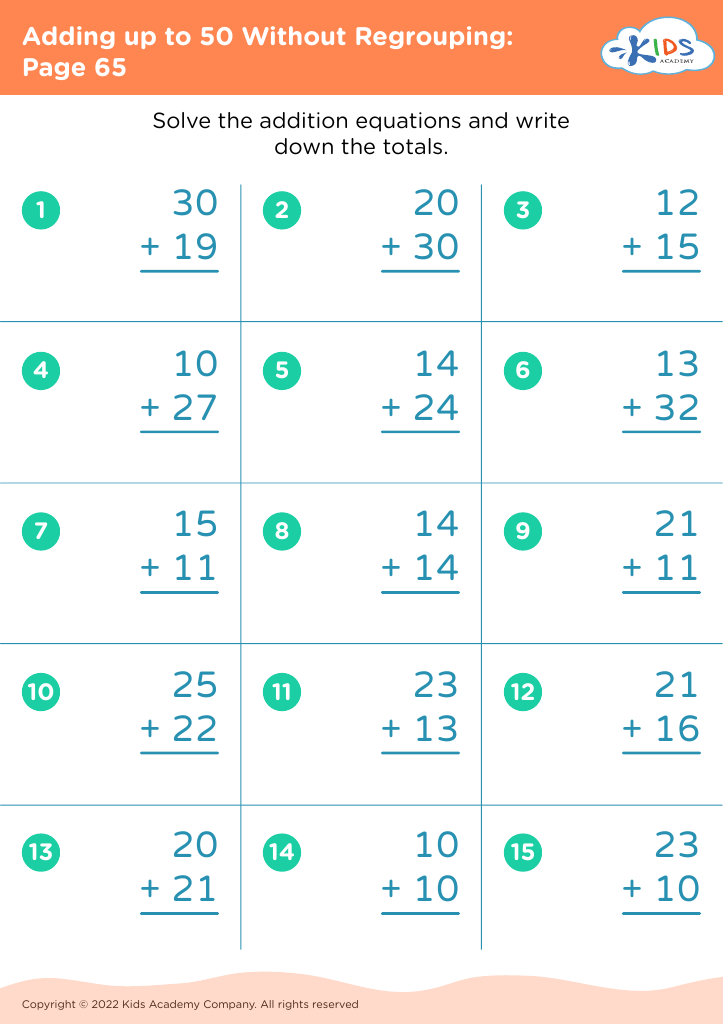
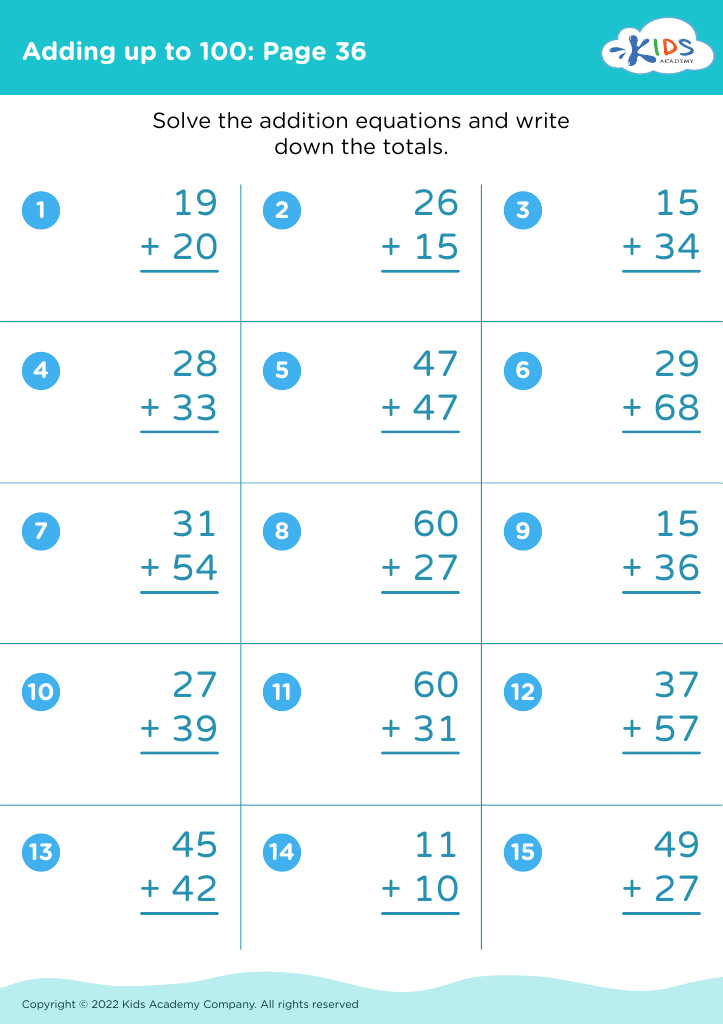
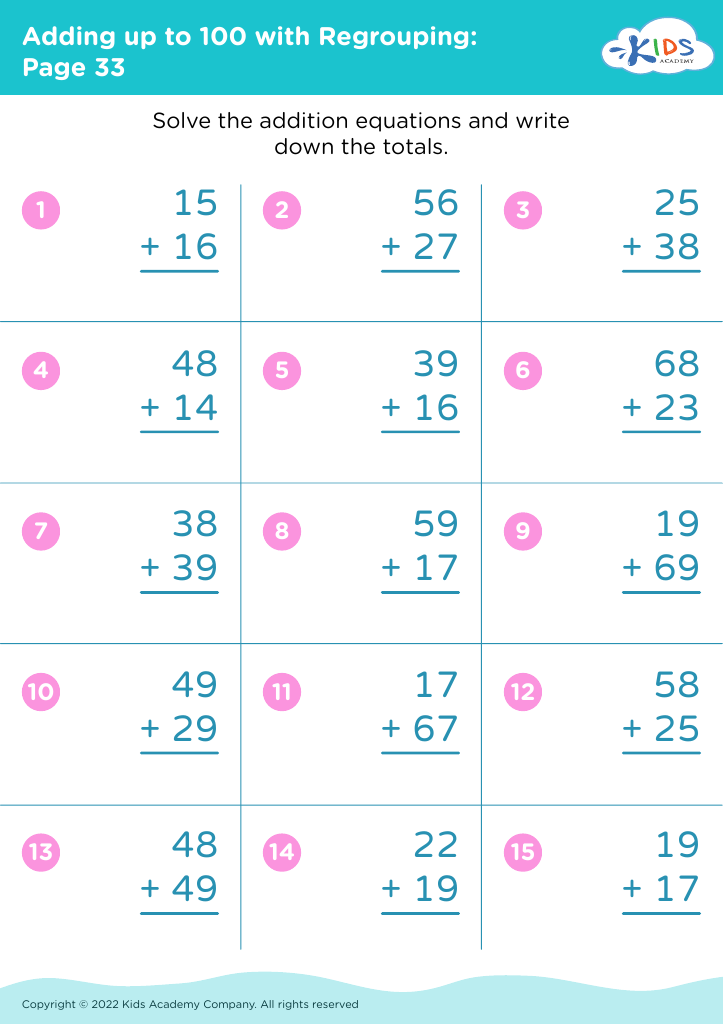
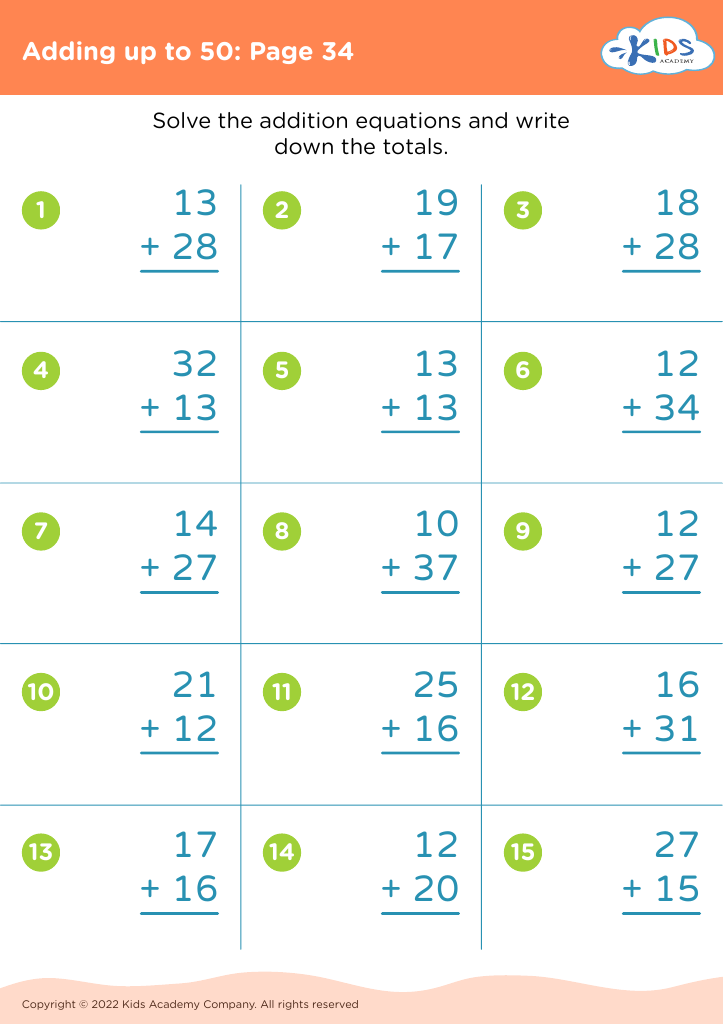








Understanding fraction simplification and addition is crucial for 7-year-olds as it lays the foundation for their future mathematical skills. At this age, children develop essential problem-solving abilities, and grasping fractions helps them relate to everyday situations, like sharing food or dividing toys. Parents and teachers play a vital role in fostering this understanding. Simplifying fractions teaches children to recognize equivalent properties, enhancing their analytical reasoning.
As they learn to add fractions, they'll practice critical thinking and logical reasoning. This process isn’t limited to fractions; the skills they gain will aid in mastering other math concepts later on, such as decimals and percentages. Furthermore, a strong grasp of fractions supports their overall confidence in mathematics, which can influence their attitude towards the subject in the long run.
Additionally, encouraging a positive mindset towards math can bridge gaps in learning and help students overcome difficulties.Educators and parents should provide engaging and interactive resources to make this learning enjoyable. In involving real-life applications of fractions, they can help children see the relevance of math in their daily lives. Ultimately, attention to fraction simplification and addition fosters awareness, collaboration, and ensures holistic development—both academically and emotionally—for these young learners.








