
Number identification Addition Worksheets for 7-Year-Olds
4 filtered results
Difficulty Level
Grade
Age
-
From - To
Subject
Activity
Standards
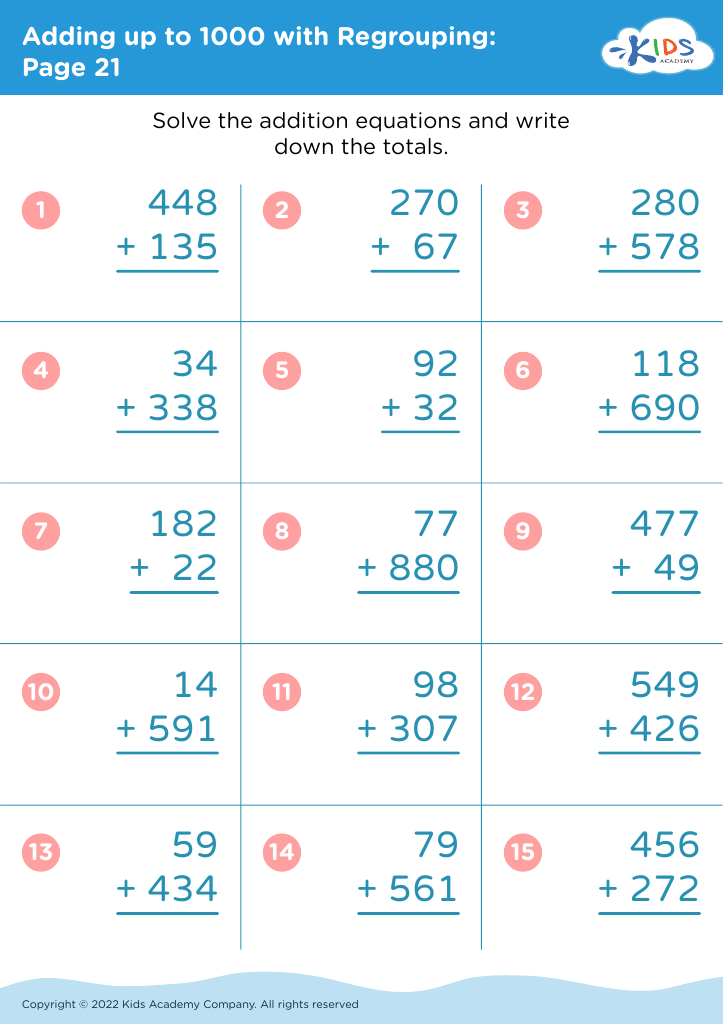
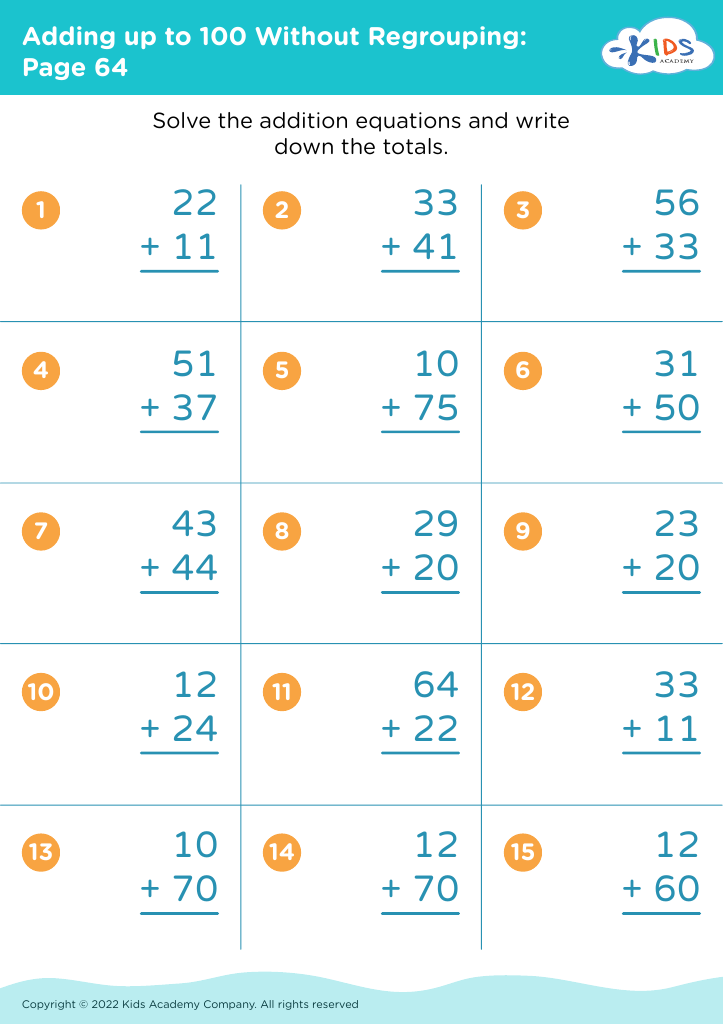
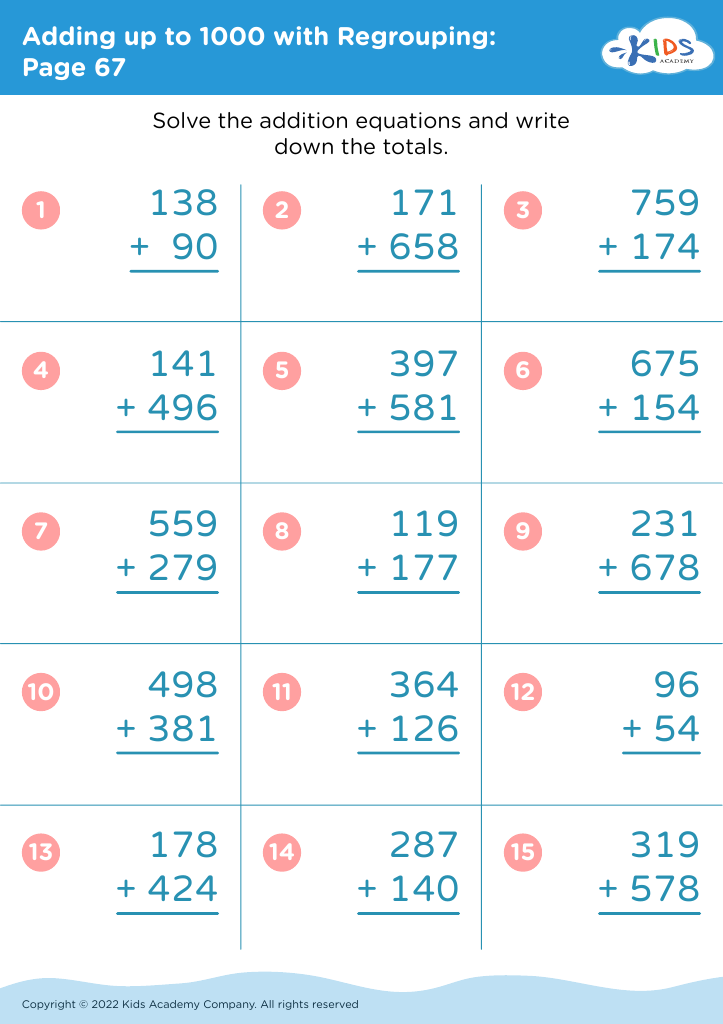
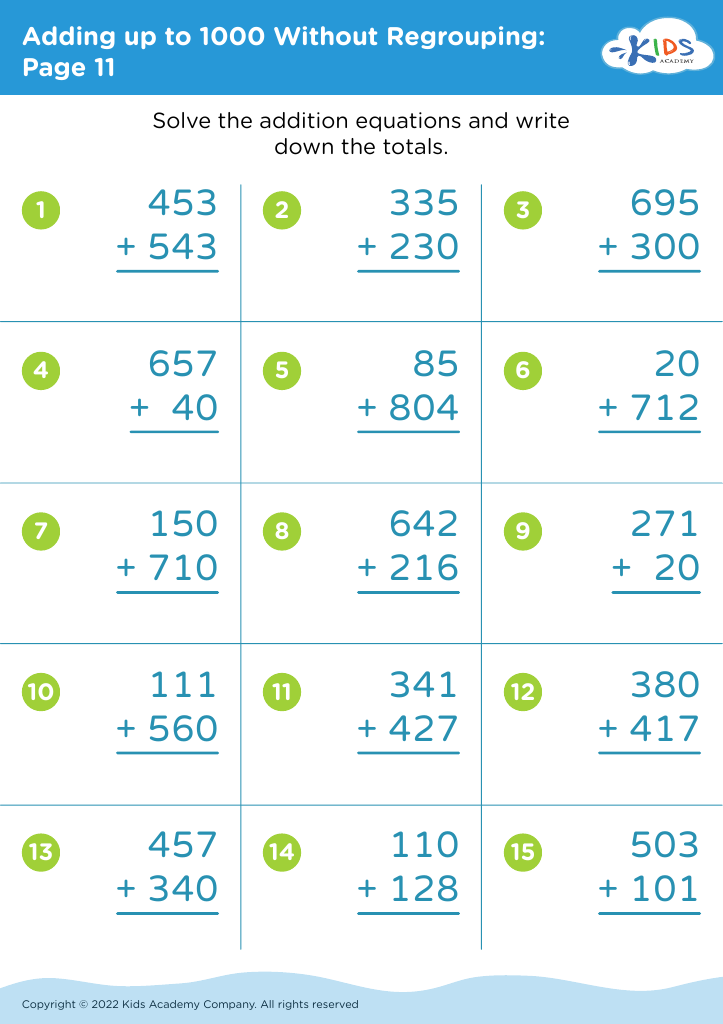
Enhance your 7-year-old's math skills with our engaging Number Identification Addition Worksheets. Designed to reinforce number recognition and addition concepts, these interactive worksheets provide a fun and effective way for children to practice identifying numbers while solving simple addition problems. Featuring vibrant illustrations and age-appropriate exercises, our worksheets promote active learning and boost confidence in young learners. Each worksheet encourages critical thinking and helps kids develop foundational math skills essential for their educational journey. Perfect for both classroom settings and at-home practice, our Number Identification Addition Worksheets ensure a comprehensive learning experience that makes mastering math enjoyable! Explore our collection today!
Favorites
With answer key
Interactive
Join Kids Academy for Free
Who is primarily going to use this learning content?








Number identification and addition are foundational skills critical for a 7-year-old's academic success and overall cognitive development. As children begin to explore more complex mathematical concepts, a solid grasp of number identification helps them recognize and understand the relationships between numbers. This skill is essential for performing basic arithmetic operations, which form the building blocks for future mathematics.
Moreover, understanding addition fosters critical thinking and problem-solving abilities. As children learn to combine numbers, they develop logical reasoning skills and an ability to analyze situations. These competencies are not only crucial in math but also enhance their decision-making skills, both academically and in everyday life.
Parents and teachers play pivotal roles in this learning process. By emphasizing number identification and addition, they create a supportive environment that nurtures confidence in math. Moreover, engaging children in interactive and playful learning experiences makes math enjoyable, reducing anxiety associated with the subject. Ultimately, caring about these early math skills lays a strong foundation for children’s future learning, paving the way for success in more advanced concepts and fostering a lifelong appreciation for mathematics. This investment in early education will positively influence their overall academic trajectory.








