Filters

135 filtered results

Clear all filters
Favorites
With answer key
Interactive

135 filtered results

Difficulty Level

Grade


Check out this FREE Trial Lesson on Addition for age 7!

Odd or Even

Favorites
With answer key
Interactive
  • 7
  • Number Recognition
  • Addition
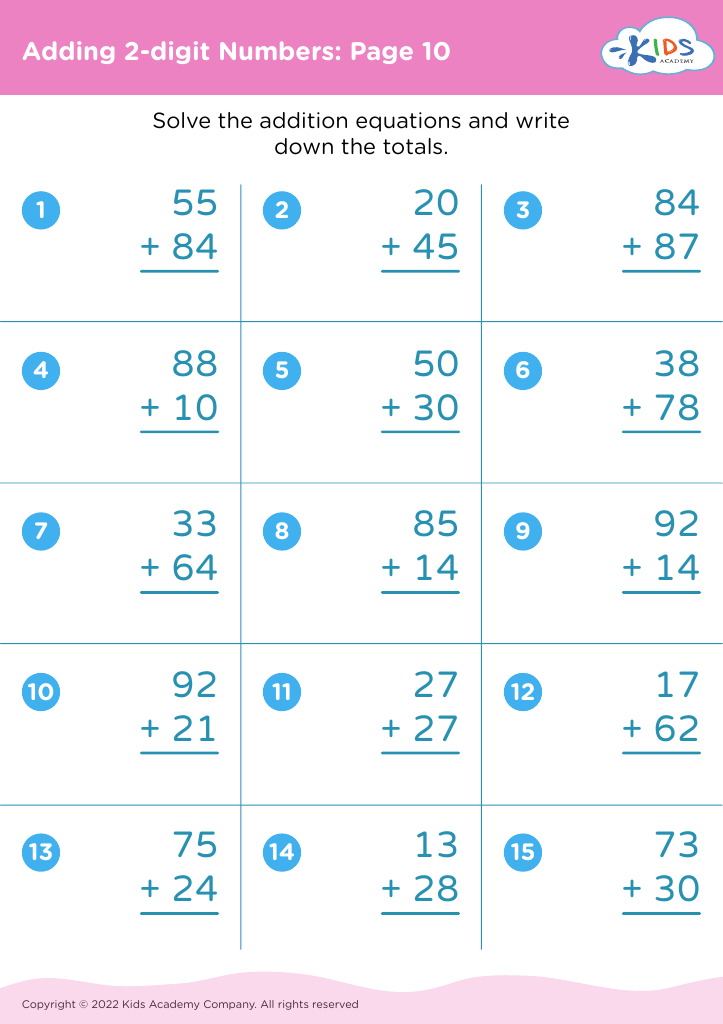
Adding 2-digit Numbers: Page 10

Adding 2-digit Numbers: Page 10

Adding 2-digit Numbers: Page 10
Worksheet
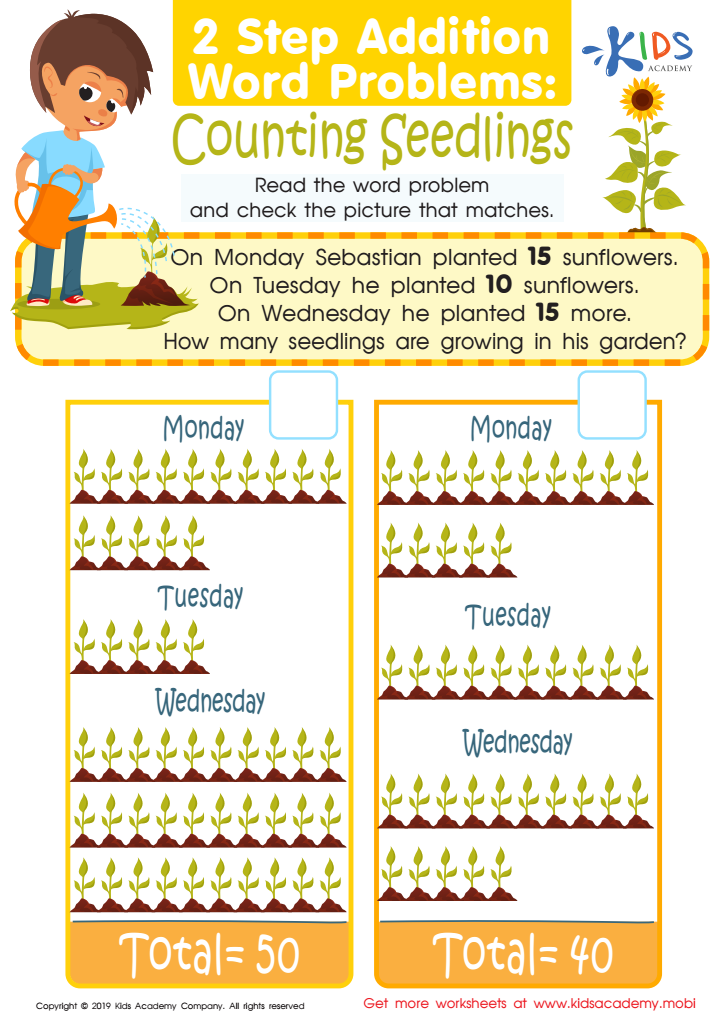
Counting Seedlings Worksheet

Counting Seedlings Worksheet

Understanding math word problems is key. Multiple steps can prove challenging - this free worksheet provides one-to-one picture representation to help kids solve multi-step addition word problems. Strengthen addition skills by choosing the matching picture to the answer.
Counting Seedlings Worksheet
Worksheet
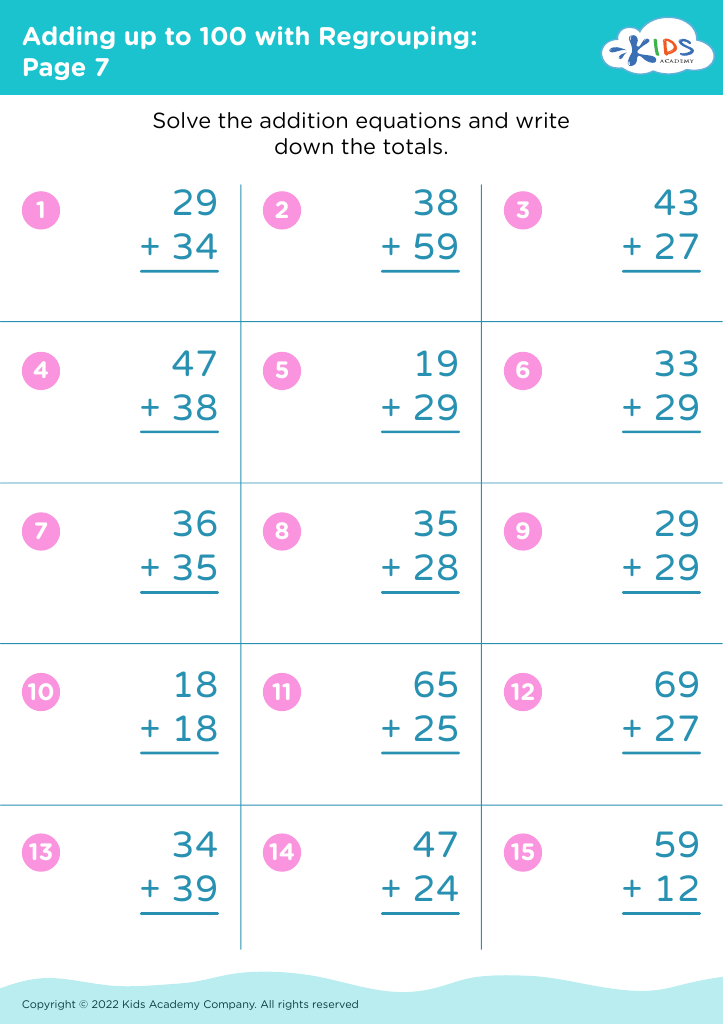
Adding up to 100 with Regrouping: Page 7
Worksheet
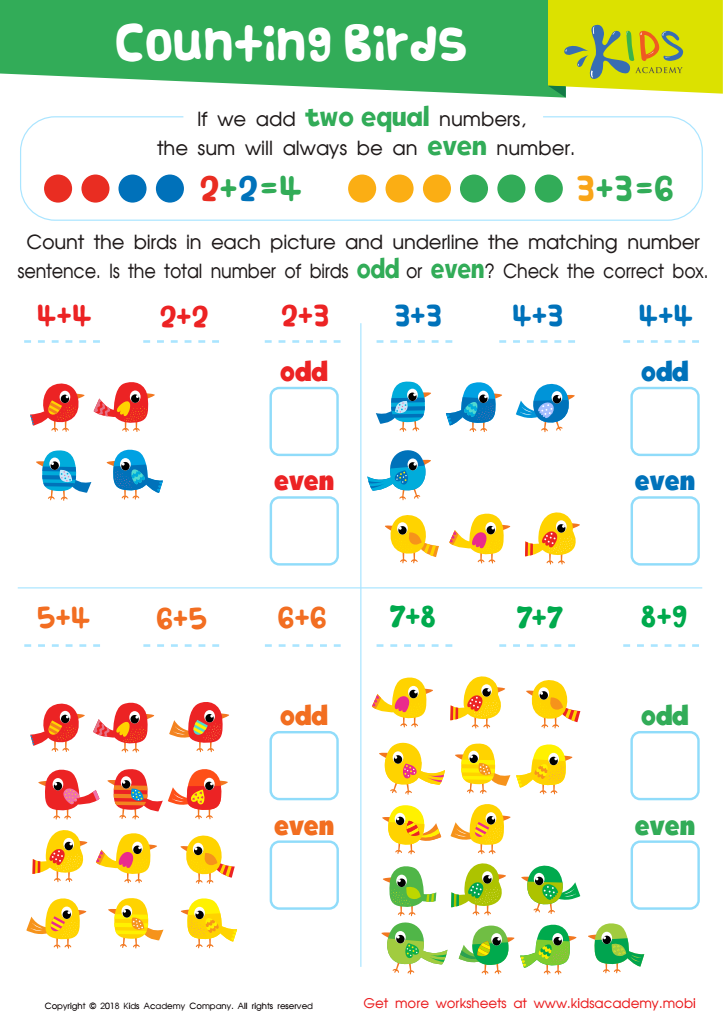
Counting Birds Worksheet

Counting Birds Worksheet

Help your child count and underline the matching number sentence in the worksheet. Ask them if the total number of birds in each picture is odd or even, then check the correct box. When two equal numbers are added, the sum is always an even number (e.g. 2+2=4, 4+4=8, both divisible by 2).
Counting Birds Worksheet
Worksheet
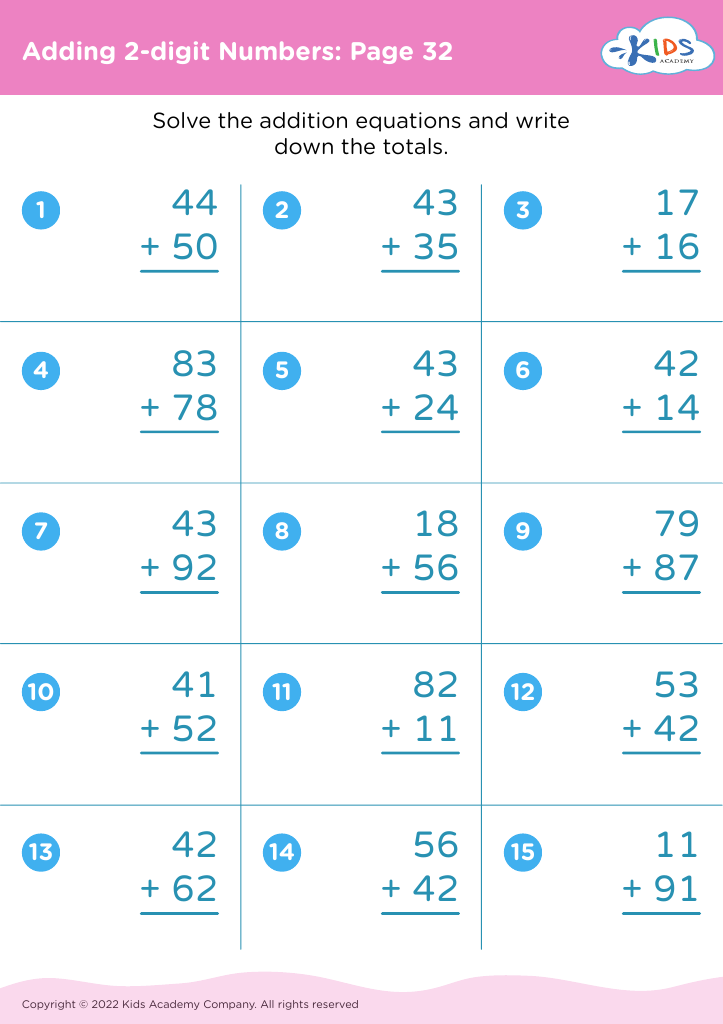
Adding 2-digit Numbers: Page 32

Adding 2-digit Numbers: Page 32

Adding 2-digit Numbers: Page 32
Worksheet
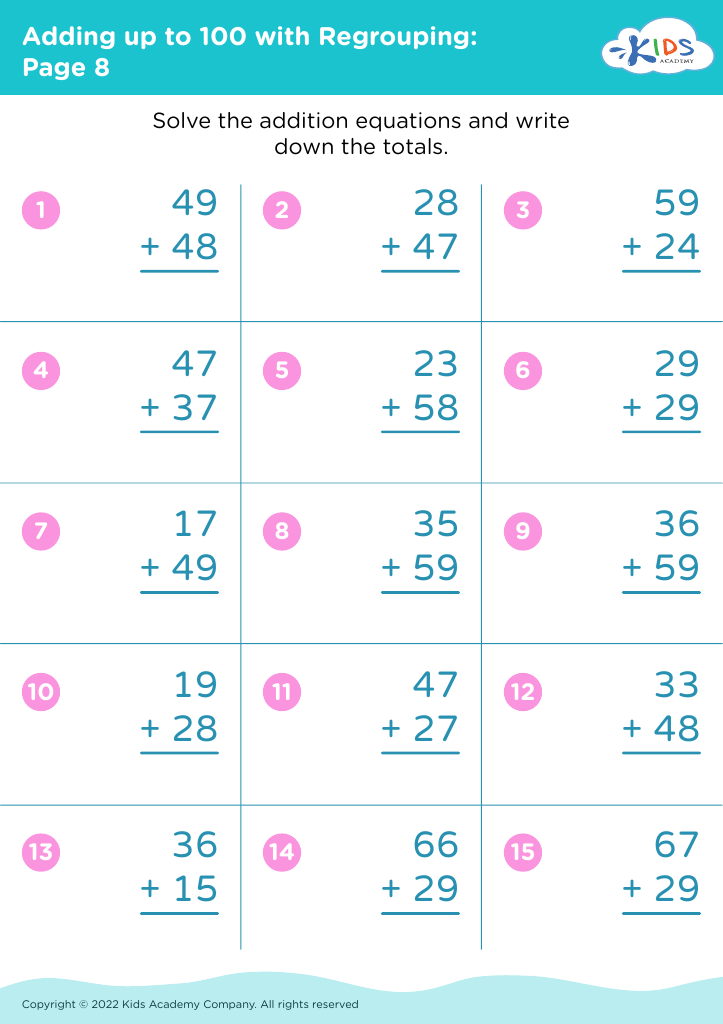
Adding up to 100 with Regrouping: Page 8
Worksheet
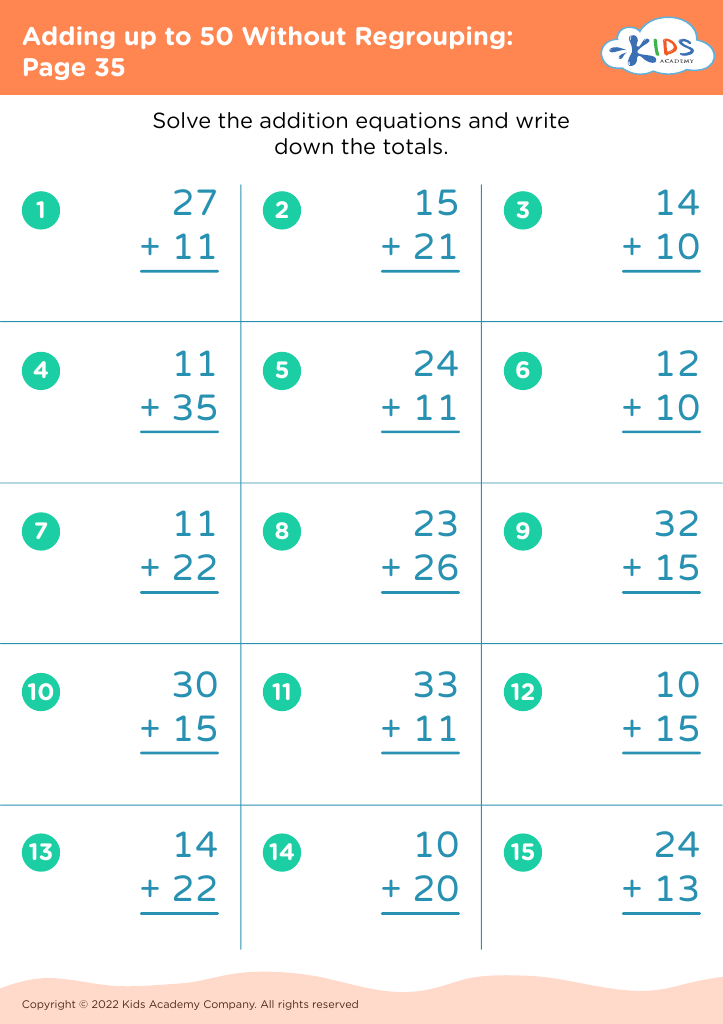
Adding up to 50 Without Regrouping: Page 35
Worksheet
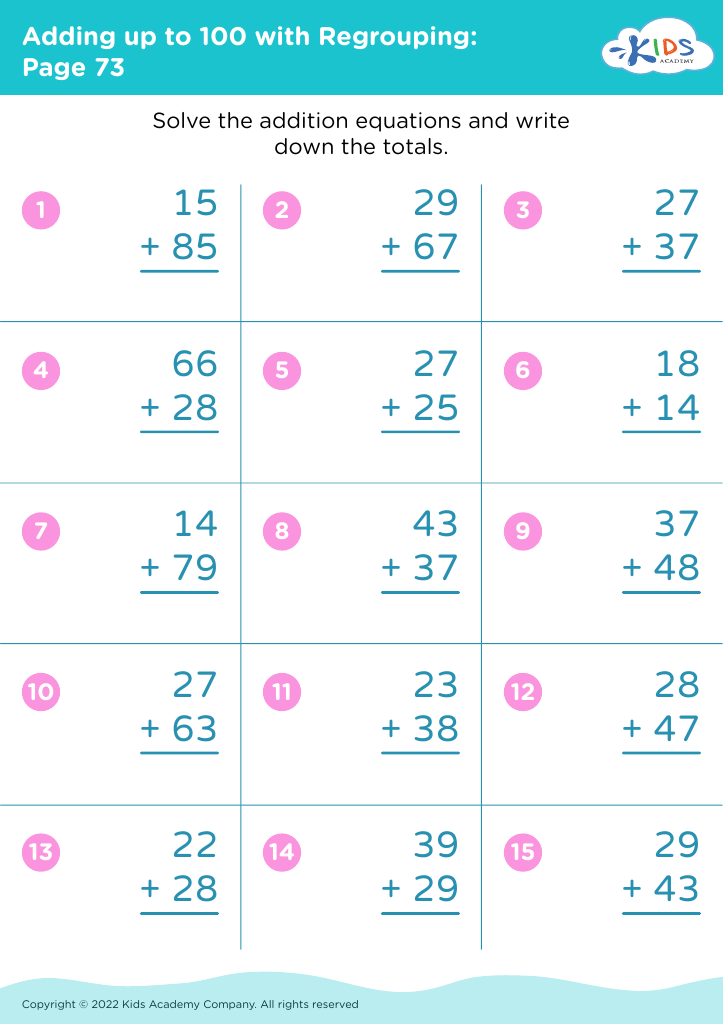
Adding up to 100 with Regrouping: Page 73
Worksheet
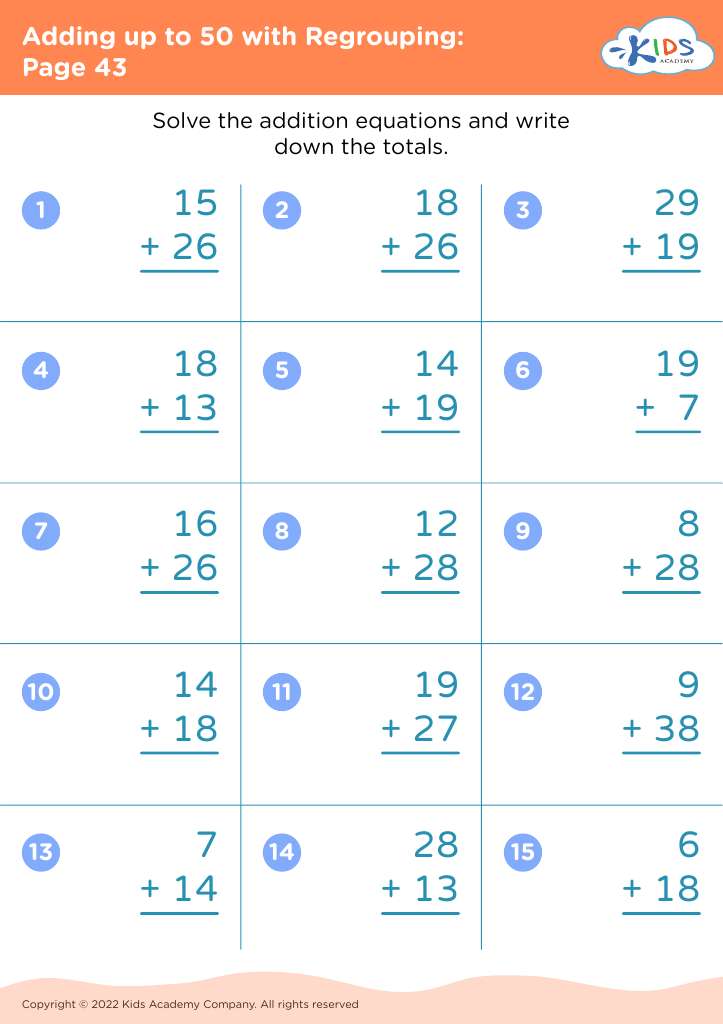
Adding up to 50 with Regrouping: Page 43
Worksheet
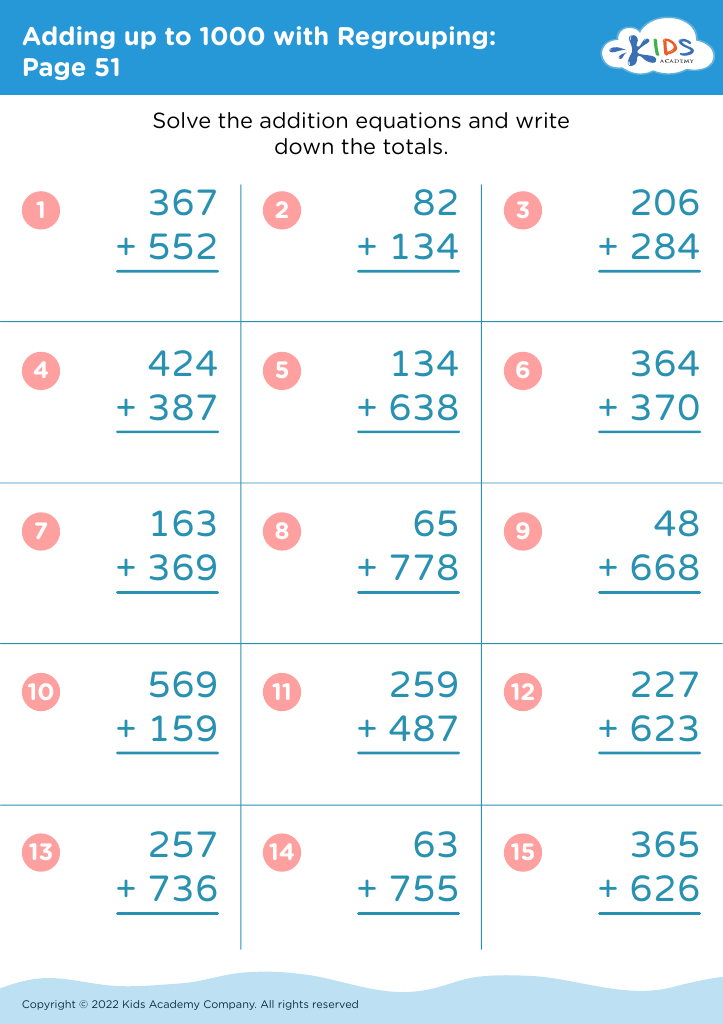
Adding up to 1000 with Regrouping: Page 51
Worksheet
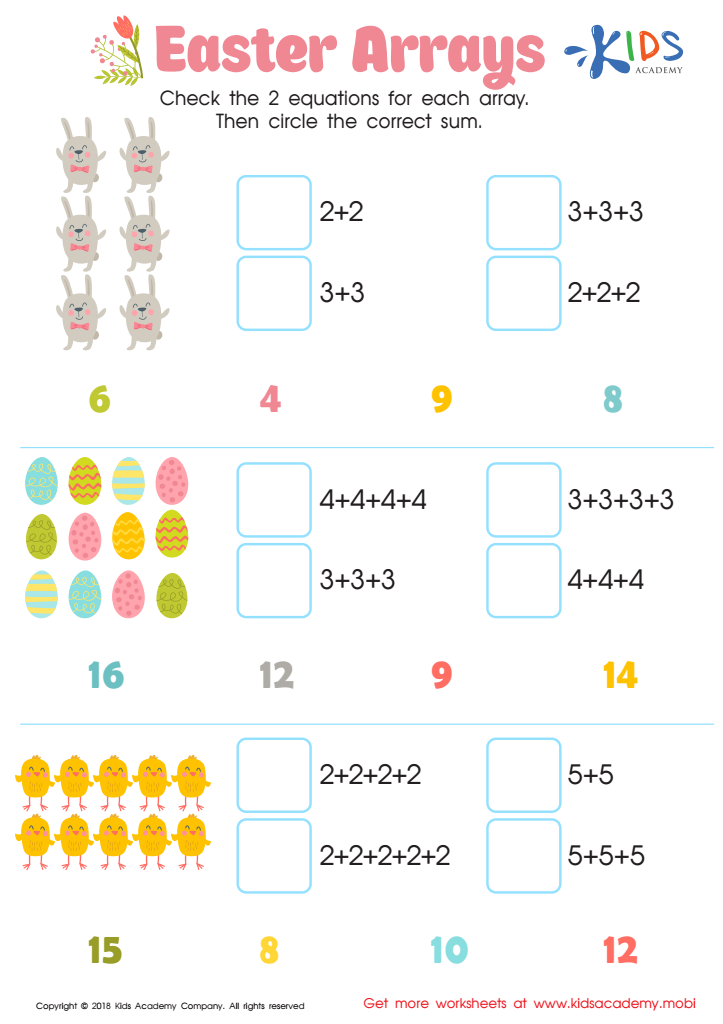
Easter Arrays Worksheet

Easter Arrays Worksheet

Does your child love Easter? Do they adore the Easter bunny and egg hunts? Help them have fun with this worksheet! Go through it with them and check the equations for each array. Then, have them circle the correct sum. It's a great way to make the holiday extra exciting!
Easter Arrays Worksheet
Worksheet
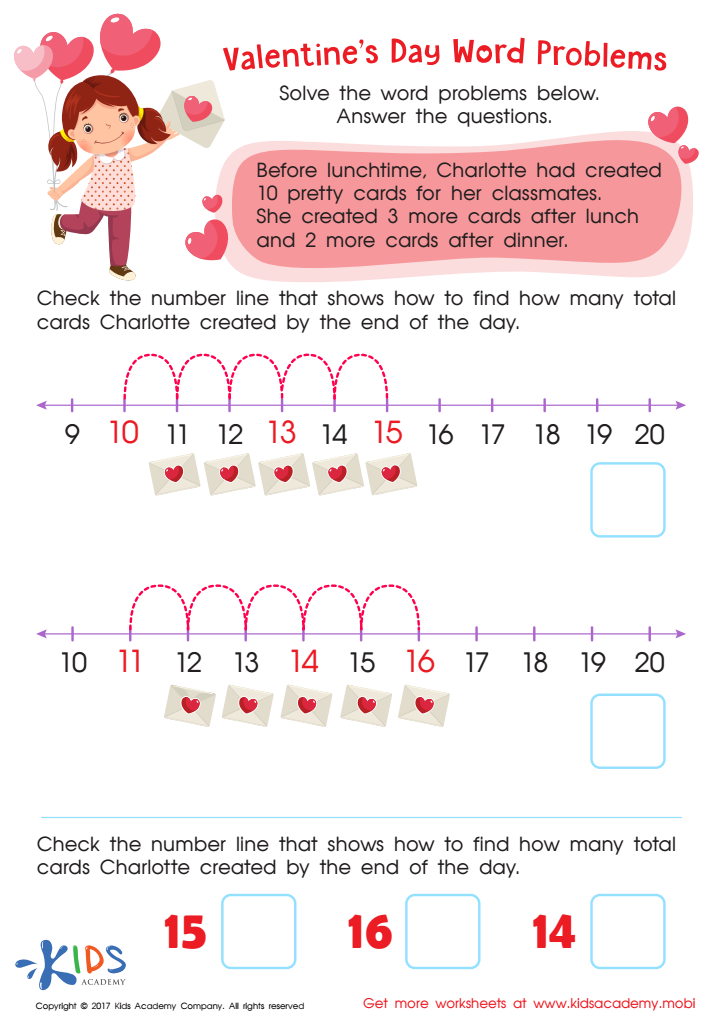
Valentine’s Day word problems worksheet

Valentines Day Word Problem Worksheet
This Valentine's Day worksheet will help your child practice using a number line to solve an addition problem. It's a great way to boost confidence and make solving word problems a breeze.
Valentines Day Word Problem Worksheet
Worksheet
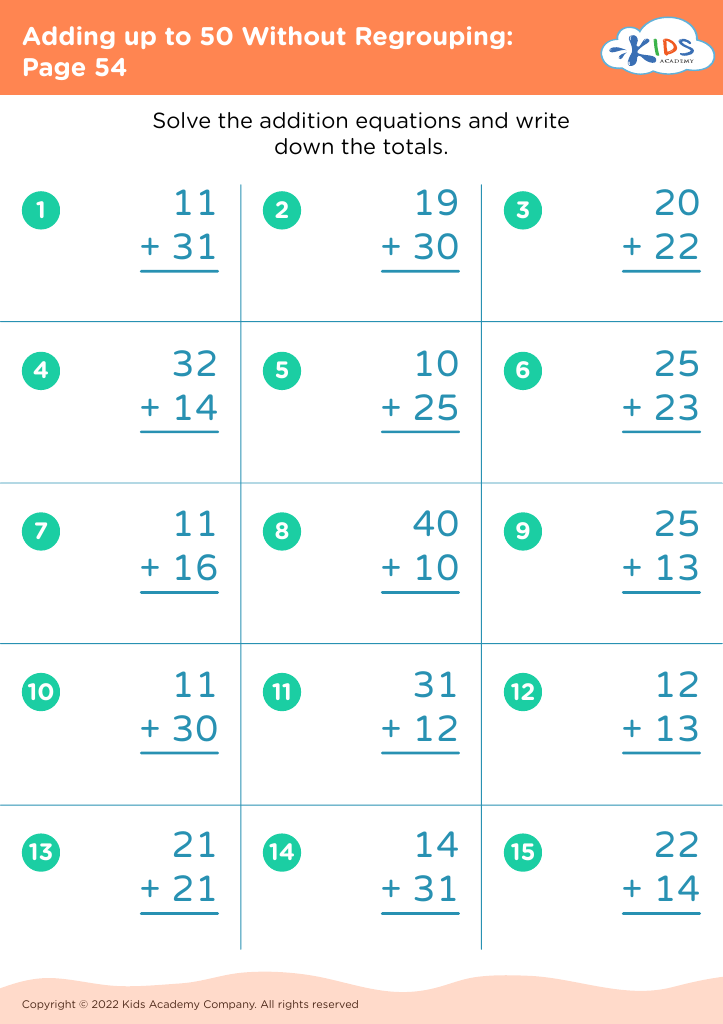
Adding up to 50 Without Regrouping: Page 54
Worksheet
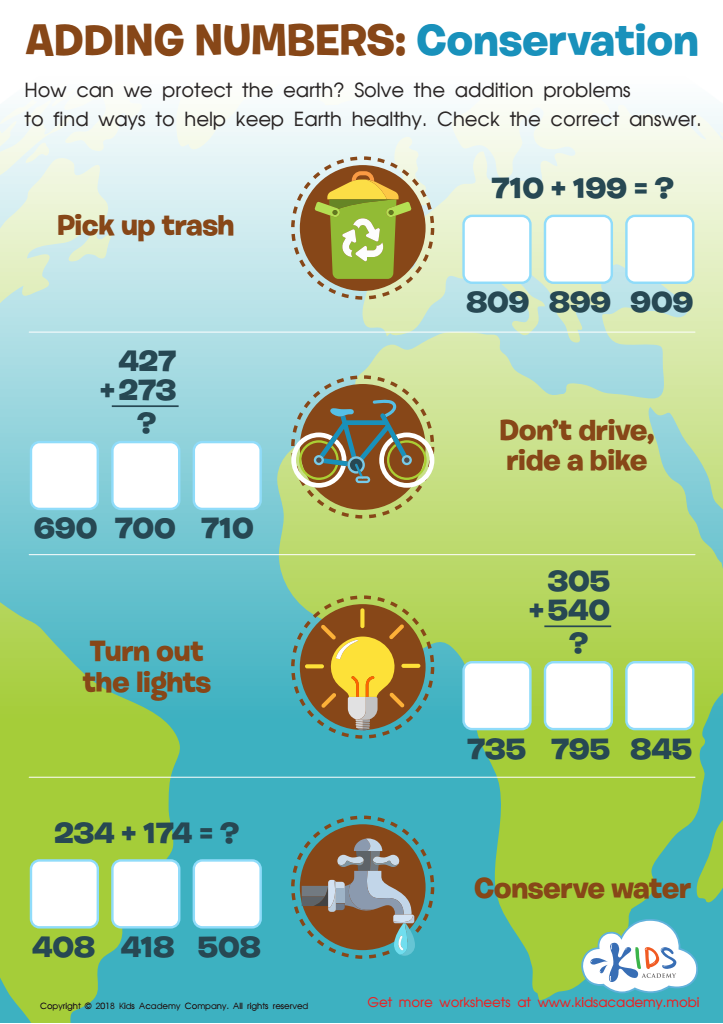
Adding Numbers: Conservation Worksheet
Adding Numbers: Conservation Worksheet
We all live on the Earth, which provides us with the vital necessities for survival. Unfortunately, we too often take advantage of this, causing pollution, water wastage and global warming. Help teach your kids how we can protect our planet - ask them to come up with good ideas and work together to find solutions. Challenge them to solve the subtraction problems to see what they can do to help keep the Earth healthy.
Adding Numbers: Conservation Worksheet
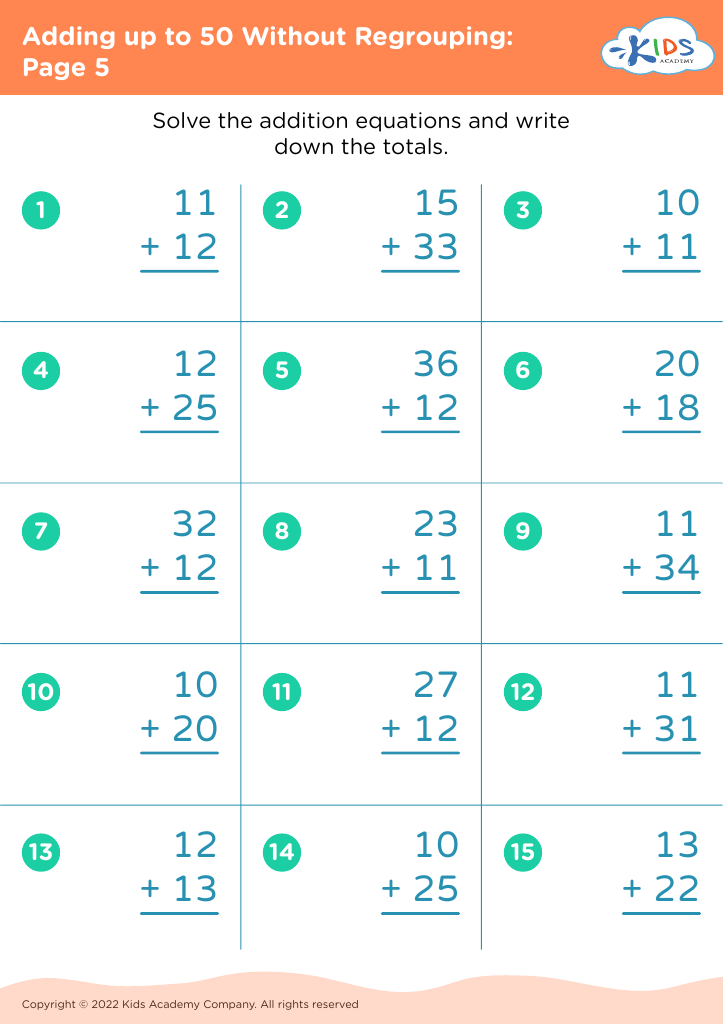
Worksheet
Adding up to 50 Without Regrouping: Page 5
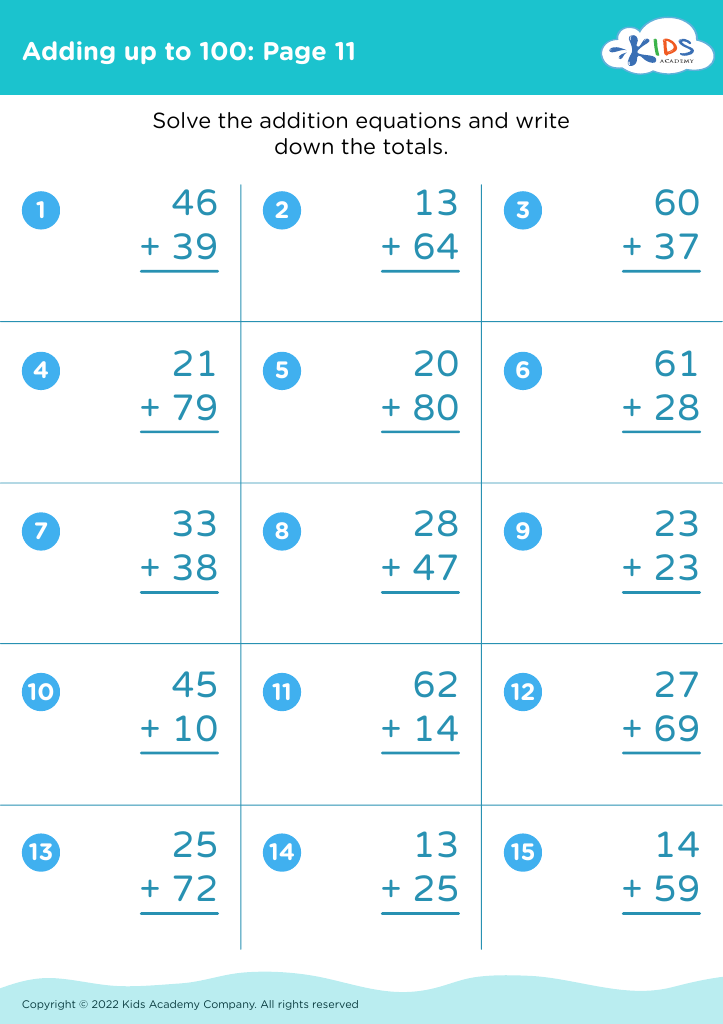
Worksheet
Adding up to 100: Page 11

Adding up to 100: Page 11

Adding up to 100: Page 11
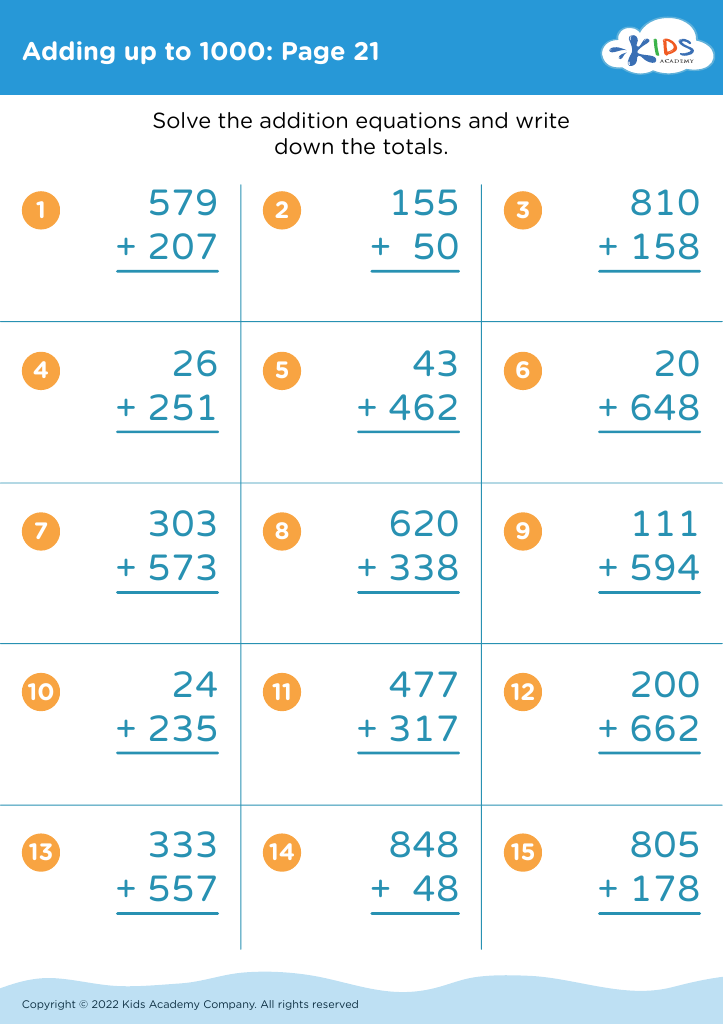
Worksheet
Adding up to 1000: Page 21

Adding up to 1000: Page 21

Adding up to 1000: Page 21
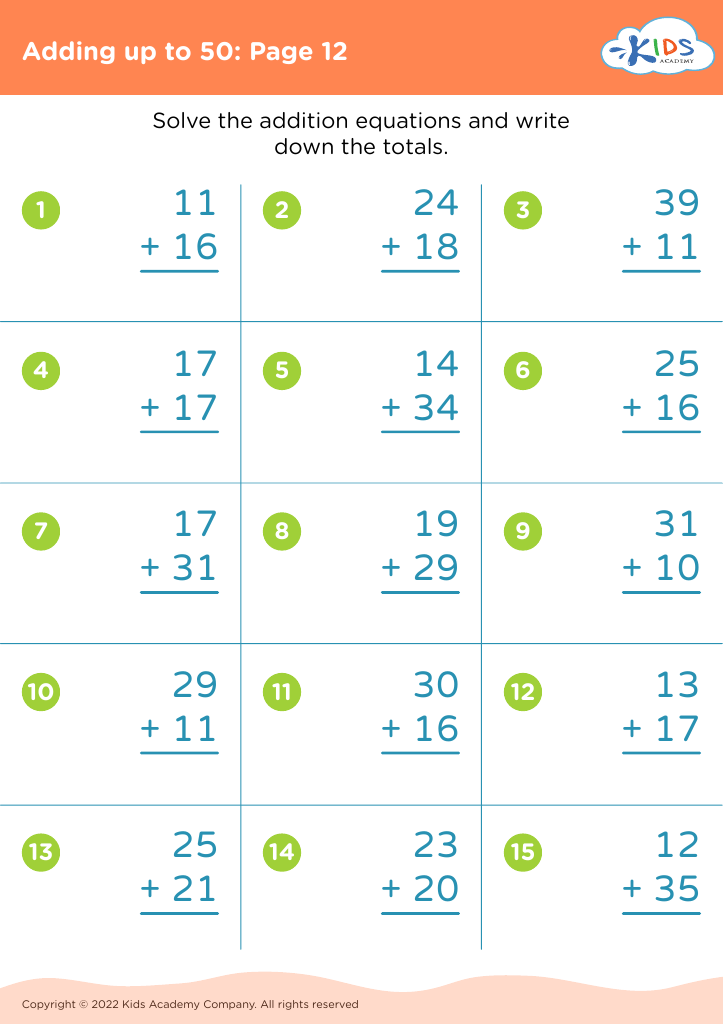
Worksheet
Adding up to 50: Page 12

Adding up to 50: Page 12

Adding up to 50: Page 12
Worksheet
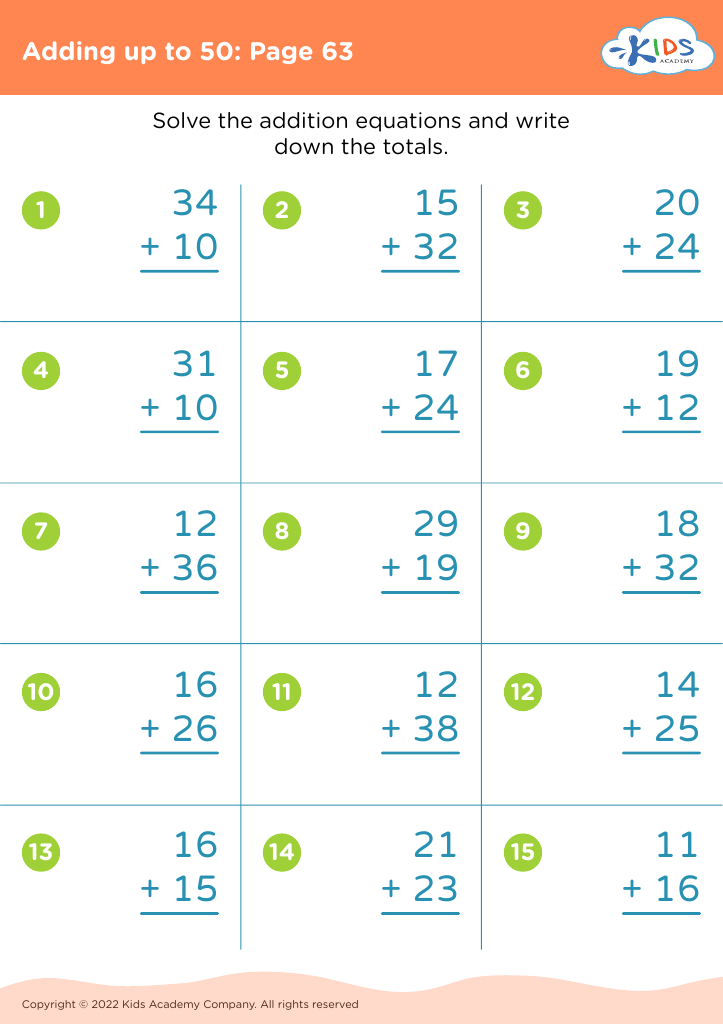
Adding up to 50: Page 63

Adding up to 50: Page 63

Adding up to 50: Page 63
Worksheet
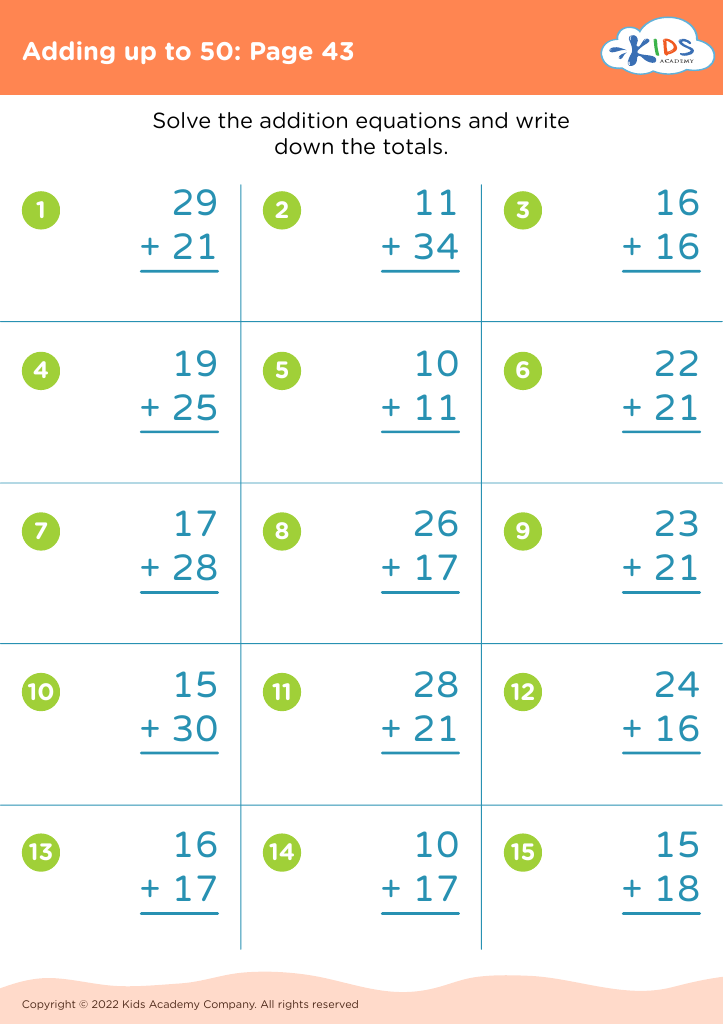
Adding up to 50: Page 43

Adding up to 50: Page 43

Adding up to 50: Page 43
Worksheet
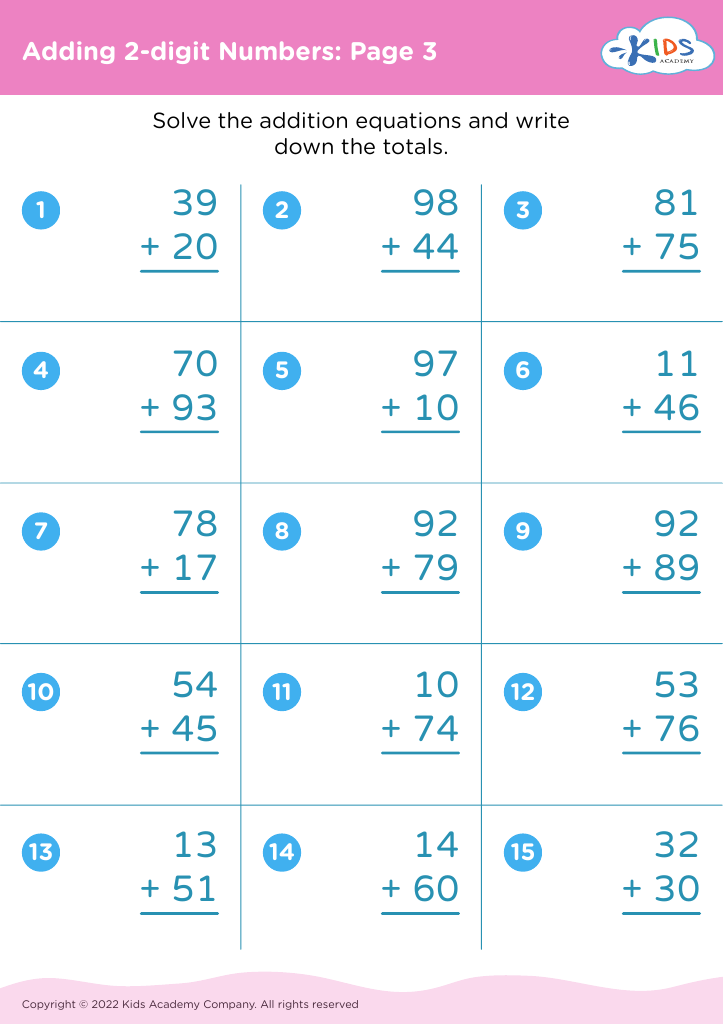
Adding 2-digit Numbers: Page 3

Adding 2-digit Numbers: Page 3

Adding 2-digit Numbers: Page 3
Worksheet
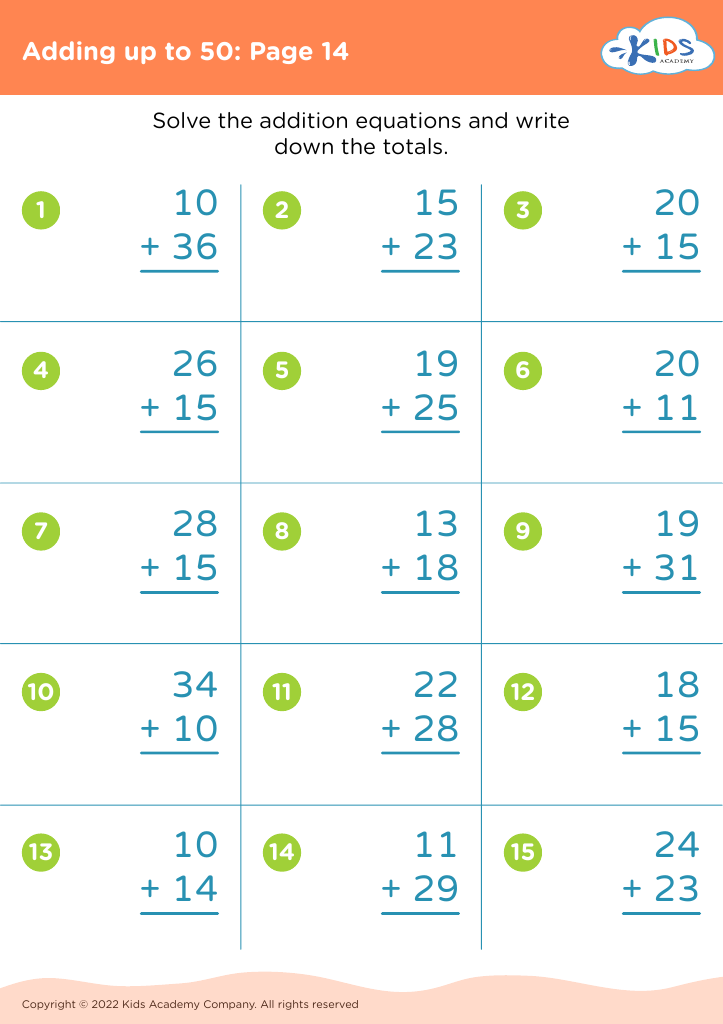
Adding up to 50: Page 14

Adding up to 50: Page 14

Adding up to 50: Page 14
Worksheet
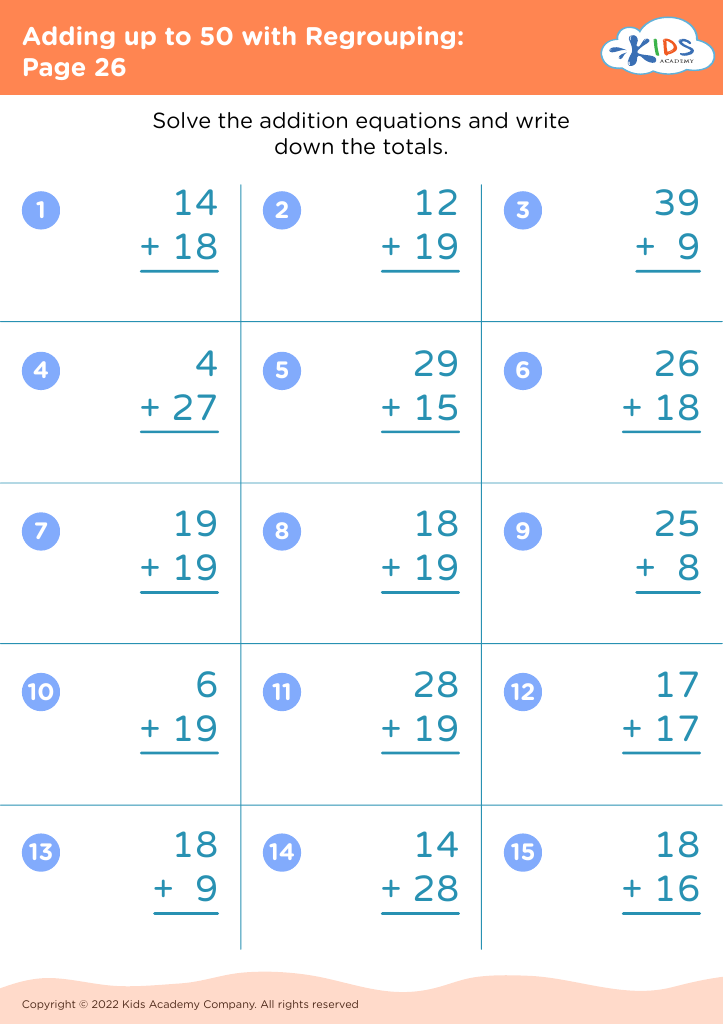
Adding up to 50 with Regrouping: Page 26
Worksheet
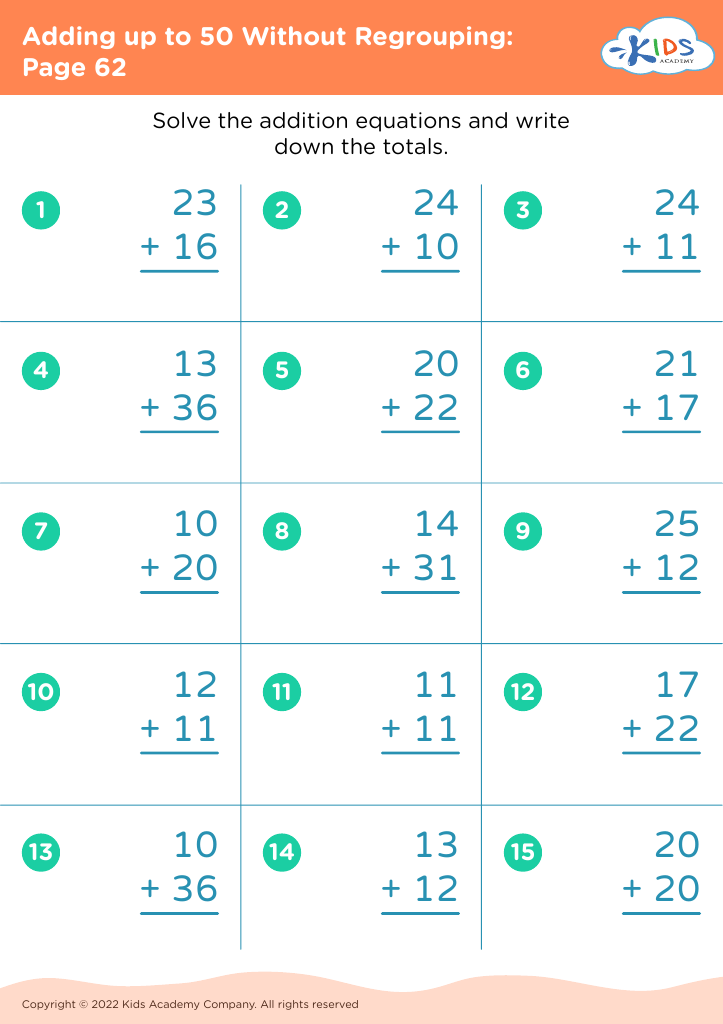
Adding up to 50 Without Regrouping: Page 62
Worksheet


Number recognition and addition are fundamental skills for 7-year-olds, forming the bedrock of their future success in math and everyday life tasks. Number recognition involves identifying, understanding, and associating numerical values with quantities, which is critical for performing basic arithmetic operations such as addition.

For parents and teachers, it’s crucial to understand that developing these skills early helps children build a strong numerical foundation, boosting their confidence and competence in math-related activities. Mastery of number recognition allows children to navigate simple counting, which then seamlessly transitions into understanding addition.

Addition is often one of the first arithmetic skills children learn, helping them to develop logical thinking, problem-solving abilities, and analytical reasoning. These are essential skills not only in academic settings but in everyday situations like making purchases and understanding time. Furthermore, early competence in addition and number recognition often correlates with improved performance in other academic areas, such as science and technology, which are increasingly important in today's world.

Fostering these skills through engaging activities and games can also make learning enjoyable, encouraging a positive attitude towards math. In the long term, a solid grasp of early math concepts sets children on a path toward academic achievement and practical, real-world problem-solving capabilities.