Numerical problem solving Addition Worksheets for 7-Year-Olds
3 filtered results
-
From - To
Welcome to our collection of Numerical Problem Solving Addition Worksheets designed specifically for 7-year-olds! These engaging worksheets help young learners develop essential addition skills through fun and challenging scenarios. By working through various problems, children will enhance their critical thinking and reasoning abilities while reinforcing their understanding of addition concepts. Our printable resources are perfect for homework, classroom activities, or extra practice at home. Encourage your child's math confidence and problem-solving skills with our thoughtfully created worksheets that cater to different learning styles. Dive into the world of numbers and make math exciting for your child today!
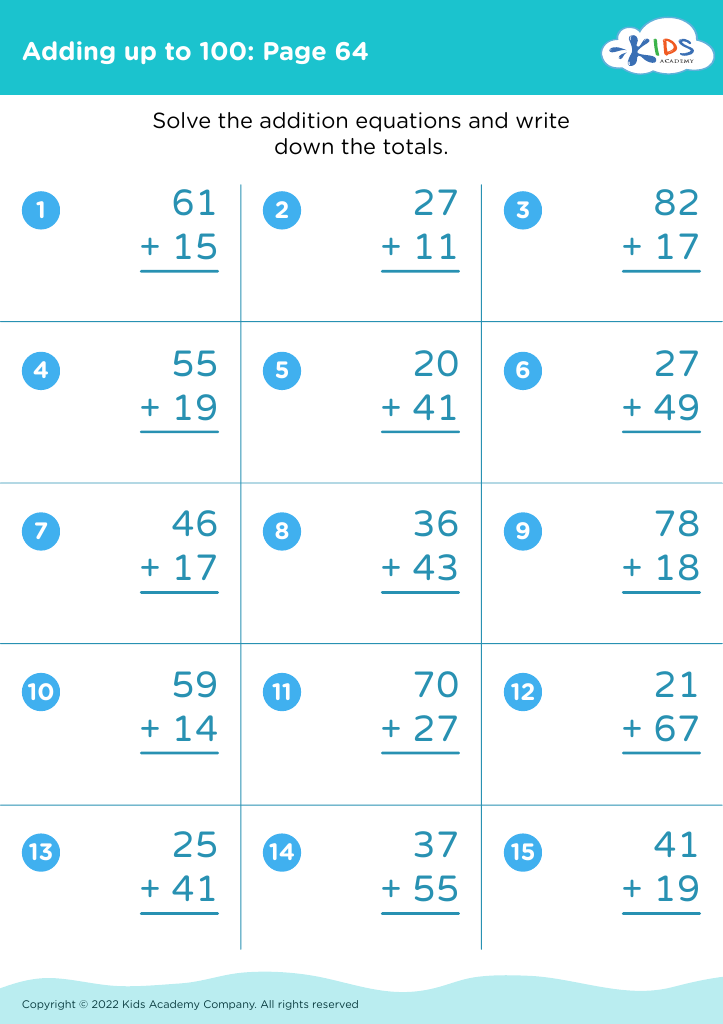
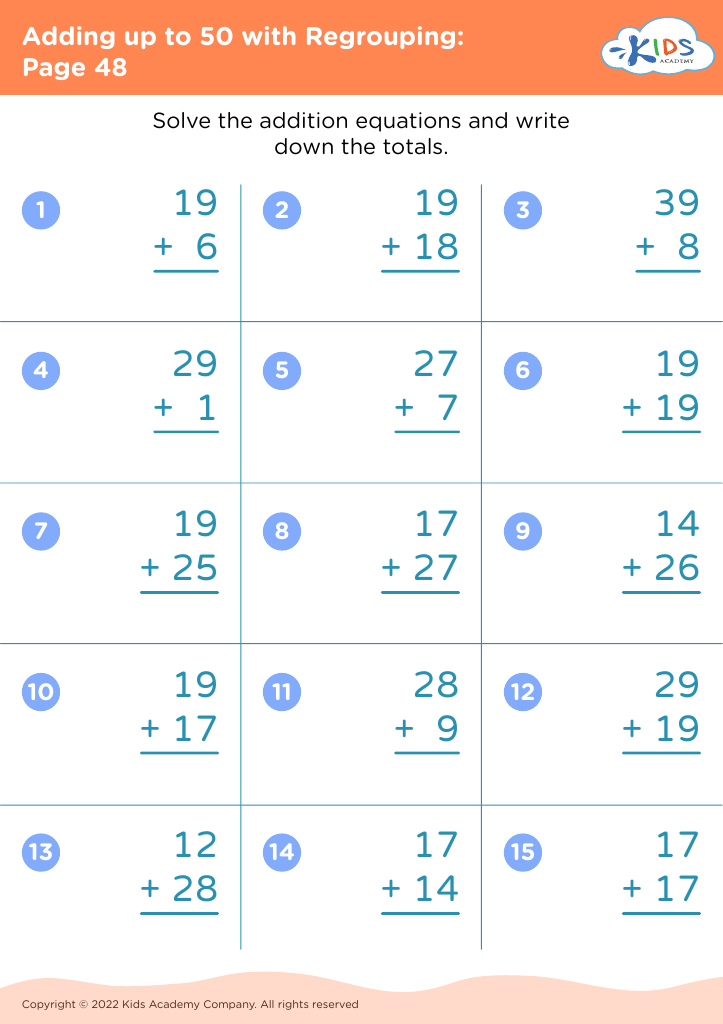
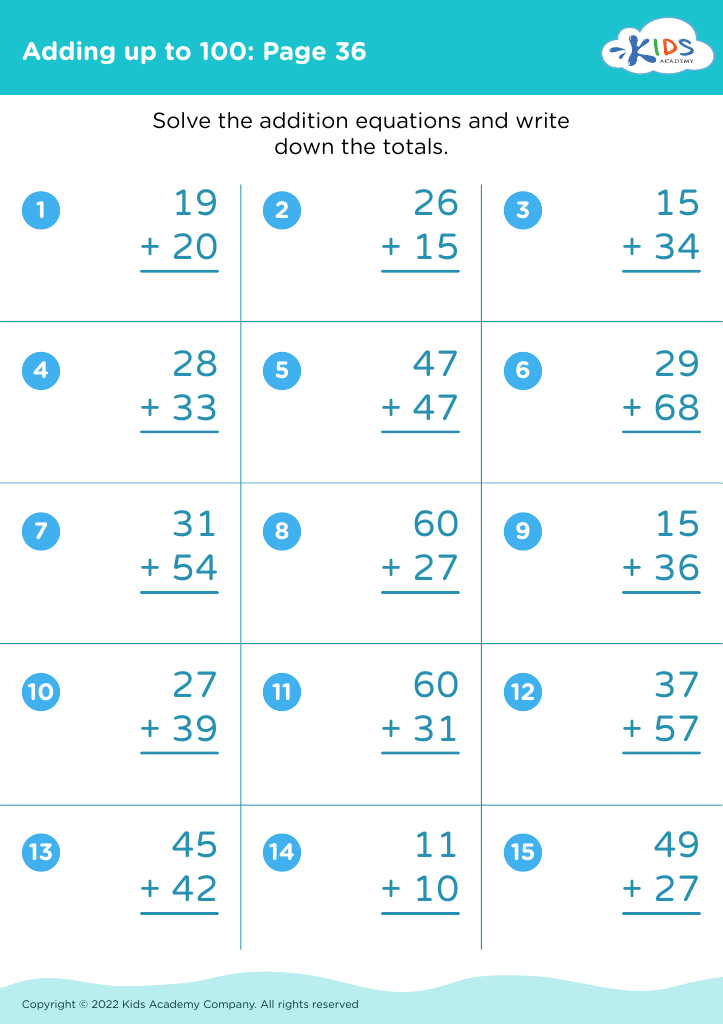








Numerical problem solving, particularly in addition, plays a critical role in the development of a 7-year-old's cognitive and academic skills. At this stage, children are transitioning from basic counting to more complex thinking, making it the perfect time to enhance their mathematical abilities. Parents and teachers should prioritize this skill as it lays a foundational understanding of mathematics that is essential for future learning.
Supporting addition problem solving fosters critical thinking and logical reasoning. It encourages children to not just recognize numbers but also understand relationships between them. Mastery in addition boosts confidence, making children more willing to tackle new mathematical concepts. Furthermore, strong numeracy skills are linked to success in various subjects beyond math, impacting overall academic achievement.
Moreover, engaging in numerical problem solving can enhance fine motor skills and focus, as children often employ physical objects, such as counters or manipulatives, to solve problems. It also cultivates perseverance and resilience as students learn to approach complex challenges.
Involving parents and teachers in this process provides a well-rounded support system. They can create enriching environments at home and school, making learning both enjoyable and impactful. Ultimately, fostering numerical problem-solving skills is essential for nurturing a child's overall development.








