Filters

21 filtered results

Clear all filters
Favorites
With answer key
Interactive

21 filtered results

Difficulty Level

Grade


Discover our "Recognizing Patterns Addition Worksheets" designed specifically for 7-year-olds, perfect for enhancing math skills through engaging and interactive activities. These worksheets encourage young learners to identify and understand number sequences and patterns while practicing their addition skills. Children will find joy in recognizing patterns in numbers, which helps sharpen their critical thinking and problem-solving abilities. Ideal for classroom use or at-home learning, our worksheets create a fun learning environment that makes mastering addition enjoyable. Download now to empower your child with essential math fundamentals and boost their confidence in recognizing patterns in mathematics!
Check out this FREE Trial Lesson on Addition for age 7!

My Family

Favorites
With answer key
Interactive
  • 7
  • Recognizing Patterns
  • Addition
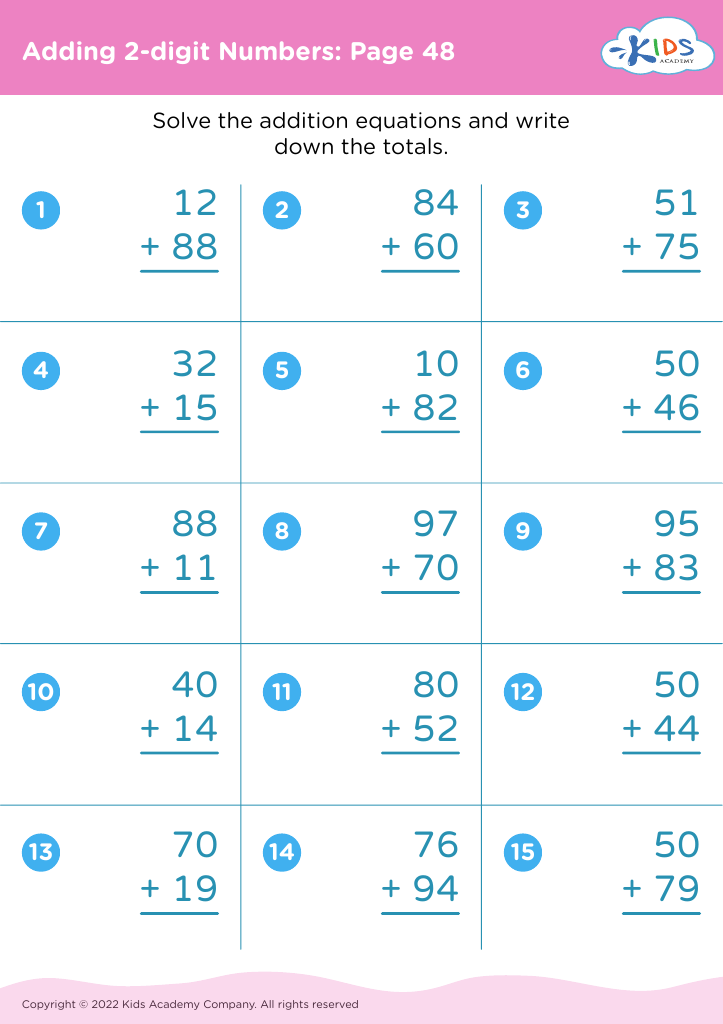
Adding 2-digit Numbers: Page 48

Adding 2-digit Numbers: Page 48

Adding 2-digit Numbers: Page 48
Worksheet
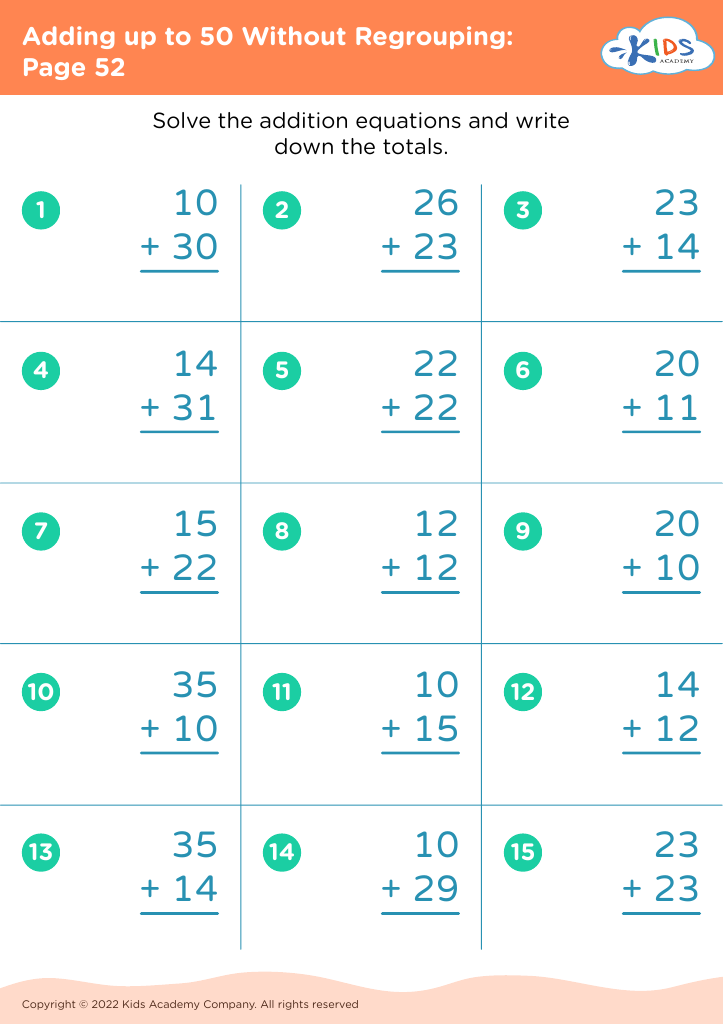
Adding up to 50 Without Regrouping: Page 52
Worksheet
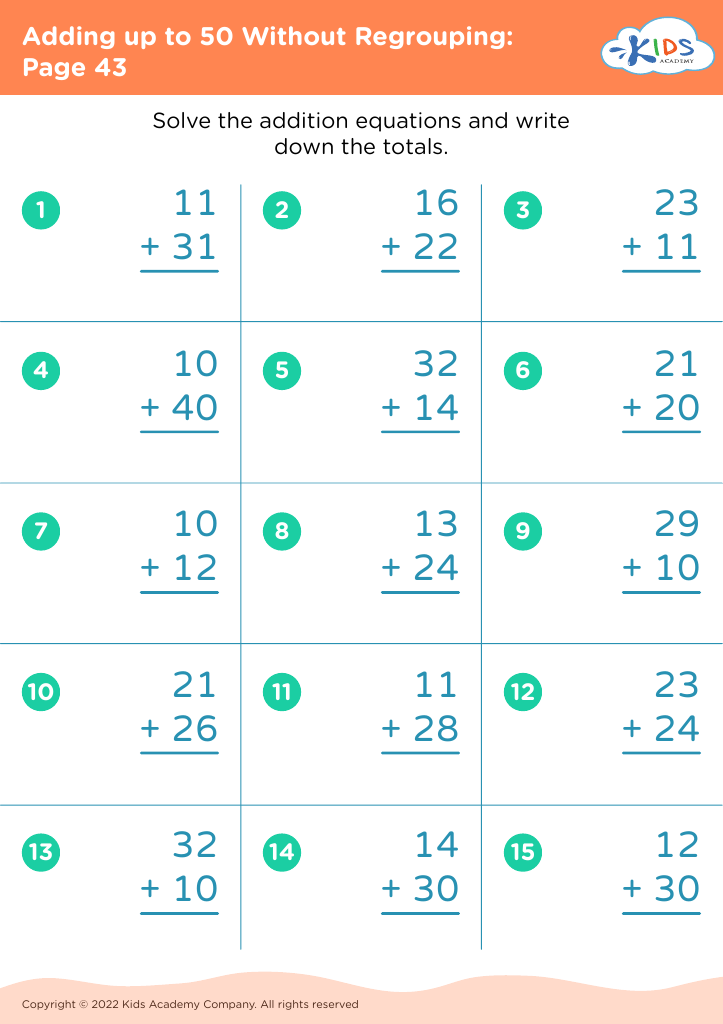
Adding up to 50 Without Regrouping: Page 43
Worksheet
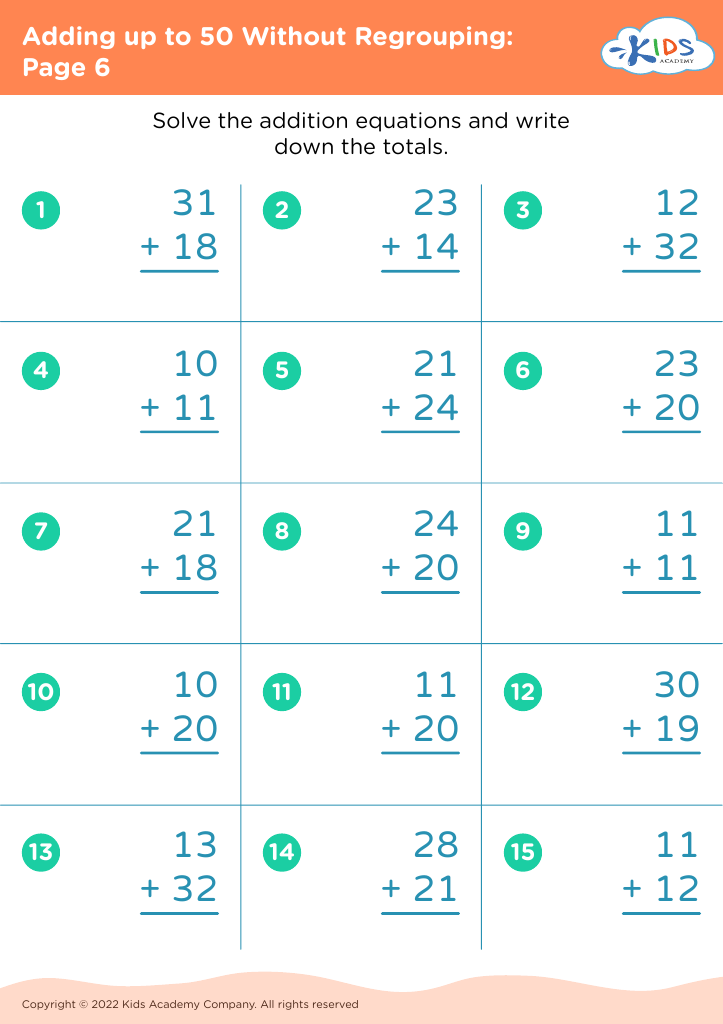
Adding up to 50 Without Regrouping: Page 6
Worksheet
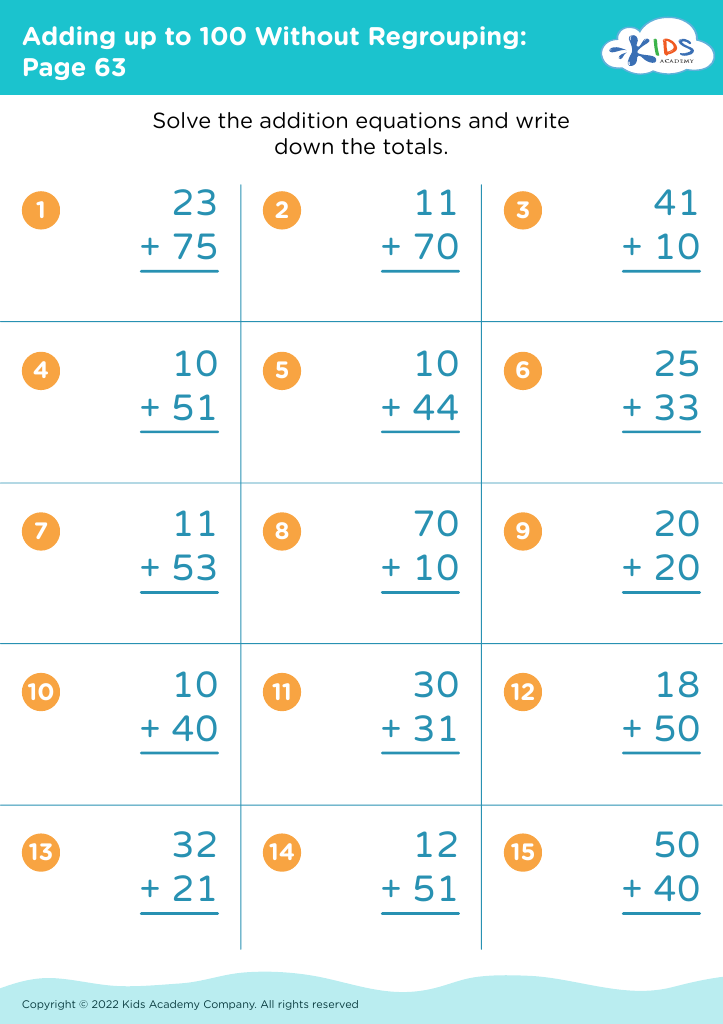
Adding up to 100 Without Regrouping: Page 63
Worksheet
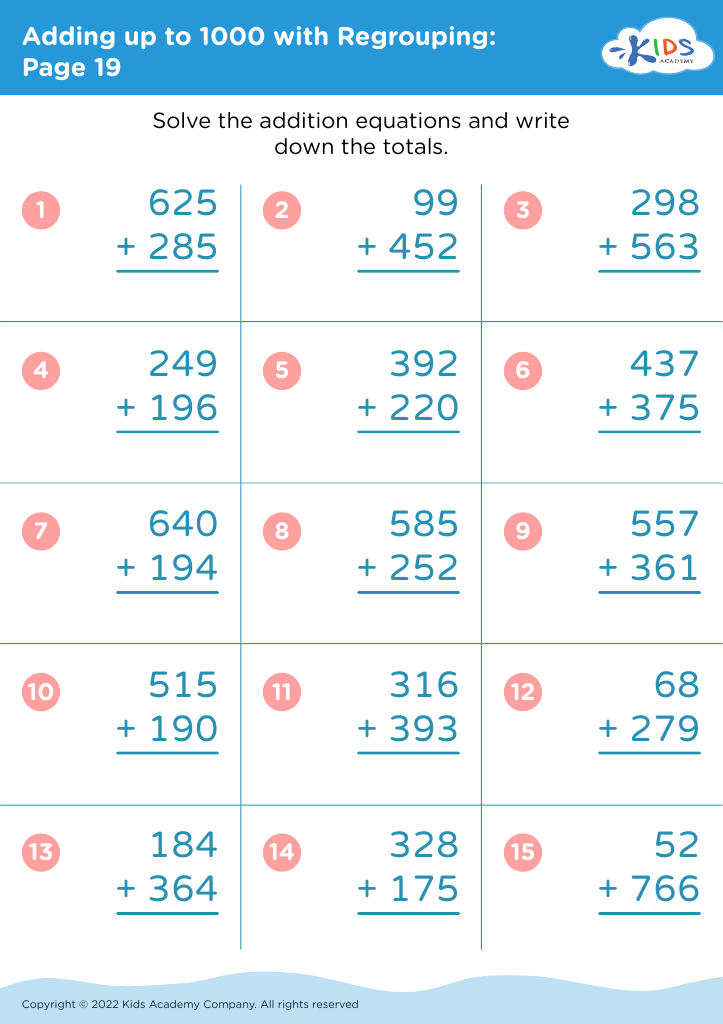
Adding up to 1000 with Regrouping: Page 19
Worksheet
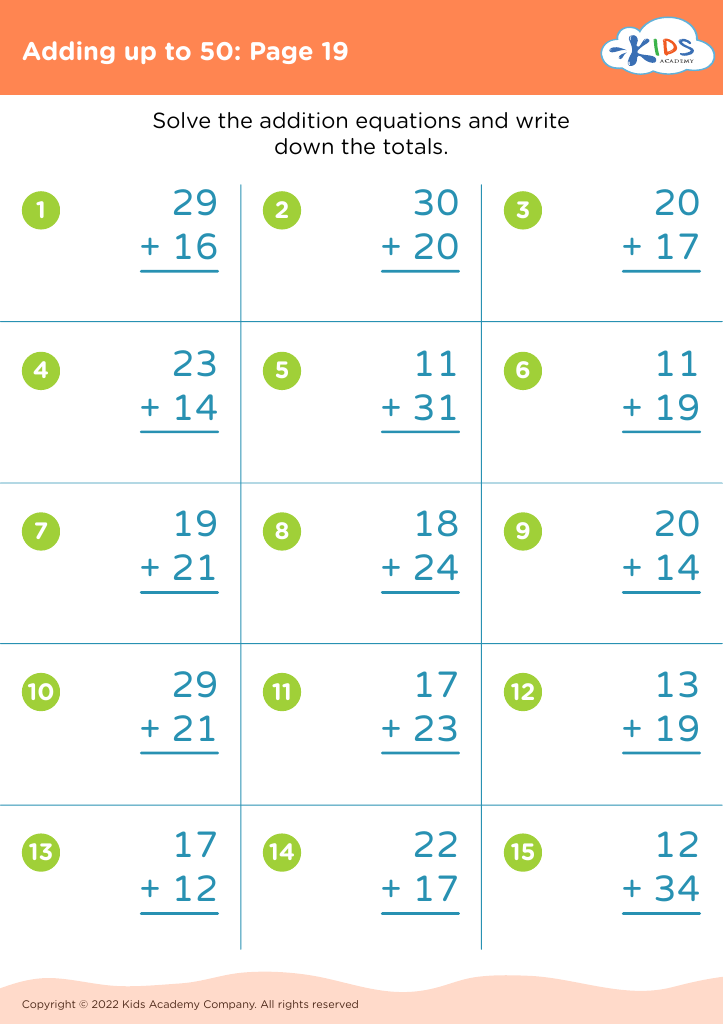
Adding up to 50: Page 19

Adding up to 50: Page 19

Adding up to 50: Page 19
Worksheet
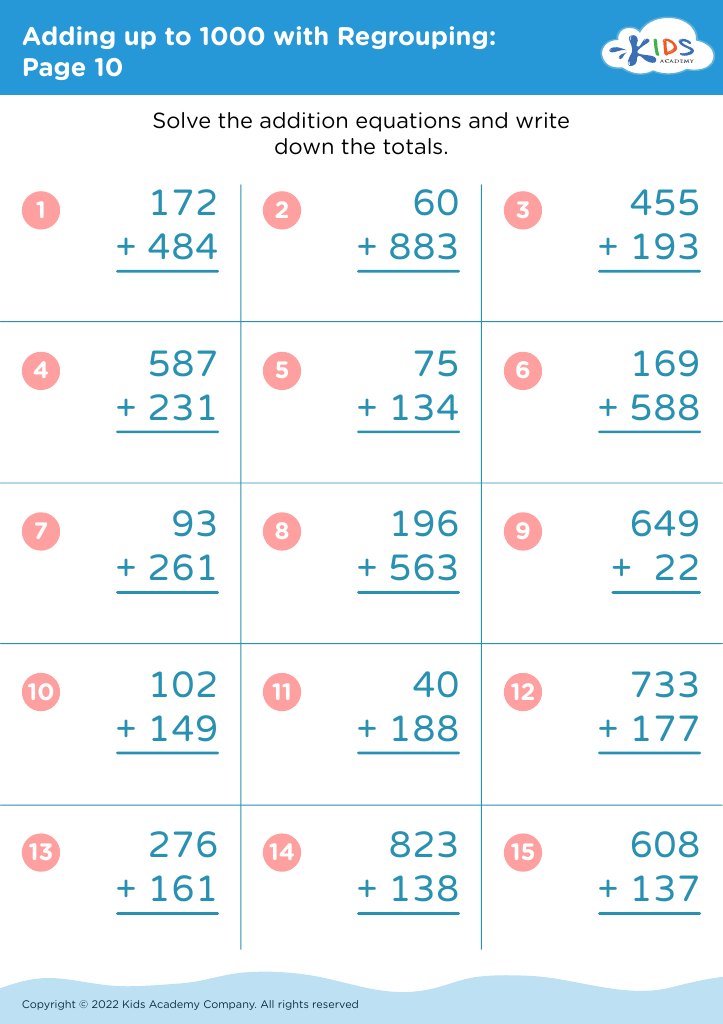
Adding up to 1000 with Regrouping: Page 10
Worksheet
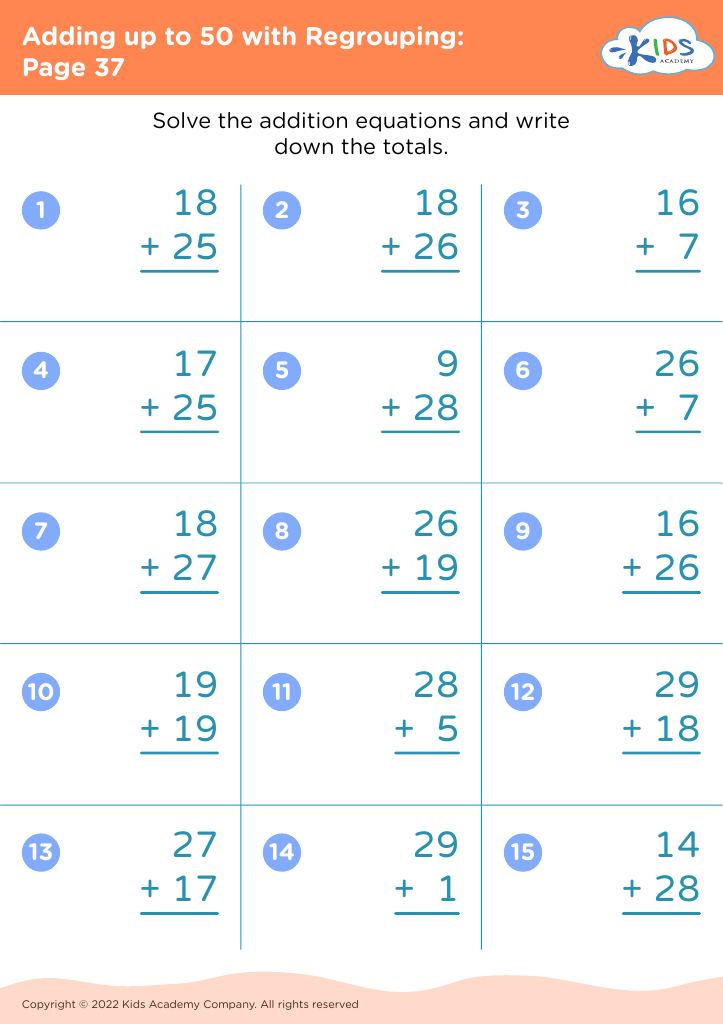
Adding up to 50 with Regrouping: Page 37
Worksheet
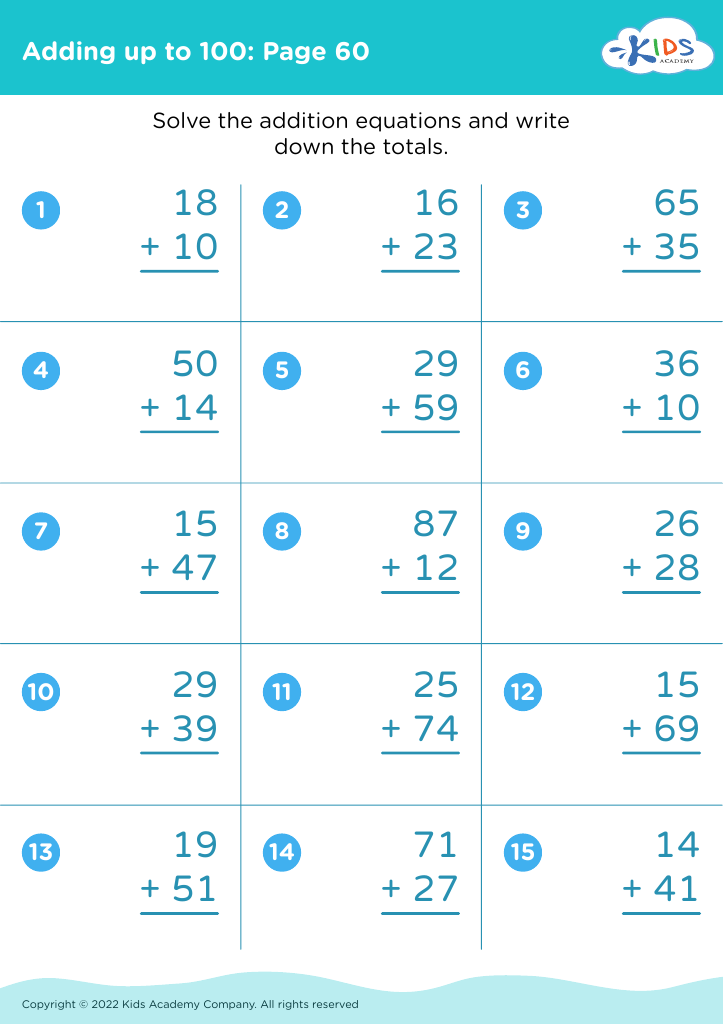
Adding up to 100: Page 60

Adding up to 100: Page 60

Adding up to 100: Page 60
Worksheet
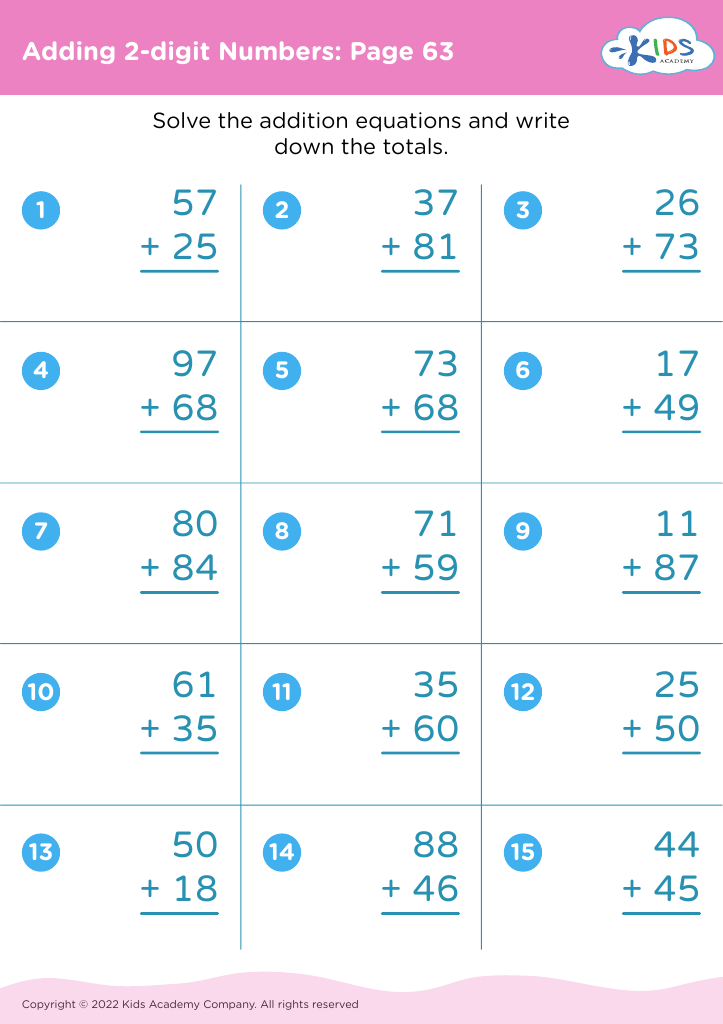
Adding 2-digit Numbers: Page 63

Adding 2-digit Numbers: Page 63

Adding 2-digit Numbers: Page 63
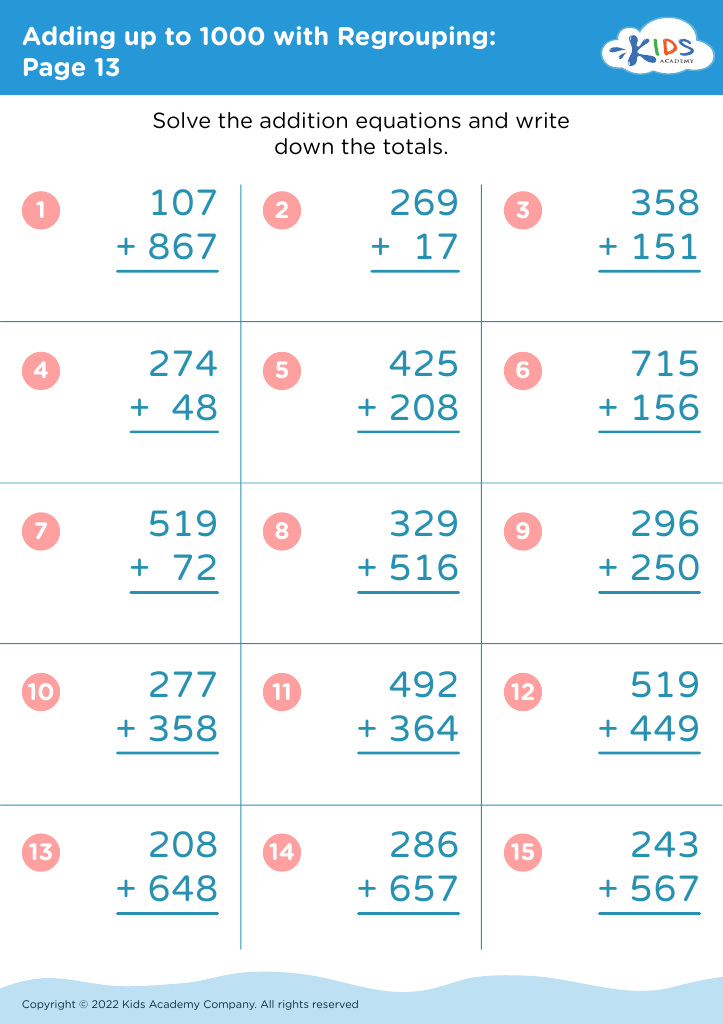
Worksheet
Adding up to 1000 with Regrouping: Page 13
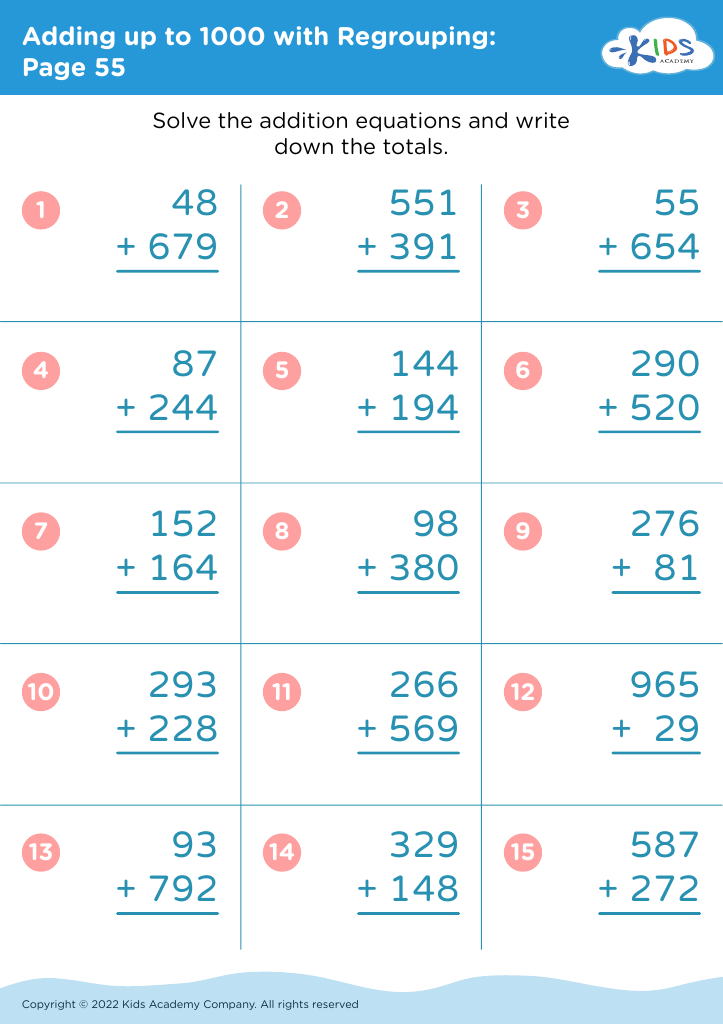
Worksheet
Adding up to 1000 with Regrouping: Page 55
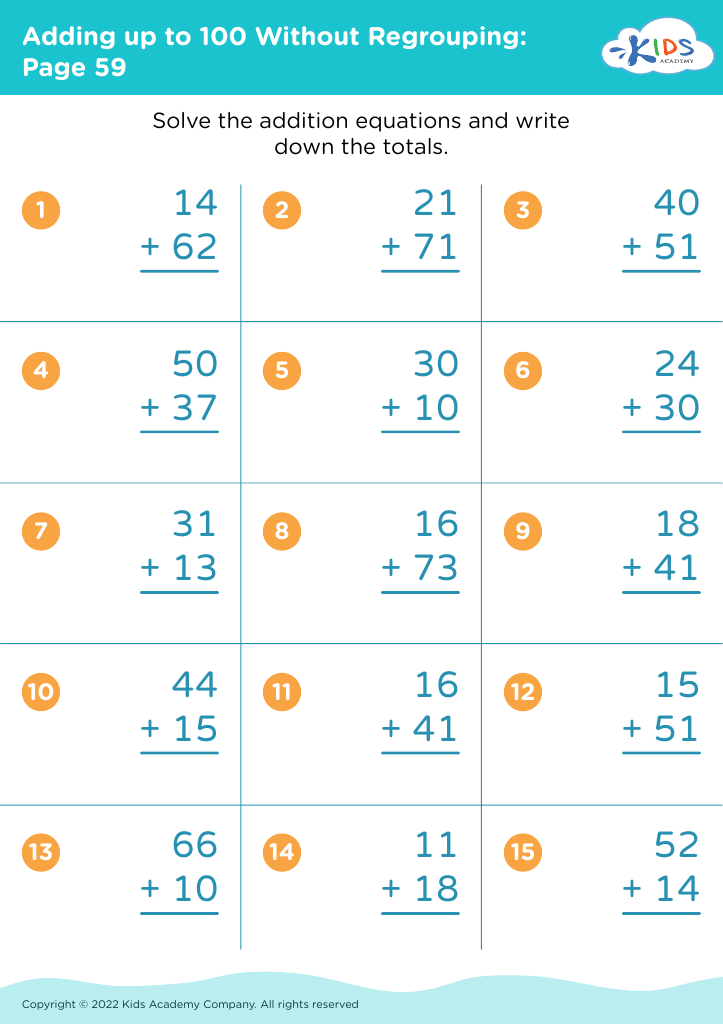
Worksheet
Adding up to 100 Without Regrouping: Page 59
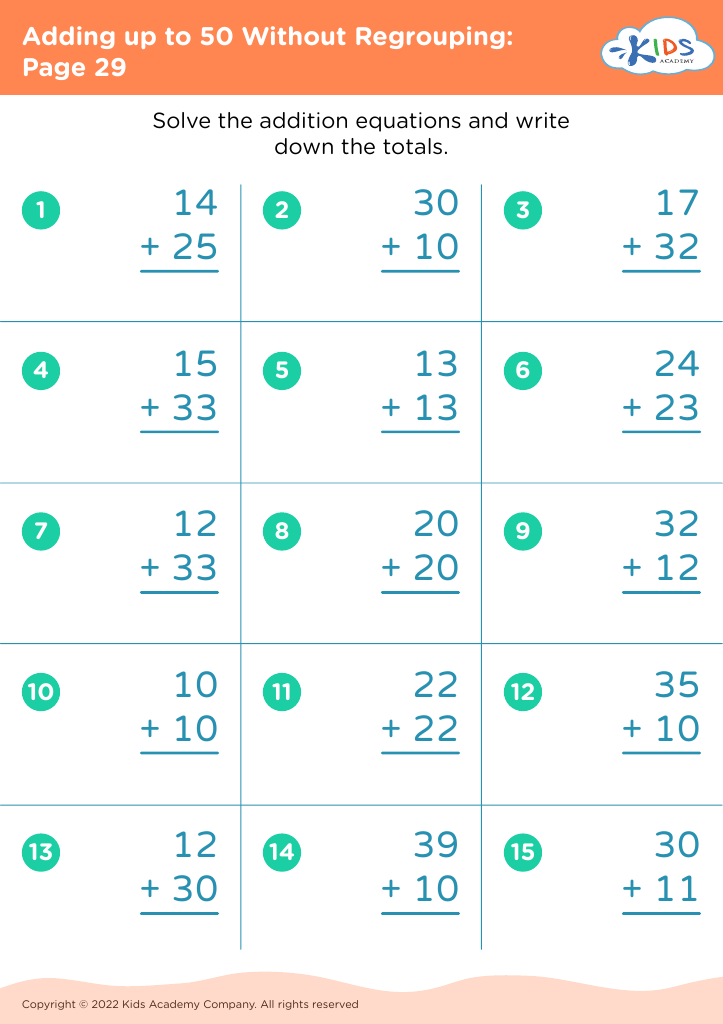
Worksheet
Adding up to 50 Without Regrouping: Page 29
Worksheet
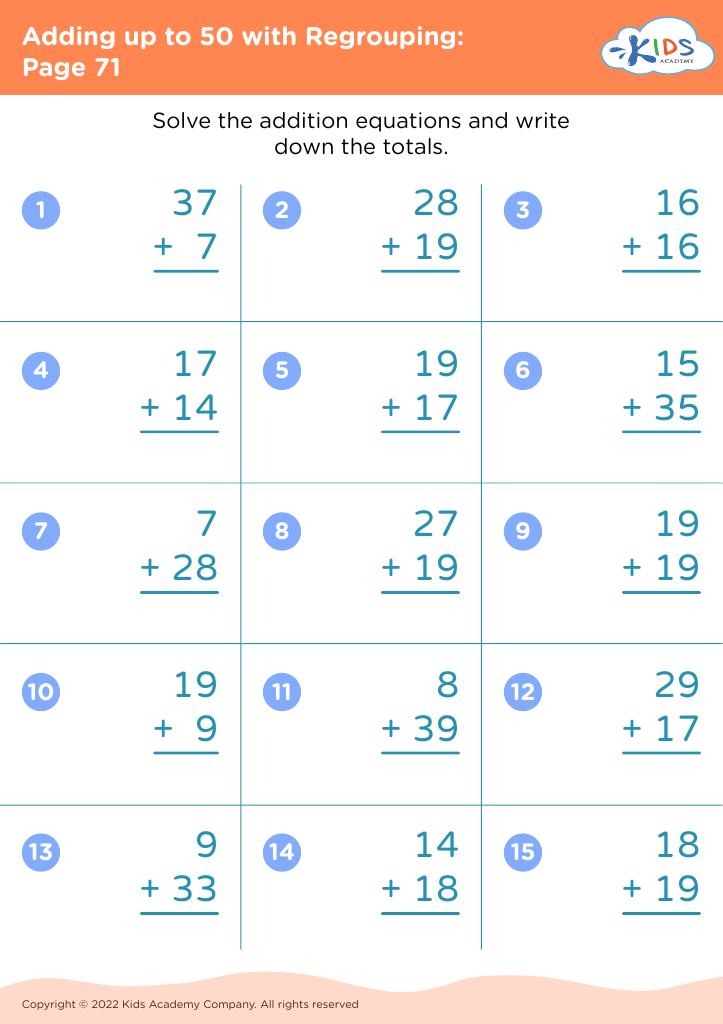
Adding up to 50 with Regrouping: Page 71
Worksheet
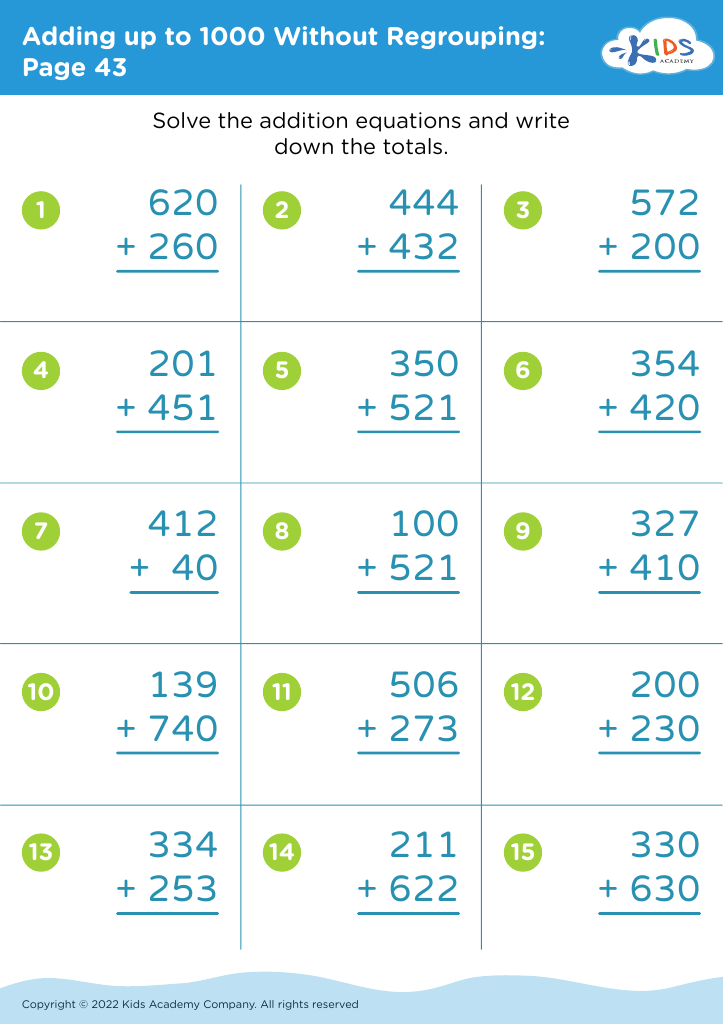
Adding up to 1000 Without Regrouping: Page 43
Worksheet
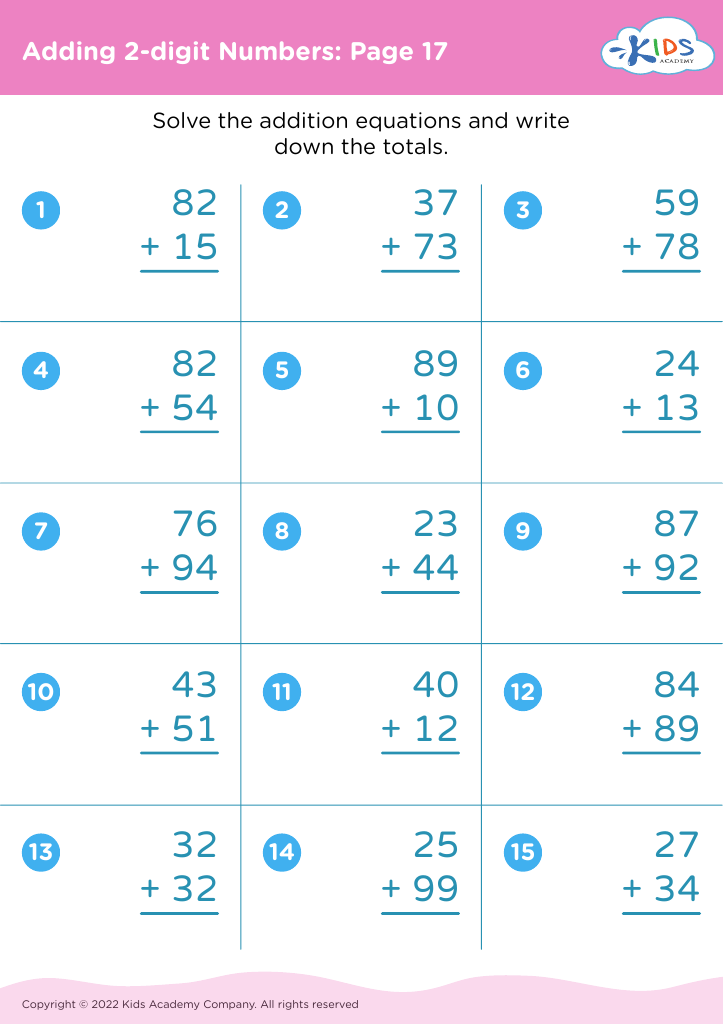
Adding 2-digit Numbers: Page 17

Adding 2-digit Numbers: Page 17

Adding 2-digit Numbers: Page 17
Worksheet
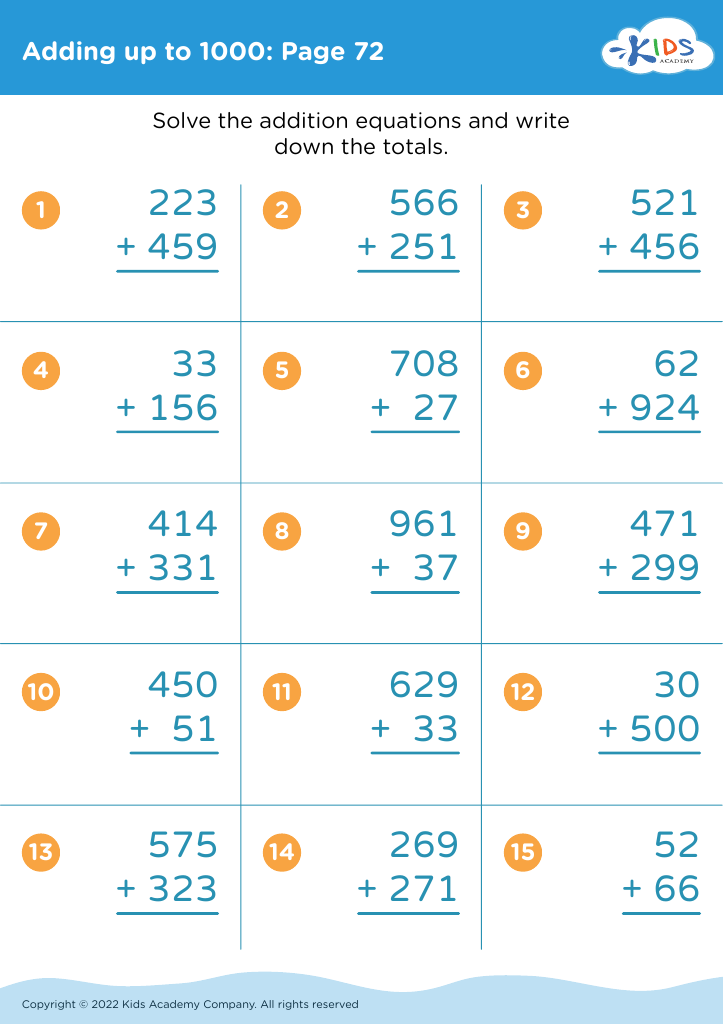
Adding up to 1000: Page 72

Adding up to 1000: Page 72

Adding up to 1000: Page 72
Worksheet
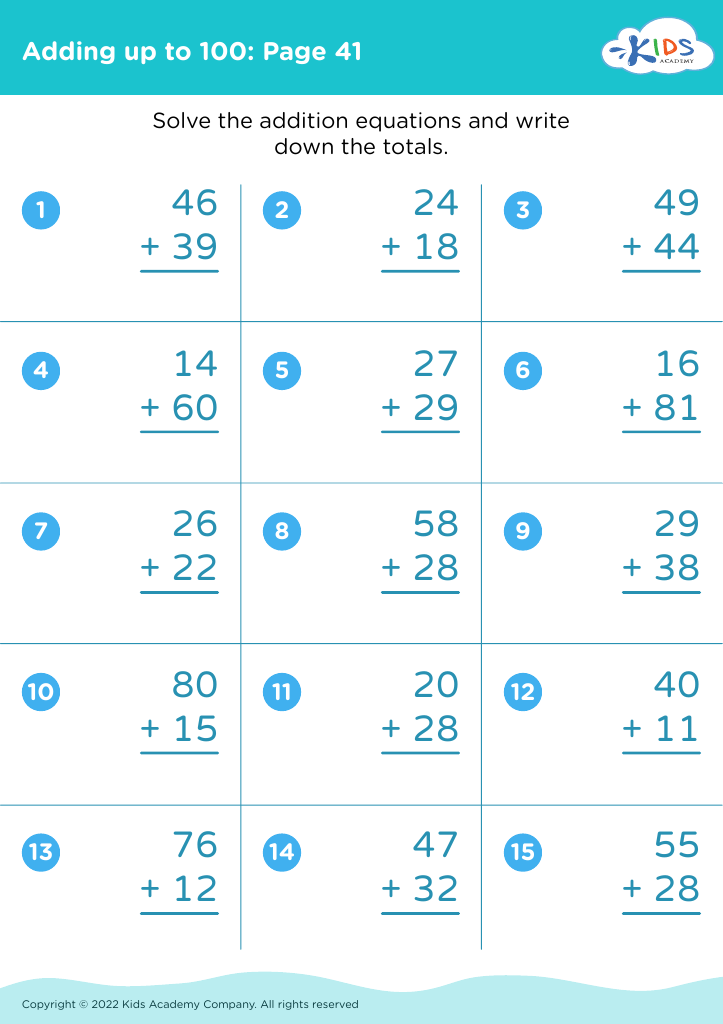
Adding up to 100: Page 41

Adding up to 100: Page 41

Adding up to 100: Page 41
Worksheet
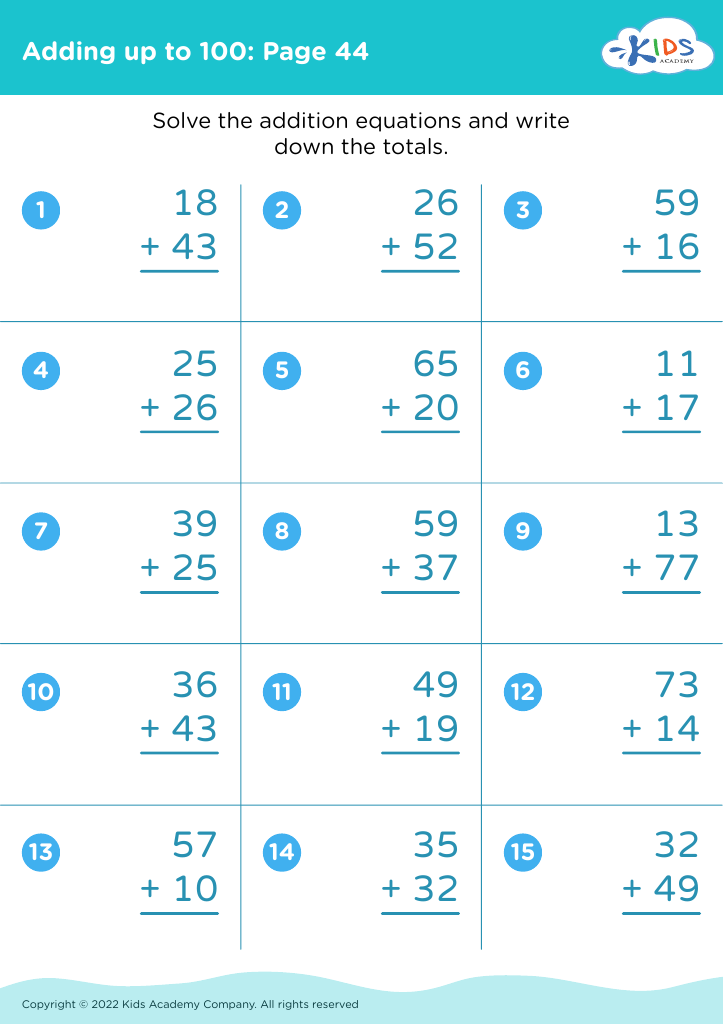
Adding up to 100: Page 44

Adding up to 100: Page 44

Adding up to 100: Page 44
Worksheet


Recognizing patterns in addition is a fundamental skill that significantly impacts a 7-year-old's mathematical understanding and overall academic success. At this age, children are building a foundation for more complex mathematical concepts, and recognizing patterns helps them make sense of the relationships between numbers. Understanding patterns enables kids to efficiently solve addition problems, identify shortcuts, and build confidence in their abilities.

When parents and teachers encourage recognizing patterns, they promote critical thinking and problem-solving skills. Children learn to identify sequences, which enhances their ability to approach mathematics logically. For example, seeing that adding the same number repeatedly forms a pattern allows children to master addition facts, leading to fluency in math.

Furthermore, recognizing patterns fosters engagement and curiosity in learning. It connects math with real-world applications, as patterns are prevalent in nature, art, and everyday life. Ultimately, supporting pattern recognition in addition not only aids in achieving better performance in mathematics but also cultivates a lifelong love for learning, equipping children with important skills needed for future academic endeavors. Investing time in this area sets a strong groundwork for future mathematical success and enhances their ability to navigate various challenges creatively and effectively.