Recognizing shapes Geometry Worksheets for 7-Year-Olds
3 filtered results
-
From - To
Discover engaging "Recognizing Shapes Geometry Worksheets for 7-Year-Olds" designed to make learning fun and interactive! Our expertly crafted worksheets help young learners identify and name various shapes while developing critical thinking and problem-solving skills. Perfect for classrooms or at-home practice, these worksheets provide a variety of activities, including matching, tracing, and sorting shapes. They aim to build a solid foundation in geometry principles, ensuring a stronger grasp of math concepts. Ideal for parents and teachers seeking to enhance shape recognition and spatial awareness, our worksheets make math enjoyable and accessible for all students.
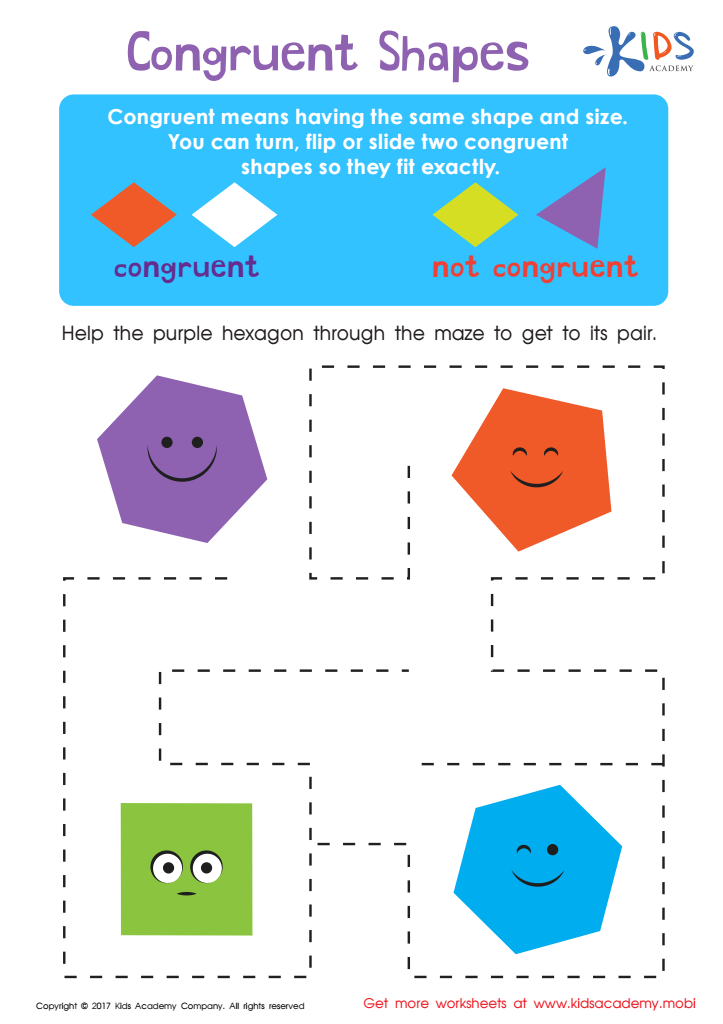
Congruent Shapes Worksheet
 Assign to My Students











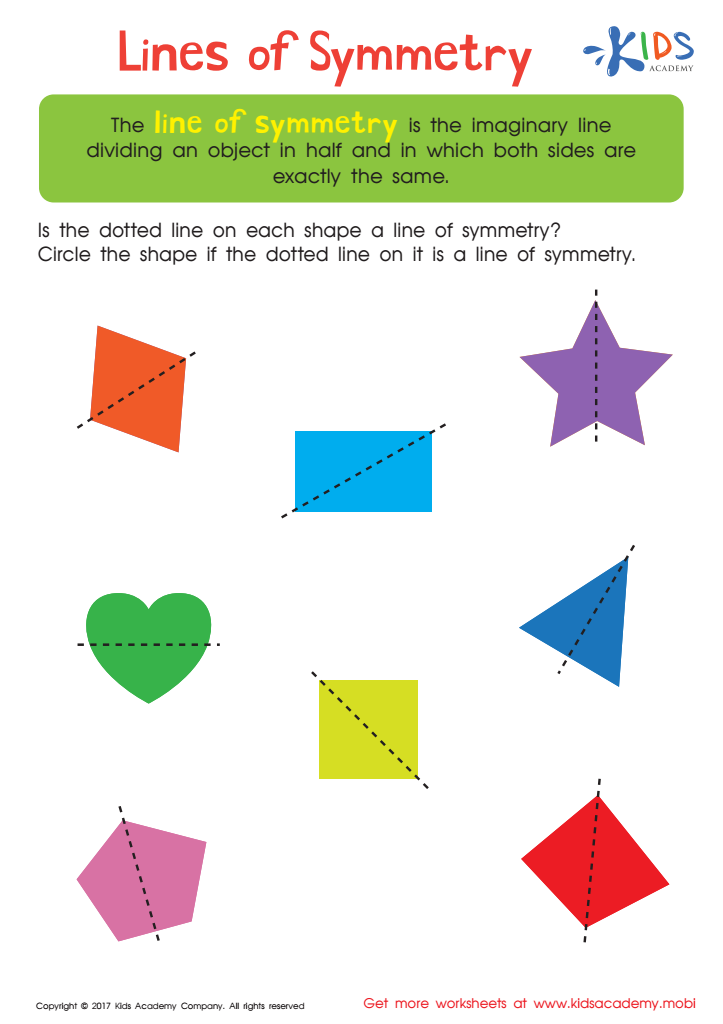
Lines of Symmetry Printable
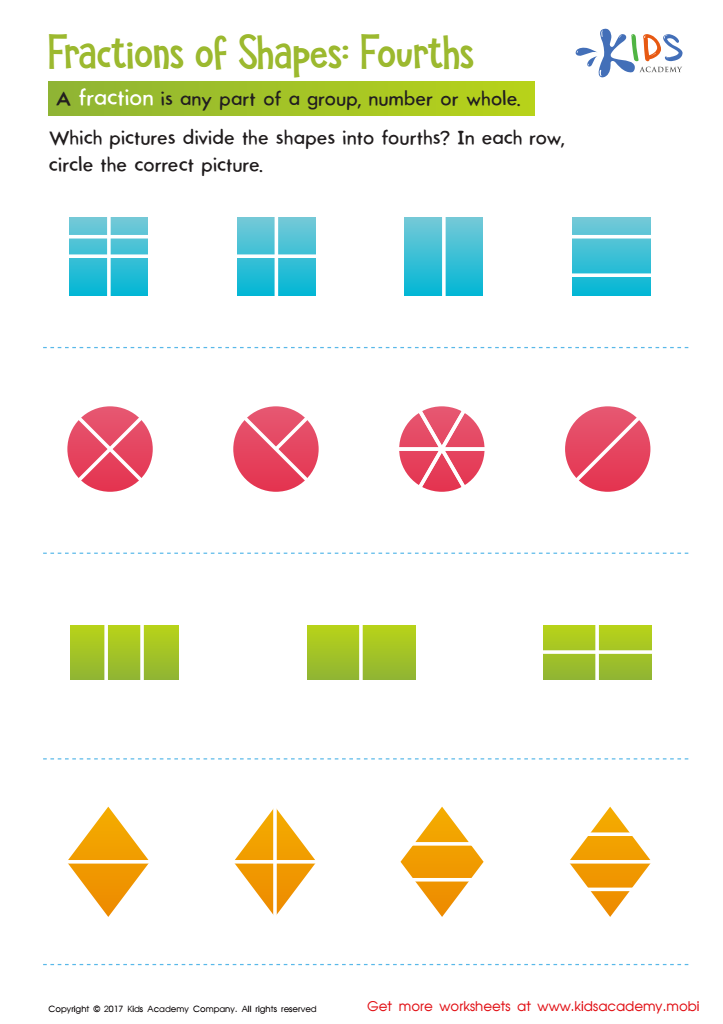
Fractions of Shapes Worksheet








Recognizing shapes and understanding basic geometry is crucial for 7-year-olds because it builds foundational skills for future academic achievement and cognitive development. Geometry helps children improve their spatial awareness, a key competency that supports tasks ranging from everyday activities like packing a bag to more complex ones like navigating maps. Understanding shapes also enhances their problem-solving abilities. When children identify and manipulate shapes, they learn to observe patterns, make predictions, and develop logical reasoning.
Additionally, recognizing shapes directly supports mathematical learning. It serves as a precursor to more advanced topics such as fractions, measurement, and geometry later in their education. For instance, understanding how shapes fit together helps with grasping concepts like area and perimeter.
Teachers and parents can make learning geometry interactive and fun through practical activities such as puzzle-solving, drawing, and playing with building blocks. This not only keeps children engaged but also helps convey abstract concepts in a tangible way. Importantly, boosting a child’s confidence in recognizing shapes can lead to a greater overall confidence in learning new and increasingly complex subjects.
Therefore, teaching shape recognition and basic geometry is not just about academic excellence. It also nurtures critical thinking, creativity, and practical life skills, establishing a well-rounded foundation for a child’s development.








