
Number comparison Numbers Worksheets for 7-Year-Olds
5 filtered results
Difficulty Level
Grade
Age
-
From - To
Subject
Activity
Standards
Discover our engaging Number Comparison Worksheets designed specifically for 7-year-olds. These resources aim to enhance young learners’ mathematical skills by developing their ability to compare numbers effectively. Our worksheets feature fun, interactive activities that encourage critical thinking and improve number sense. From identifying greater than, less than, and equal to, children will become confident in their comparison skills. Designed to align with educational standards, these worksheets provide a solid foundation in math while keeping learning enjoyable. Explore our collection today and empower your child to master number comparison skills, setting them up for success in their future mathematical journey!
Favorites
With answer key
Interactive
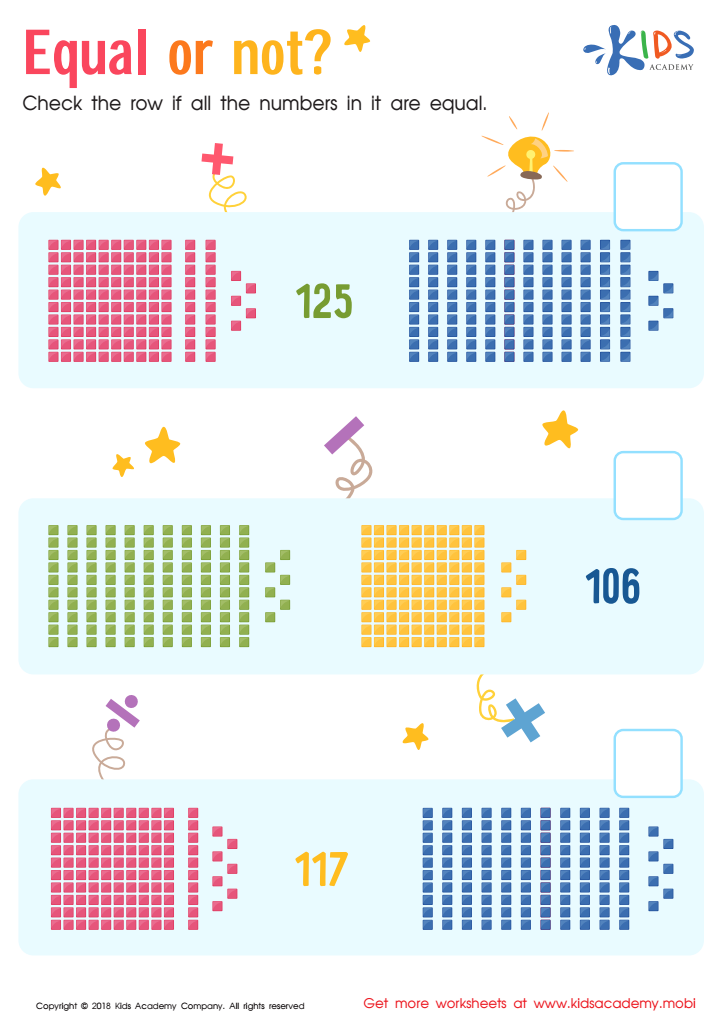
Equal or not Worksheet
To grow your child's learning, challenge them with new tasks. Stimulate their brains with activities that will build their knowledge and thinking skills. Take advantage of this worksheet exercise: ask your child to check the rows where all the numbers are equal. This simple exercise will improve their learning.
 Assign to My Students
Equal or not Worksheet
Worksheet
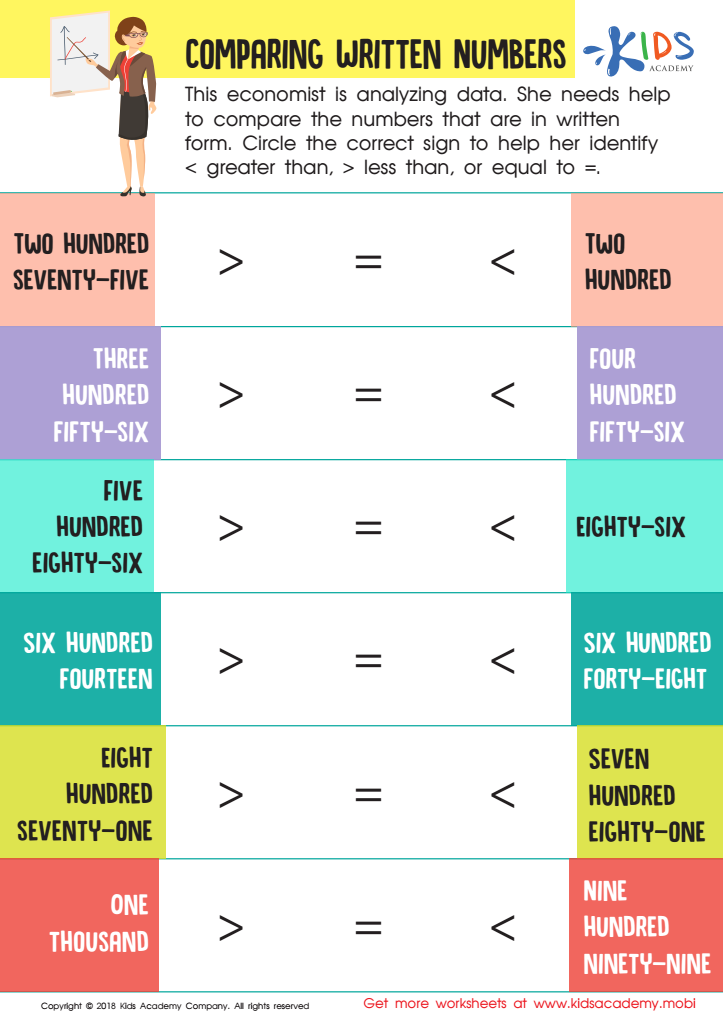
Comparing Written Numbers Worksheet
Children need to grasp that numbers come in different forms. This exciting PDF provides practice for comparing values written as words. Young economists can analyze the number pairs, then circle the sign (<, =, or >) to make comparisons true.
Comparing Written Numbers Worksheet
Worksheet
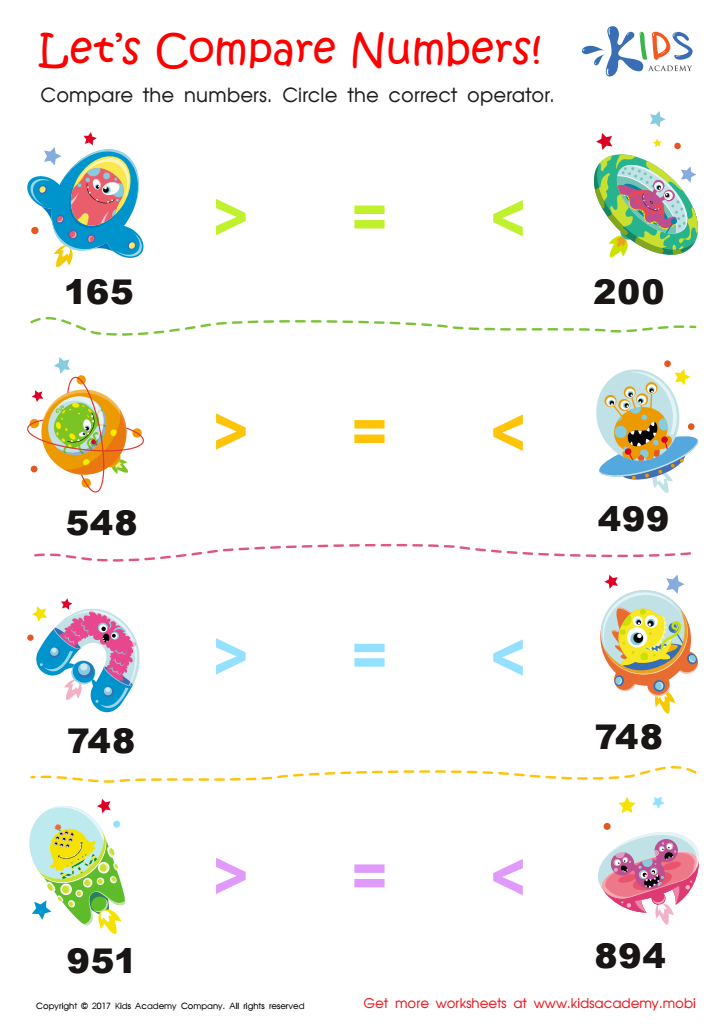
Comparing Numbers Worksheet for 2nd Grade
Alien friends are back to help your child learn to compare numbers using >, < and = symbols. This 2nd grade worksheet will challenge them with larger numbers!
Comparing Numbers Worksheet for 2nd Grade
Worksheet
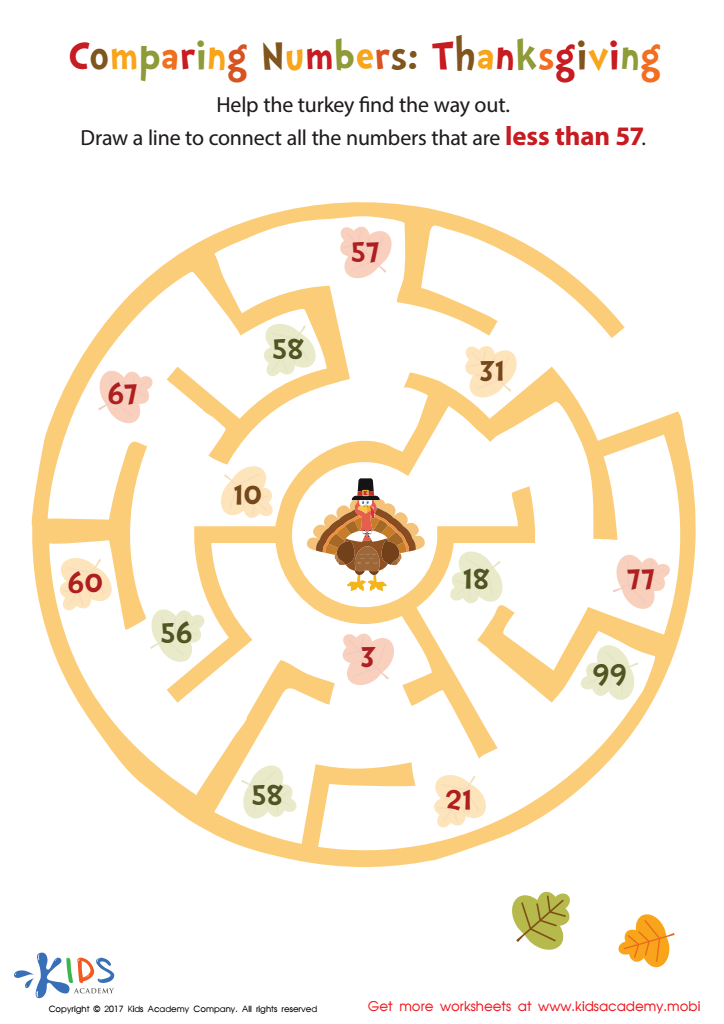
Comparing Numbers Printable
Test your child's number skills with this fun and tricky maze! This Thanksgiving worksheet lets them explore a maze, using numbers less than 57 to get to the tasty goal: A Thanksgiving turkey! Develop their number sense in a fun and engaging way!
Comparing Numbers Printable
Worksheet
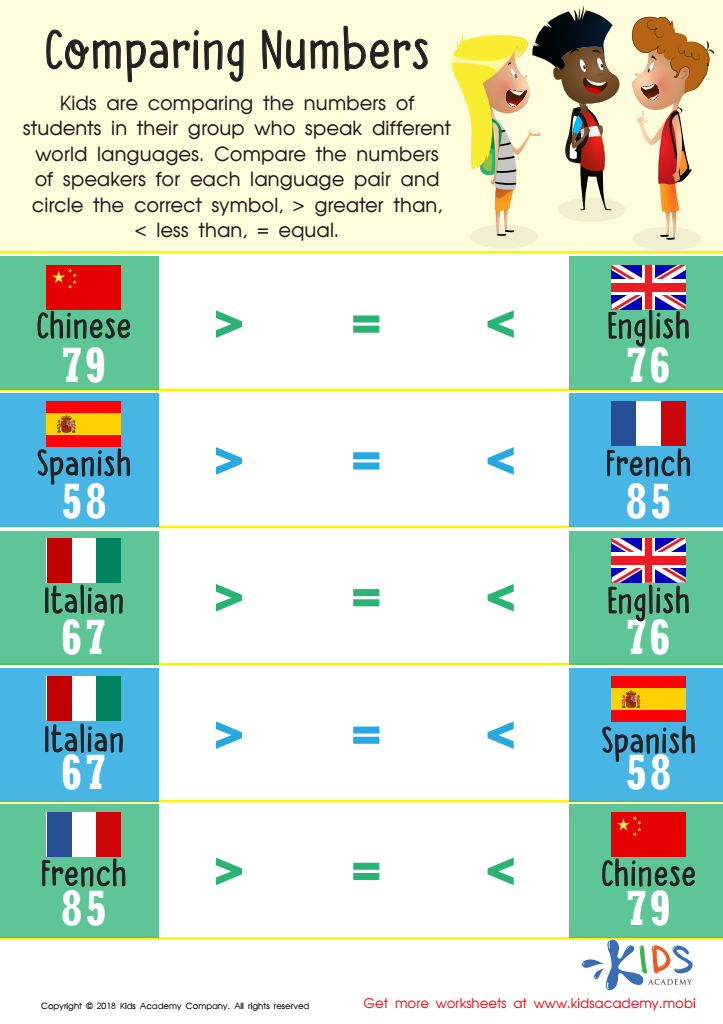
Comparing Numbers Worksheet for 1st Grade
Children can build number sense by exploring the relationship between numbers. This worksheet uses bright international flags to compare numerical groups. Kids will love the cheerful colors and flags from different countries. It encourages them to compare numbers and reinforces their number sense with tens and ones place values.
Comparing Numbers Worksheet for 1st Grade
Worksheet
Join Kids Academy for Free
Who is primarily going to use this learning content?







Parents and teachers should care about number comparison for 7-year-olds because it lays a crucial foundation for mathematical understanding. At this age, children begin to develop their numerical fluency, which encompasses recognizing, ordering, and comparing numbers. Mastery of these skills is essential as it helps them make sense of larger mathematical concepts, including addition, subtraction, and even basic multiplication and division.
When children learn to compare numbers, they enhance their critical thinking and problem-solving skills. For instance, understanding which number is larger or smaller fosters cognitive development and helps them make better decisions in real-life situations, such as using money or understanding time. Furthermore, number comparison aids in building their confidence in mathematics, a subject where many children might feel apprehensive.
Engaging in number comparison activities can also promote collaboration and communication skills as children often share strategies and reasoning with peers and adults. Additionally, incorporating games and visual aids makes learning fun and interactive, ensuring that children remain engaged and motivated.
Ultimately, a strong grasp of number comparison leads to future academic success, and it empowers children with the confidence to tackle more complex mathematical challenges. Thus, both parents and teachers should prioritize this essential skill.








