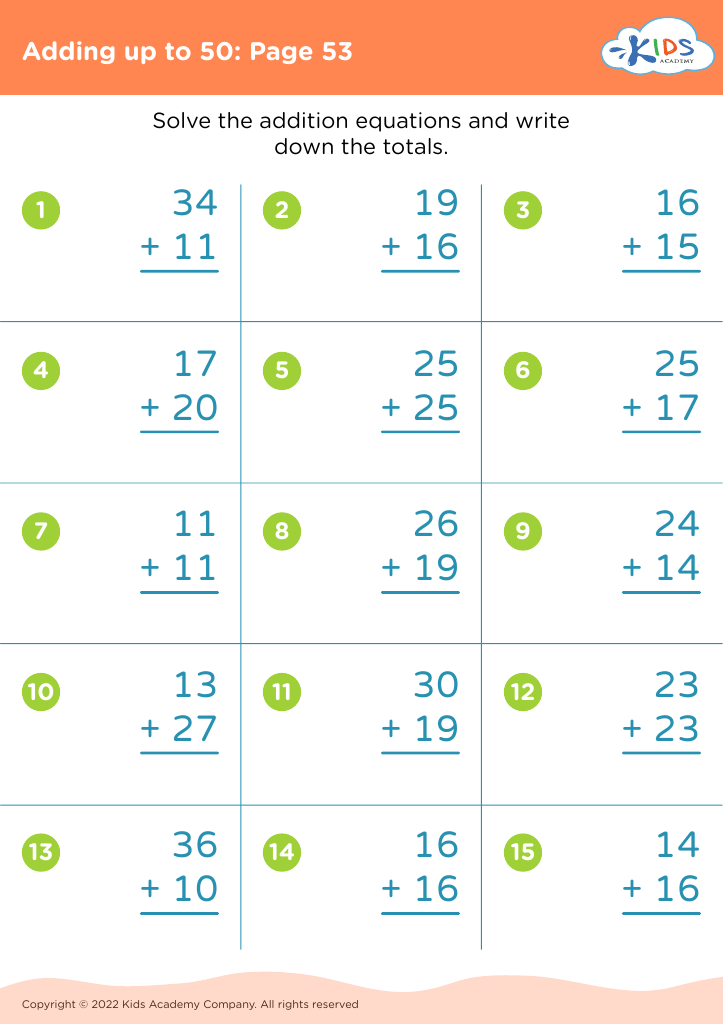
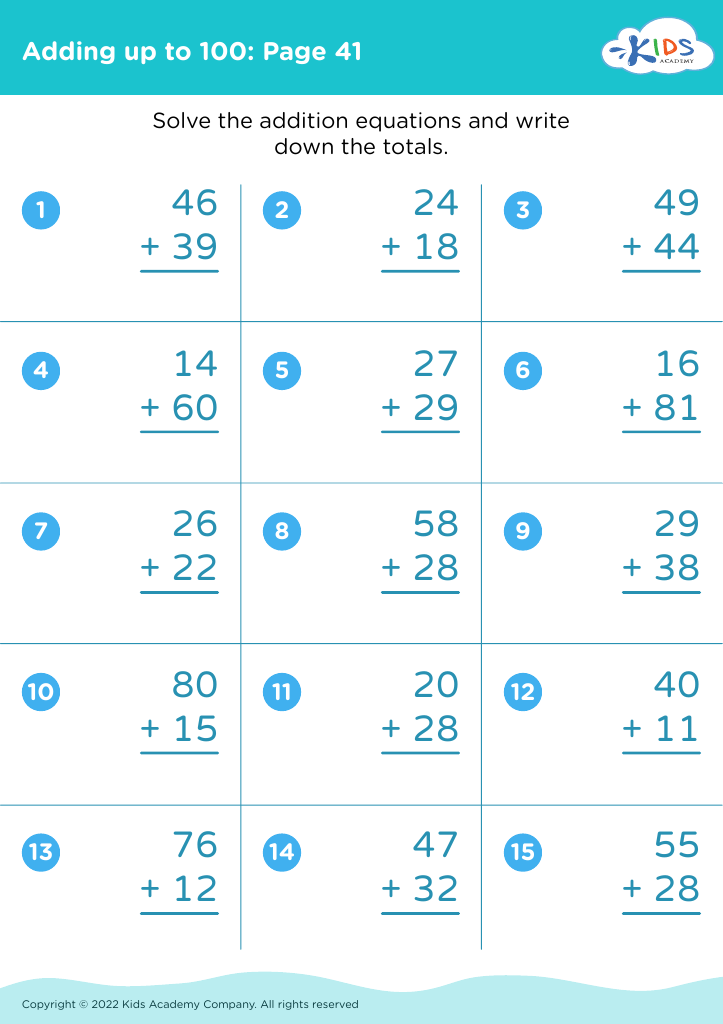
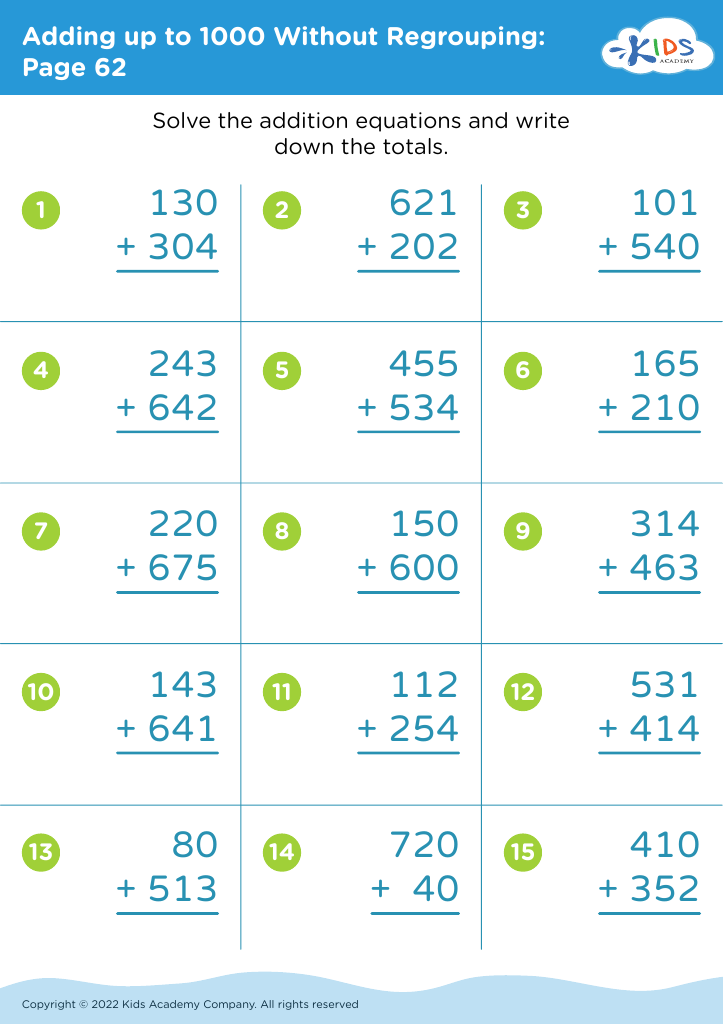







Basic math skills are crucial for 7-year-olds as they form the foundation for future academic success and everyday functional skills. At this age, children are transitioning from simple counting to more complex concepts such as addition, subtraction, and basic problem-solving. Mastery of these skills fosters critical thinking and enhances cognitive development, which is vital as they face more challenging subjects in school.
Additionally, strong mathematical skills contribute to better self-confidence. When children grasp fundamental concepts, they are more likely to engage in classroom activities and less likely to experience math-related anxiety. This positive attitude towards learning can extend beyond math, influencing their overall academic performance.
Moreover, basic math proficiency is necessary for practical life skills. From understanding finances, measuring ingredients while cooking, to telling time and managing schedules, math is ingrained in daily activities.
Parents and teachers play essential roles in nurturing these skills by creating supportive learning environments, using fun, engaging activities, and providing positive reinforcement. By prioritizing basic math education, they equip children with essential life skills, ensuring they are well-prepared for future academic challenges and everyday responsibilities, while fostering a love for learning.








