Comprehension improvement Math Worksheets for 7-Year-Olds
3 filtered results
-
From - To
Enhance your 7-year-old's understanding of mathematical concepts with our Comprehension Improvement Math Worksheets. Designed to engage young learners, these worksheets focus on building critical thinking and problem-solving skills through fun and interactive exercises. Each sheet features age-appropriate problems that encourage kids to apply math in real-life contexts, fostering a deeper comprehension of fundamental principles. Perfect for at-home practice or classroom reinforcement, our worksheets cater to various learning styles, ensuring every child gains confidence in their math abilities. Support your child's learning journey today with these valuable resources, promoting not only math skills but also a lasting passion for learning!
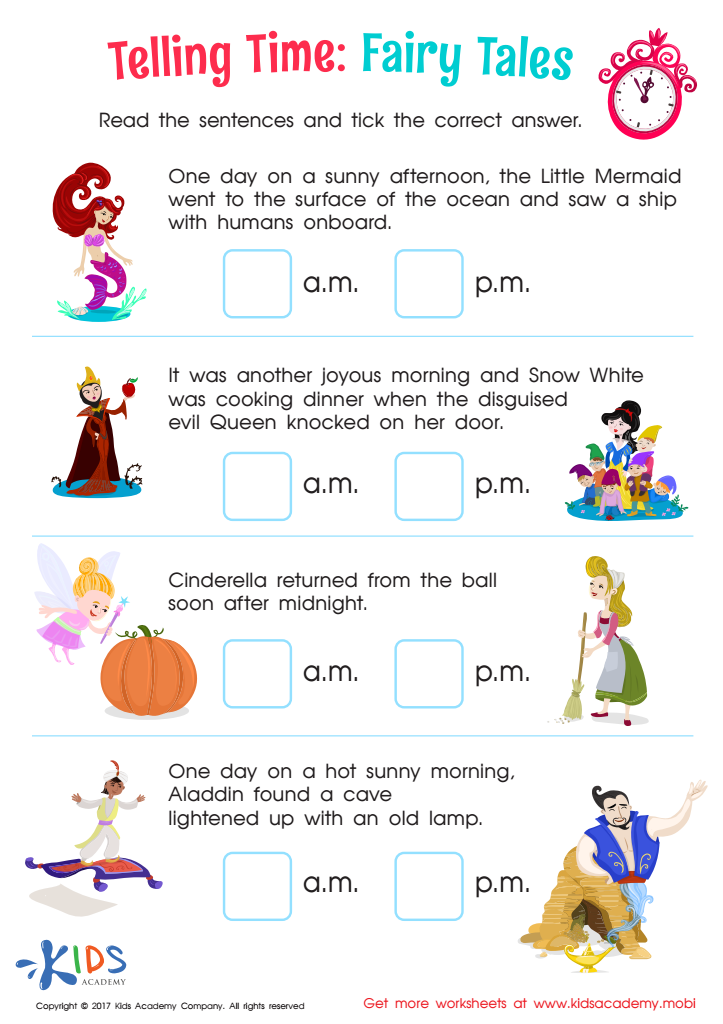
Telling Time: Fairy Tales Worksheet
 Assign to My Students
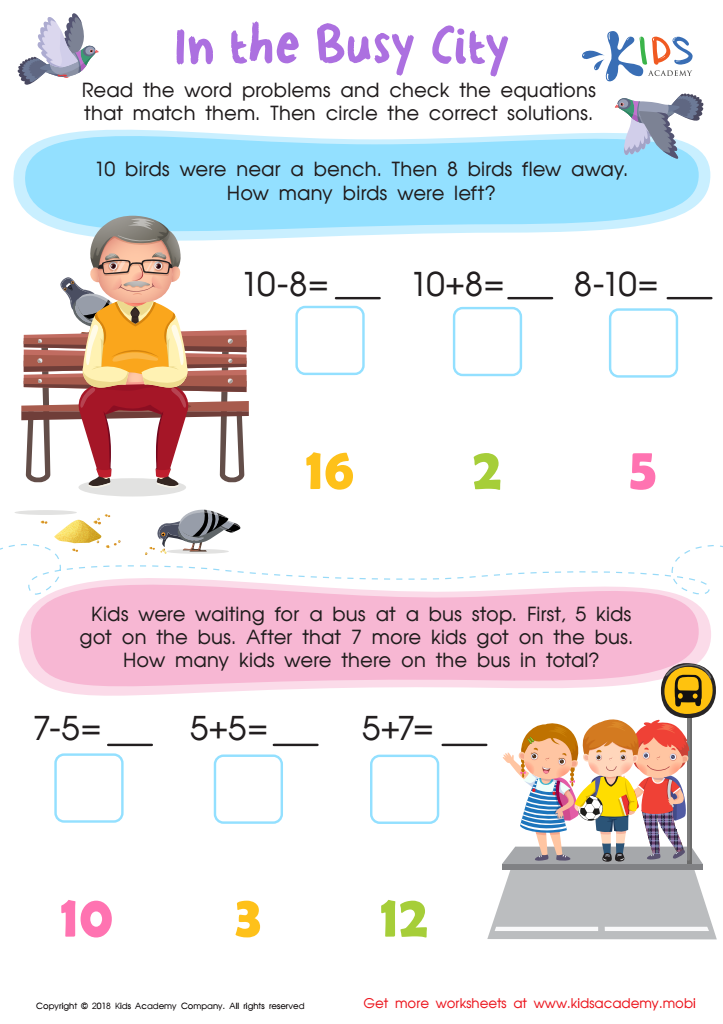
In the Busy City Word Problems Worksheet
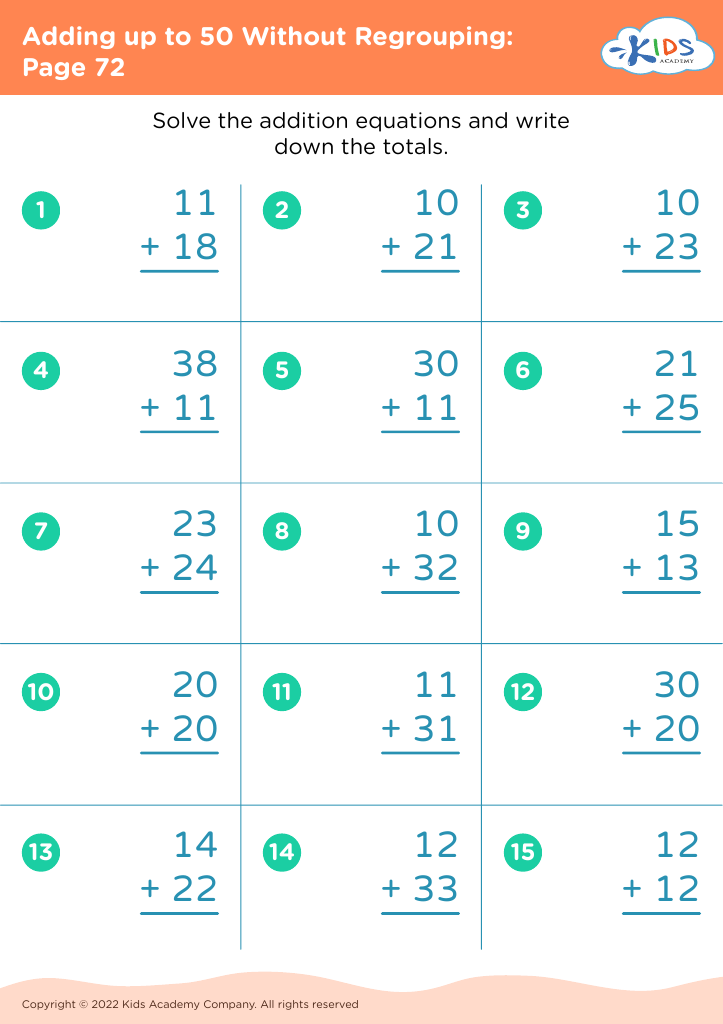






Comprehension improvement in math for 7-year-olds is crucial as it lays the foundation for future mathematical understanding and problem-solving skills. At this age, children are transitioning from basic arithmetic to more complex concepts like word problems and simple operations. When they grasp these concepts, they develop a deeper understanding of how math applies to real-world situations, which fosters critical thinking.
Enhancing comprehension not only improves mathematical skills but also boosts confidence. Children who can understand and process mathematical information are more likely to engage warmly with challenges. This positive attitude towards math leads to a lifelong appreciation of the subject.
Moreover, strong math comprehension is linked to better performance in higher academic levels, which is vital as students progress into more sophisticated content in later grades. Teachers and parents play a key role in nurturing these skills by using interactive methods, real-life applications, and encouraging questions. Their support can create a fertile learning environment that challenges children while also ensuring they feel safe to explore mistakes and learn from them.
Ultimately, investing time in improving math comprehension now can produce confident learners who are prepared to tackle future academic challenges with enthusiasm and effectiveness.








