Develop critical thinking Math Worksheets for 7-Year-Olds
13 filtered results
-
From - To
Nurture your child’s mathematical potential with specially designed critical thinking math worksheets for 7-year-olds from Kids Academy. Our engaging worksheets encourage young learners to explore, analyze, and solve problems creatively, paving their way to advanced math skills. By incorporating puzzles, patterns, and real-world scenarios, these activities transform math lessons into exciting adventures. Ideal for parents and educators aiming to build a solid foundation in logical reasoning, these worksheets are tailored to boost confidence and inspire a love for learning. Foster critical thinking in your child today with expert-crafted worksheets that make math both fun and challenging!
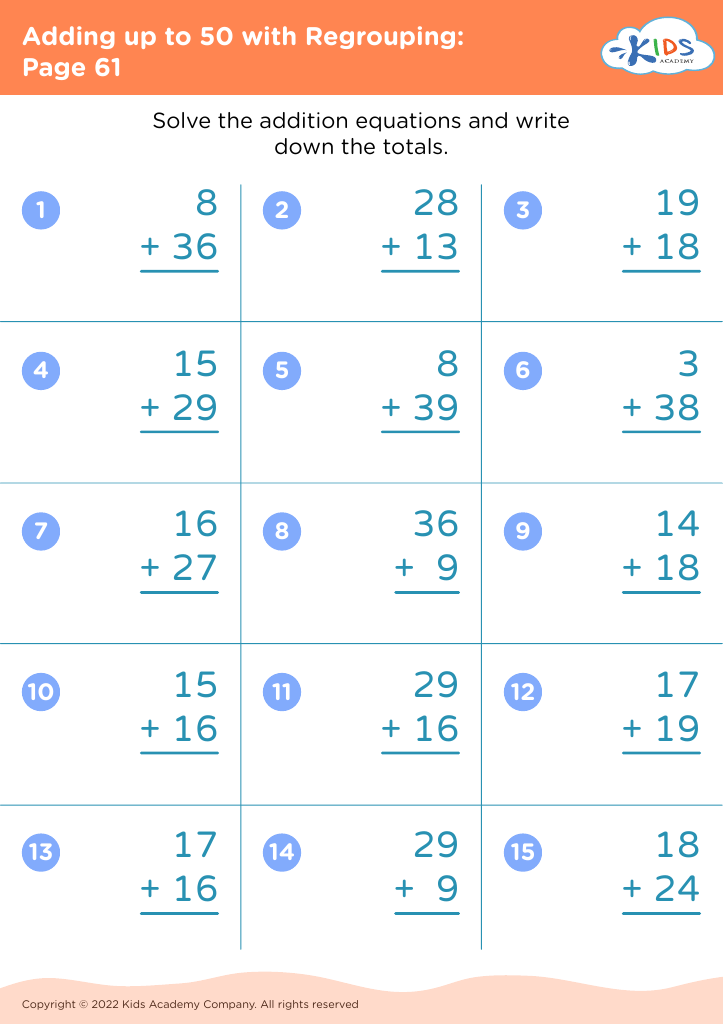
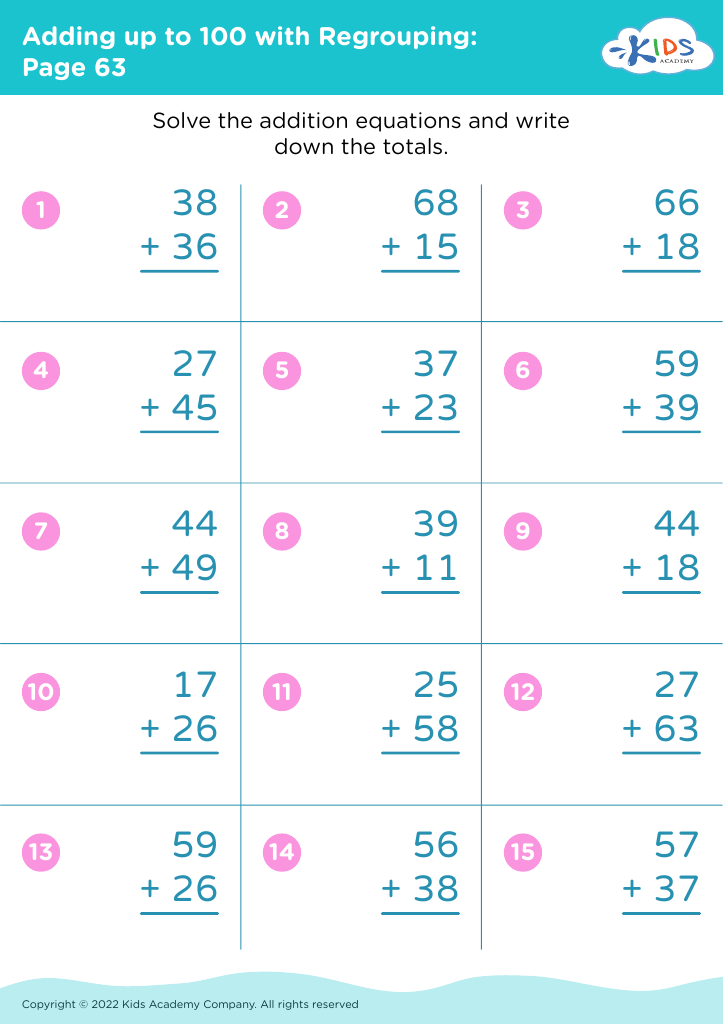
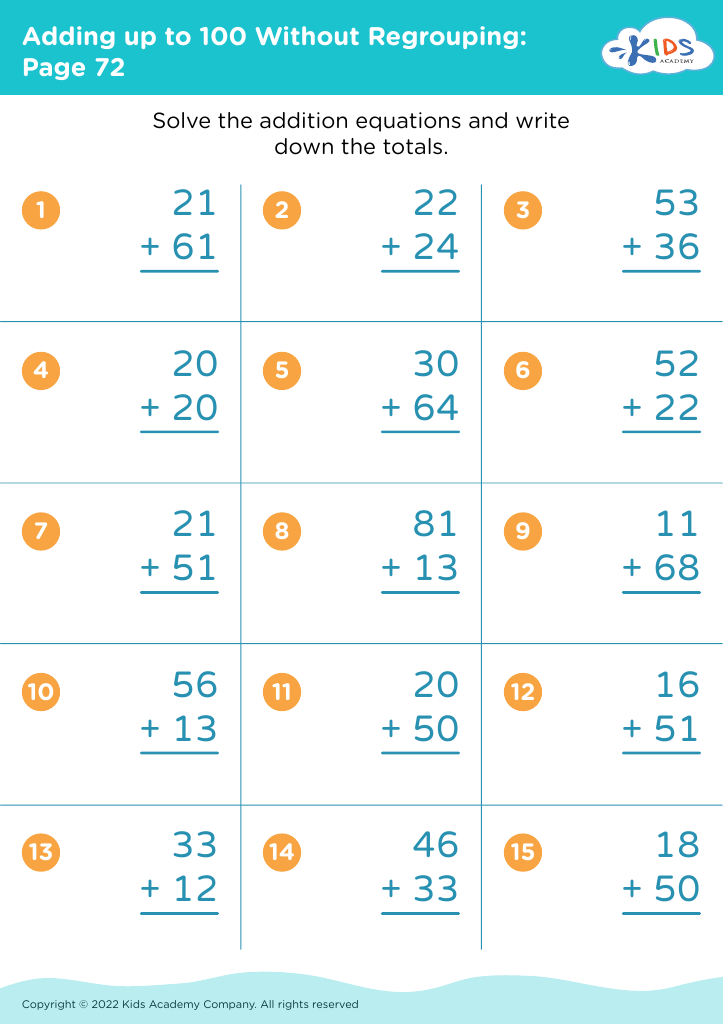
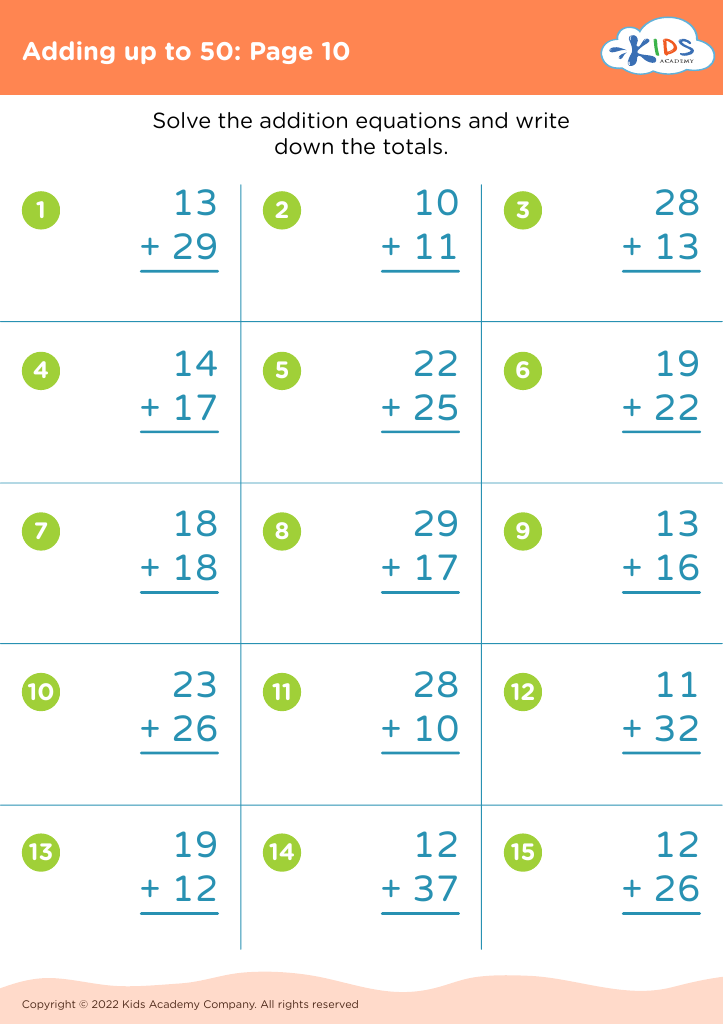
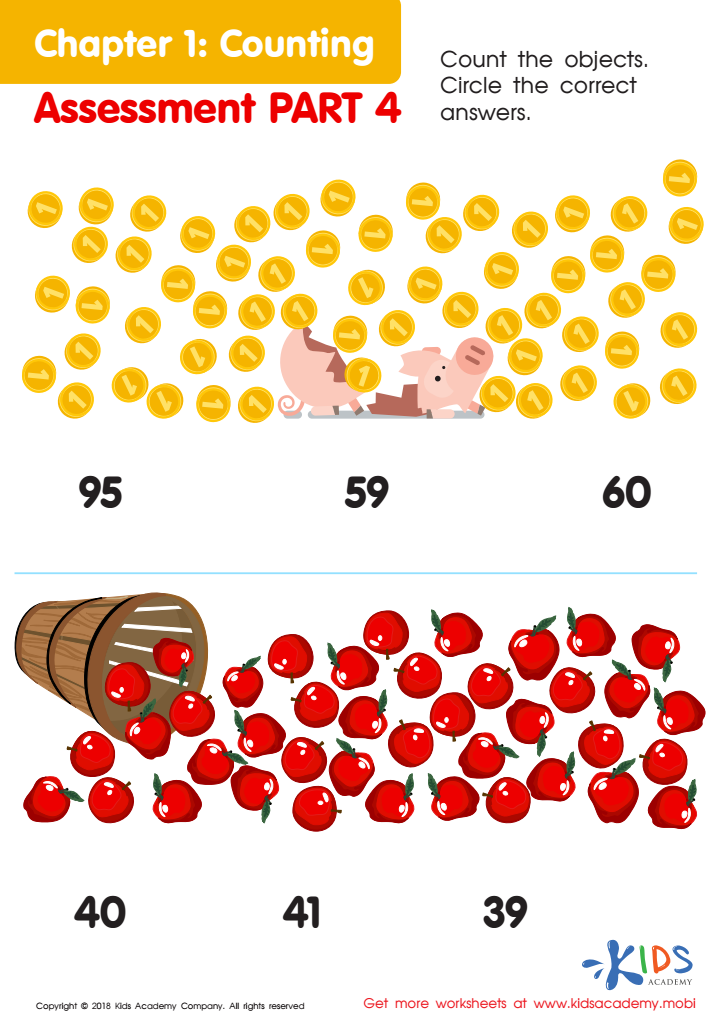
Counting: Assessment 4 Worksheet
 Assign to My Students
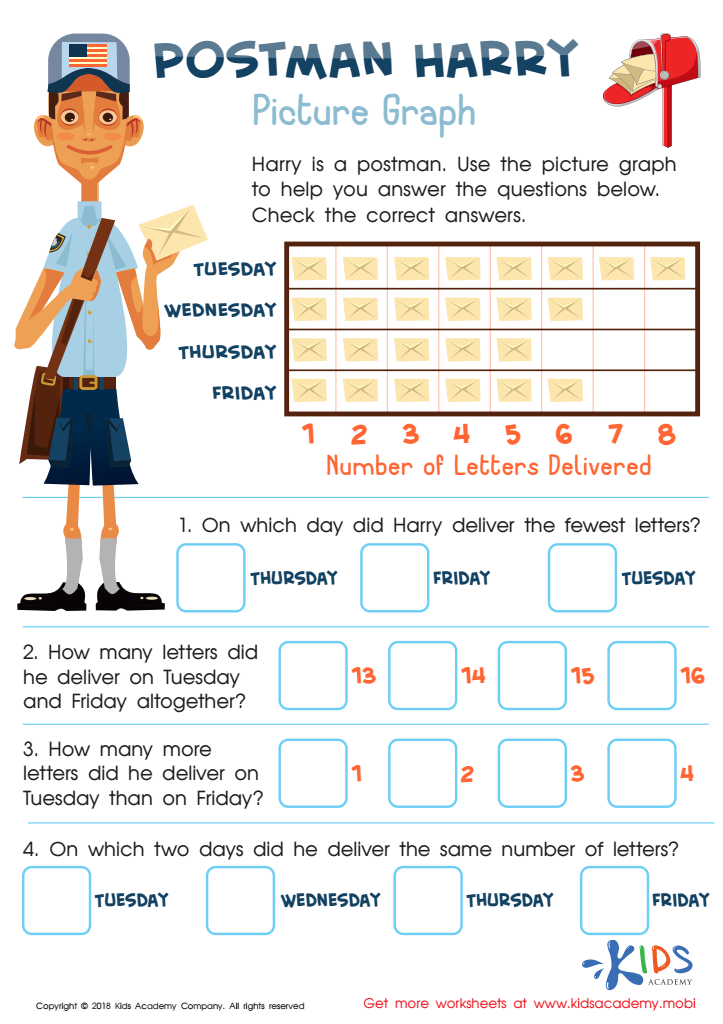
Postman Harry: Picture Graph Worksheet
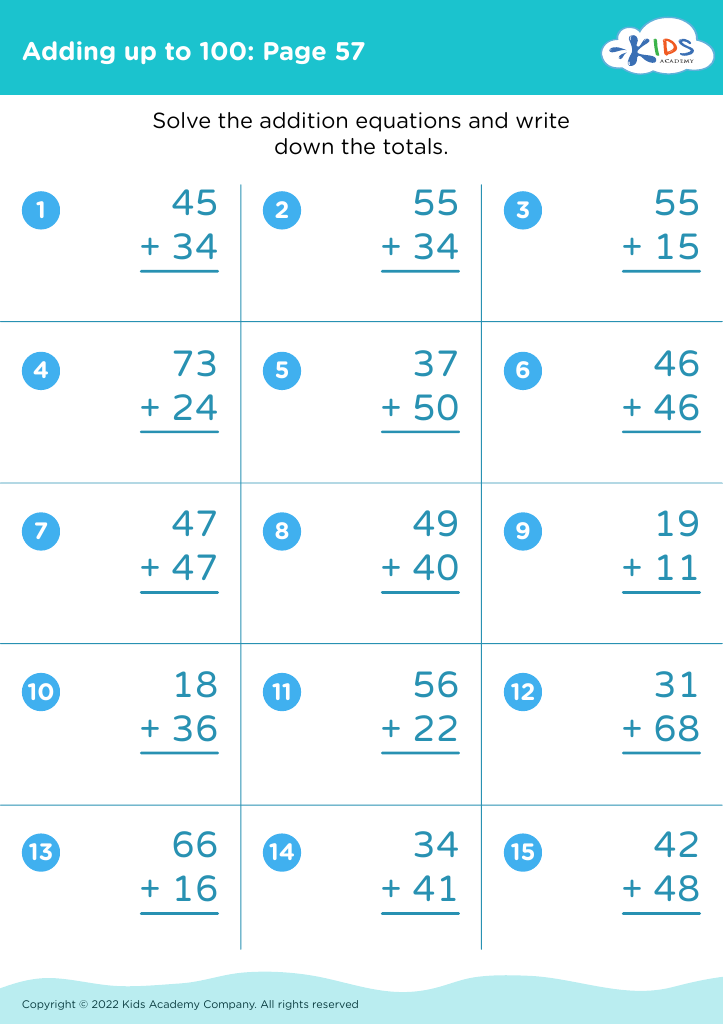
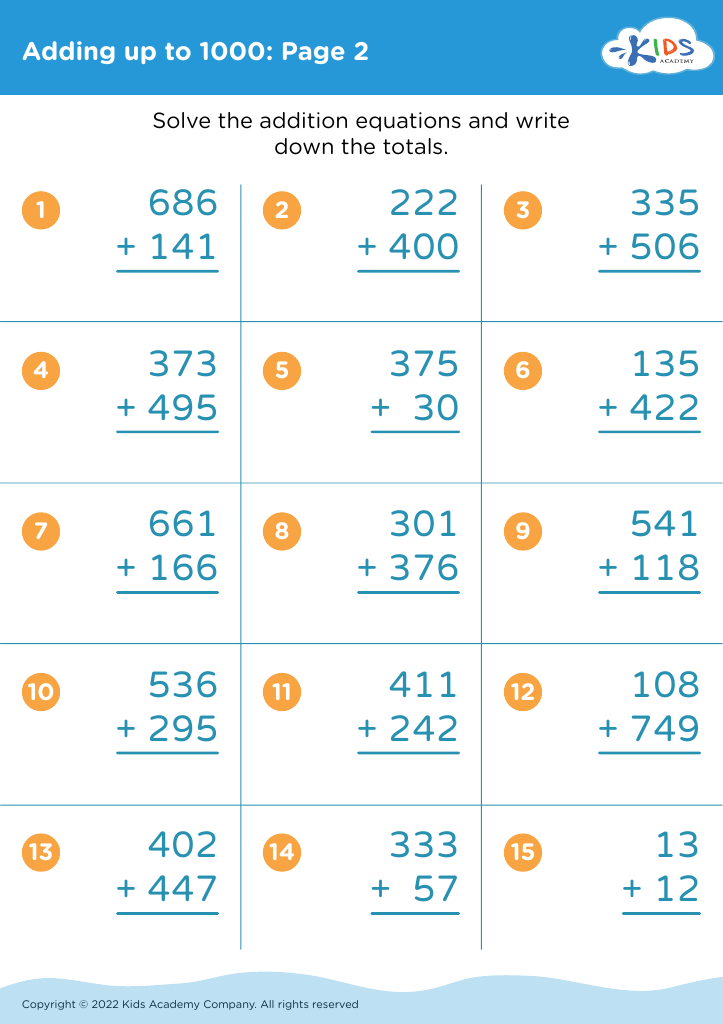
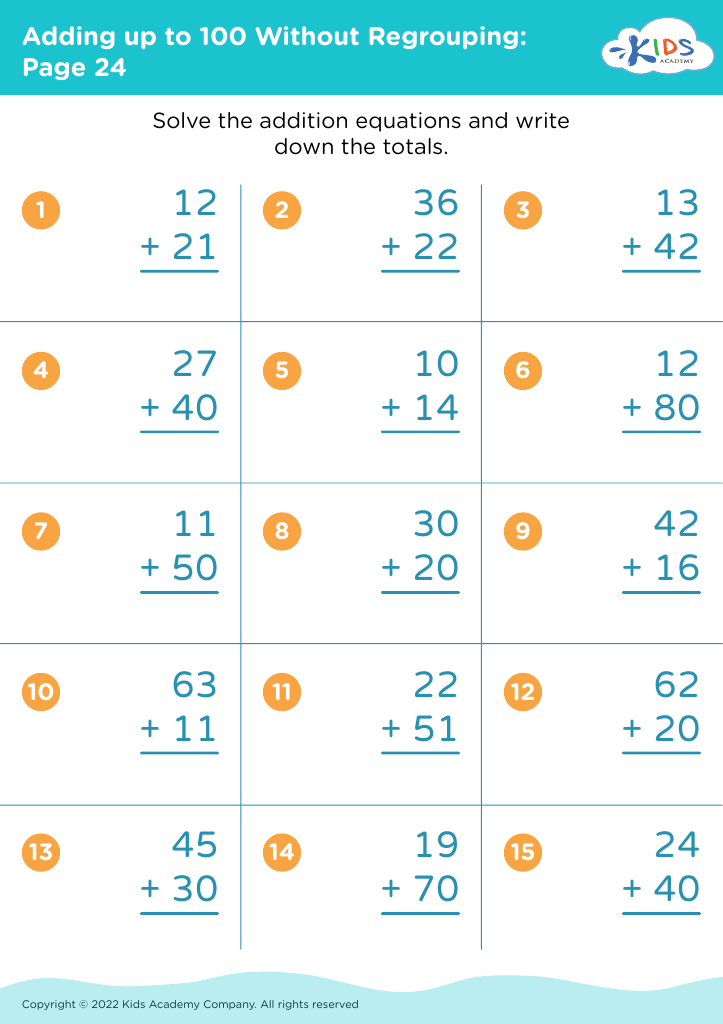
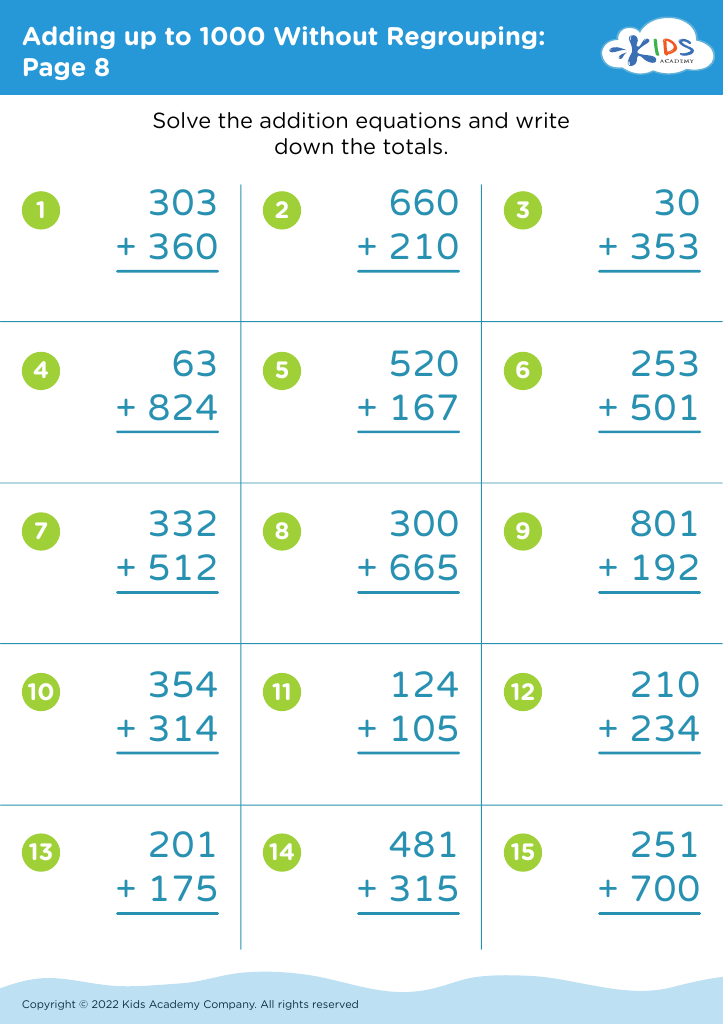
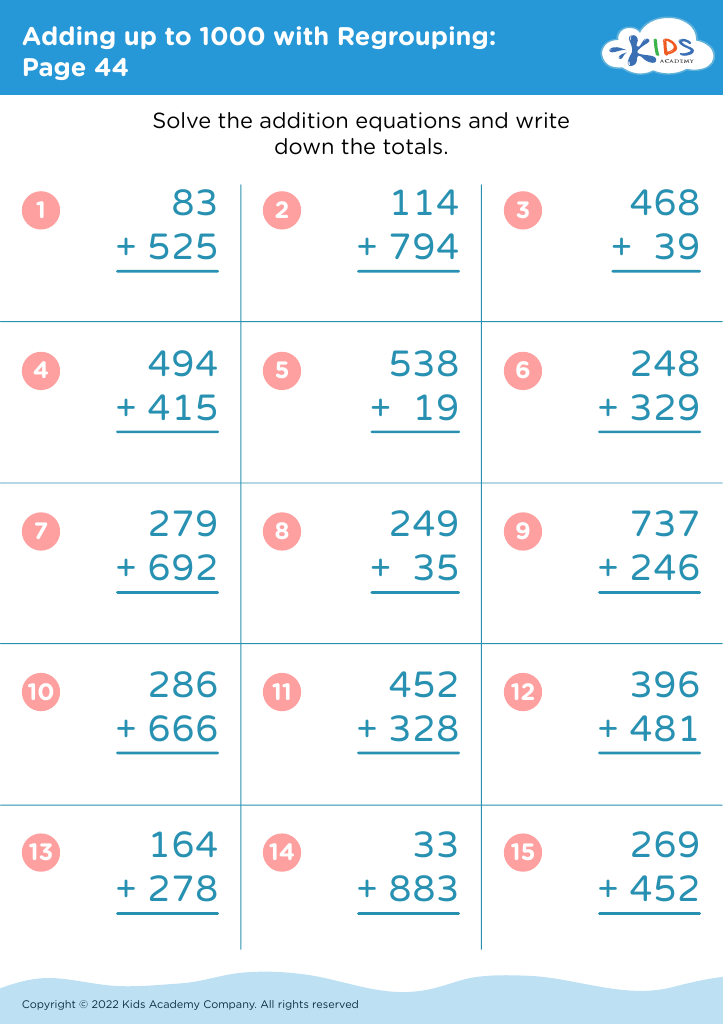






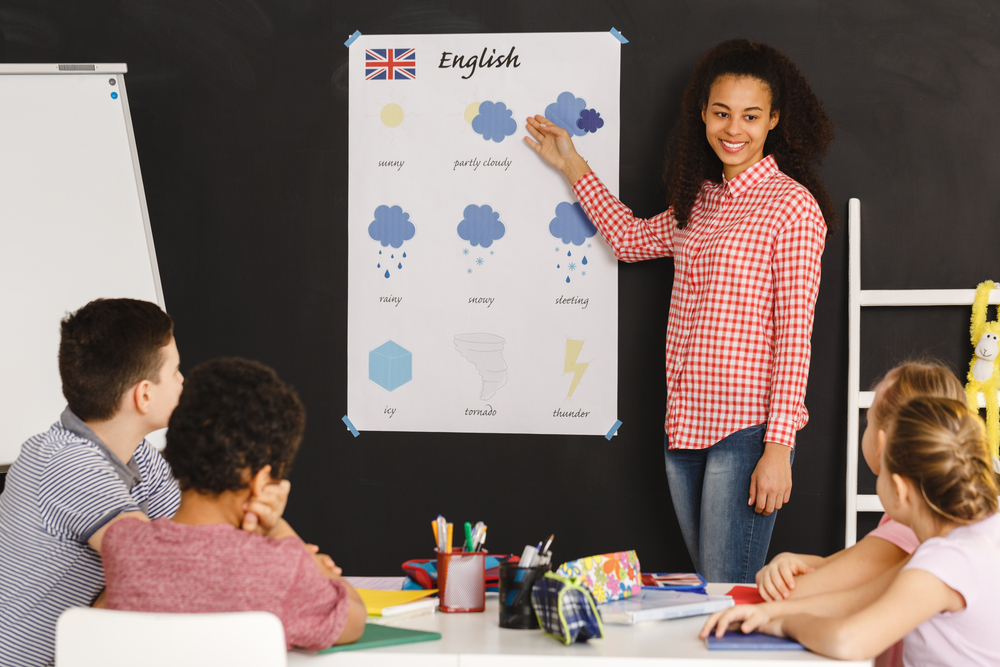

Developing critical thinking skills in 7-year-olds, especially through math, is a foundational aspect of their education that contributes significantly to their overall cognitive development. For parents and teachers, nurturing these skills is essential because they foster problem-solving abilities, analytical thinking, and creativity — competencies that serve children well beyond the classroom.
Critical thinking in math involves understanding and applying logical reasoning to arrive at conclusions, rather than just memorizing formulas or procedures. For a 7-year-old, this might mean figuring out different ways to solve a problem or understanding why a mathematical rule works, not just that it does. This level of comprehension enables children to tackle new and unfamiliar problems with confidence.
Moreover, developing these skills at a young age lays the groundwork for advanced mathematical thinking and application in later years, enhancing academic performance across subjects. It also equips children with the mindset to question, analyze, and make reasoned decisions in everyday life.
Parents and teachers play a pivotal role in this process by providing engaging activities, encouraging exploration, and asking open-ended questions. By prioritizing the development of critical thinking in math, adults ensure that children are better prepared to navigate a world that increasingly values innovation and analytical prowess, thereby setting them on a path to lifelong learning and success.








