Enhancing observation skills Math Worksheets for 7-Year-Olds
7 filtered results
-
From - To
Unlock your child's potential with our "Enhancing Observation Skills Math Worksheets" designed specifically for 7-year-olds! These engaging worksheets aim to sharpen young learners' observation skills through interactive and fun math activities. By encouraging careful analysis of patterns, shapes, and quantities, kids develop critical thinking abilities essential for their academic journey. Each worksheet is creatively crafted to stimulate curiosity and promote problem-solving skills, ensuring a comprehensive and enjoyable learning experience. Whether used in the classroom or at home, these worksheets provide a valuable resource for parents and educators looking to foster a strong mathematical foundation in their children. Start enhancing observation skills today!
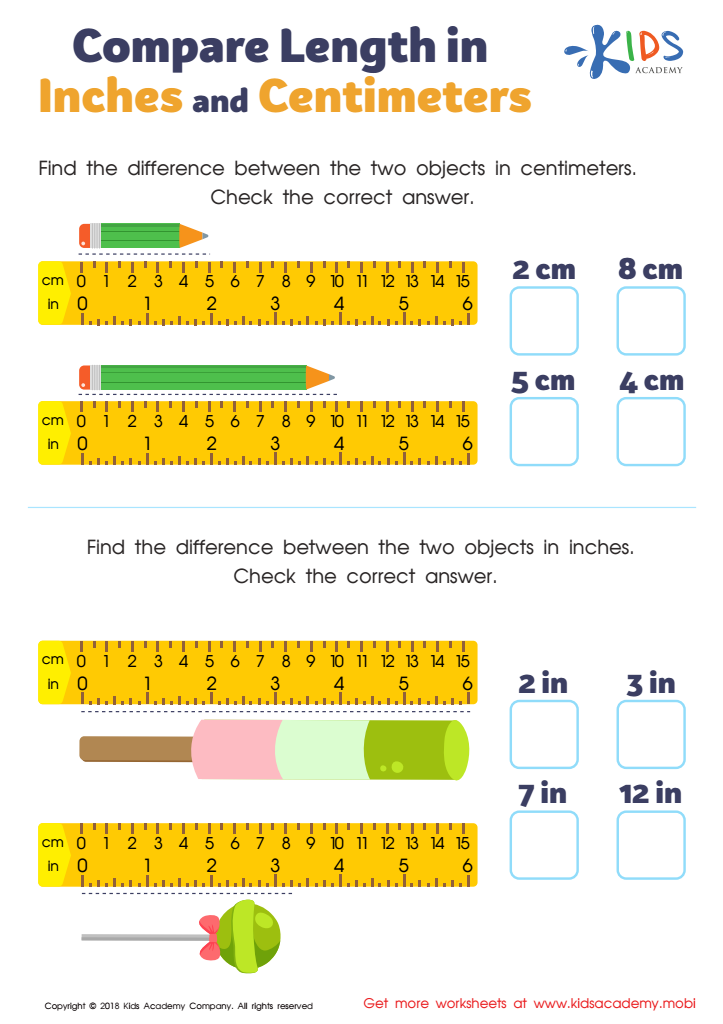
Compare Length in Inches and Centimeters Worksheet
 Assign to My Students
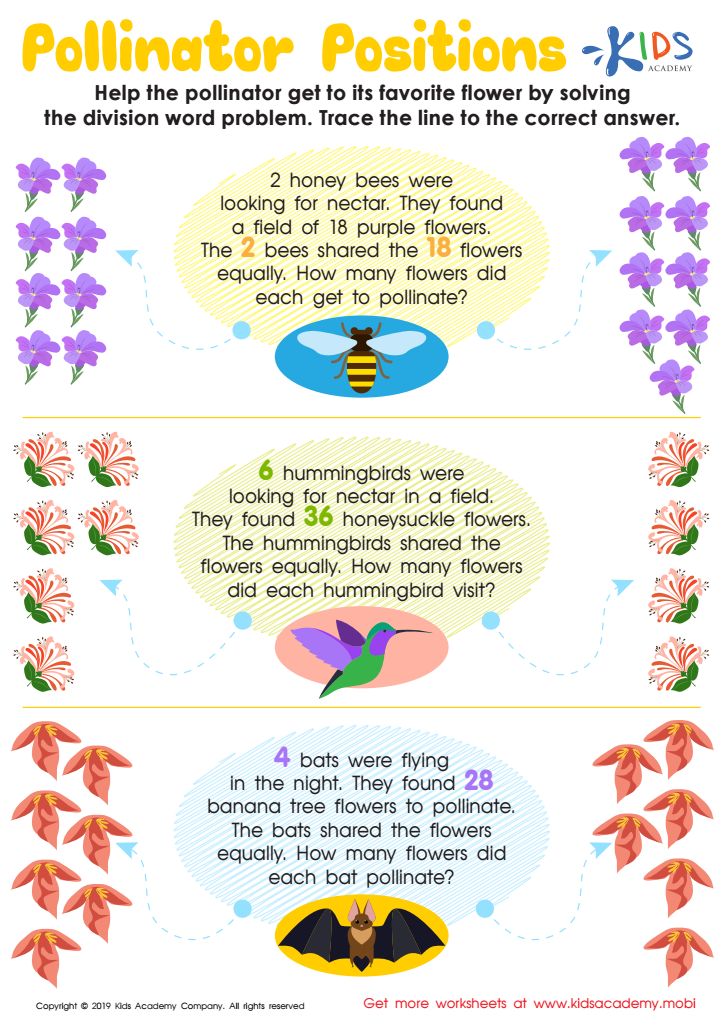
Pollinator Positions Worksheet
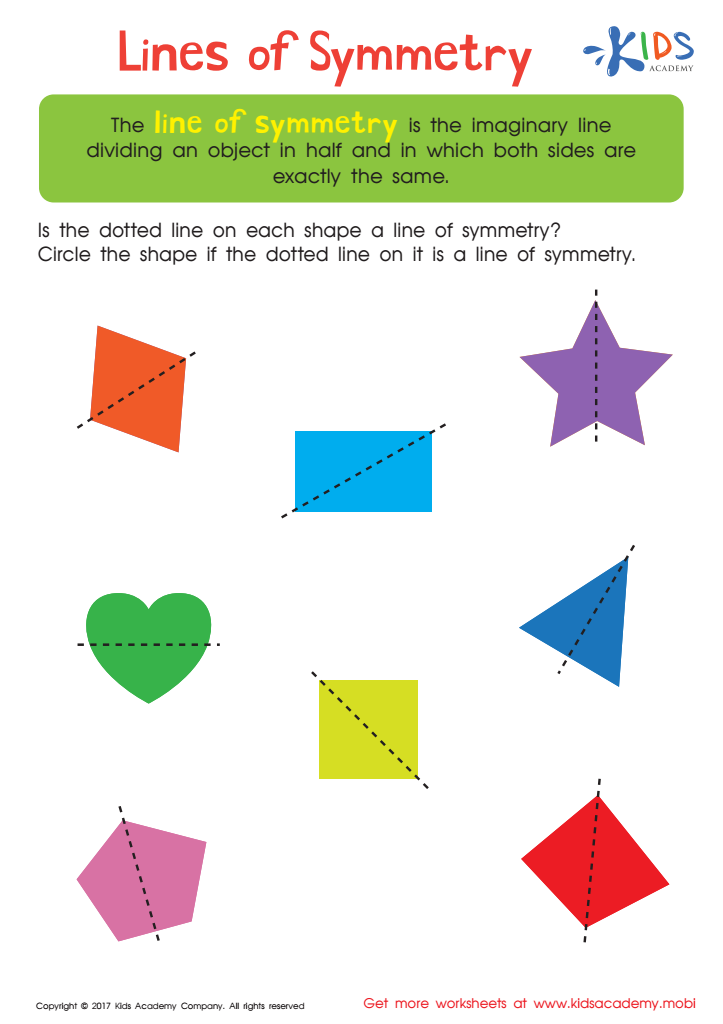
Lines of Symmetry Printable
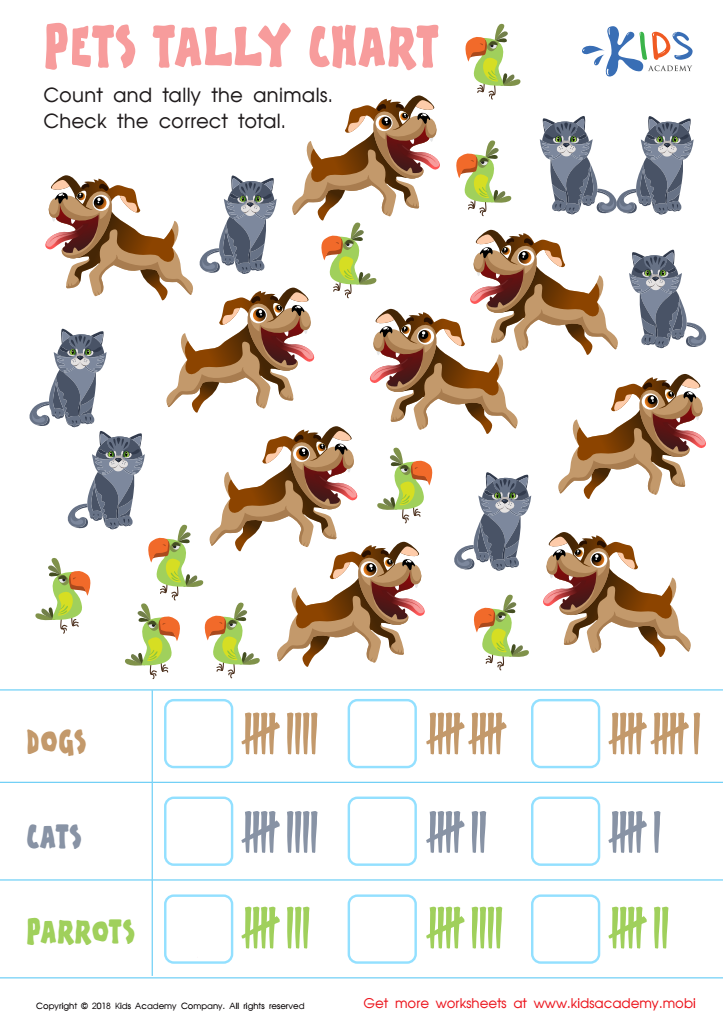
Pets Tally Chart Worksheet
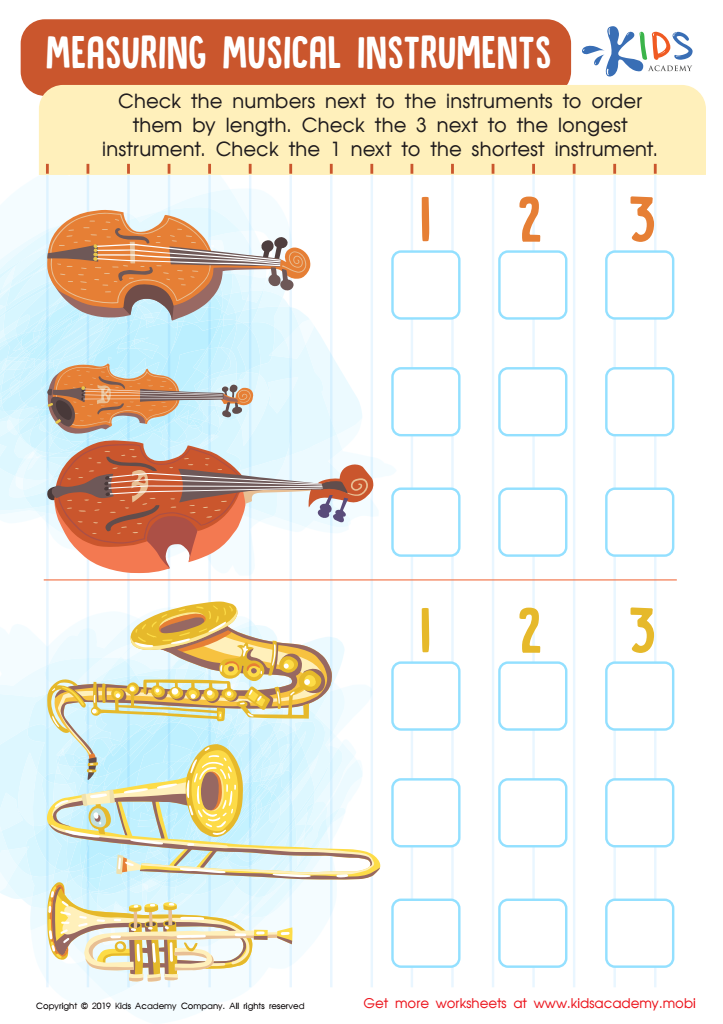
Measuring Musical Instruments Worksheet




.jpg)


Enhancing observation skills in math for 7-year-olds is crucial for several reasons. Firstly, observation is essential for understanding mathematical concepts, as it allows children to connect abstract ideas to real-world contexts. When kids enhance their observational skills, they learn to recognize patterns, make predictions, and draw conclusions – all core components of mathematical thinking.
Furthermore, strong observation skills foster critical thinking. When children attentively observe details in their environment or in mathematical problems, they develop the ability to analyze data and make informed decisions. This analytical mindset is not only vital for mastering math but also applies across various disciplines and life situations.
Moreover, enhancing these skills encourages curiosity. Seven-year-olds are naturally inquisitive; cultivating their observation skills awakens a lifelong passion for learning. Parents and teachers can build strategies that incorporate games, hands-on activities, and discussions to stimulate observational learning.
Finally, nurturing observation skills supports individualized learning. Children have unique ways of processing information, and by honing these skills, educators and parents can better support students who may struggle with traditional teaching methods. In essence, fostering observation skills lays a foundational groundwork for mathematical understanding and overall academic success, benefiting the child's entire educational journey.








