Hand-eye Coordination Math Worksheets for 7-Year-Olds - Page 2
27 filtered results
-
From - To
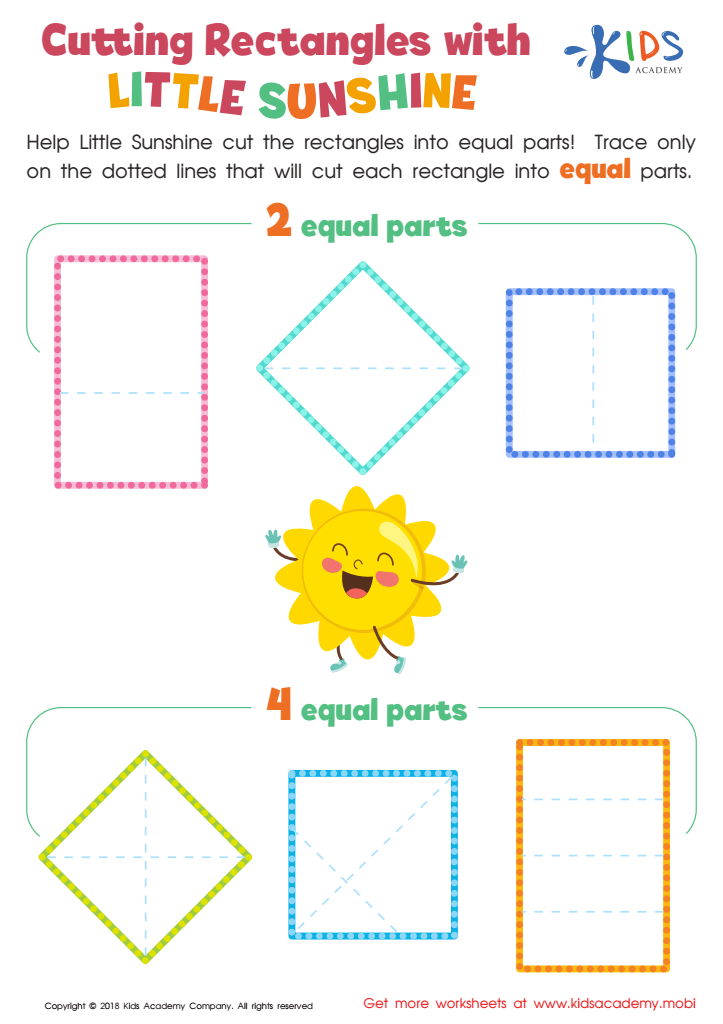
Cutting Rectangles with Little Sunshine Worksheet
 Assign to My Students
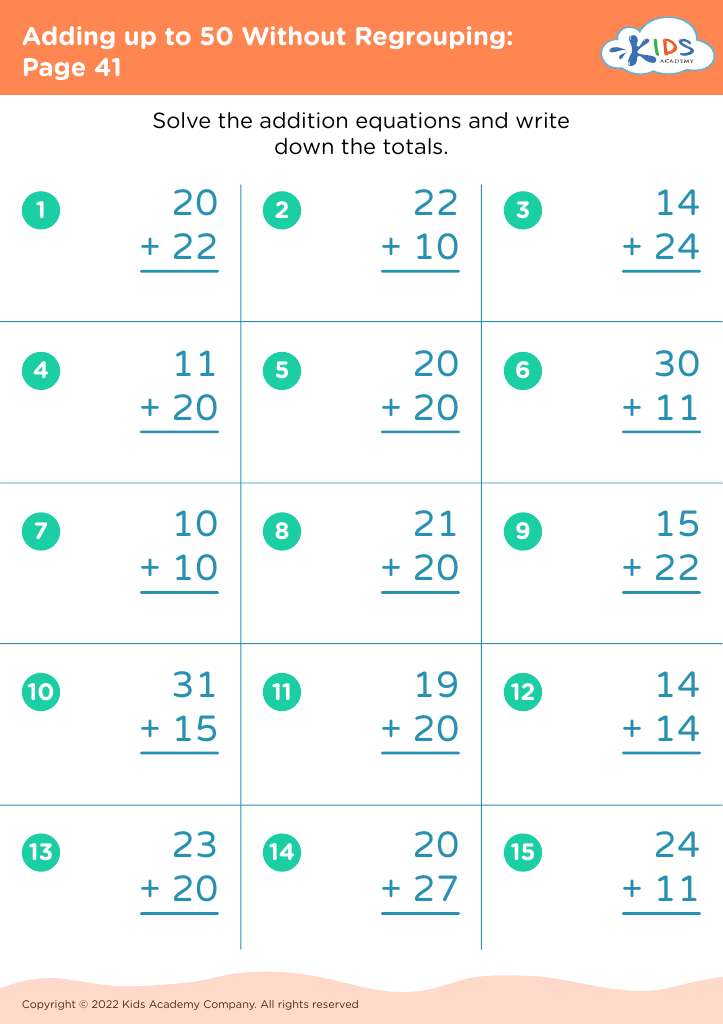
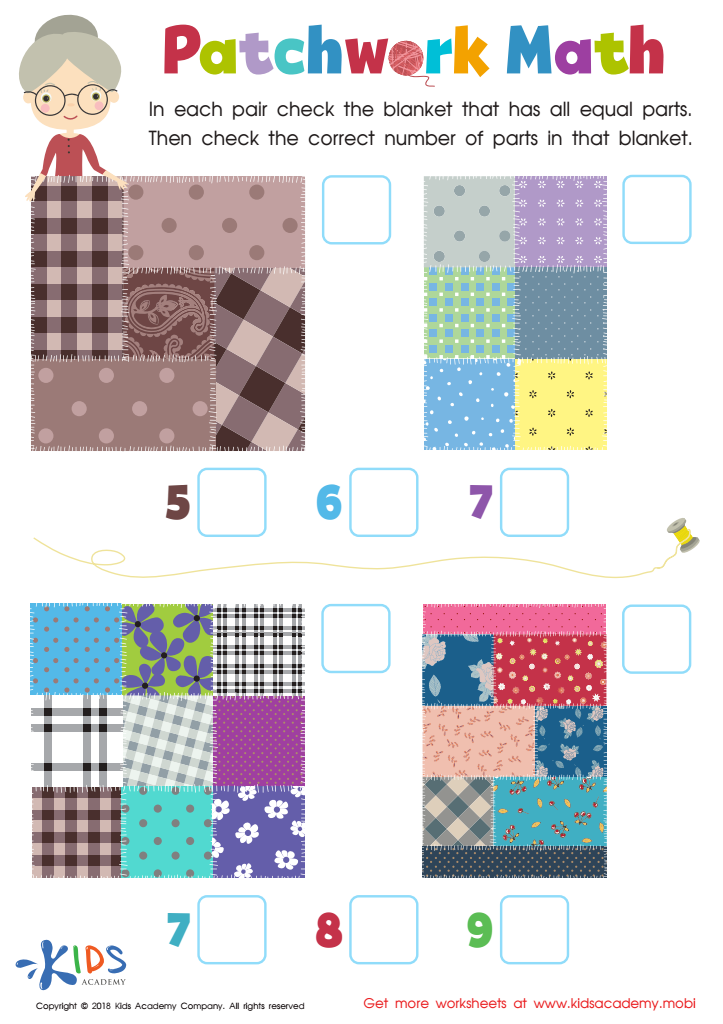
Patchwork Math Worksheet





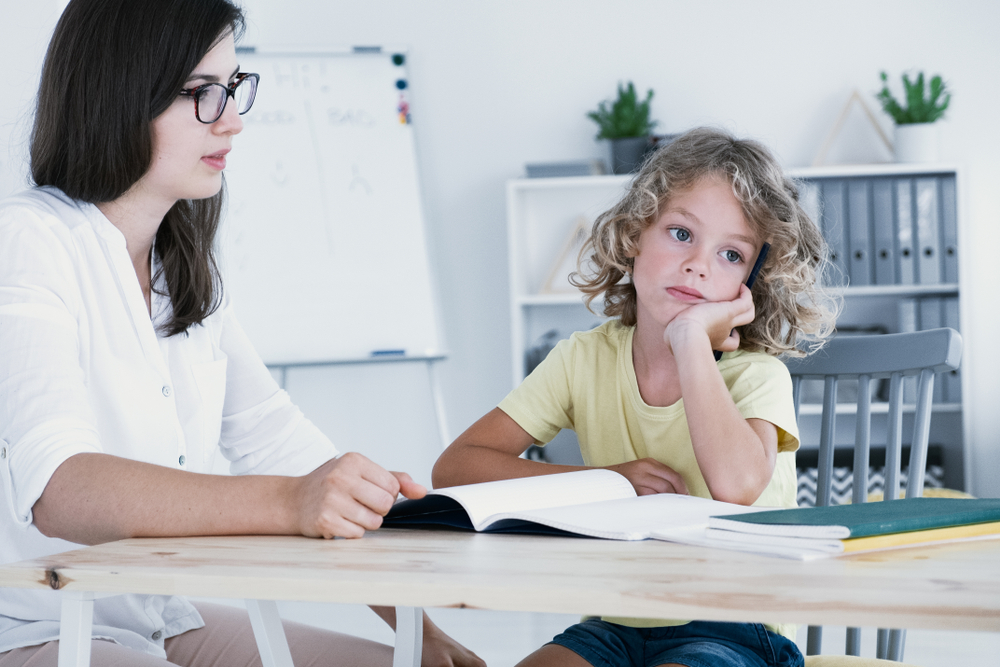
Parents and teachers should care about hand-eye coordination math for 7-year-olds because it promotes not only mathematical skills but also essential physical and cognitive development. At this age, children are building foundational math skills, and integrating hand-eye coordination activities reinforces their understanding of concepts like counting, shapes, and spatial relationships. Activities that involve physical movement, such as sorting objects, playing math games, or using manipulatives, can significantly enhance a child's ability to visualize and apply math principles.
Moreover, developing hand-eye coordination supports fine motor skills, which are crucial for tasks ranging from writing to using tools. When children engage in tactile learning experiences, they improve their focus and concentration, skills that are critical in both academic and everyday contexts. This development also fosters confidence and independence, as mastering physical tasks can translate to greater success in math-related activities.
By recognizing the importance of hand-eye coordination in math education, parents and teachers can create engaging, multisensory learning environments that cater to different learning styles, making math enjoyable and accessible for every child. Investing in these skills not only enhances mathematical understanding but also lays the groundwork for lifelong learning and problem-solving abilities.








