Historical Knowledge Math Worksheets for 7-Year-Olds
5 filtered results
-
From - To
Boost your 7-year-old's math skills while exploring fascinating historical facts with our "Historical Knowledge Math Worksheets." Designed for young learners, these engaging worksheets combine important math concepts with captivating history lessons, creating a unique and educational experience. Each worksheet challenges kids with age-appropriate math problems, seamlessly integrated with historical topics to enhance both mathematical understanding and historical awareness. Ideal for curious minds, our worksheets make learning fun and interactive. Perfect for home or classroom use, they support cognitive development and encourage a love for learning. Transform math practice into an exciting adventure through time!
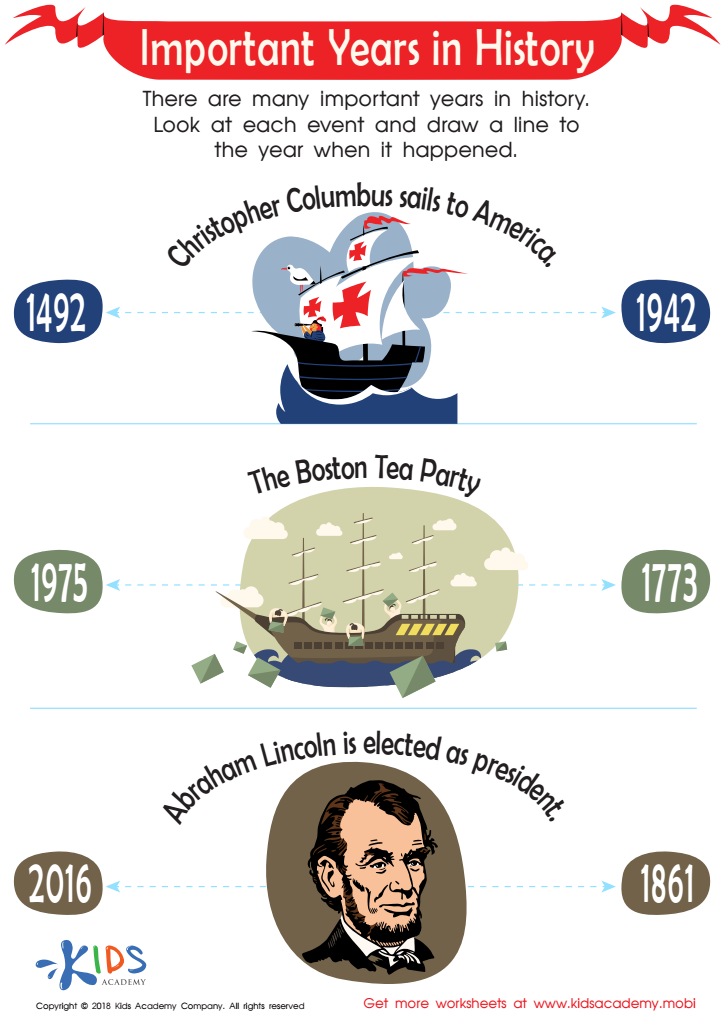
Important Years in History Worksheet
 Assign to My Students
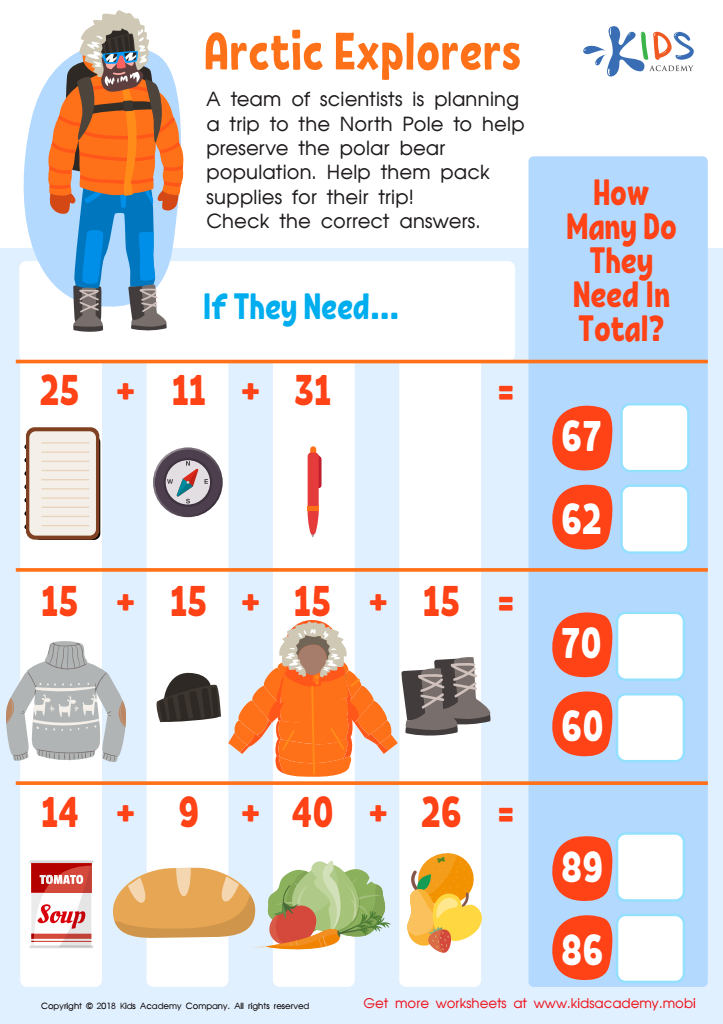
Arctic Explorers Worksheet
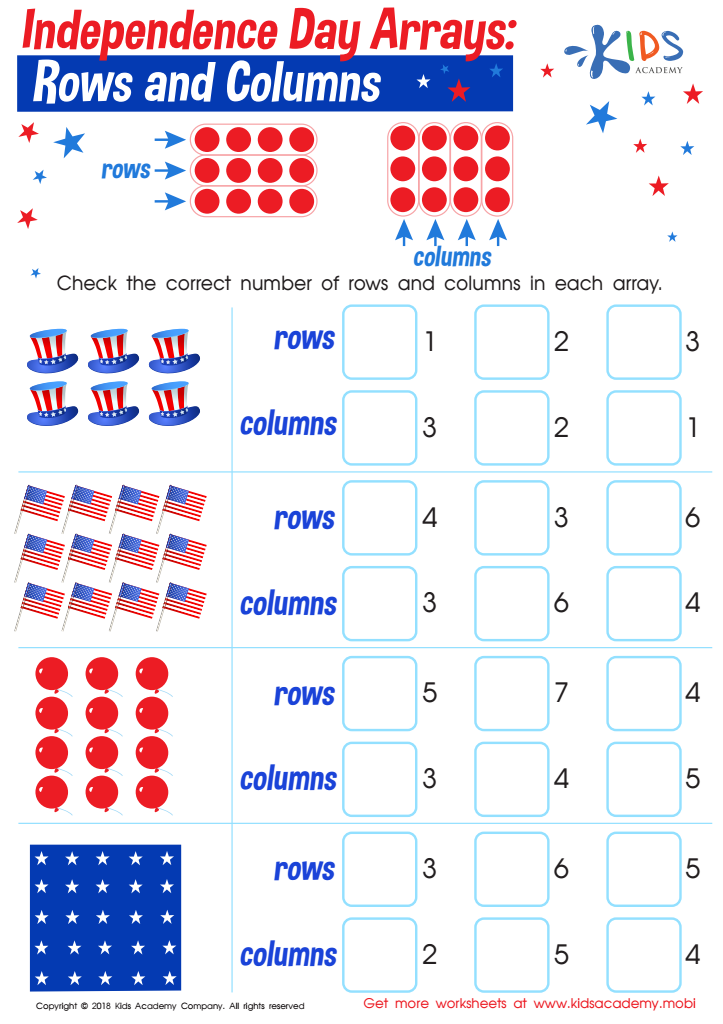
Independence Day Arrays: Rows and Columns Worksheet
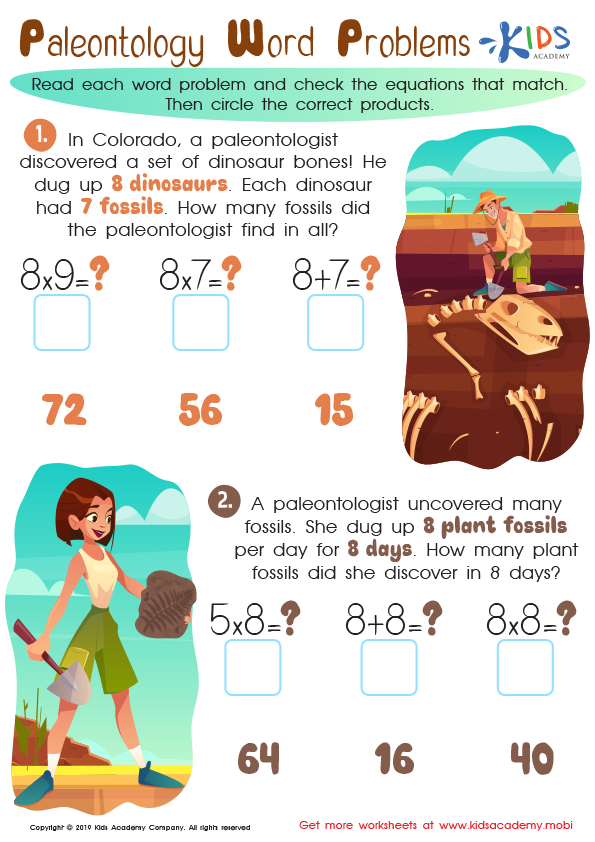
Archeology Word Problems Worksheet
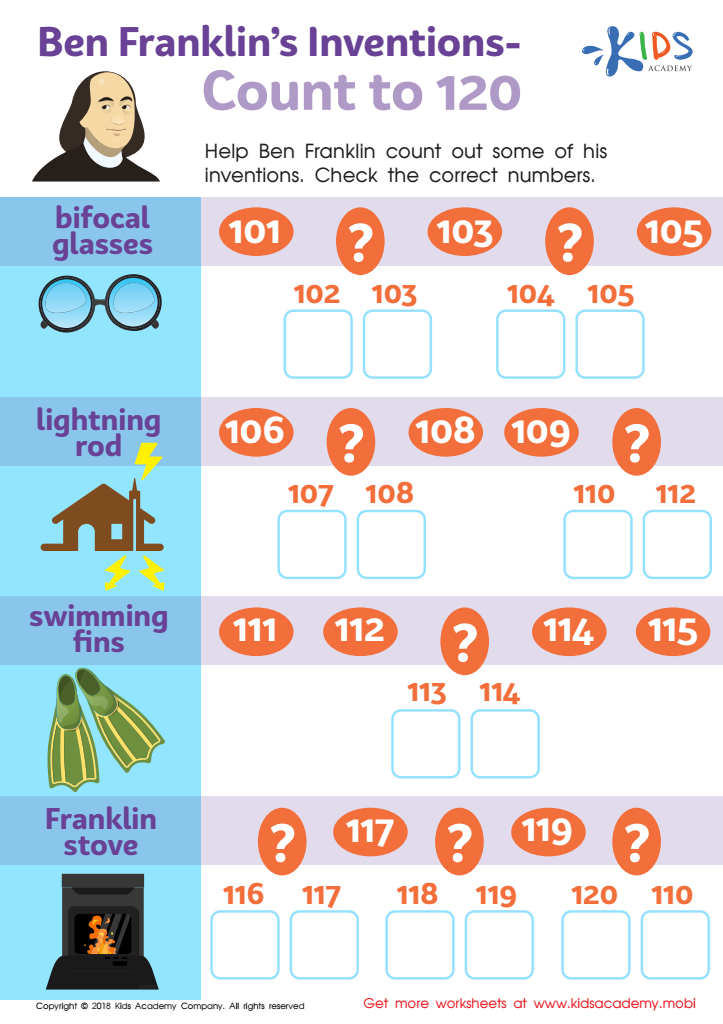
Ben Franklin’s Inventions – Count to 120 Worksheet







Introduction to historical knowledge in math for 7-year-olds plays a pivotal role in fostering a well-rounded educational foundation. This approach connects abstract mathematical concepts to real-world applications and the evolution of human thought. By integrating the history of mathematics, children can appreciate the relevance and significance of math in various cultural and historical contexts.
Understanding historical milestones in math, such as the development of numbers, aids in solidifying foundational concepts. For instance, learning about ancient Egyptian geometry or the invention of zero in ancient India makes abstract concepts more relatable and brings a sense of excitement and curiosity. Historical contexts can turn math into a storytelling experience, making lessons more engaging and enjoyable for young minds.
Moreover, this knowledge helps develop critical thinking by illustrating how mathematical problems were approached and solved throughout history. This perspective emphasizes that math is not just a set of rigid rules but a dynamic and evolving discipline shaped by human ingenuity.
In addition, historical knowledge fosters a broader appreciation for global contributions, promoting cultural awareness and diversity. Children begin to recognize the universal language of math and its impact on civilization’s progress. By caring about historical knowledge in math, parents and teachers can help instill a love for learning, a respect for cultural achievements, and a curiosity that transcends the classroom.








