
Interpreting data Math Worksheets for 7-Year-Olds
6 filtered results
Difficulty Level
Grade
Age
-
From - To
Subject
Activity
Standards
Discover our engaging Interpreting Data Math Worksheets designed for 7-year-olds! These fun and interactive worksheets help young learners develop essential skills in understanding and analyzing data. Through colorful visuals and relatable scenarios, children practice interpreting bar graphs, pictographs, and simple charts, making math both exciting and accessible. Our carefully crafted activities promote critical thinking and encourage students to draw conclusions based on the information presented. Ideal for classroom use or home practice, these worksheets boost confidence and foster a love for learning. Dive into the world of data with our resources and watch your child's math skills flourish!
Favorites
With answer key
Interactive
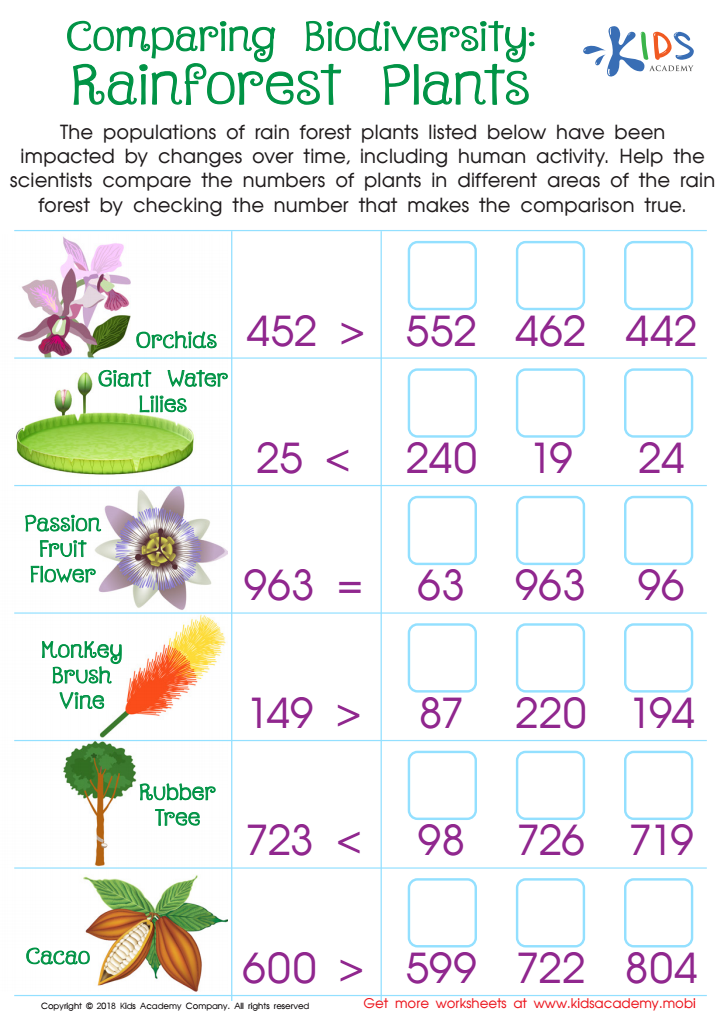
Comparing Biodiversity: Rainforest Plants Worksheet
Have your students learn about biodiversity in the rainforest and practice number sense and reasoning with this colorful PDF worksheet. Comparing the numbers of plants found in different areas of the rainforest, they'll combine eco-friendly science and math to make the number comparisons true.
 Assign to My Students
Comparing Biodiversity: Rainforest Plants Worksheet
Worksheet
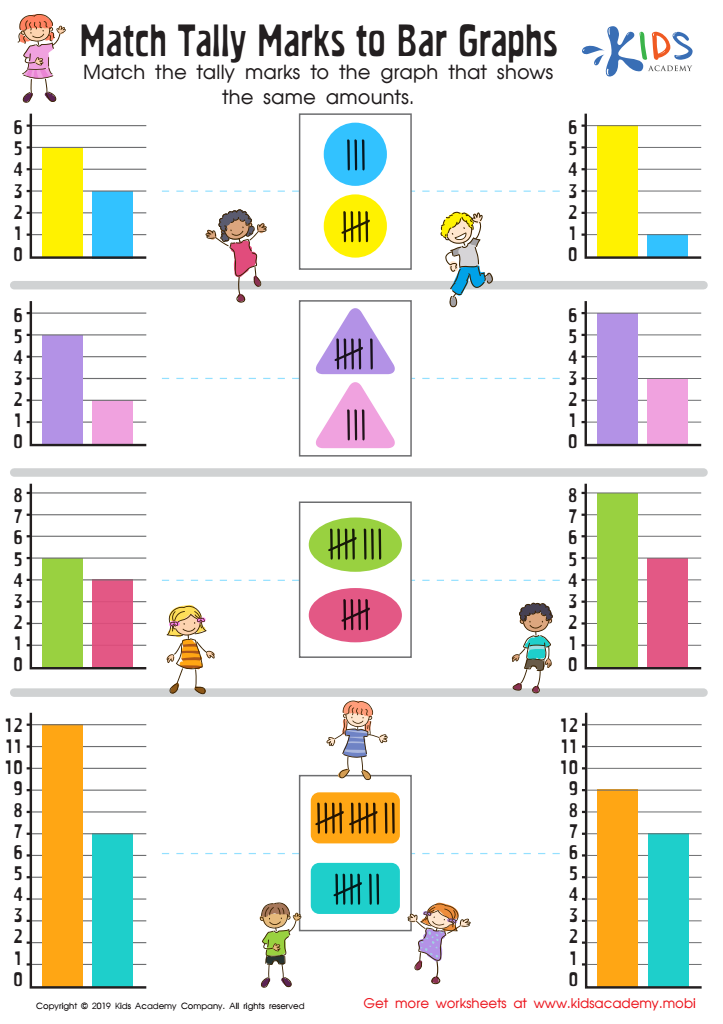
Match Tally Marks to Bar Graphs Worksheet
Learning math can be tough for kids. Rules and formulas can be confusing. Don't worry, this worksheet can help them understand graphs better. Show them how to match the tally marks with the graph that shows the same amount. It will help them grasp the basics and prepare them for more complex equations.
Match Tally Marks to Bar Graphs Worksheet
Worksheet
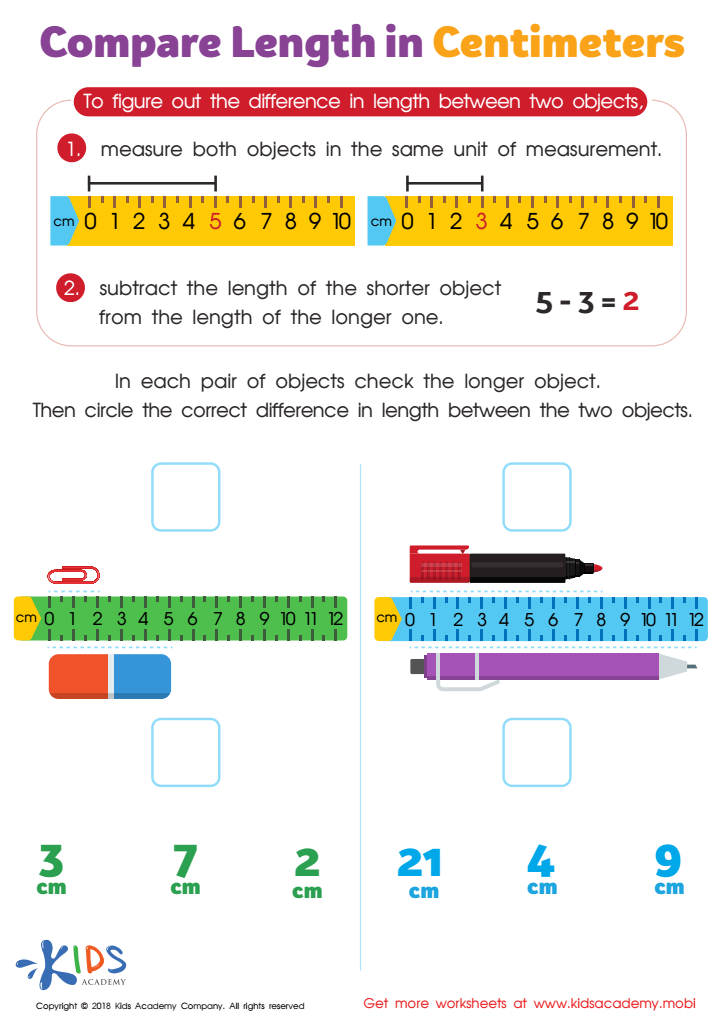
Compare Length in Centimeters Worksheet
To do this worksheet, your child needs to be able to measure accurately, add and subtract. They must measure both items and subtract the shorter from the longer to work out the difference in length.
Compare Length in Centimeters Worksheet
Worksheet
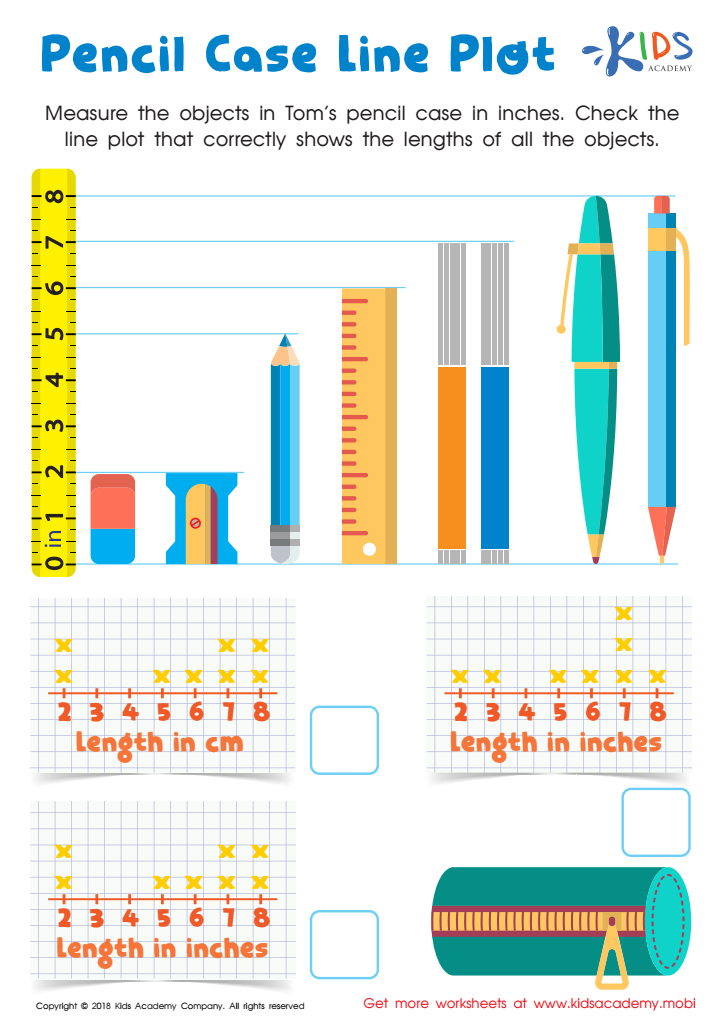
Pencil Case Line Plot Worksheet
Explain to your child that a line plot is a way to organize information. For example, if they need to arrange objects, they should draw a line plot. Now, have them help Tom measure the objects in his pencil case in inches. Then, have them check the line plot that accurately shows the length.
Pencil Case Line Plot Worksheet
Worksheet
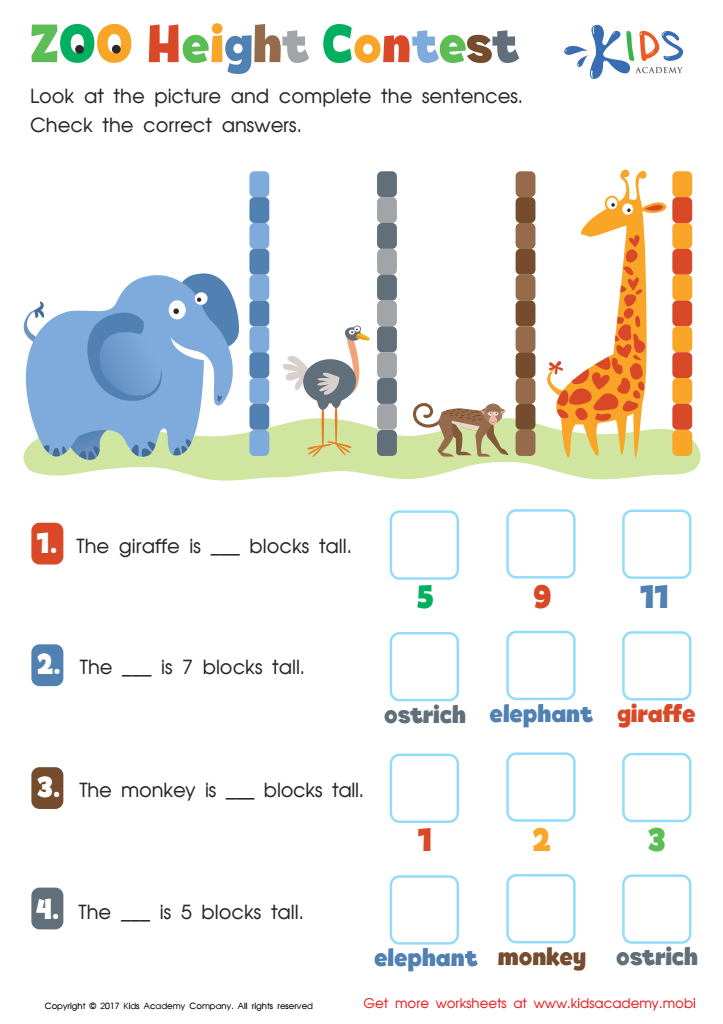
Zoo Height Contest Worksheet
Let's head to the zoo and use colorful blocks to measure your child's favorite animals! With this Kids Academy worksheet, help them practice and prepare for learning measurement. Guide them in looking at the zoo animals and counting blocks to find the height. Then, read the questions and check the box next to the correct answer.
Zoo Height Contest Worksheet
Worksheet
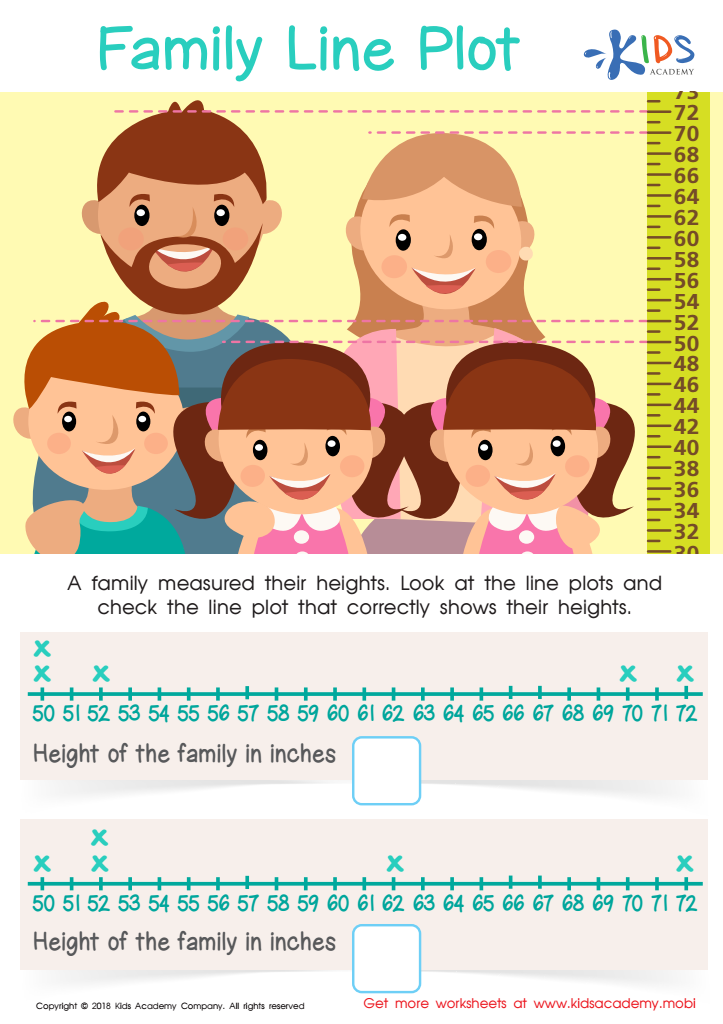
Family Line Plot Worksheet
Have you and your kids ever done a family height measurement? How did it go? If they're familiar with it, this worksheet may be simpler. The picture shows a family with their heights recorded. Get your kid to look at the line plots and choose the one that shows the family's heights accurately.
Family Line Plot Worksheet
Worksheet
Join Kids Academy for Free
Who is primarily going to use this learning content?







Interpreting data is a crucial skill for 7-year-olds as it lays the foundation for critical thinking and problem-solving abilities. Parents and teachers should care about this topic for several compelling reasons.
First, data interpretation helps children make sense of the world around them. By analyzing charts, graphs, and simple data sets, they learn to discern patterns, identify trends, and draw conclusions based on evidence. This skill is not only vital in math but also enhances their understanding in subjects like science and social studies.
Second, these skills promote active engagement with the learning process. When children interpret data, they develop curiosity and an innate desire to explore and ask questions. This promotes a growth mindset, where they learn to approach problems with perseverance and analytical thinking.
Moreover, proficiency in data interpretation fosters informed decision-making. As kids grow, they must process information from various sources critically, a skill vital in today's data-rich environment.
Lastly, encouraging data interpretation sets the stage for increased performance in math and other subjects. Strong foundational skills in data support their academic journey, ultimately contributing to a well-rounded education. Thus, fostering this ability at an early age is essential for their future success.








