Introduce your 7-year-old to the world of finances with our engaging Money Recognition Math Worksheets! These fun and educational printables are designed to help your child identify and value various coins and bills, improving their basic math skills effectively. Each worksheet features colorful images, puzzles, and activities that make learning about money exciting. Perfect for home or classroom use, our worksheets encourage practical knowledge that will benefit young learners in everyday life. Download now to empower your child with essential financial literacy and confidence in handling money!

Check out this FREE Trial Lesson on Math for age 7!

Make a Group to Match Numerals

Favorites
With answer key
Interactive
  • 7
  • Money recognition
  • Math
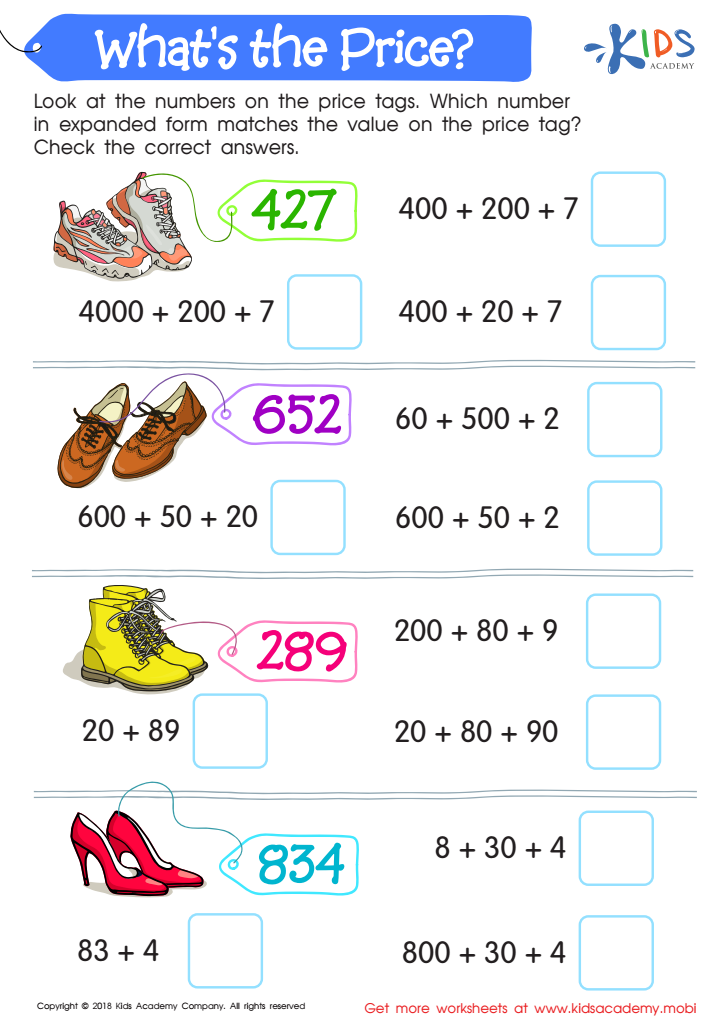
What's the Price? Worksheet

What's the Price? Worksheet

With this price tag worksheet, you and your kids can have some educational fun! Check the numbers on the tags, ask your child to work out their expanded form, and circle the correct answers. It's a great way to teach math and keep them entertained!
What's the Price? Worksheet
Worksheet
Counting Coins Worksheet

Counting Coins Worksheet

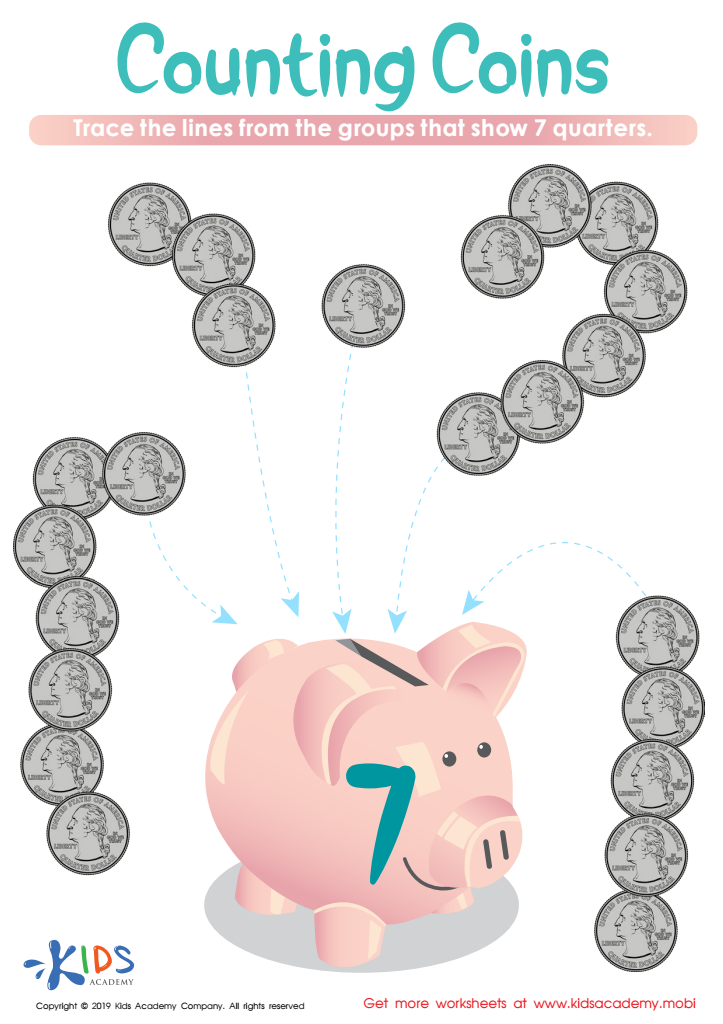
Help your students overcome their fear or aversion of counting and learning numbers with this fun worksheet! It features colorful pictures with four groups of coins. Ask the students to count each group, then trace the lines to the piggy bank. Show them it's easy to count and learn numbers!
Counting Coins Worksheet
Worksheet
Printable Money Games and PDF Worksheets: How Many Coins

How Many Coins Money Worksheet

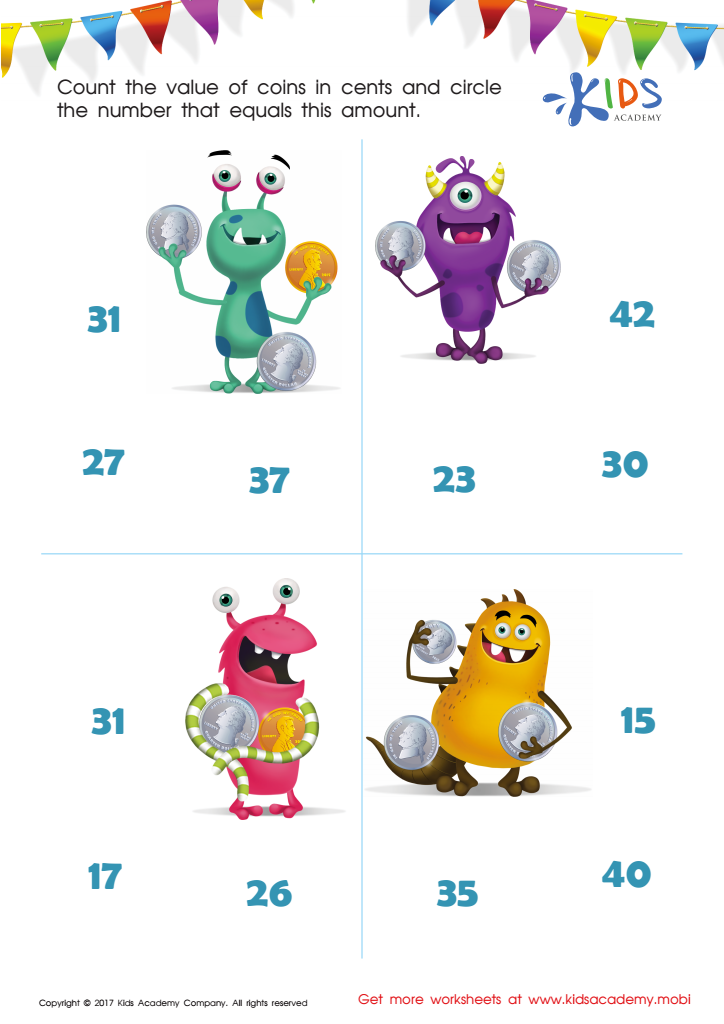
Have fun while counting coins: look at the monsters and count the coins in their hands. Challenge your little learners to count and write down the number of coins each one has. Enjoy the time together!
How Many Coins Money Worksheet
Worksheet
Printable Money Games and PDF Worksheets: One Cent or the Penny

One Cent or the Penny Money Worksheet
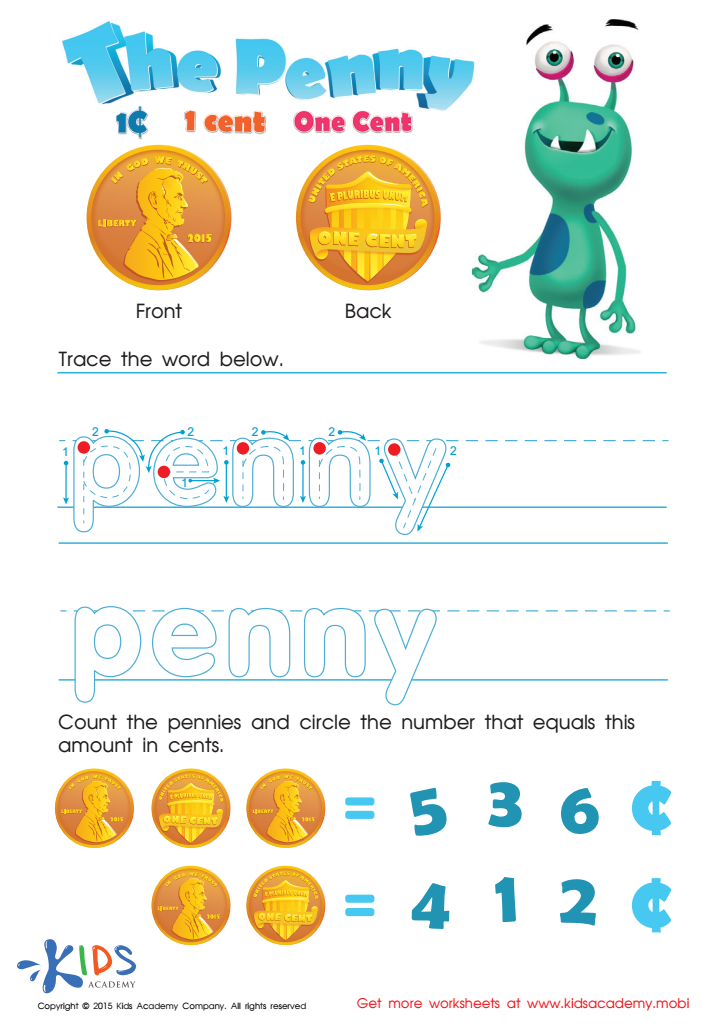
Counting money made easy with Kids Academy's new collection of worksheets! Start with the one cent coin, or "Penny": trace it and count the pennies to work out the total. Visit our site for more free, printable money worksheets.
One Cent or the Penny Money Worksheet
Worksheet
Printable Money Games and PDF Worksheets: Coin Names and Values

Coin Names and Values Money Worksheet
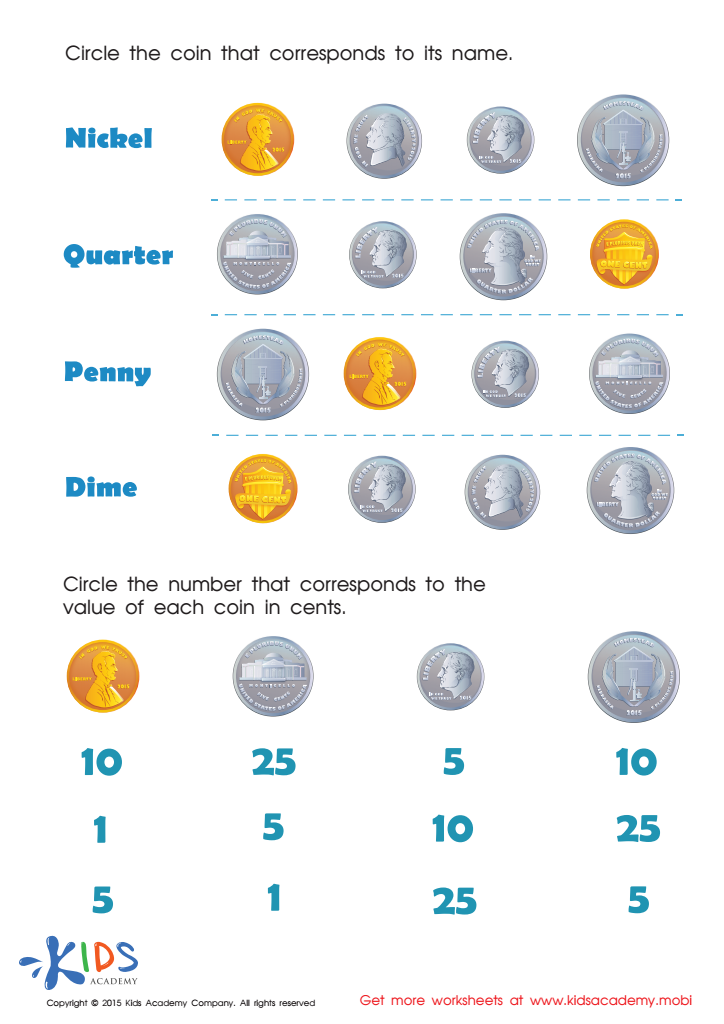
Learning about money can be easy, interesting and fun! Start by memorizing names and values of coins and then try matching pictures of coins to the right names and values. Find a great selection of counting money worksheets at our web site and keep learning.
Coin Names and Values Money Worksheet
Worksheet
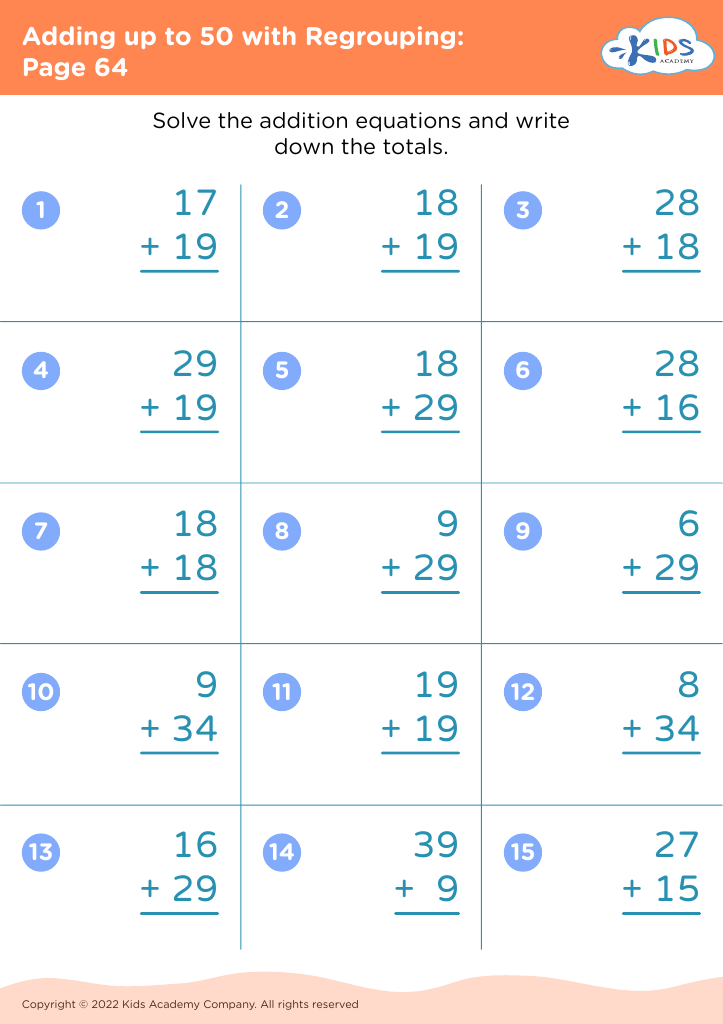
Adding up to 50 with Regrouping: Page 64
Worksheet
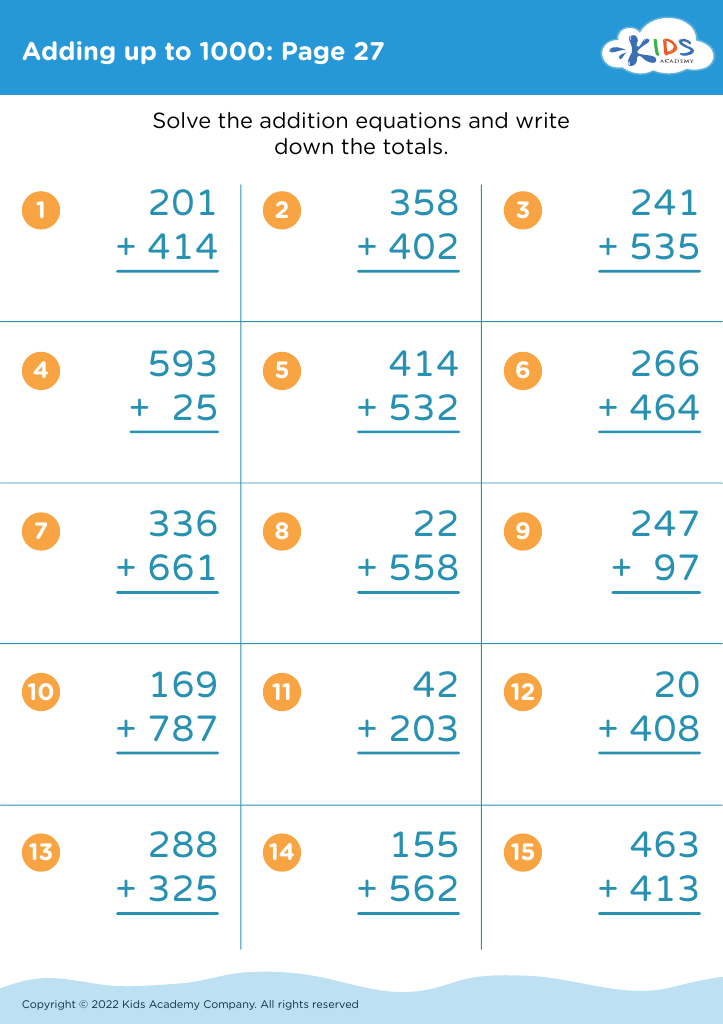
Adding up to 1000: Page 27

Adding up to 1000: Page 27

Adding up to 1000: Page 27
Worksheet
Printable Money Games and PDF Worksheets: Twenty Five Cents or the Quarter

Twenty Five Cents or the Quarter Money Worksheet

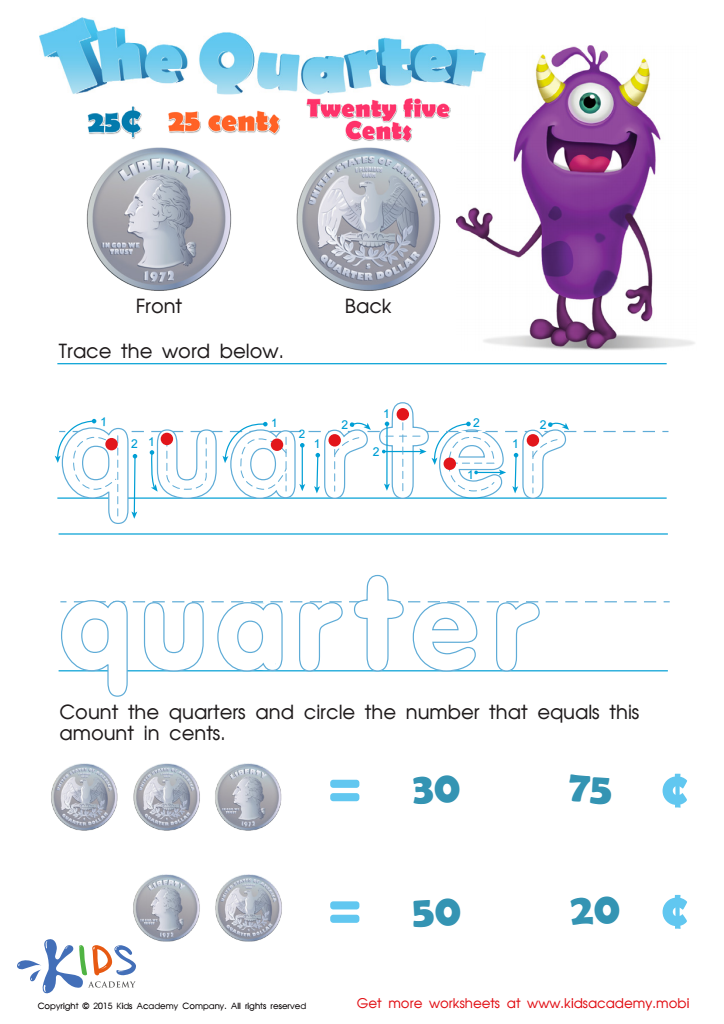
Check out our new printable money games - learn to count money easily! With quarters, trace the word, count them and calculate the amount in cents. More worksheets at our website. Give it a try!
Twenty Five Cents or the Quarter Money Worksheet

Worksheet


Money recognition is a crucial skill for 7-year-olds, as it lays the groundwork for their financial literacy and understanding of math concepts that they will use throughout their lives. By learning to identify and count coins and bills, children develop number sense, a fundamental math skill. This skill helps them grasp addition, subtraction, and the value of different currency denominations.

Importantly, understanding money builds children's practical life skills. They begin to associate the sums they learn with real-world transactions, enhancing their ability to make informed financial decisions and grasp the benefits and limitations of saving, spending, and budgeting. This early exposure can foster responsible financial habits and a sense of independence from a young age.

For parents and teachers, integrating money recognition into their educational approach reinforces learning in a relatable and engaging way. It can make abstract math concepts more tangible and meaningful. Activities like counting change during a pretend store game or sorting coins by value can be both educational and fun, stimulating a child's interest in math while also teaching essential life skills.

Therefore, prioritizing money recognition ensures that children are not only adept at basic math but also possess the foundational skills necessary for real-world financial competence in their future.