Telling time Math Worksheets for 7-Year-Olds
4 filtered results
-
From - To
Welcome to our engaging "Telling Time Math Worksheets for 7-Year-Olds" page! Here, we provide a fun and interactive way for young learners to master time-telling skills. Our expertly designed worksheets cater to children as they explore both analog and digital clocks, enhancing their understanding through real-world applications. With colorful illustrations and age-appropriate activities, kids will learn to read hours and minutes, understand AM/PM concepts, and solve relatable problems. Perfect for classroom use or at-home practice, these worksheets support curriculum goals while making learning enjoyable. Dive into the world of time-telling and make every minute count!
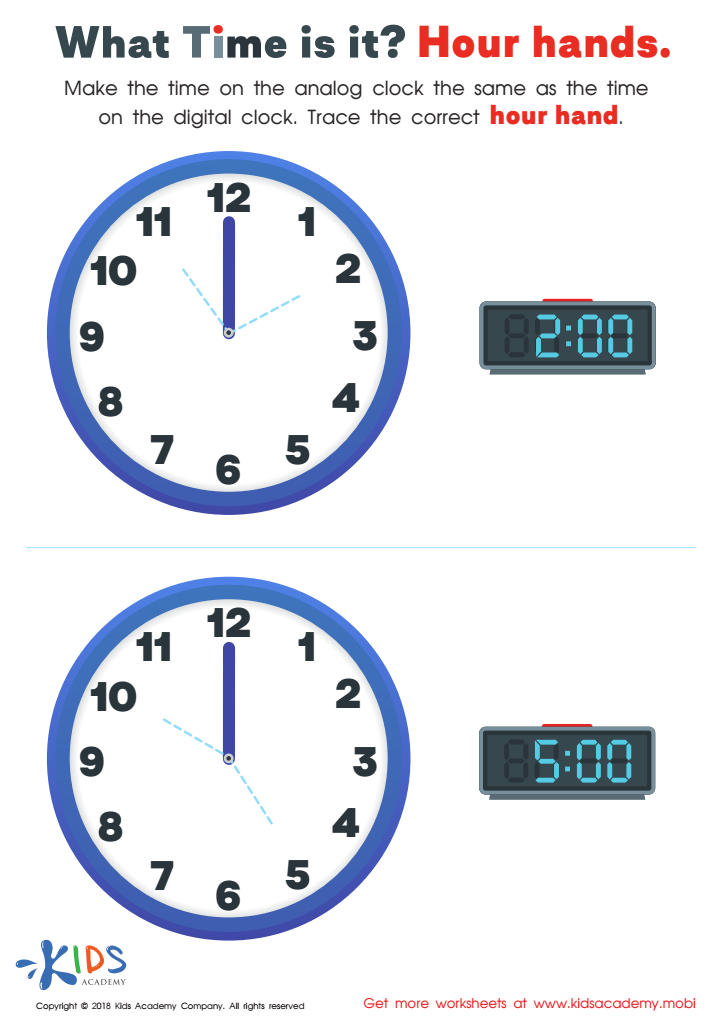
What Time Is it? Hour Hands Worksheet
 Assign to My Students





Teaching seven-year-olds how to tell time is crucial for their cognitive and social development. At this age, children are beginning to grasp the concepts of numbers and routines, making it an ideal time to introduce them to clocks and timekeeping. Understanding how to tell time fosters independence, allowing kids to manage their time effectively for school, chores, and play.
Moreover, learning to tell time promotes critical thinking and reasoning skills. Children learn to interpret analog and digital clocks, which enhances their ability to engage with number relationships and develop problem-solving strategies. As they learn to differentiate between hours and minutes, they gain a sense of order and structure in their daily activities.
For parents and teachers, teaching time can also provide valuable opportunities for practical learning experiences. Incorporating daily activities related to time, such as scheduling events or using timers, can make the learning experience more tangible and enjoyable. Furthermore, understanding time is fundamental for building math skills that will be essential later in life, such as estimating durations and planning tasks. In short, teaching time is not just about numbers; it's about equipping children with essential life skills for independence and success.








