Time-telling skills Math Worksheets for 7-Year-Olds
4 filtered results
-
From - To
Help your 7-year-old master time-telling with our engaging and educational math worksheets! At Kids Academy, our expertly crafted resources are designed to make learning to read both analog and digital clocks fun and effortless. Through interactive exercises, children will practice recognizing hours, half-hours, quarters, and minutes. These time-telling worksheets are perfect for reinforcing school lessons and building confidence in young learners. Whether at home or in the classroom, our printables provide endless opportunities for students to develop essential life skills while enhancing their math abilities. Join us to ensure your child’s time-telling journey is both enjoyable and successful!
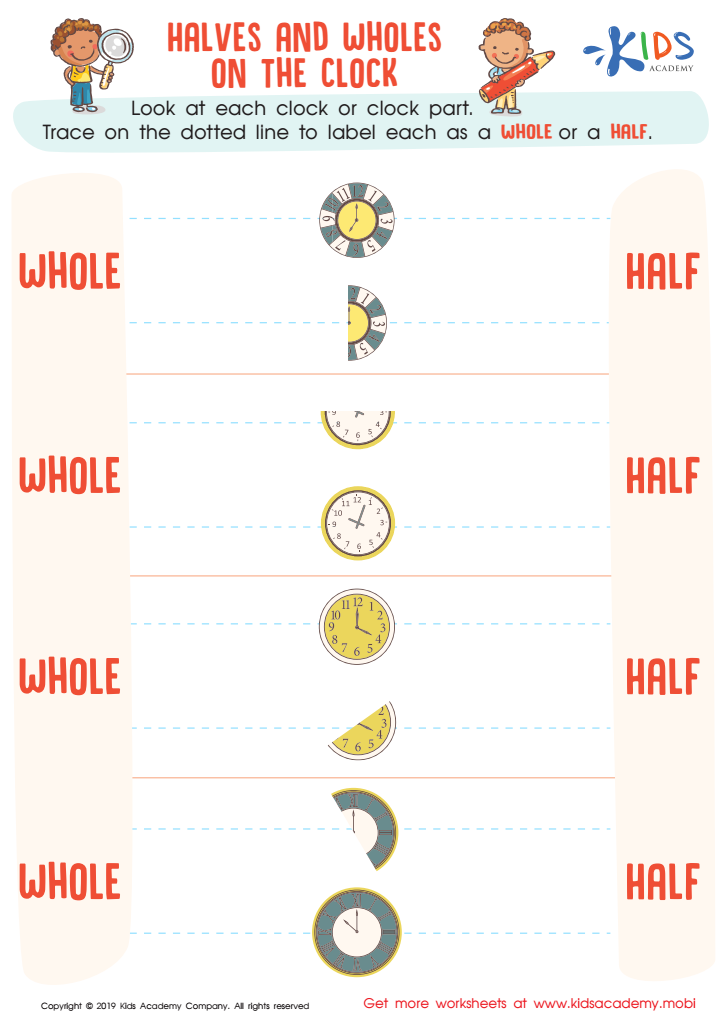
Halves and Wholes on the Clock Worksheet
 Assign to My Students
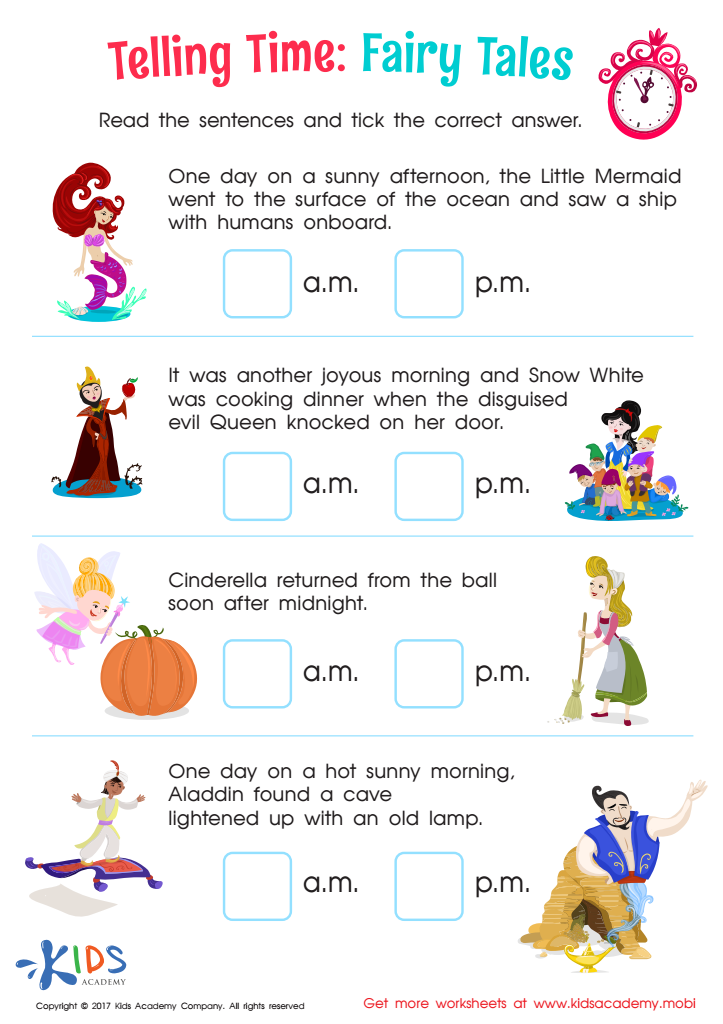
Telling Time: Fairy Tales Worksheet
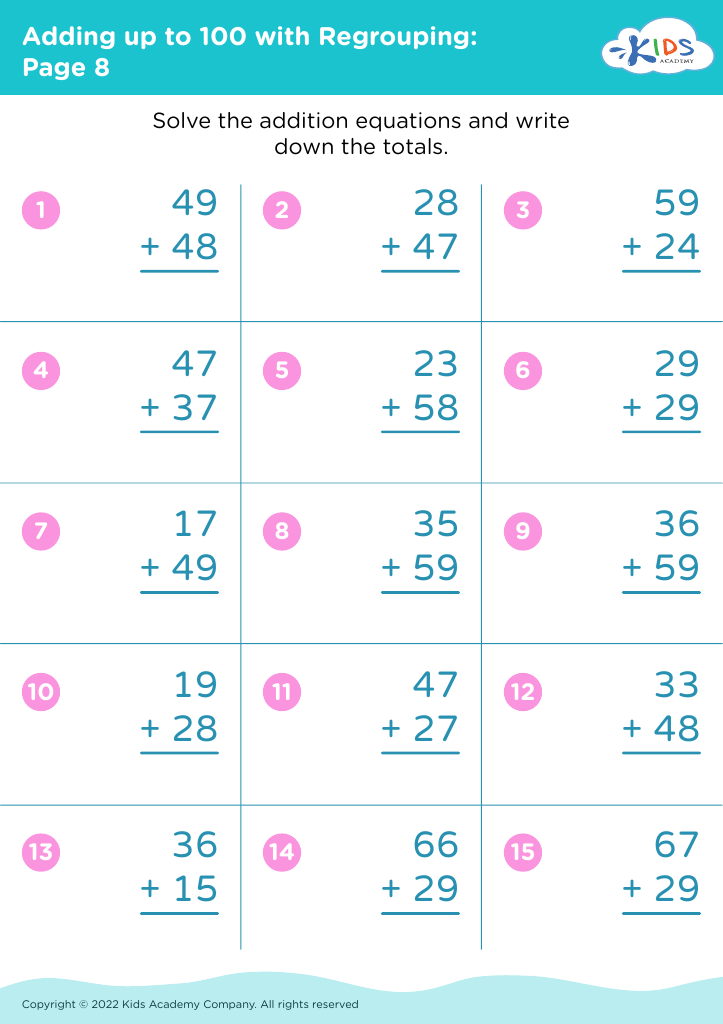
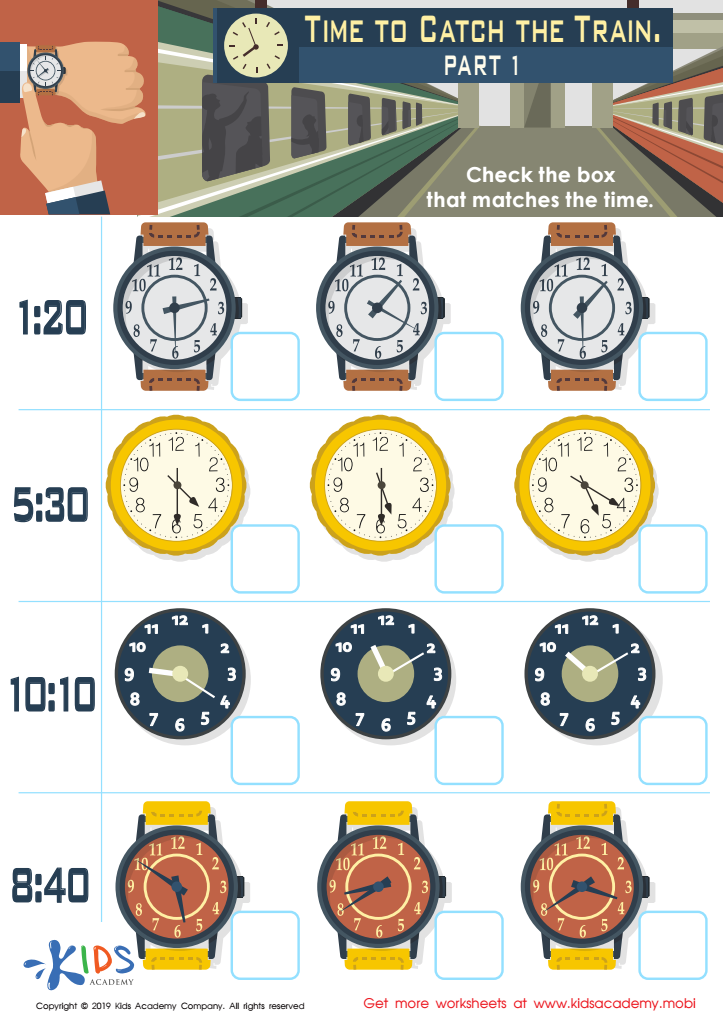
Time to Catch the Train Part 1 Worksheet




.jpg)


Time-telling skills are crucial for 7-year-olds because they form an essential part of their everyday experiences and future learning. For parents and teachers, understanding the importance of these skills in early childhood development is vital for several reasons.
First, time-telling fosters a sense of responsibility and independence in children. Being able to read a clock allows kids to manage their daily activities, such as getting ready for school or sticking to bedtime routines, thereby instilling a sense of structure and discipline.
Secondly, acquiring time-telling skills enhances math proficiency. Learning how to tell time involves understanding numbers, fractions, and arithmetic (e.g., counting by fives), which reinforces other mathematical concepts taught at this age. It lays the groundwork for more complex math skills that children will encounter in later academics.
Moreover, practical time-telling can improve cognitive skills, such as problem-solving and logical thinking. It requires kids to grasp the concept of time sequences and duration, which can enhance their ability to think critically and make decisions based on time constraints.
Finally, comprehension of time nurtures social and functional skills, such as punctuality and coordination with others’ schedules, which are crucial for social interactions and real-world situations. Supporting children in mastering these skills ensures they grow to be well-rounded, competent individuals prepared for future success.








