
Understand number relationships Math Worksheets for 7-Year-Olds
3 filtered results
Difficulty Level
Grade
Age
-
From - To
Subject
Activity
Standards
Explore our engaging "Understand Number Relationships" math worksheets designed specifically for 7-year-olds! These interactive resources help young learners grasp essential math concepts by exploring connections between numbers, enhancing their problem-solving skills, and fostering mathematical thinking. Each worksheet incorporates fun activities that make learning enjoyable while building a strong foundation in numeracy. Perfect for both classroom and home use, our printable worksheets cater to diverse learning styles, ensuring every child can succeed. Watch your child's confidence and skills grow as they master number relationships in a supportive, encouraging environment. Start your mathematical journey today with our comprehensive worksheets!
Favorites
With answer key
Interactive
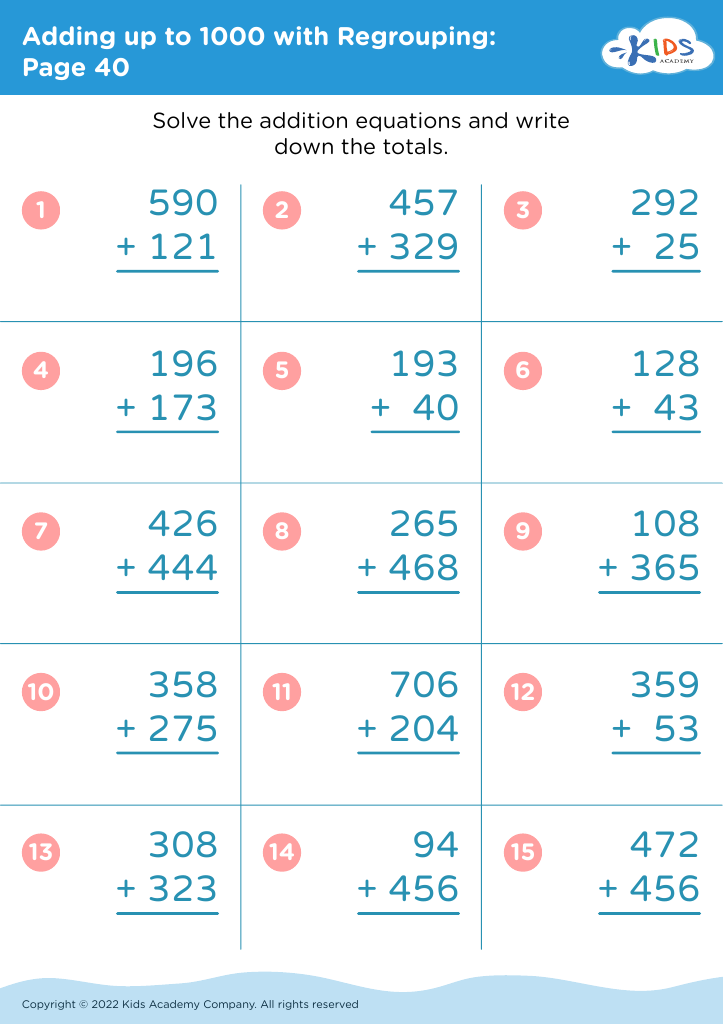
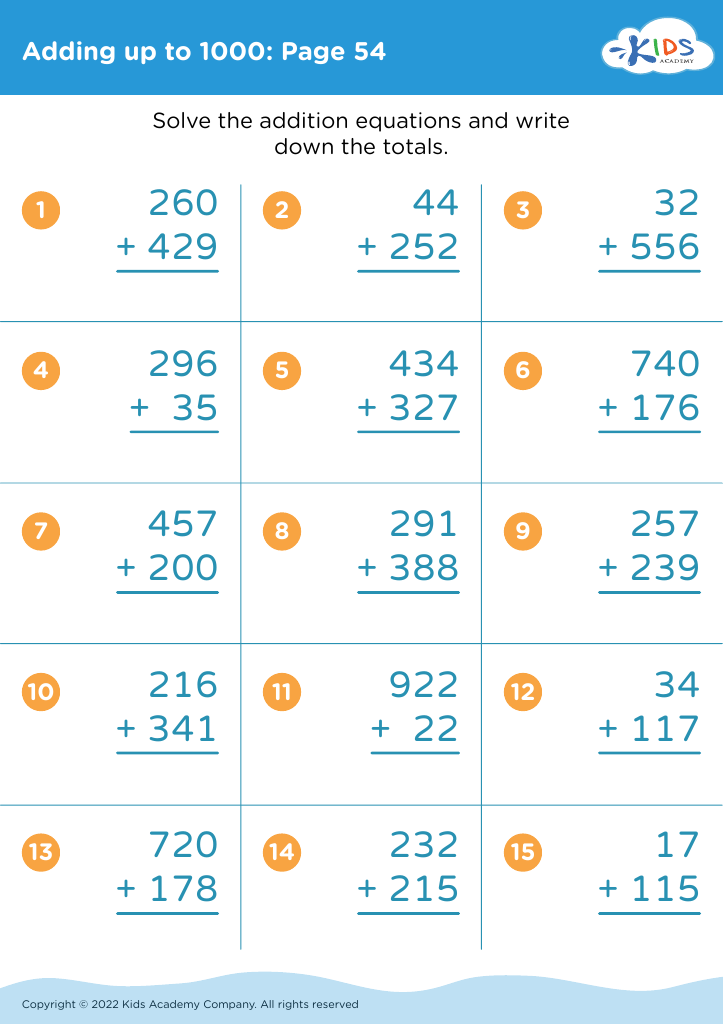
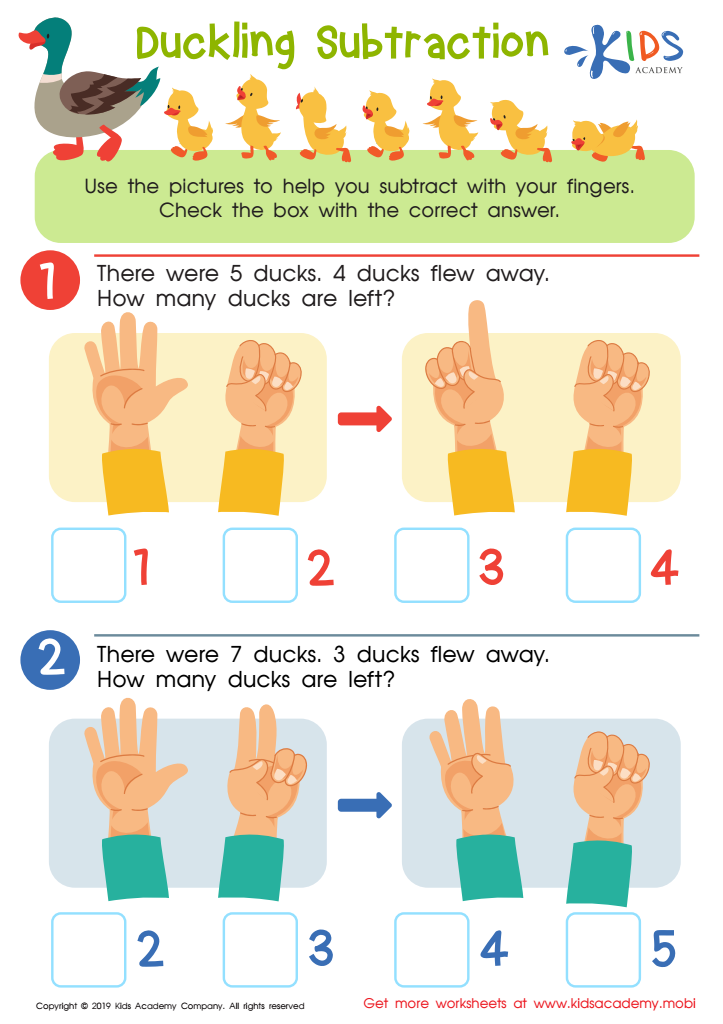
Duckling Subtraction Worksheet
Help your students learn equations and math with this fun worksheet. There are two questions to solve with the help of the pictures. Ask them to subtract with their fingers and check the box with the correct answer. This makes math easier and more enjoyable!
 Assign to My Students
Duckling Subtraction Worksheet
Worksheet
Join Kids Academy for Free
Who is primarily going to use this learning content?








Understanding number relationships is fundamental to a child's mathematical development, especially for 7-year-olds who are at a critical stage of cognitive growth. At this age, children begin to explore various number concepts, such as addition, subtraction, and the relationships between numbers. Parents and teachers should care about this because a strong grasp of number relationships lays the groundwork for more complex mathematical ideas in the future, such as multiplication, division, and fractions.
When children understand how numbers interact, they become adept problem solvers, able to recognize patterns and make connections in their learning. This enhances their confidence and promotes a positive attitude towards math, which is crucial in a world increasingly reliant on numerical literacy. Furthermore, a solid foundation in math can have a long-lasting impact on academic performance and anxiety related to math.
Moreover, engaging in discussions about number relationships encourages critical thinking skills, fostering an environment where children feel safe to ask questions and explore concepts further. By prioritizing this understanding, educators and parents can create passionate, enthusiastic learners who view mathematics as an exciting challenge rather than a daunting task, paving the way for future success in both academics and real-life applications.








