
Understanding shapes Math Worksheets for 7-Year-Olds
4 filtered results
Difficulty Level
Grade
Age
-
From - To
Subject
Activity
Standards
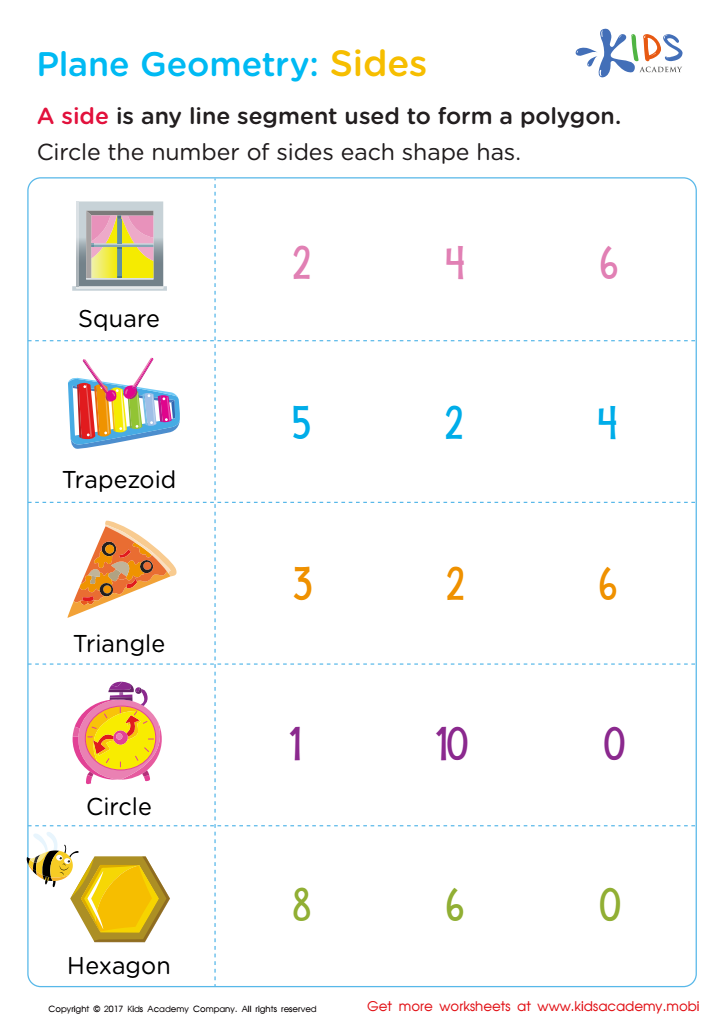
Explore our engaging "Understanding Shapes" math worksheets designed specifically for 7-year-olds! These fun and interactive activities help young learners grasp fundamental geometry concepts, including identifying, categorizing, and drawing various shapes. Our worksheets are perfect for reinforcing classroom lessons or for at-home practice, featuring vibrant visuals to capture your child's interest. With a mix of activities tailored to different skill levels, kids will gain confidence in their shape recognition abilities. Foster a love for math while enhancing critical thinking skills with our comprehensive resources. Browse our collection today and watch your child's understanding of shapes soar!
Favorites
With answer key
Interactive
 Assign to My Students
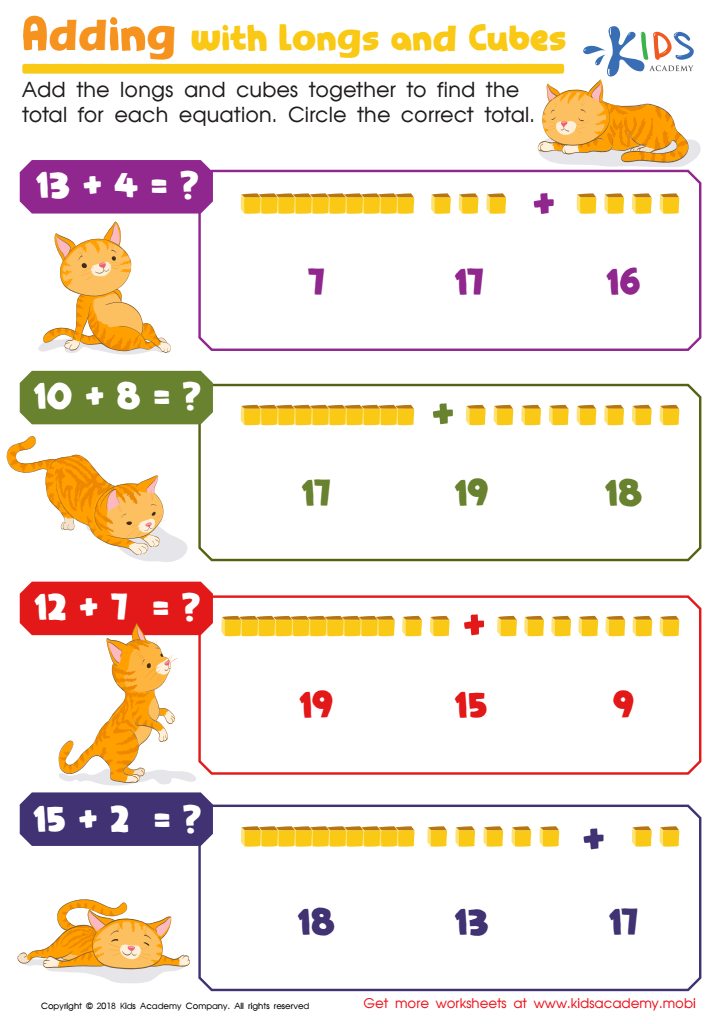
Adding With Longs and Cubes Worksheet
Math might not be your child's favorite, but they must master it to advance. If they're having difficulties or don't like it, use this worksheet to make it easier. Have them add longs and cubes together to find the total for each question, then circle the correct answer. This exercise can help make math experiences better.
Adding With Longs and Cubes Worksheet
Worksheet
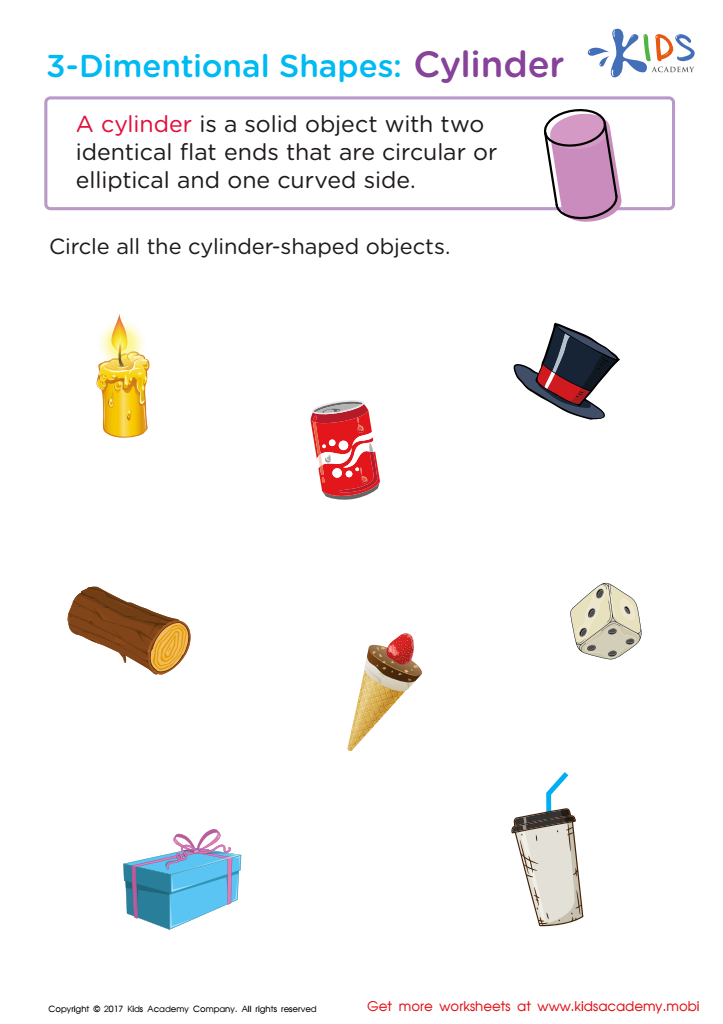
Three–Dimensional Shapes: Cylinder Worksheet
Introduce your toddler to geometry and 3D cylinders with this printable and watch their knowledge grow. It will help them recognize, define, and identify cylinders, as well as differentiate between 3D objects.
Three–Dimensional Shapes: Cylinder Worksheet
Worksheet
Join Kids Academy for Free
Who is primarily going to use this learning content?







Understanding shapes is crucial for 7-year-olds as it lays the foundation for their overall mathematical and spatial reasoning skills. At this age, children start to explore the world of geometry, and grasping shape concepts enhances their cognitive development. When parents and teachers prioritize shape recognition, identification, and manipulation, they cultivate visual-spatial skills that are vital for problem-solving in everyday situations.
Moreover, shape understanding supports other areas of math, including measurement, fractions, and algebra. Recognizing simple shapes can also ease the introduction of more complex geometric concepts later in their education. By engaging children through hands-on activities with blocks, drawing, or puzzles, they apply critical thinking and develop a sense of creativity.
Additionally, geometry isn't just about mathematics; it's linked to art, architecture, and graphics. This interdisciplinarity makes shape understanding relevant in various contexts, fostering an appreciation for both math and design.
Lastly, developing shape awareness helps strengthen fine motor skills, as tasks like drawing and assembling shapes require coordination. By supporting shape comprehension, parents and teachers provide children with essential tools that contribute to academic success and everyday life skills. This investment in their mathematical journey helps build confidence that lasts beyond the classroom.








