
Understanding time Math Worksheets for 7-Year-Olds
10 filtered results
Difficulty Level
Grade
Age
-
From - To
Subject
Activity
Standards
Discover our "Understanding Time" math worksheets designed specifically for 7-year-olds! These engaging and interactive resources help young learners grasp essential time concepts, including reading clocks, differentiating between AM and PM, and calculating elapsed time. Each worksheet combines fun exercises with vibrant visuals to make learning enjoyable and effective. Perfect for teachers and parents alike, these worksheets cater to different learning styles, fostering independence and confidence in time-telling skills. Whether used in the classroom or at home, our materials support early math education while making abstract concepts tangible. Start your child's journey toward mastering time with our thoughtfully crafted worksheets today!
Favorites
With answer key
Interactive
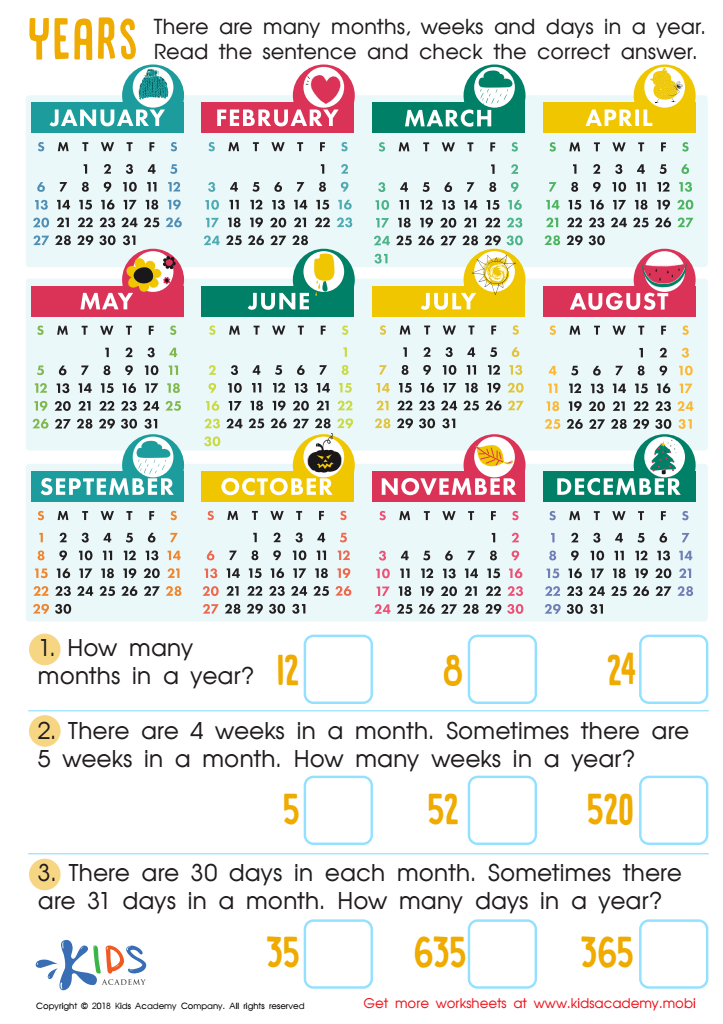
Years Worksheet
This worksheet is a great way to test your children's knowledge of the calendar. Ask them if they can name the days of the week and months in a year. Read and discuss the questions with them and help them find the right answers. Encourage them to check their answers.
 Assign to My Students
Years Worksheet
Worksheet
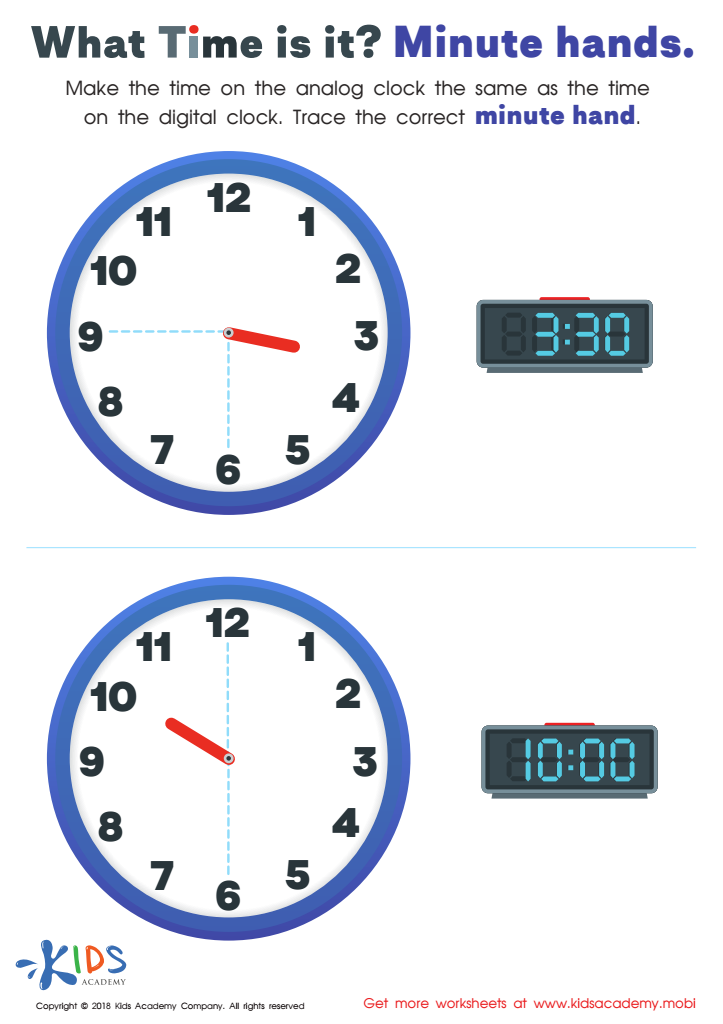
What Time Is it? Minute Hands Worksheet
Help your kids telling time with the minute hand correctly with this tracing sheet. Trace the correct minute hand to make the time on the analog clock the same as the time on the digital clock. Give them a pictured demonstration of how to do it and you'll be all set!
What Time Is it? Minute Hands Worksheet
Worksheet
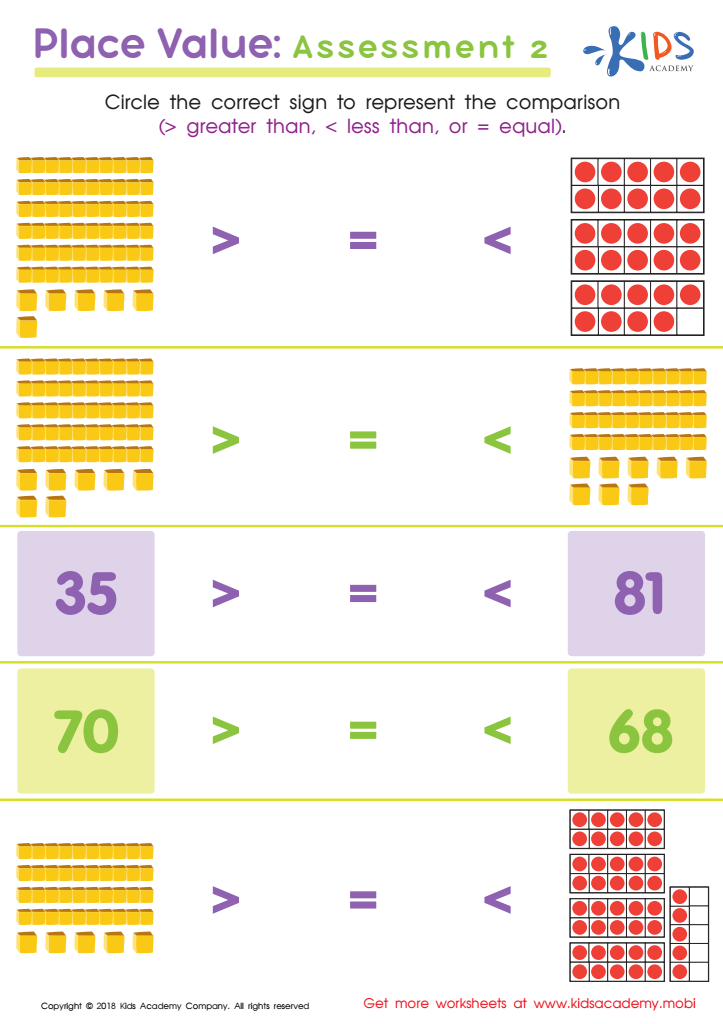
Place Value: Assessment 2 Worksheet
Children must learn to recognize the value of numbers and break them into chunks of ten. They must also be able to compare numbers to know if one is greater, less than or equal to another. The Place Value Assessment PDF is a great tool to assess their skills and identify what requires more practice.
Place Value: Assessment 2 Worksheet
Worksheet
My Day Worksheet
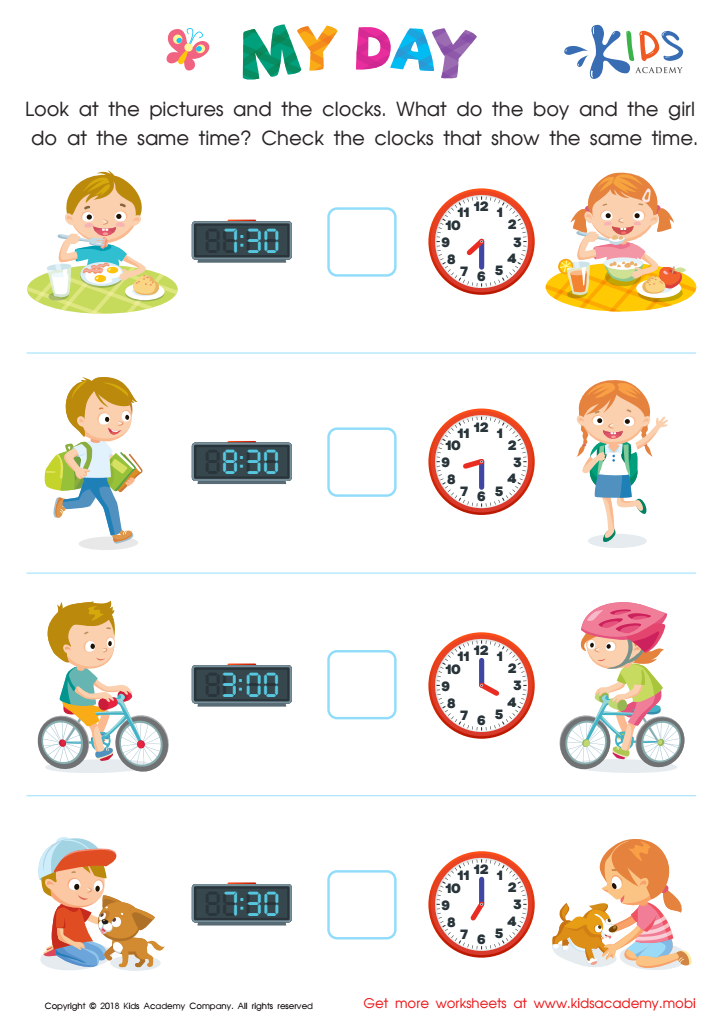
Show your students the pictures and clocks in the colorful worksheet. Ask what the boy and girl are doing in each, then what time the clocks show. Finally, ask what activities they both do at the same time. Help them check the clocks showing the same time in both pictures.
My Day Worksheet
Worksheet
Join Kids Academy for Free
Who is primarily going to use this learning content?








Understanding time is a crucial math skill for 7-year-olds, and both parents and teachers play a significant role in supporting this learning. Mastering time not only aids in developing essential math skills but also equips children with practical tools for daily life. At this age, children start to grasp concepts of hours, minutes, and the significance of scheduling, which enhances their time management skills.
Time-related math fosters logical thinking, enhances problem-solving abilities, and creates a foundation for more advanced mathematical concepts. When children learn to read clocks and understand schedules, they also learn about responsibility, punctuality, and planning. These skills contribute to their overall independence and self-discipline.
Moreover, incorporating time exercises into formal education and home activities reinforces teamwork and bonding. Engaging in discussions about daily routines, such as bedtime or meal times, reinforces the importance of time in a context that is relatable and enjoyable for children.
Ultimately, prioritizing understanding of time ensures that children are well-prepared for both academic and life challenges, promoting balance and efficiency. Parents and teachers should view this as a pivotal opportunity to enhance cognitive growth, build essential life skills, and nurture responsible habits right from an early age.








