
Vocabulary development Math Worksheets for 7-Year-Olds
9 filtered results
Difficulty Level
Grade
Age
-
From - To
Subject
Activity
Standards
Enhance your 7-year-old's mathematical journey with our engaging Vocabulary Development Math Worksheets! Specifically designed for first graders, these worksheets foster a deeper understanding of math vocabulary while reinforcing crucial skills. Each activity encourages children to connect words with their meanings, boosting their comprehension of mathematical concepts. From addition and subtraction to shapes and measurements, our worksheets provide interactive exercises that make learning fun. With colorful illustrations and appealing formats, your child will eagerly explore math language in a playful environment. Visit our site to download these resources, and watch your child's confidence and vocabulary flourish in math!
Favorites
With answer key
Interactive
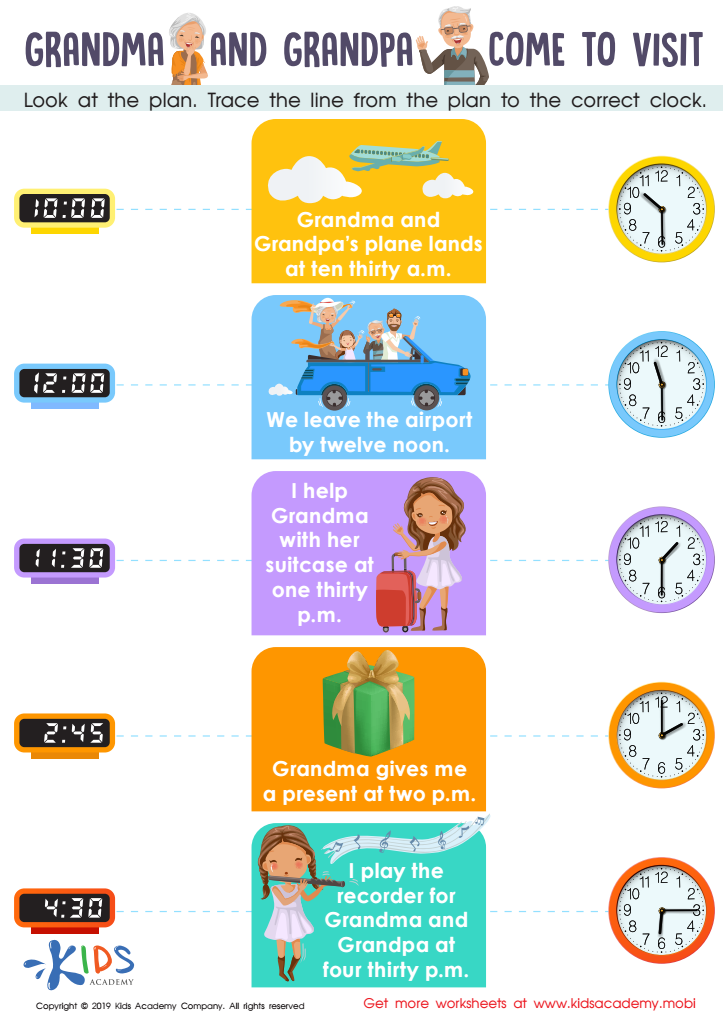
Grandpa and Grandma Come to Visit Worksheet
Have your kids learn about time using this worksheet. It contains pictures, accompanying texts and a clock, which you can use to help them trace the plan. Grandparents' visits and trips to their house are the perfect opportunity to practice this skill. Talk to your kids about the plan and watch them trace it to the correct clock.
 Assign to My Students
Grandpa and Grandma Come to Visit Worksheet
Worksheet
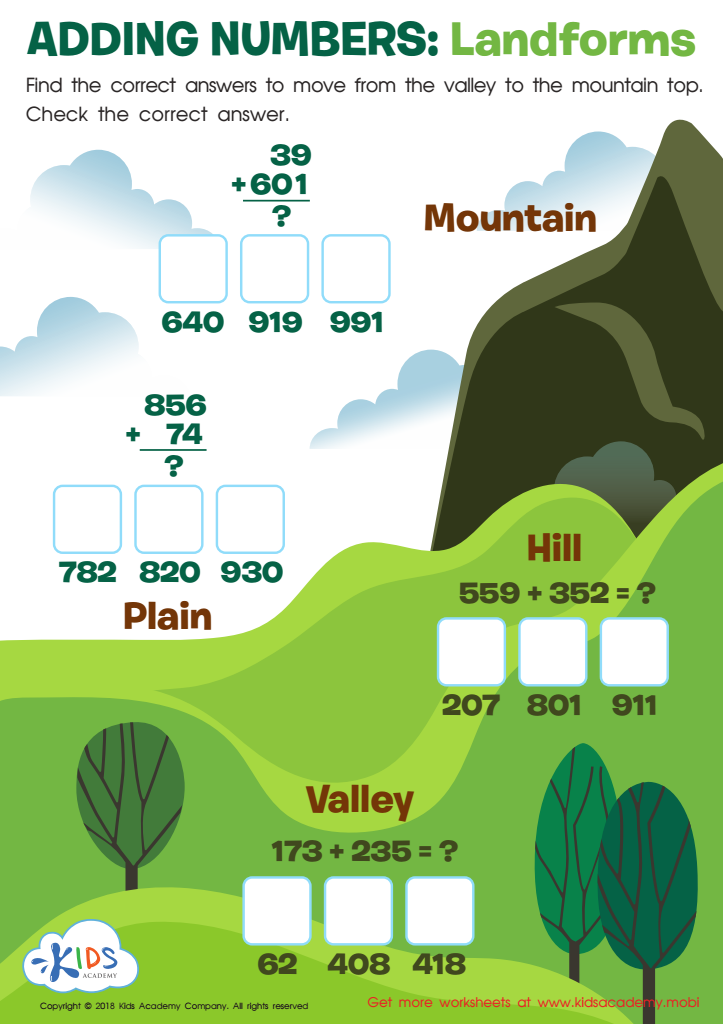
Adding Numbers: Landforms Worksheet
Help your kids solve simple equations and find the right answers to climb from valley to mountain top, then check the correct answer. Land on Earth is home to plants, animals and humans. It's not flat; there are mountains, valleys and hills.
Adding Numbers: Landforms Worksheet
Worksheet
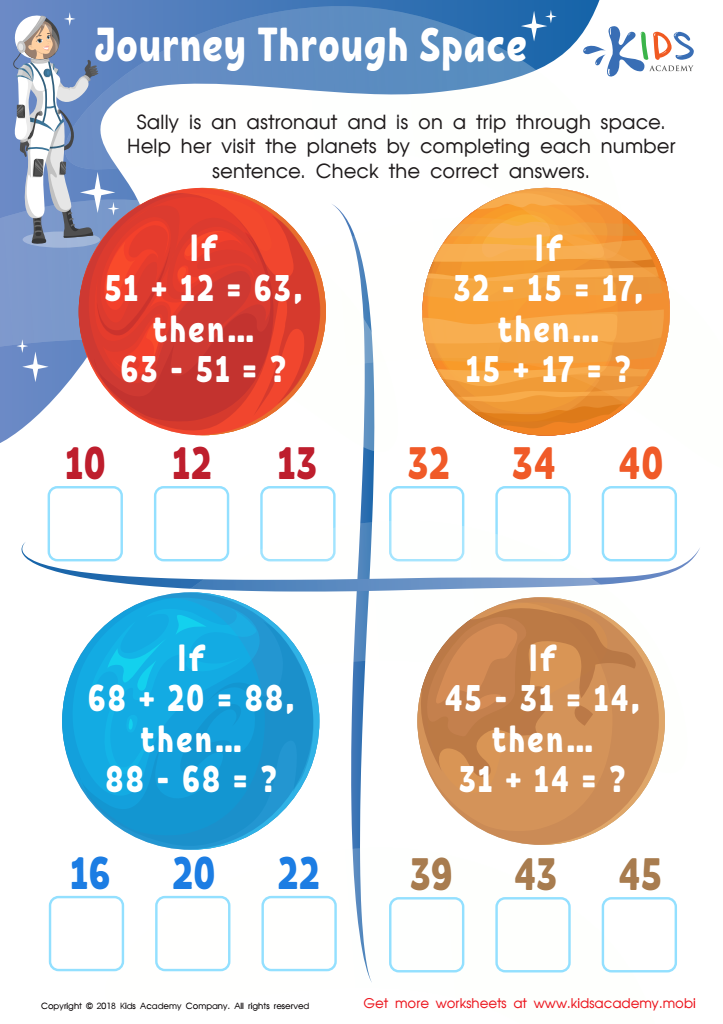
Journey Through Space Worksheet
Astronauts are essential explorers. They travel between Earth and other planets to gain knowledge of life in space. Being an astronaut requires strong math skills, so help your child develop them through this worksheet. Ask them to assist Sally on her journey to the planets by solving the number sentences in the picture. Verify the answers are correct.
Journey Through Space Worksheet
Worksheet
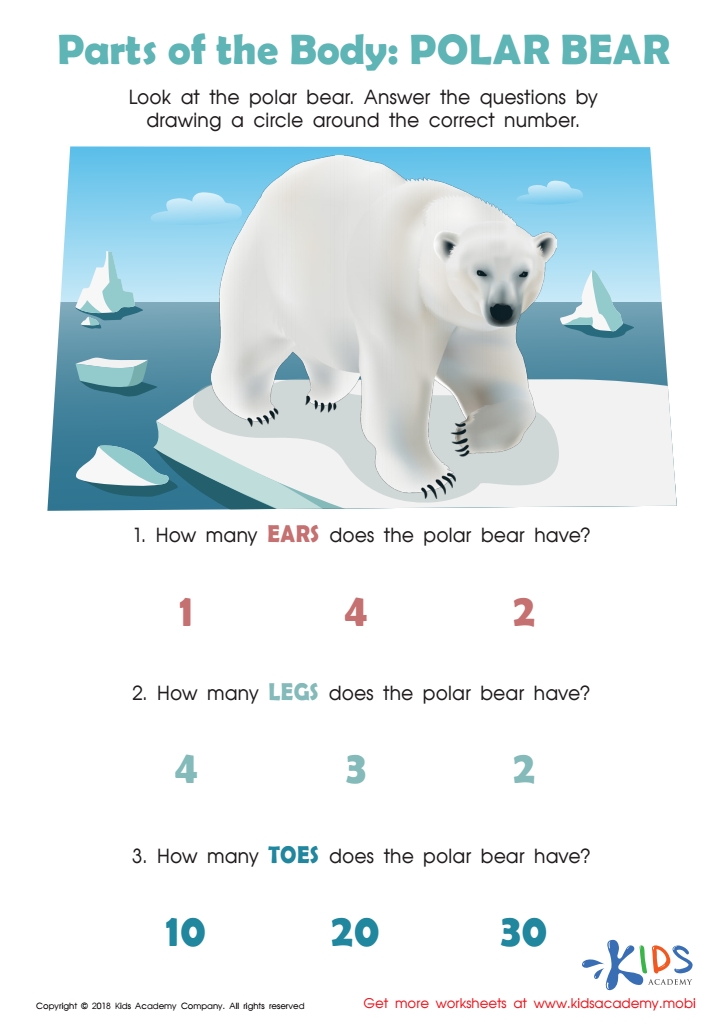
Parts of the Body: Polar Body Worksheet
Start by showing your kid a picture of a Polar Bear. Explain that it's a member of the bear family with white fur and a large size. Use this worksheet to teach them more about the animal. Go through the questions together and have them draw a circle around the correct number for each one.
Parts of the Body: Polar Body Worksheet
Worksheet
Join Kids Academy for Free
Who is primarily going to use this learning content?








Vocabulary development in math is crucial for 7-year-olds as it lays the foundation for their overall academic success. At this age, children are beginning to grasp not only numerical concepts but also the language that articulates these ideas. A rich mathematical vocabulary empowers them to understand instructions, solve problems, and communicate solutions effectively.
When children are fluent in math vocabulary—terms such as "addition," "subtraction," "greater than," and "equal to"—they can engage more fully in discussions about math concepts. This fluency enhances their ability to express their thought processes and reason through problems, promoting critical thinking skills. Furthermore, strong vocabulary skills in math can lead to improved confidence, as children gain clarity about what is expected during lessons and assessments.
Parents and teachers play an essential role in facilitating this development. By incorporating math vocabulary into everyday conversations, using visual aids, and engaging students in problem-solving activities that target specific mathematical language, they create a rich learning environment. Ultimately, investing time in enhancing math vocabulary will help children navigate both academic challenges and real-world situations with greater ease, contributing to a positive attitude toward math overall.








