Comparing sizes Measurement Worksheets for 7-Year-Olds
4 filtered results
-
From - To
Welcome to our "Comparing Sizes Measurement Worksheets" designed specifically for 7-year-olds! These engaging and interactive worksheets help young learners master the concept of size comparison, fostering essential measurement skills. Through fun exercises and captivating visuals, students will practice ordering, comparing, and understanding sizes in various contexts, from everyday objects to shapes. Our worksheets cater to diverse learning styles, making math enjoyable and accessible. Ideal for classroom activities or home practice, these resources empower children to build confidence in their measurement abilities. Explore our printable worksheets and watch your child thrive as they compare and measure like a pro!
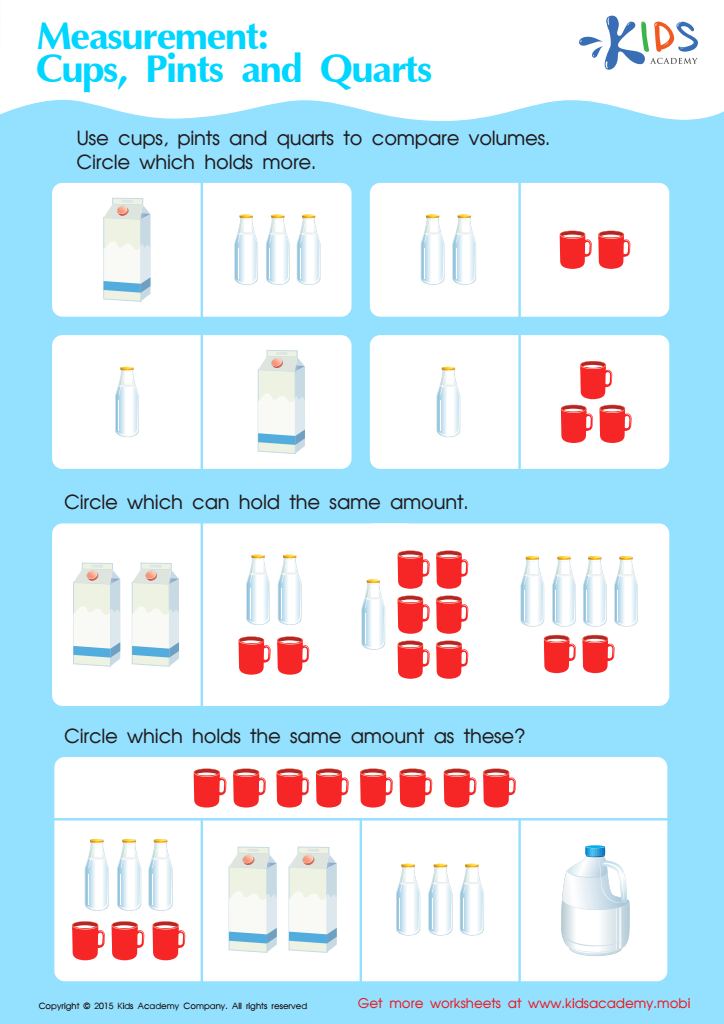
Measurement: Compare Volumes Worksheet
 Assign to My Students
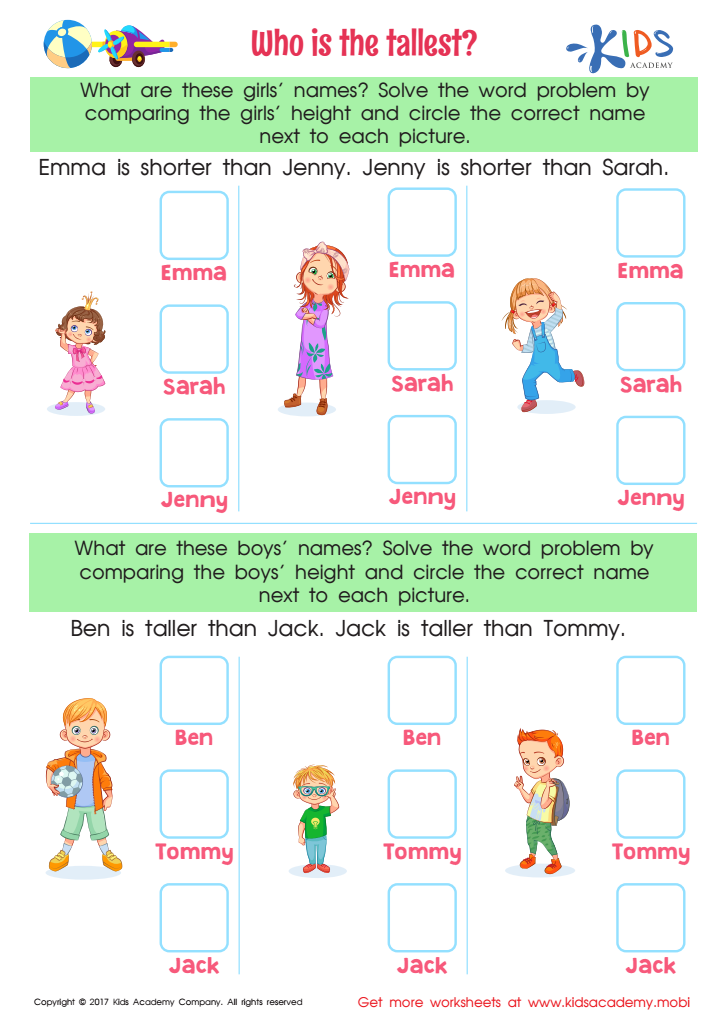
Who Tallest Printable
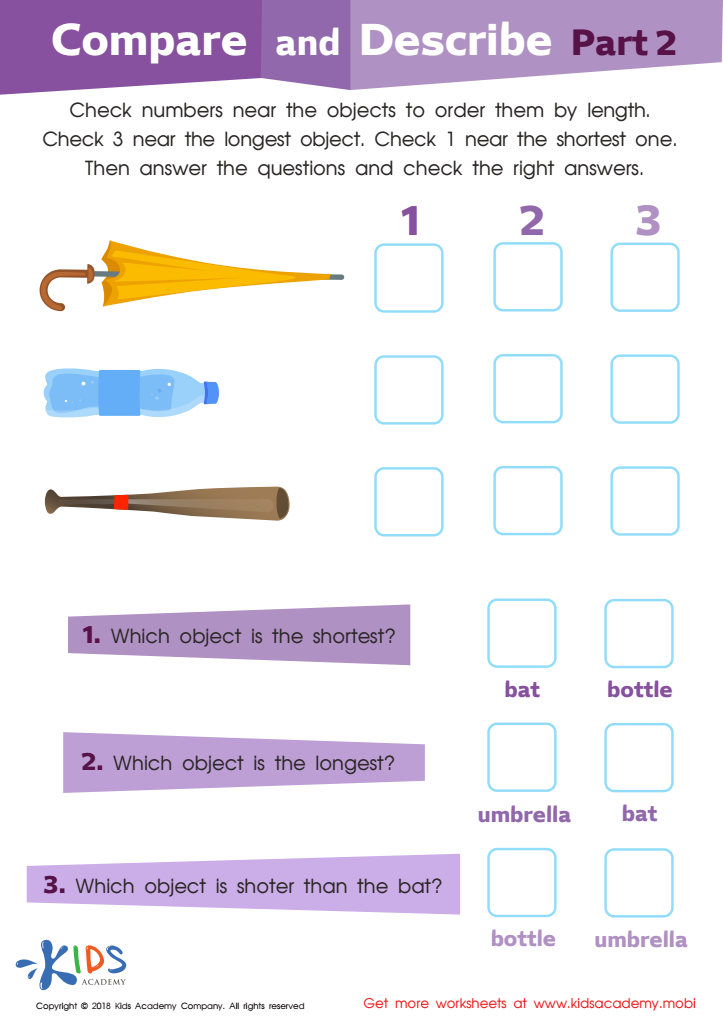
Compare and Describe: Part 2 Worksheet
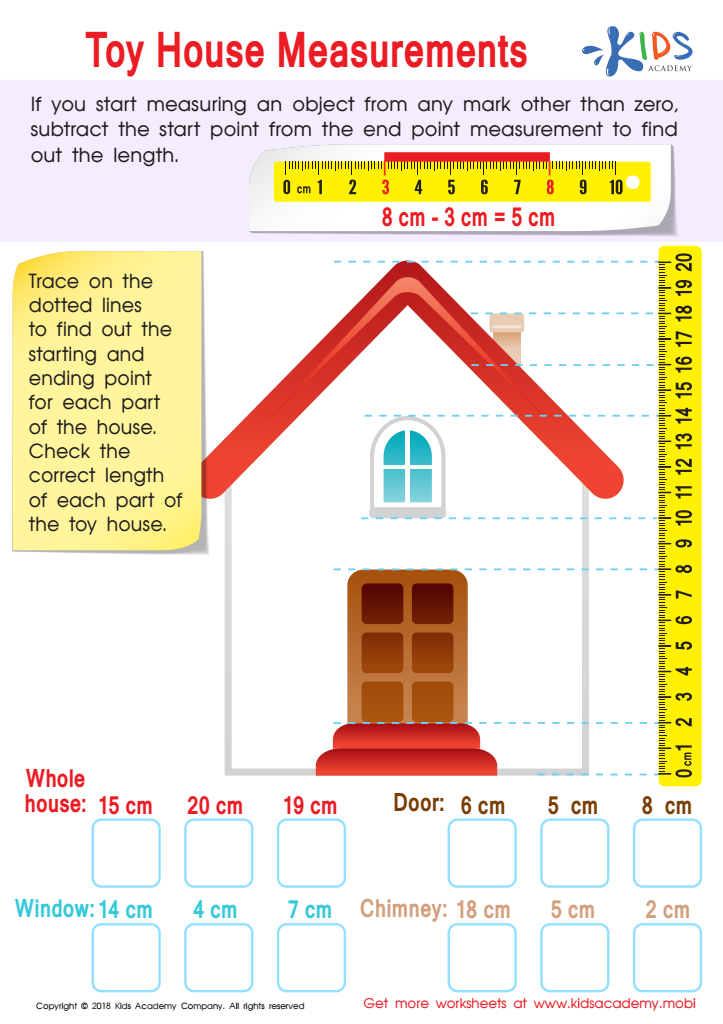
Toy House Measurements Worksheet








Understanding measurement and comparing sizes is a fundamental skill for 7-year-olds that establishes a foundation for future mathematical learning. At this age, children are beginning to grasp concepts of size, length, weight, and volume, making it essential for parents and teachers to engage in these activities.
Learning to compare sizes nurtures critical thinking and problem-solving skills. When children measure objects and determine their sizes, they develop an understanding of spatial awareness and logical reasoning. This skill not only supports math but enhances everyday activities, such as cooking, shopping, or organizing their room, where size comparison is crucial.
Additionally, engaging in measurement activities fosters curiosity and exploration. Children are naturally inquisitive, and hands-on measuring can transform their learning into an interactive experience. It encourages observation and helps them draw connections between numbers and their real-world applications.
Moreover, comparing sizes also supports language development. As children articulate their thoughts, use comparative language, and discuss their findings, they enhance their vocabulary and communication skills.
In summary, emphasizing measurement and size comparison in early education equips children with vital life skills, promotes cognitive development, and lays the groundwork for more advanced mathematical concepts in the future.








