
Time recognition Measurement Worksheets for 7-Year-Olds
3 filtered results
Difficulty Level
Grade
Age
-
From - To
Subject
Activity
Standards
Discover engaging Time Recognition Measurement Worksheets designed specifically for 7-year-olds! Our carefully crafted resources help young learners master the fundamentals of telling time, understanding time intervals, and converting between analogue and digital clocks. These worksheets promote essential skills through fun activities, making math easier and more enjoyable. Ideal for both classroom and home use, they encourage independent learning while equipping children with vital time management abilities. Foster a lifelong appreciation for math with interactive exercises tailored to enhance cognitive development. Explore our collection and help your child succeed in grasping time concepts today! Perfect for reinforcing lessons and building confidence.
Favorites
With answer key
Interactive
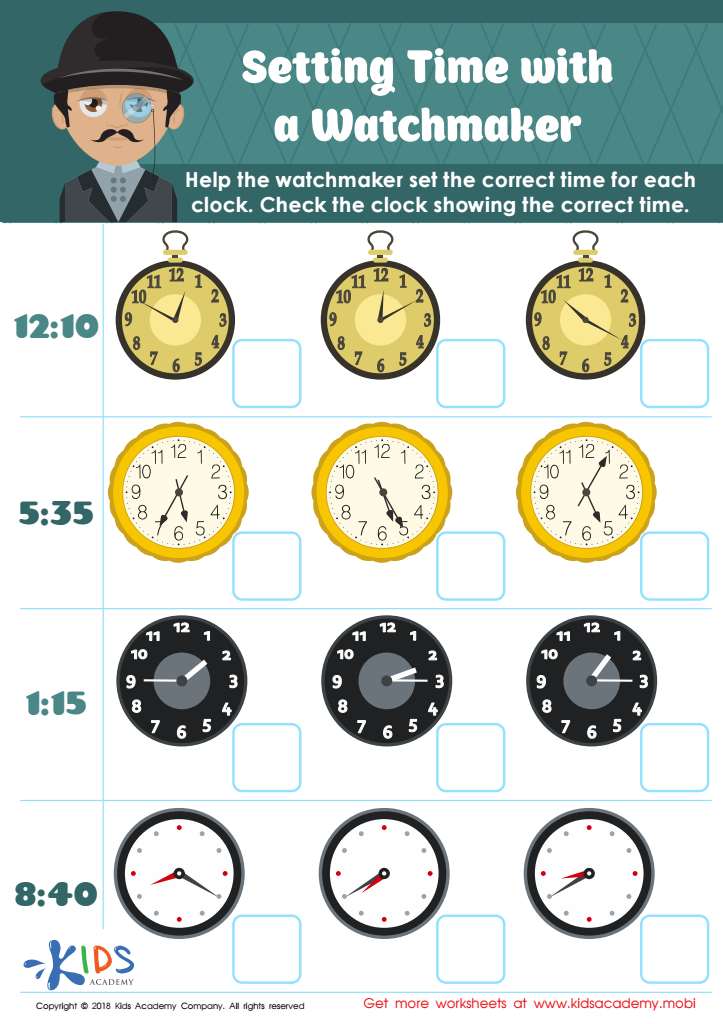
Setting Time with Watchmaker Worksheet
Can your kids tell the time? If so, this worksheet should be easy. Help them set the time for each clock: look at the time written on the left side and find the clock on the right side that matches.
 Assign to My Students
Setting Time with Watchmaker Worksheet
Worksheet
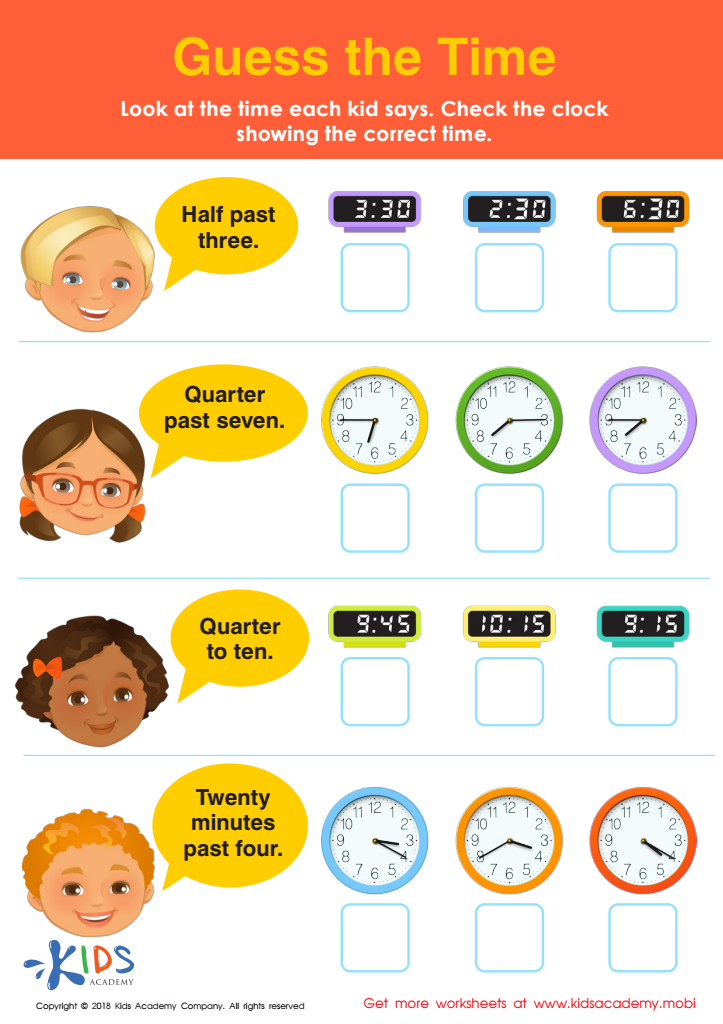
Guess the Time Worksheet
Help students tell the time accurately with this fun exercise. Read the time each person says and find the corresponding clock. Check the options on the left and have students guess the right time. This worksheet is sure to sharpen their time-telling skills.
Guess the Time Worksheet
Worksheet
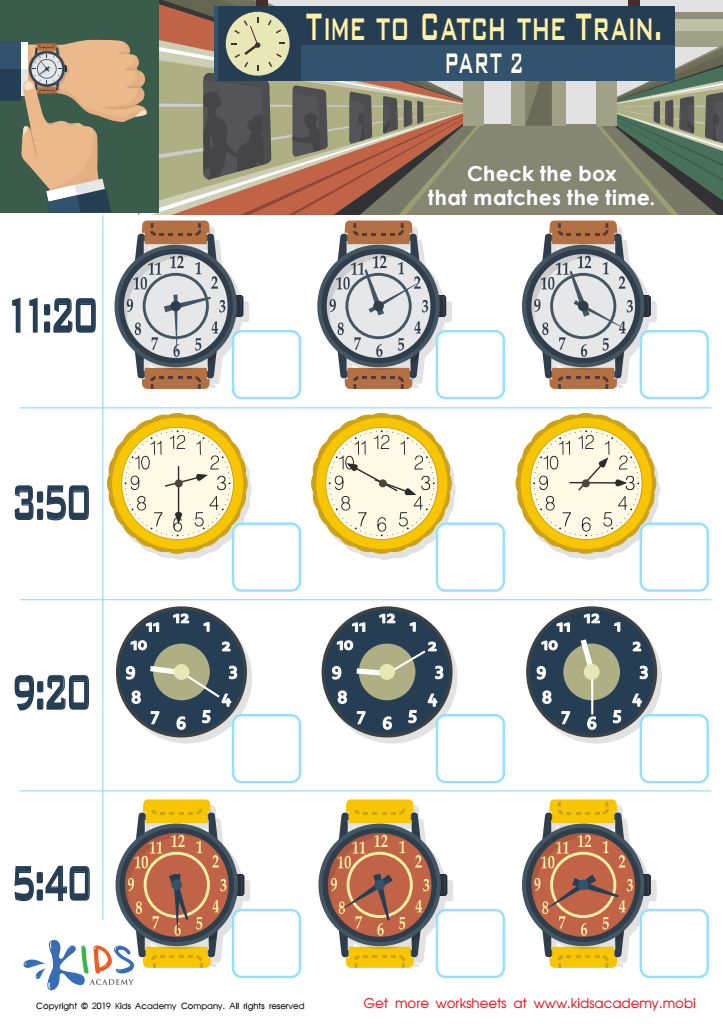
Time to Catch the Train Part 2 Worksheet
Teach your kids the importance of telling time and how to do it. Explain that there are multiple ways to show the time, such as written on the left side or watches in the picture. Guide them to check the box that matches the time. Knowing the time is essential to get things done and create order. Ensure your kids understand this and they will reap the benefits.
Time to Catch the Train Part 2 Worksheet
Worksheet
Join Kids Academy for Free
Who is primarily going to use this learning content?








Time recognition is an essential skill for 7-year-olds that extends beyond simply telling time. As children learn to read clocks and understand calendars, they develop critical cognitive and life skills that are foundational for their future. Parents and teachers should care about this skill for several reasons.
Firstly, time recognition fosters independence. By understanding how to manage time, children can plan their daily activities, leading to better personal responsibility and organization. Secondly, this skill plays a crucial role in academic success. Many subjects, including math and science, require a grasp of time for completing assignments, managing schedules, and understanding concepts related to sequences and durations.
Moreover, teaching time recognition encourages routines, which are essential for a child's emotional and psychological well-being. A clear routine helps reduce anxiety by providing predictability in their day-to-day lives.
Finally, understanding time ensures that children can engage in social practices, like being punctual for school or playdates, enriching their social development and relationships. In summary, teaching time recognition to 7-year-olds is vital for fostering independence, academic skills, emotional security, and social interactions, making it a key focus for parents and educators alike.








