
Phonics skills improvement Reading Worksheets for 7-Year-Olds
3 filtered results
Difficulty Level
Grade
Age
-
From - To
Subject
Activity
Standards
Enhance your 7-year-old's reading abilities with our Phonics Skills Improvement Reading Worksheets! Designed to boost critical phonics skills, these printable worksheets offer engaging and educational activities that make learning fun. From vowel blends to consonant clusters, each carefully crafted worksheet supports various literacy skills.e. Ideal for classroom use or at-home practice, these resources ensure your child becomes a confident, proficient reader. Unlock their full potential and transform reading struggles into successes with our expertly developed phonics worksheets. Start their reading journey today with Kids Academy!
Favorites
With answer key
Interactive
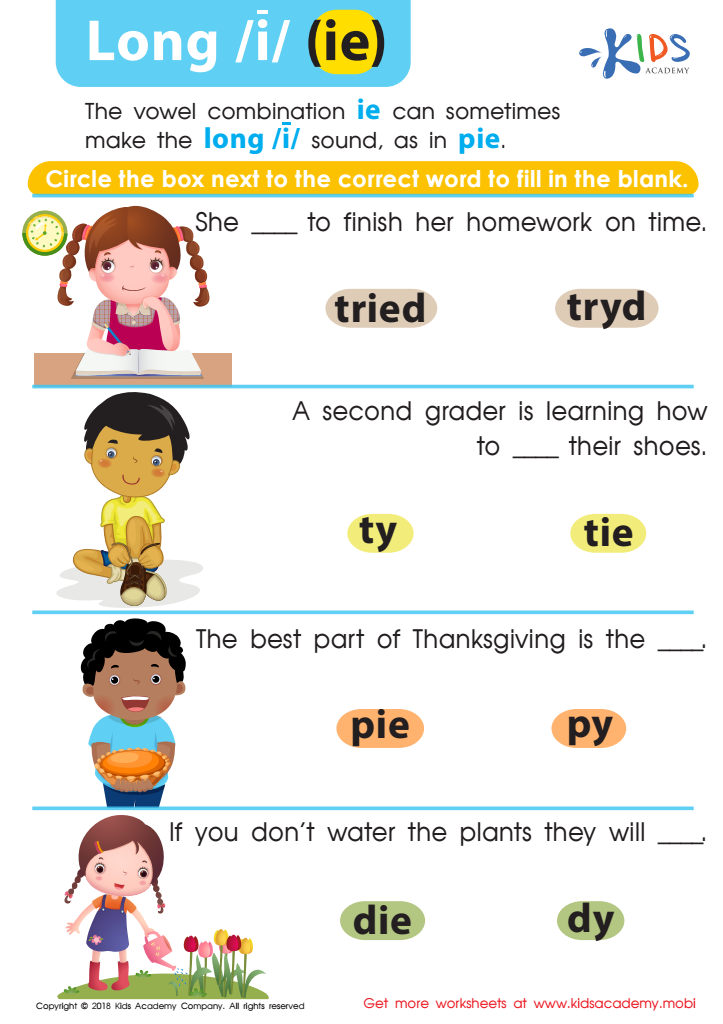
Reading: Long I and IE Worksheet
Have your child list words with the long /i/ sound (eg. 'pie'), and if needed, help them out with some examples. Read each word in the worksheet together and check their answer by having them circle the correct word.
Reading: Long I and IE Worksheet
Worksheet
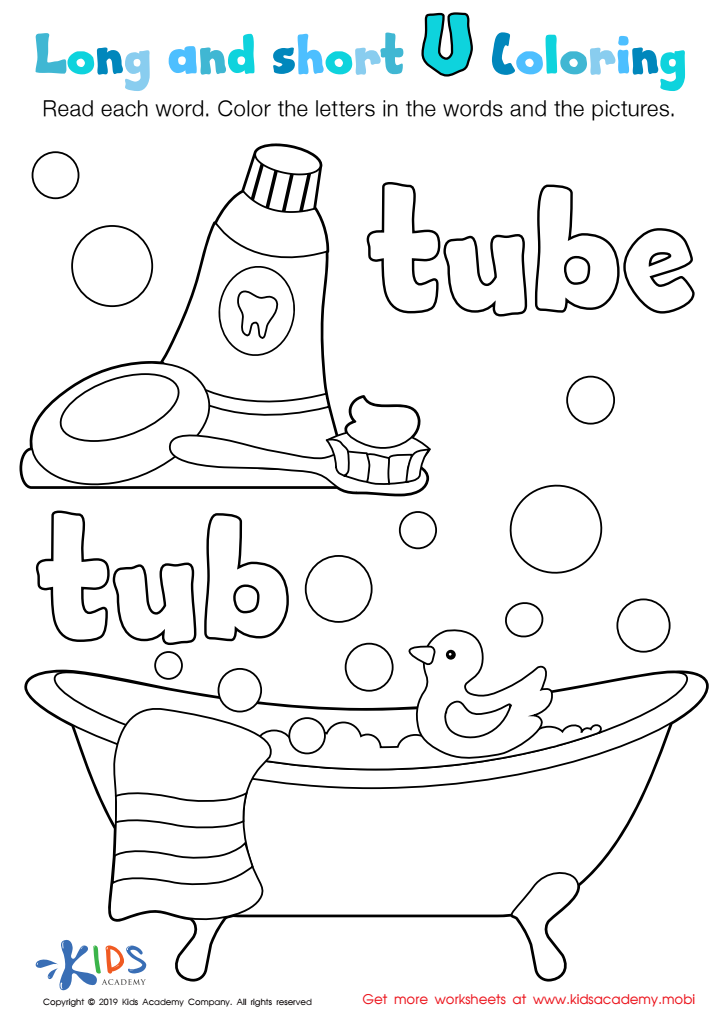
Long and Short U Worksheet
Revised: Spice up your lesson on long and short vowels with this fun printout! Kids read the words "tube" and "tub," then reinforce the sound by coloring in the words and pictures. It's a great way to make phonics class enjoyable!
Download (PDF)
 Assign to My Students
Assign to My Students
Long and Short U Worksheet
Worksheet
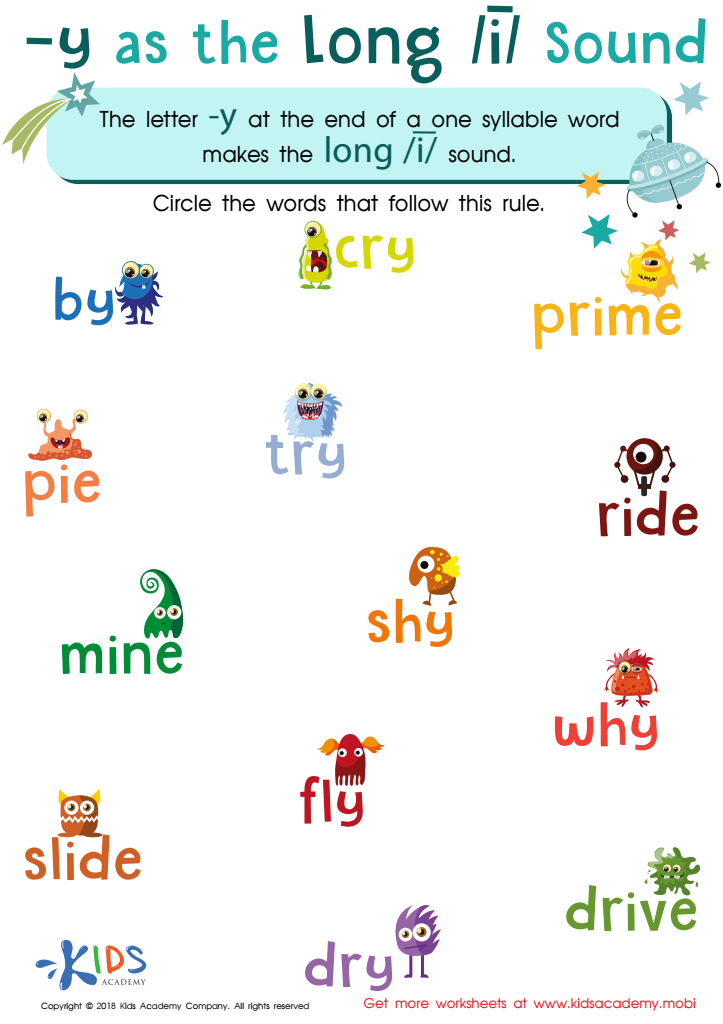
Reading: Y as Long I Worksheet
Students need practice and exposure to letters that make different sounds for decoding and reading success. This printable is a great resource for language arts classes: it explains that words ending with Y and having only one syllable make the long I sound. Students will circle all words with Y that have this sound.
Reading: Y as Long I Worksheet
Worksheet
Join Kids Academy for Free
Who is primarily going to use this learning content?



.jpg)




Phonics skills are foundational for children's reading development, particularly for 7-year-olds who typically are in the early stages of literacy. Focusing on phonics helps children understand the relationship between letters and sounds, a key component in decoding words. Mastery of these skills makes reading less frustrating and more enjoyable, positively impacting a child's outlook toward learning.
For parents and teachers, improving phonics skills can significantly boost a child's overall academic performance. When children can read fluently, they are better able to comprehend texts across all subjects, expanding their knowledge and critical thinking abilities. It's not just about reading; phonics skills build confidence, leading to greater participation in class and a willingness to tackle challenging materials.
Importantly, early intervention in reading issues through improved phonics instruction can prevent future academic struggles. Research indicates that children who fall behind in reading at a young age are at risk for lifelong learning difficulties. By prioritizing phonics, parents and teachers set the stage for academic success, ensuring children develop the enhanced comprehension skills necessary to thrive in school and beyond.
In summary, phonics is a critical component of early education, vital for empowering children with the tools they need for academic achievement and lifelong love of reading.








