Sentence structure understanding Reading Worksheets for 7-Year-Olds
3 filtered results
-
From - To
Enhance your 7-year-old's reading skills with our engaging Sentence Structure Understanding Worksheets. These printable activities are designed to help young learners grasp the basics of sentence formation, including recognizing subjects, predicates, and proper punctuation. Our worksheets provide a variety of fun exercises that encourage critical thinking and improve comprehension. Each activity is tailored to develop your child's ability to identify and construct sentences, fostering their confidence in reading and writing. Perfect for at-home learning or classroom use, these resources make learning about sentence structure enjoyable and effective. Empower your child to become a proficient reader and writer today!
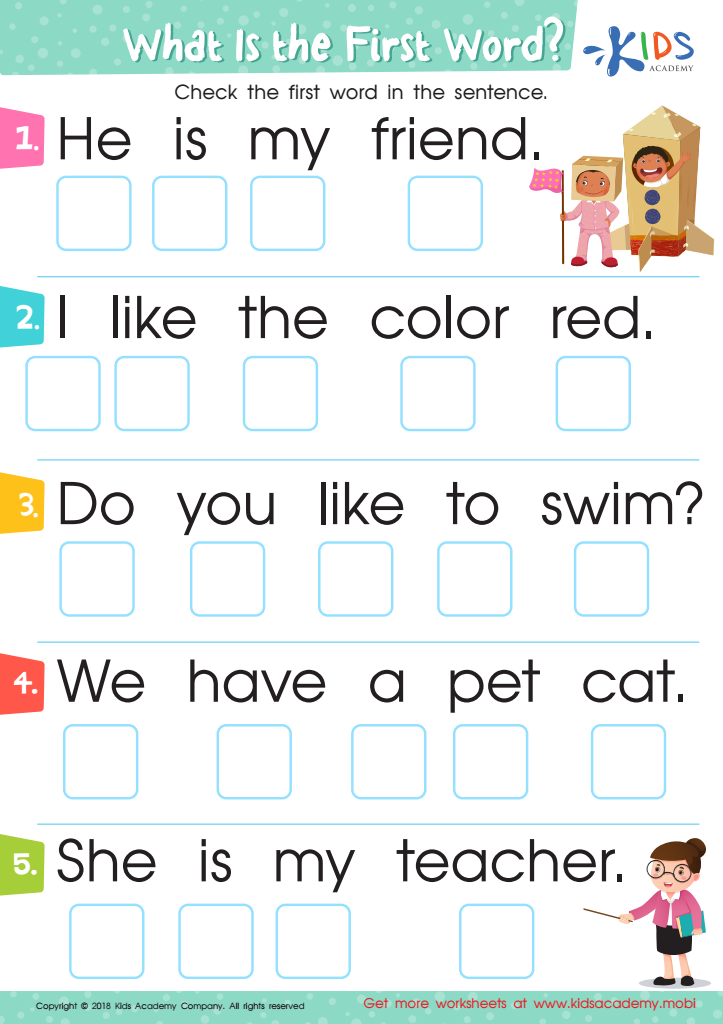
What is the First Word? Worksheet
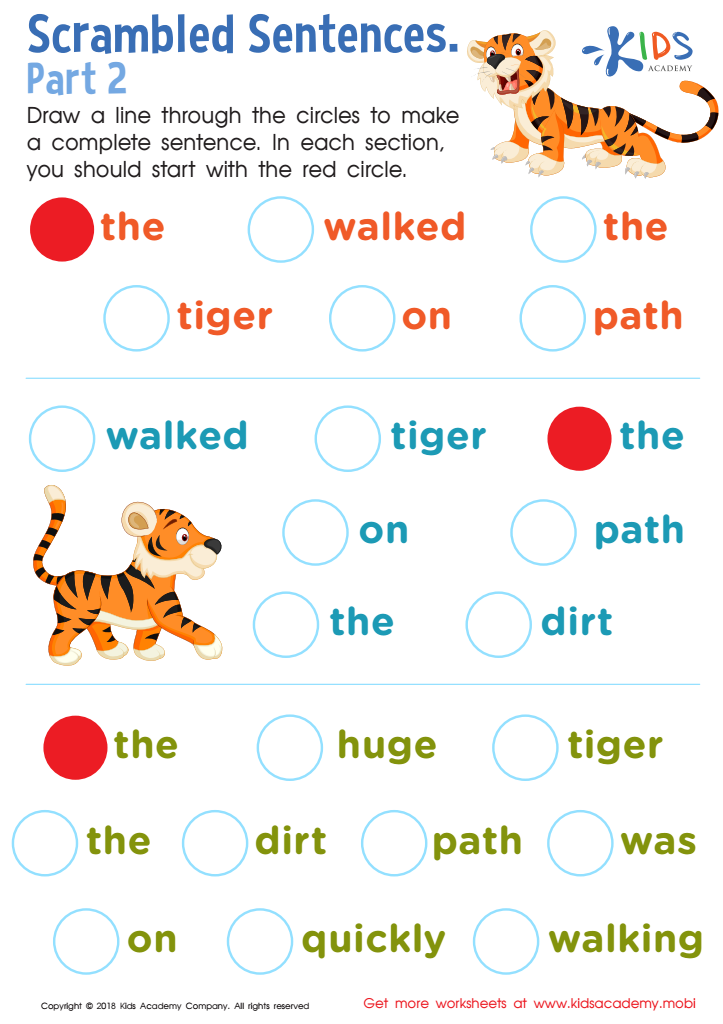
Scrambled Sentences Part 2 Worksheet
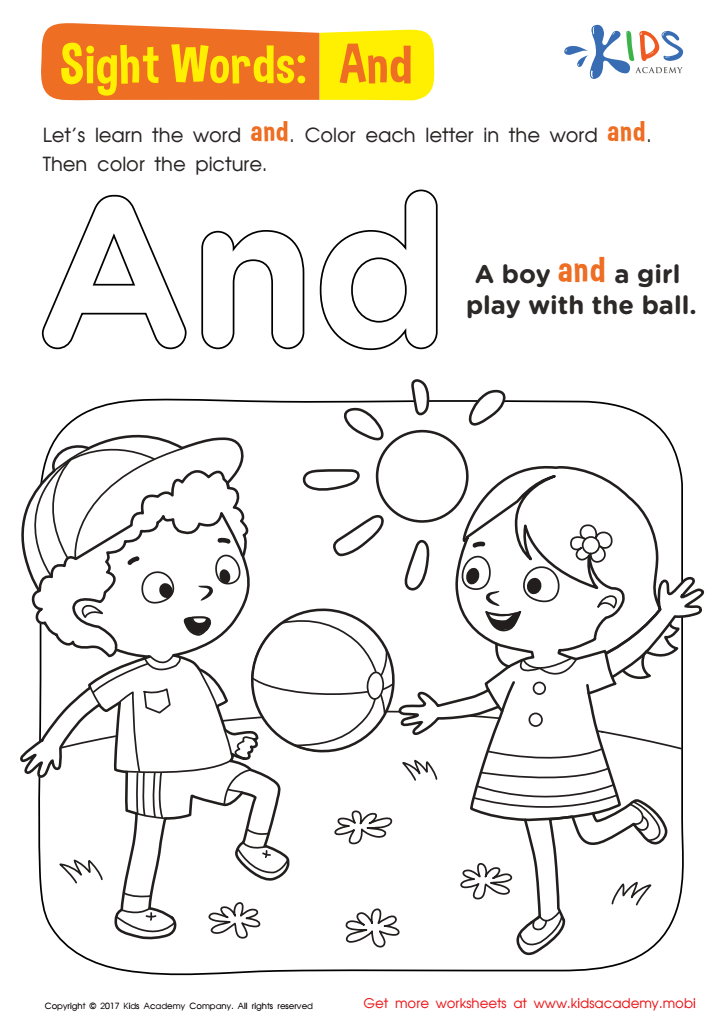
And Worksheet Sight Words Worksheet
 Assign to My Students






Sentence structure understanding is crucial for 7-year-olds as they develop their reading skills. At this stage, children transition from learning to read to reading to learn, making comprehension essential. A solid grasp of sentence structure—such as recognizing subjects, verbs, and the arrangement of words—enables young readers to decode sentences and grasp their meanings more effectively.
Parents and teachers should prioritize this understanding because it directly impacts a child’s overall literacy development. Children who can identify sentence types and their components are better equipped to interpret texts, enhance their vocabulary, and engage in meaningful discussions about what they read. This skills foundation also fosters critical thinking, as children learn how sentence structure can alter meaning.
Moreover, a strong foundation in sentence structure supports writing skills. When children understand how sentences are constructed, they can express their thoughts more clearly and creatively. Furthermore, proficiency in reading leads to improved performance in other subjects, as literacy is integral in learning across the curriculum.
Ultimately, nurturing sentence structure understanding encourages a lifelong love for reading and learning, shaping confident, competent students who are prepared for future academic challenges. By prioritizing this foundation, parents and teachers help pave the way for success.








