Information retention Reading Non-Fiction Worksheets for 7-Year-Olds
3 filtered results
-
From - To
Boost your 7-year-old’s reading skills with our engaging "Information Retention Reading Non-Fiction Worksheets." Designed to enhance comprehension, these worksheets focus on helping young learners retain key facts and ideas from non-fiction texts. Each activity encourages critical thinking and provides fun prompts that motivate children to engage deeply with the material. Establishing solid information retention skills at this early age will not only improve reading proficiency but also foster a lifelong love for learning. Explore our collection of worksheets and watch your child excel in understanding and recalling important information from a variety of non-fiction topics. Fun and beneficial learning await!
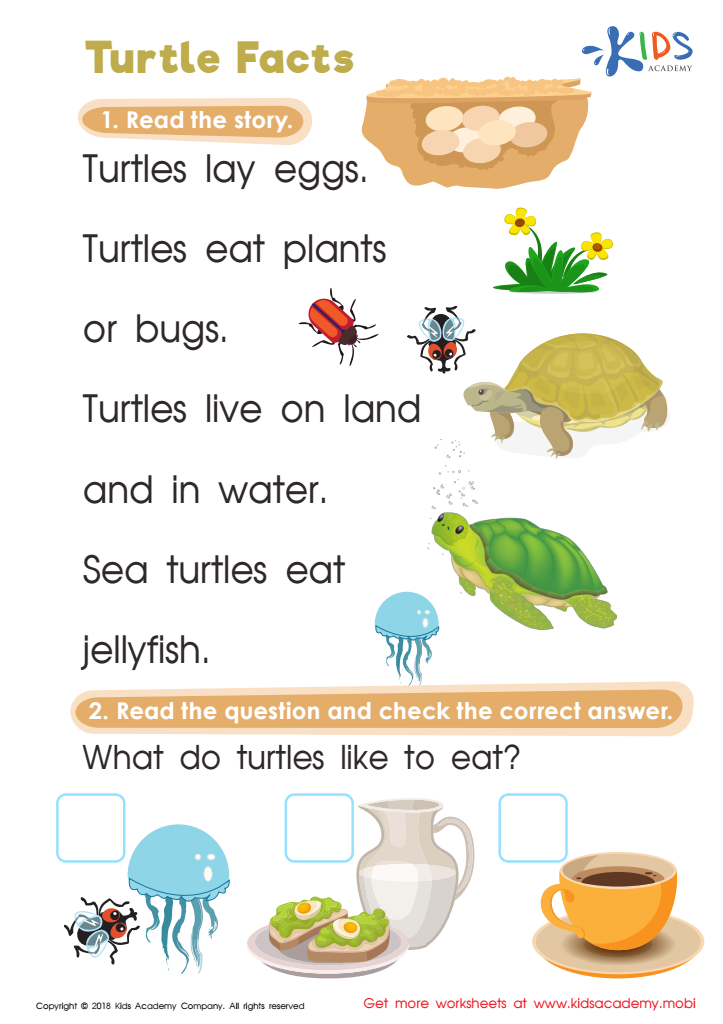
Turtle Facts Worksheet
 Assign to My Students
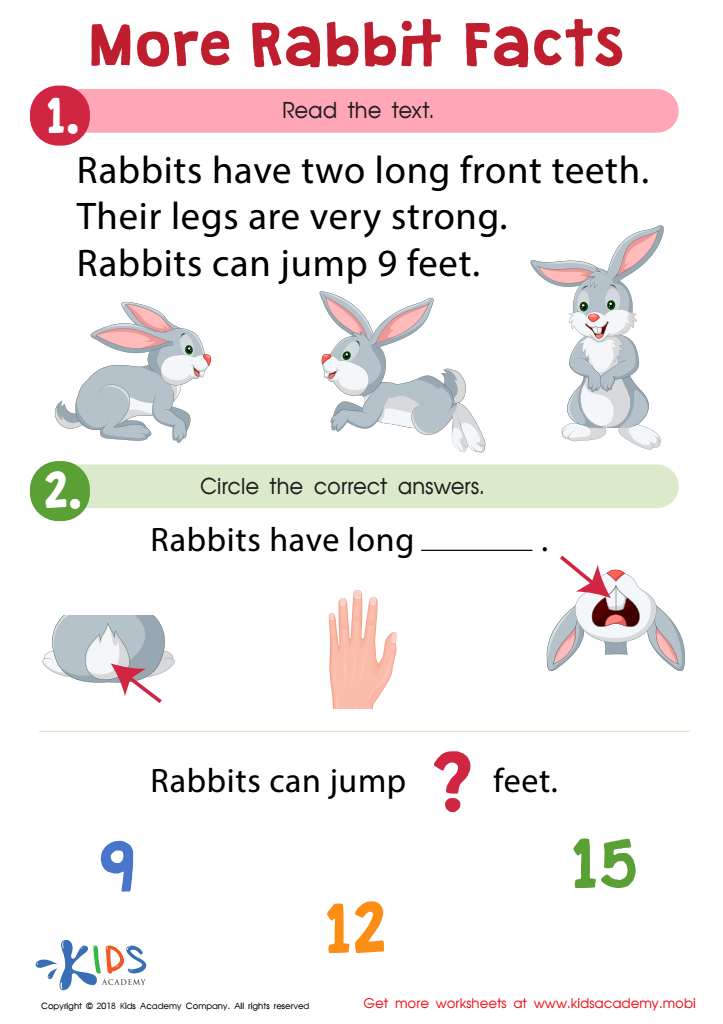
More Rabbit Facts Worksheet

More About the White House Worksheet








Information retention in reading non-fiction is crucial for 7-year-olds as it lays the foundation for lifelong learning skills. At this age, children are beginning to transition from learning to read to reading to learn. Understanding and retaining information from non-fiction texts encourages curiosity and fosters a love for knowledge about the world around them—topics that encompass science, history, geography, and more.
By developing strong information retention skills, children improve comprehension and critical thinking, enabling them to connect new ideas to their prior knowledge. This is particularly important as their academic demands increase in school. Parents and teachers can support this by selecting engaging and age-appropriate non-fiction books, using discussions that prompt questions about the material, and incorporating hands-on activities.
Moreover, strong information retention enhances vocabulary acquisition and understanding of complex concepts, empowering children to articulate their thoughts better. When children see non-fiction reading as a tool for exploration and discovery, it cultivates intrinsic motivation and confidence in their abilities.
Overall, fostering information retention in young readers encourages them to engage with real-world issues, become informed citizens, and develop skills that will serve them well academically and personally as they grow.








