Rhyming skills development Rhyming Words Worksheets for 7-Year-Olds
3 filtered results
-
From - To
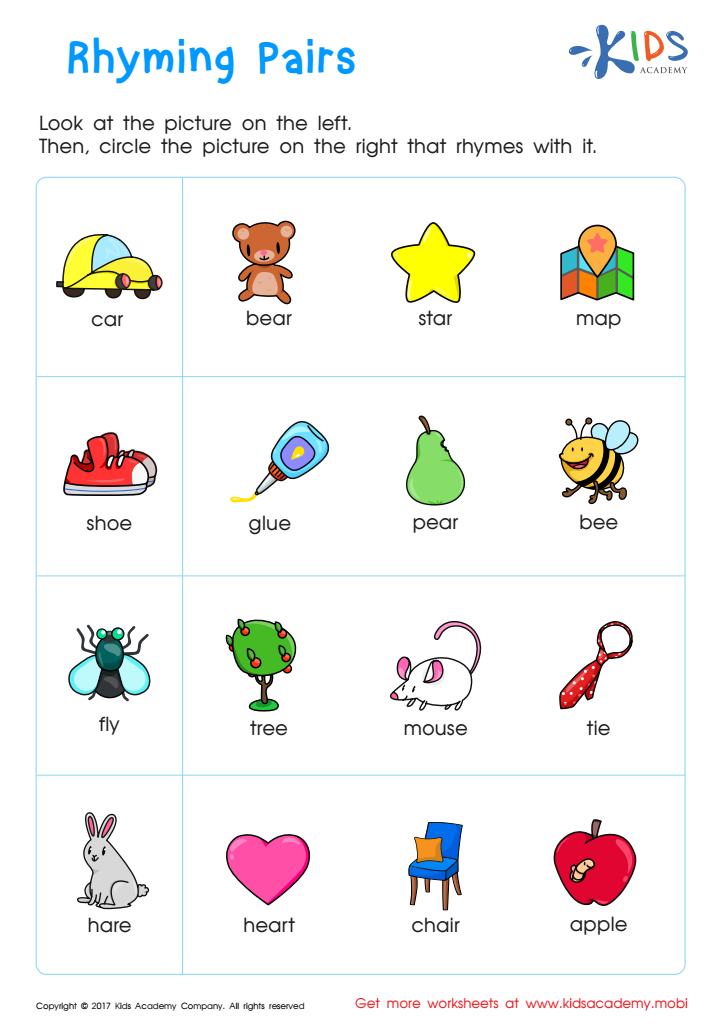
Enhance your child’s literacy with our engaging Rhyming Words Worksheets designed specifically for 7-year-olds! These worksheets promote rhyming skills development, essential for early reading and language comprehension. Through fun activities and exercises, students will learn to identify, create, and complete rhyming words, fostering phonemic awareness and vocabulary growth. Our resources make learning enjoyable, transforming the often-challenging task of grasping rhymes into an exciting adventure. Perfect for classroom use or at-home practice, these worksheets serve as a valuable tool for parents and teachers alike. Start nurturing your child’s love for language today and watch their confidence soar with our structured rhyming activities!
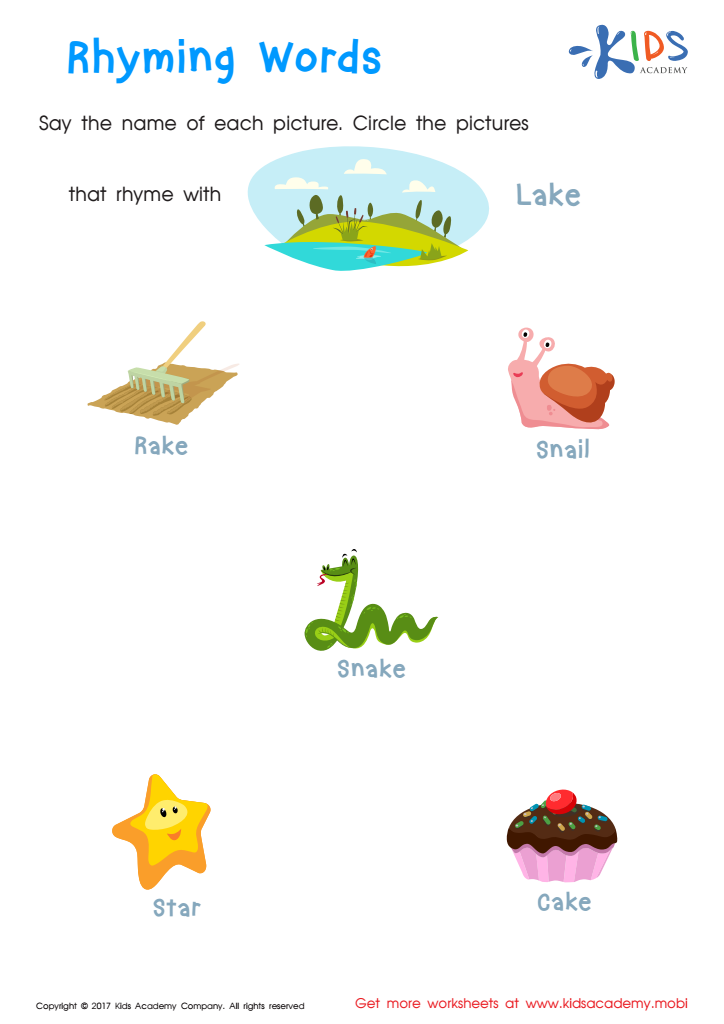
Rhyming Words Rhyming Worksheet
 Assign to My Students
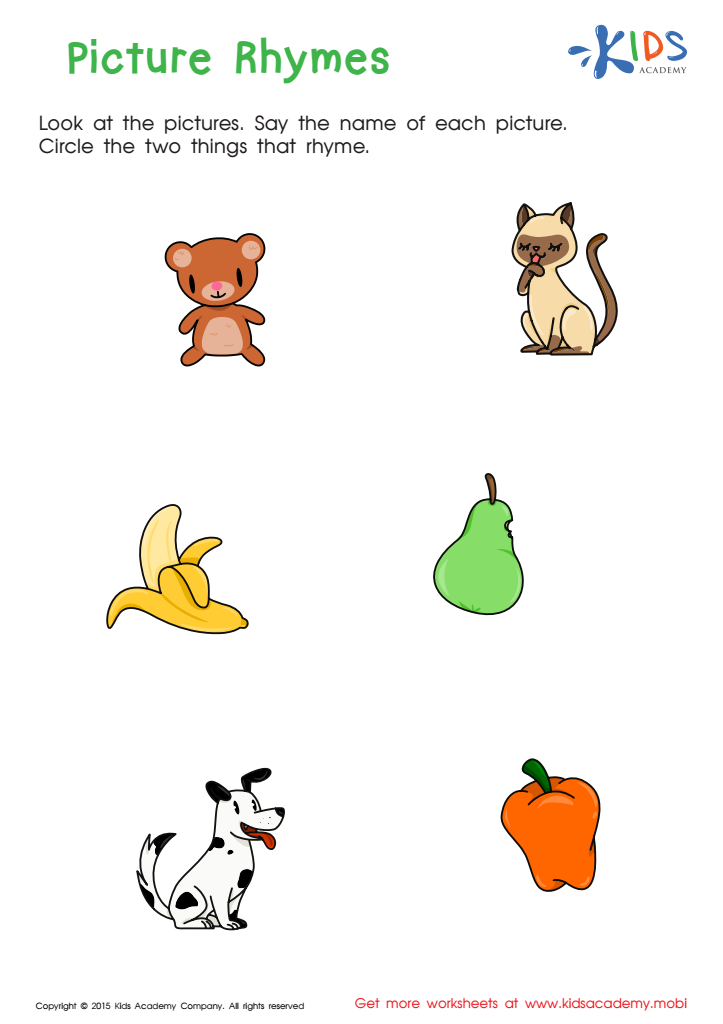
First Words: Picture Rhymes Worksheet




.jpg)



Rhyming skills are crucial in the development of literacy in young children, particularly for 7-year-olds who are at a pivotal stage in their reading and writing journey. Understanding and recognizing rhymes enhances phonemic awareness, which is the ability to hear, identify, and manipulate sounds in words. This skill is foundational for decoding and spelling, making reading more accessible and enjoyable for children.
When parents and teachers prioritize rhyming activities, they not only bolster language skills but also foster cognitive development. Engaging with rhymes helps children build vocabulary, improving their expression and comprehension as they encounter new words in a playful context. Additionally, rhyming promotes memory skills. Repetition in rhyming games aids recall, contributing to stronger cognitive connections.
Moreover, rhyming can cultivate a love for language and storytelling. Children who enjoy playful sounds and rhythms are often more enthusiastic about reading and writing, which can pave the way for lifelong learning. It’s also a simple and fun way to create engaging learning experiences at home or in the classroom. In essence, investing in rhyming skill development not only enhances literacy but also supports emotional and social growth, leading to well-rounded, confident communicators.








