Vocabulary enhancement Rhyming Words Worksheets for 7-Year-Olds
5 filtered results
-
From - To
Our Vocabulary Enhancement Rhyming Words Worksheets for 7-Year-Olds are meticulously designed to make learning fun and effective. These engaging resources boost vocabulary through fun rhyming activities that captivate young minds. Each worksheet focuses on enhancing reading and phonemic skills, crucial for early literacy development. Kids will expand their word bank while understanding how rhymes can build critical thinking. Tailored to align with educational standards, our worksheets promise a seamless addition to any learning routine, ensuring that your child not only learns but also enjoys the process. Transform vocabulary lessons into delightful educational journeys with our expertly crafted worksheets.
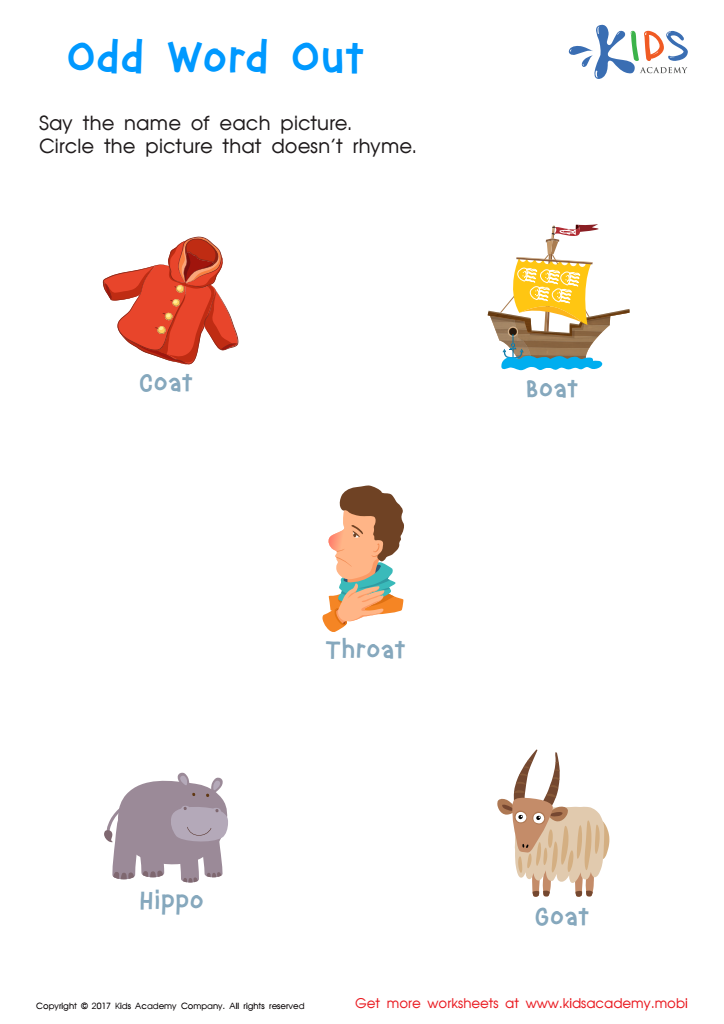
Odd Word Out Rhyming Worksheet
 Assign to My Students
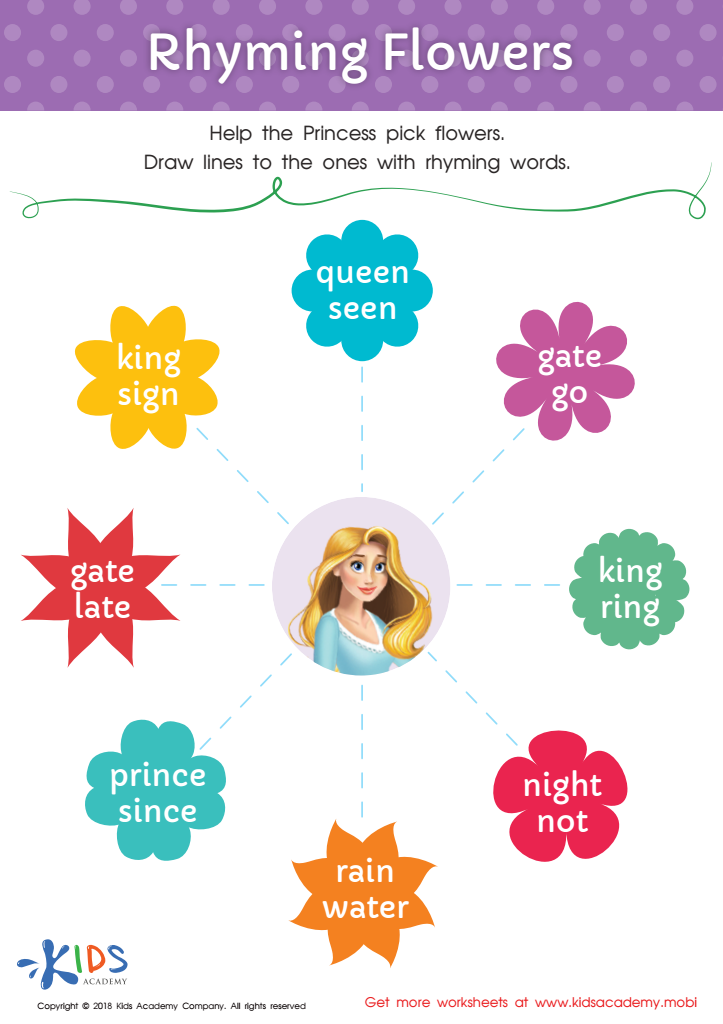
Rhyming Flowers Worksheet
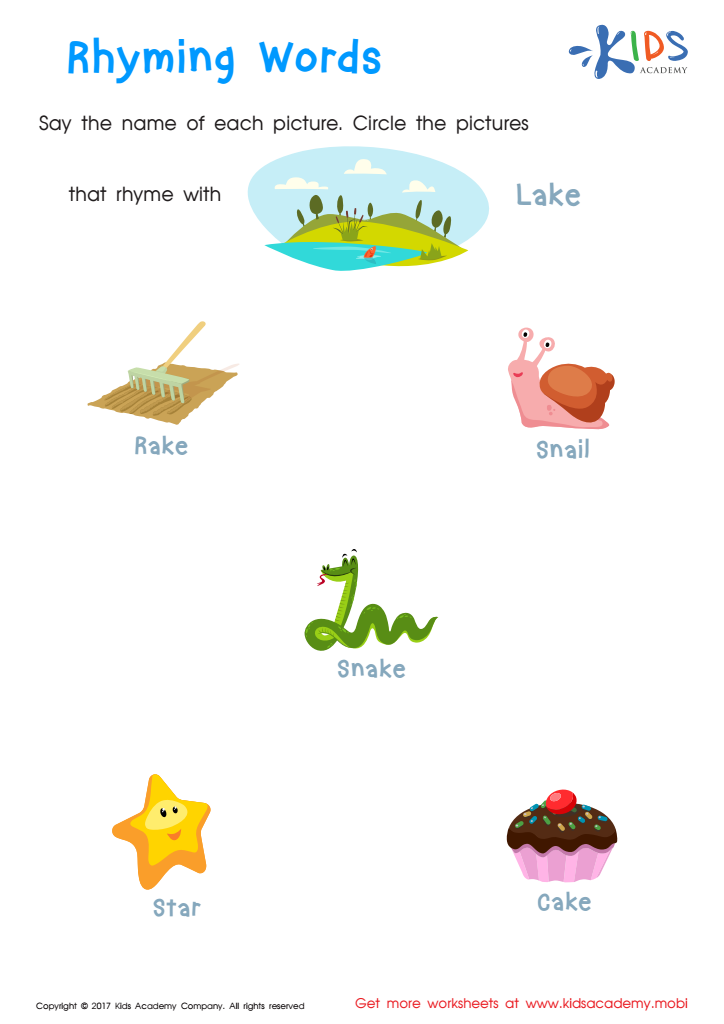
Rhyming Words Rhyming Worksheet
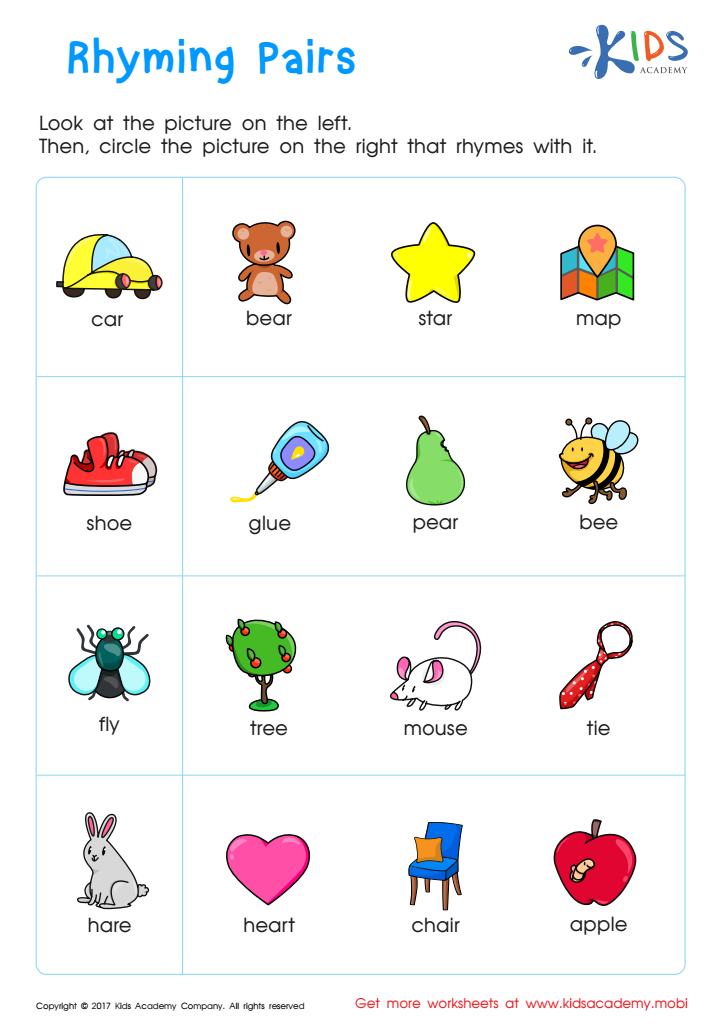
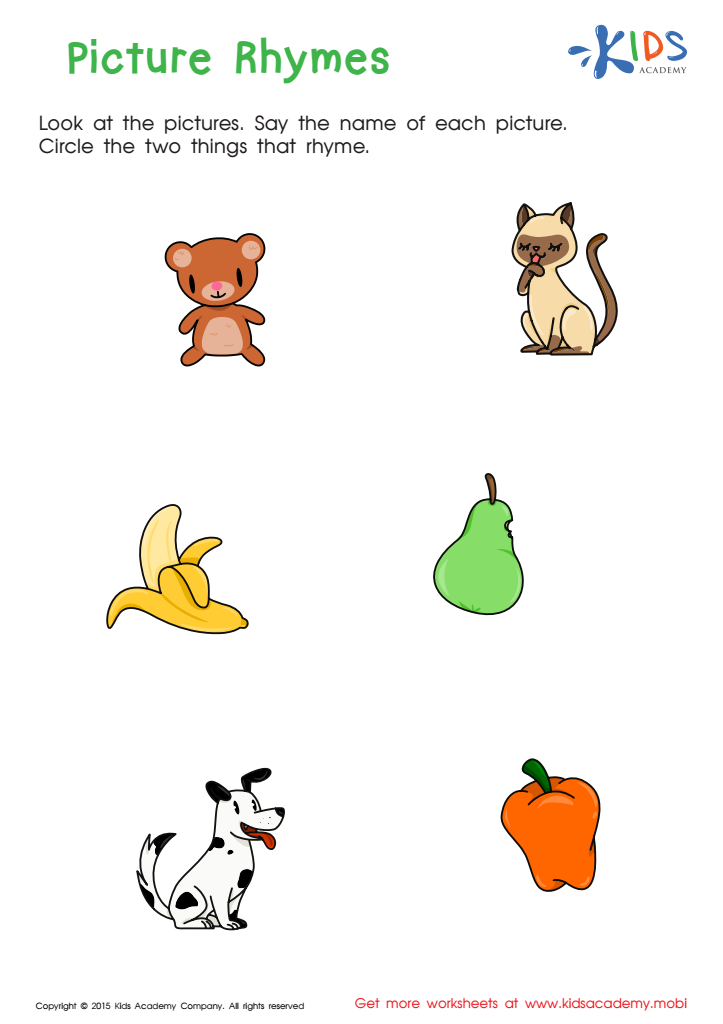
First Words: Picture Rhymes Worksheet








Vocabulary enhancement through rhyming words is vital for 7-year-olds because it builds the foundation for effective communication, reading, and writing skills. Rhymes are a playful and engaging way to learn new words, which helps children expand their vocabulary in an enjoyable manner. When kids identify words that rhyme, they learn to recognize patterns and sounds in language, enhancing their phonemic awareness—an essential component of reading.
Additionally, rhyming words foster creativity as children experiment with language and sounds. It sparks their imagination and makes language learning fun, encouraging a lifelong love of reading. Activities involving rhyming, like singing rhymes or reading rhyming stories, also provide opportunities to bond over learning, whether with parents or teachers.
From a social perspective, a strong vocabulary enables children to express themselves clearly, improving their confidence and interactions with peers and adults. It also sets a strong groundwork for academic achievement across various subjects, as the comprehension of instructions, questions, and content becomes easier with an extensive vocabulary.
In summary, focusing on vocabulary enhancement through rhyming words engages young learners, builds their linguistic and cognitive skills, and fosters a deeper connection with language. Therefore, parents and teachers play a crucial role in integrating these activities into daily learning experiences.








