Subtraction practice Sight Words Worksheets for 7-Year-Olds
3 filtered results
-
From - To
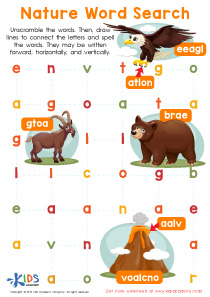
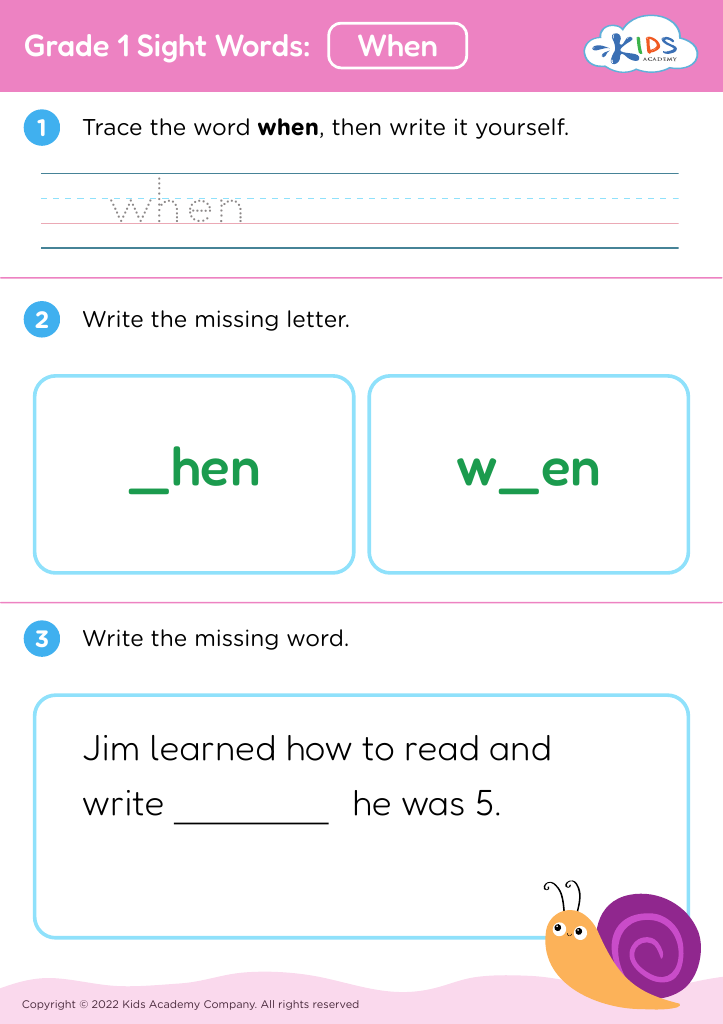
Enhance your 7-year-old’s reading and math skills with our engaging Subtraction Practice Sight Words Worksheets! Designed to integrate literacy and numeracy, these worksheets encourage early learners to recognize essential sight words while practicing subtraction. Each fun activity captures children's attention while reinforcing their understanding of both subjects. You'll find colorful illustrations and interactive exercises that make learning enjoyable and effective. Perfect for home or classroom use, these worksheets support developmental milestones and help children build confidence in their academic abilities. Start your child's journey towards mastering subtraction and sight words with our thoughtfully crafted resources today!







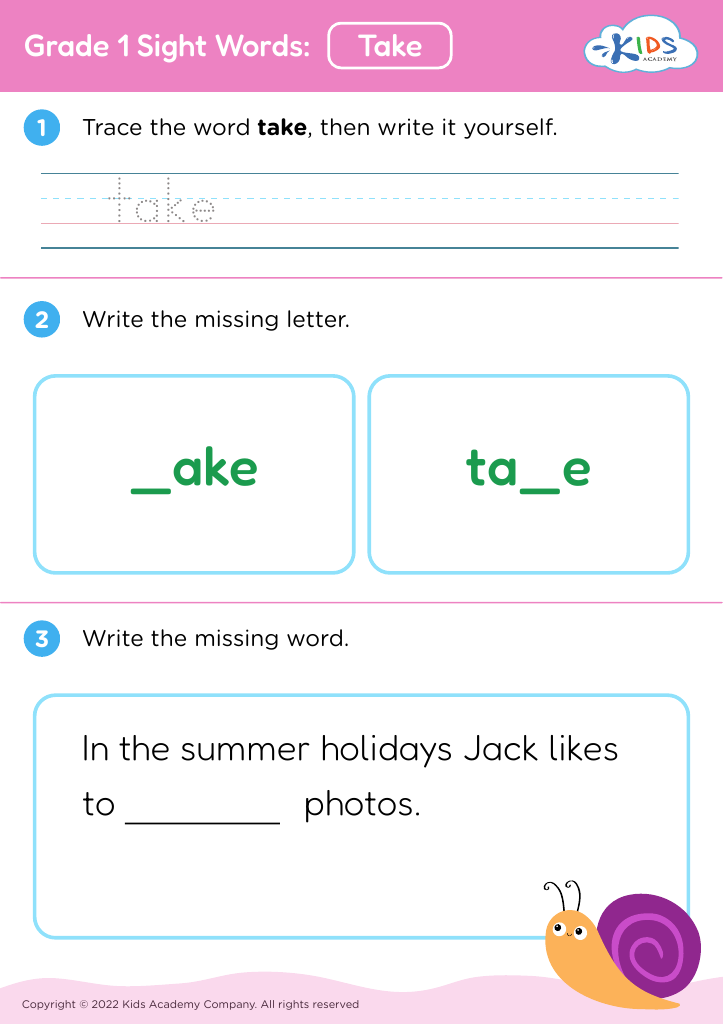
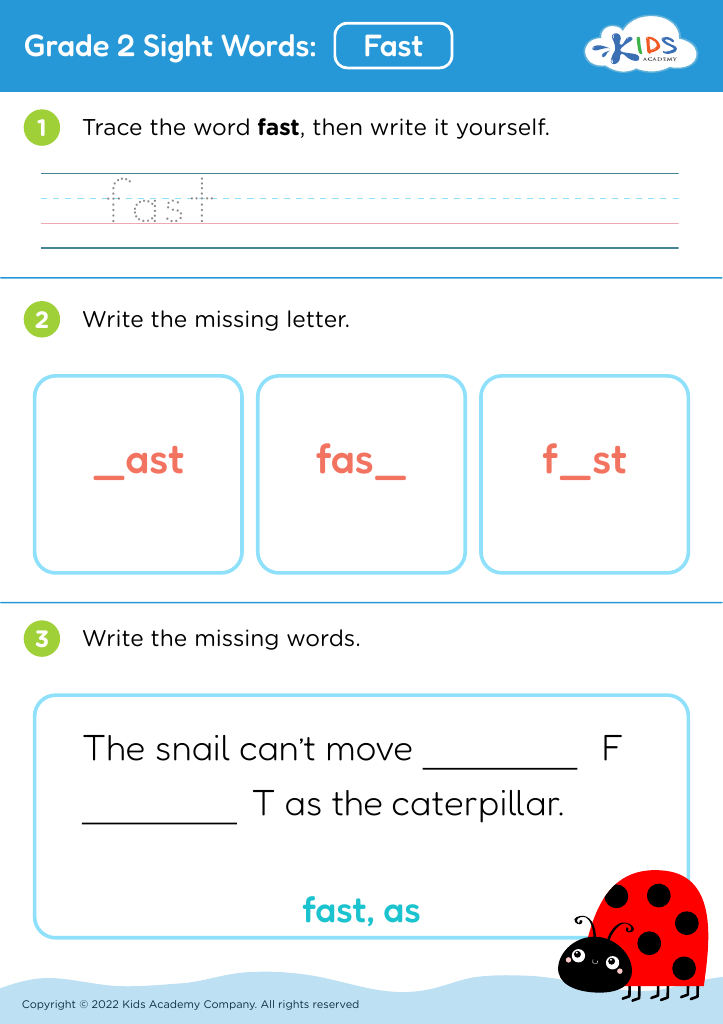








Subtraction practice and sight words are crucial components of early education that significantly impact a 7-year-old’s learning journey. For parents and teachers, fostering proficiency in these areas lays the groundwork for future academic success.
Subtraction is foundational in mathematics, teaching children essential skills like problem-solving, critical thinking, and number sense. Mastering subtraction helps kids understand a variety of mathematical concepts, from basic arithmetic to more complex operations. When kids are confident in subtraction, they are more likely to embrace challenges in higher-level math, which becomes increasingly important as they progress through school.
Sight words, on the other hand, are high-frequency words that children encounter regularly in reading and writing. Familiarity with these words boosts a child's reading fluency, comprehension, and confidence. By encouraging the recognition of sight words, parents and teachers assist children in becoming more independent readers, thus enhancing their overall literacy skills.
Integrating subtraction practice and sight word activities into daily routines makes learning enjoyable and effective. This combination not only solidifies foundational skills but also fosters a love for learning, setting the stage for lifelong educational success and curiosity. Ultimately, investing time in these practices yields benefits for a child’s cognitive and educational growth.