
Critical thinking skills Science Worksheets for 7-Year-Olds
4 filtered results
Difficulty Level
Grade
Age
-
From - To
Subject
Activity
Standards
Introducing our Critical Thinking Skills Science Worksheets designed specifically for 7-year-olds! At Kids Academy, we believe in nurturing inquisitive young minds through engaging, interactive activities. These worksheets encourage children to explore scientific concepts while enhancing their critical thinking abilities. With fun exercises involving observation, analysis, and problem-solving, kids will build crucial skills that lay the foundation for future learning. Our expertly crafted materials make science both accessible and enjoyable, sparking curiosity and a love for discovery. Ideal for both classroom and home use, these worksheets are a fantastic resource for developing young scientists. Dive into the world of science and critical thinking today!
Favorites
With answer key
Interactive
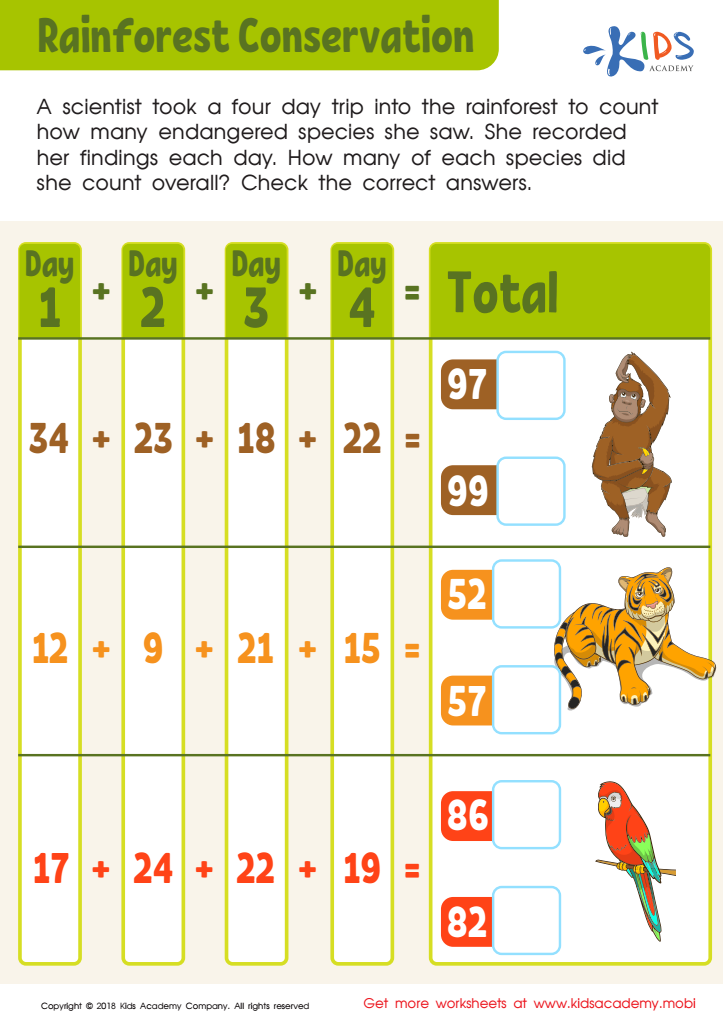
Rainforest Conservation Worksheet
Explain to your child what a rainforest is and why it's important. A scientist took a four-day trip to count endangered species. Let your child count how many of each species were seen in total. Check the answers and help them understand.
 Assign to My Students
Rainforest Conservation Worksheet
Worksheet
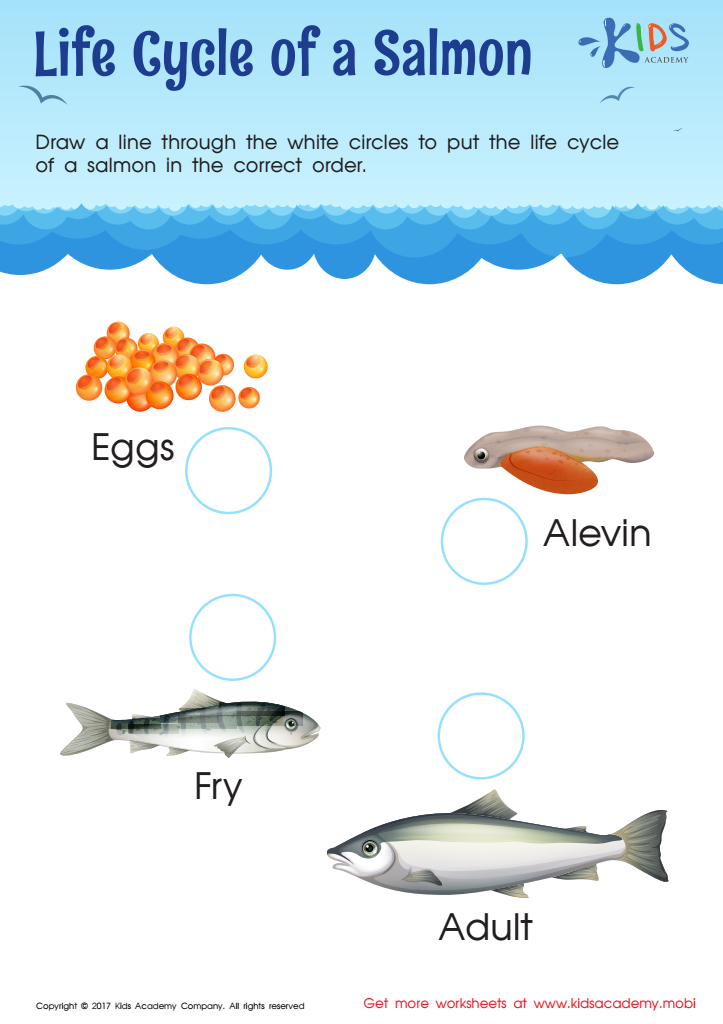
Cycle Of Salmon Worksheet
Explore the life cycle of a salmon with this grade 2 worksheet! Kids will learn by arranging the stages of the salmon's lifecycle in order. Science activities in this set cover a wide range of lifecycles in nature.
Cycle Of Salmon Worksheet
Worksheet
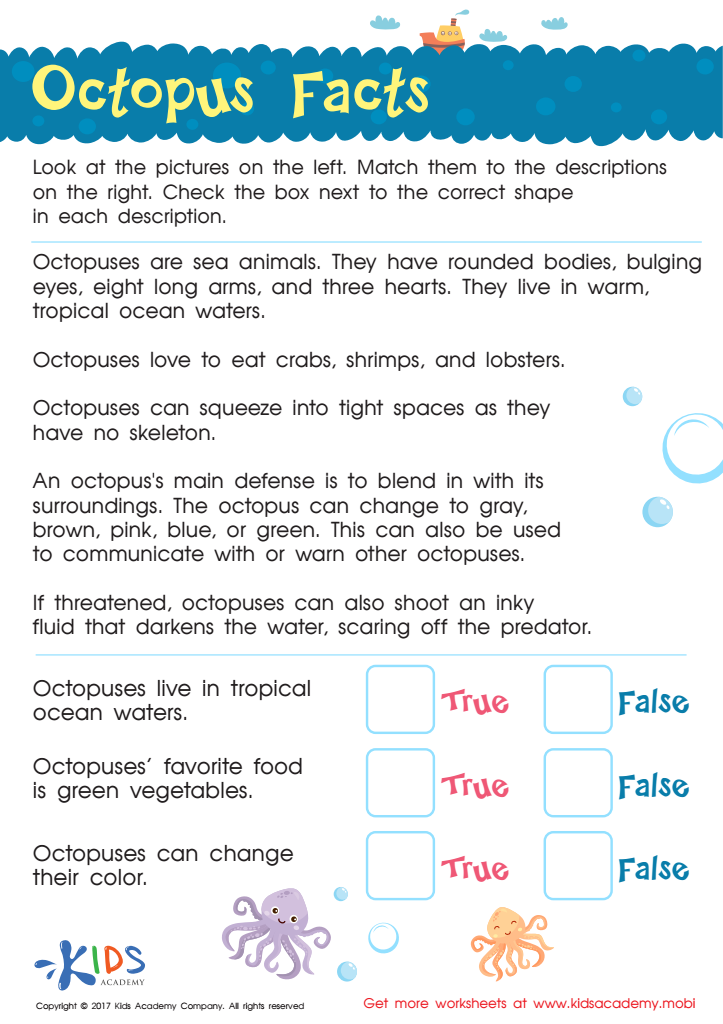
Octopus Facts Worksheet For Kids
Let your child dive into the world of octopuses with this fun worksheet. It offers invaluable practice in reading non-fiction texts, while they learn interesting facts about these strange sea creatures. It's a great way to help them hone their skills in reading comprehension.
Octopus Facts Worksheet For Kids
Worksheet
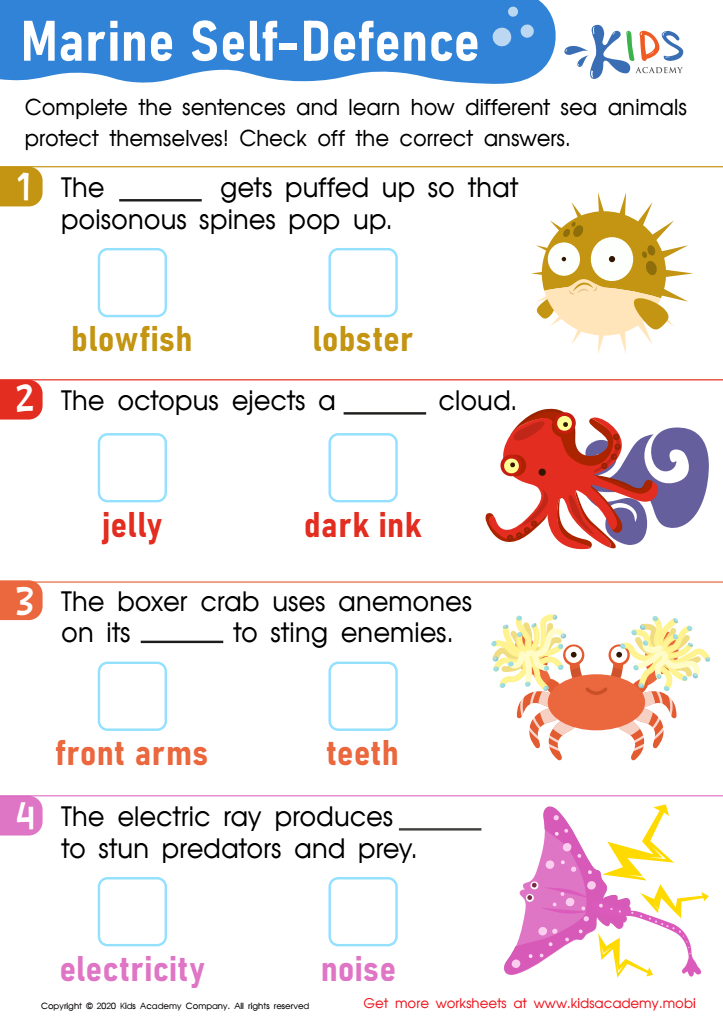
Marine Self-Defence Worksheet
Kids will love discovering the ingenious ways sea creatures protect themselves from predators such as sharks and whales! Let them explore the strategies with this fun science worksheet, which features vibrant illustrations. Have them fill in the blanks with each creature's defense strategy, such as shells, spikes, ink, or even electricity!
Marine Self-Defence Worksheet
Worksheet
Join Kids Academy for Free
Who is primarily going to use this learning content?







Parents and teachers should prioritize critical thinking skills in science for 7-year-olds because these skills provide a foundation for lifelong learning and problem-solving. At this age, children's brains are exceptionally adaptable and ready to explorethe world around them. Introducing critical thinking tasks in science enriches their curiosity and natural tendency to question and discover.
Critical thinking empowers children to analyze information systematically, making sense of the how and why, not just the "what." When kids learn to observe, hypothesize, experiment, and draw conclusions, they develop a deeper understanding of scientific concepts rather than just memorizing facts. For instance, a simple activity like experimenting with different objects to see if they float or sink compels children to think logically and predict outcomes based on evidence.
Moreover, these skills are transferable and beneficial beyond the science classroom. They enhance overall cognitive abilities, including logic, focus, and planning. When children face challenging problems, they can apply their critical thinking skills to come up withcreative solutions. As the world becomes more reliant on STEM fields, fostering these skills early prepares children for future academic and professional success, cultivating innovative thinkers and adept problem-solvers who can navigate an increasingly complex world. Hence, both parents and teachers hold a crucial role in actively nurturing and valuing early scientific critical thinking abilities.







