Capitalization rules Writing Worksheets for 7-Year-Olds
3 filtered results
-
From - To
Discover engaging Capitalization Rules Writing Worksheets designed specifically for 7-year-olds! These printable resources help young learners grasp essential capitalization principles in a fun and interactive way. Covering topics such as proper nouns, sentence beginnings, and days of the week, our worksheets offer a variety of activities to enrich your child’s writing skills. Perfect for home or classroom use, each worksheet is age-appropriate and easy to understand, ensuring a smooth learning experience. Boost your child's confidence and proficiency in writing by exploring our collection of engaging practice materials today! Start cultivating their love for writing with effective capitalization exercises!
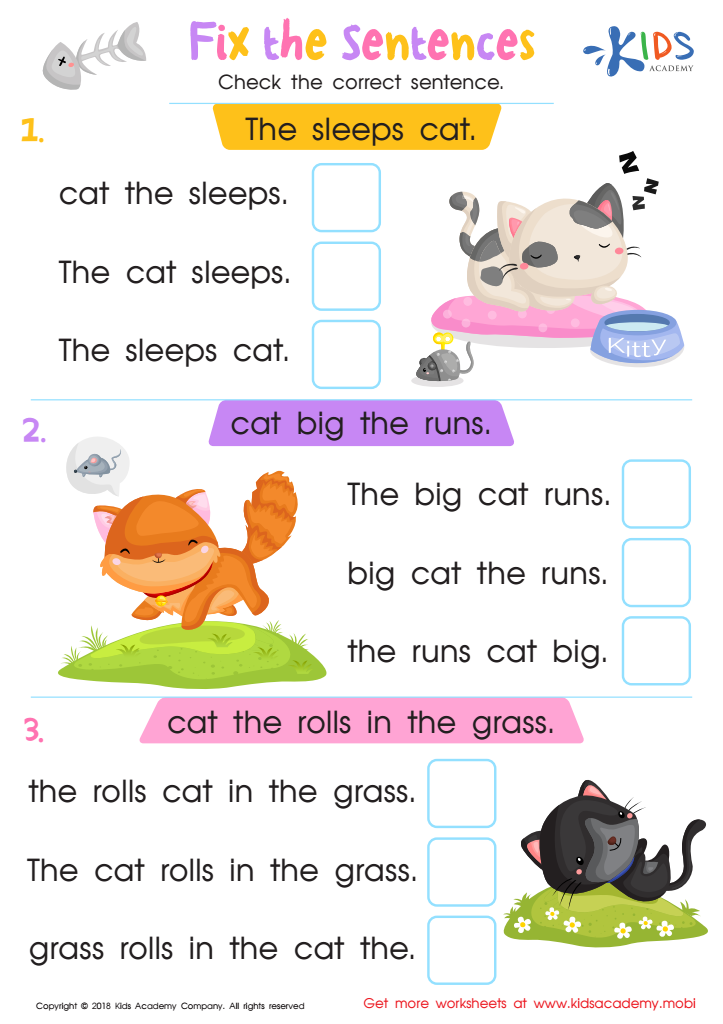
Fix the Sentences Worksheet
 Assign to My Students
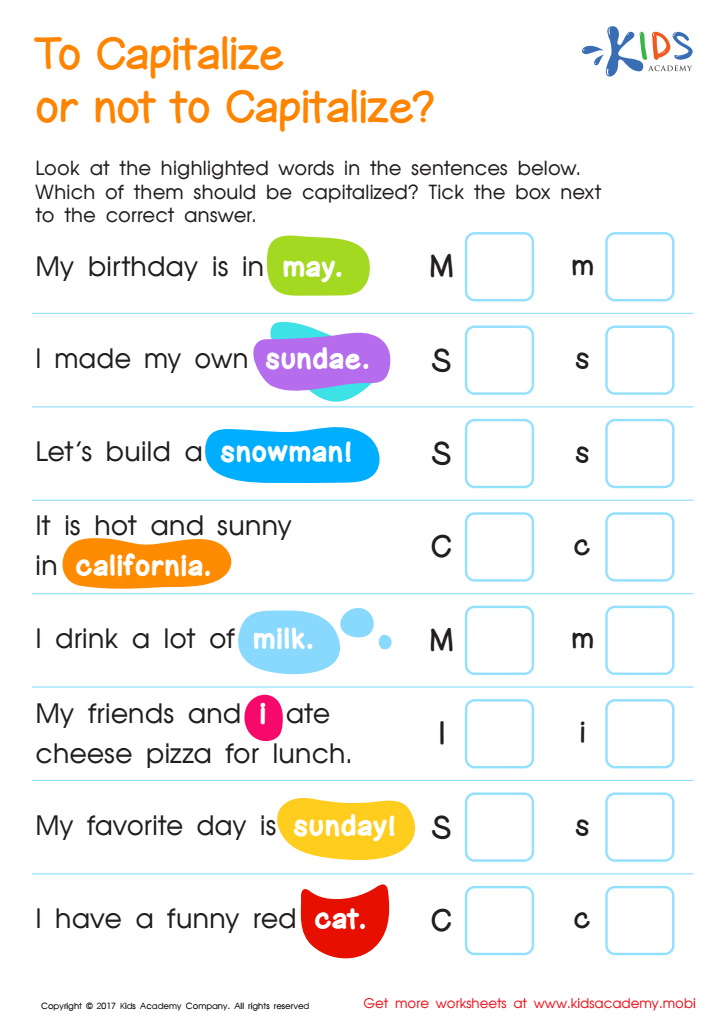
Capitalization: To Capitalize or Not? Printable
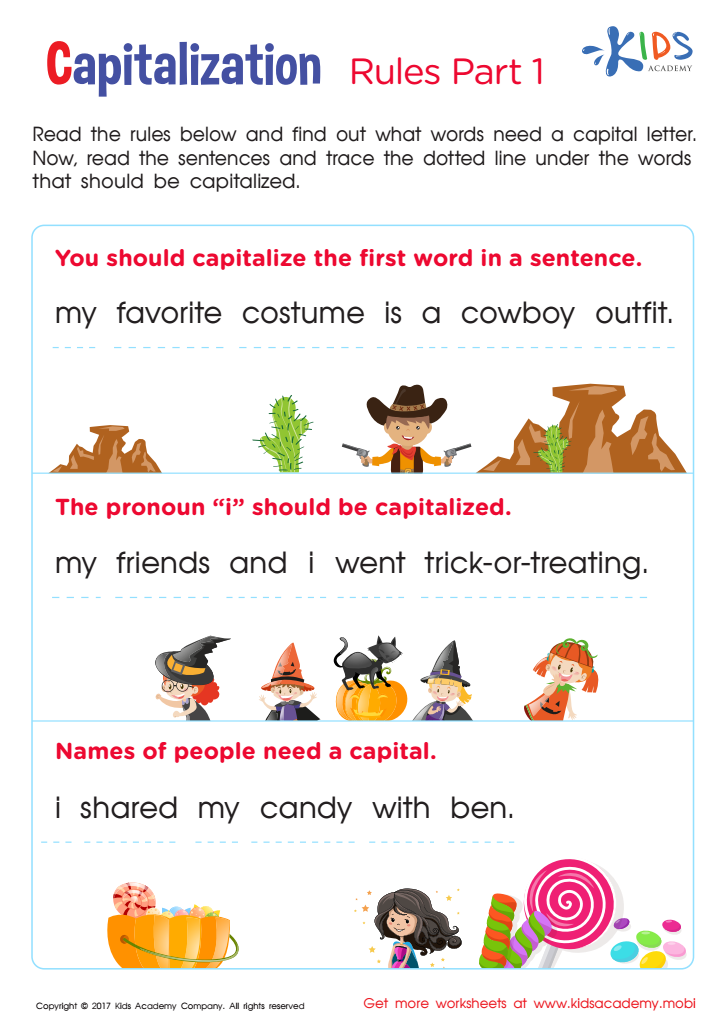
Capitalization Rules: Part 1 Worksheet







Teaching capitalization rules to 7-year-olds is essential for several reasons. First and foremost, proper capitalization enhances clarity and understanding in writing. When children consistently use capital letters for the beginning of sentences, names, and proper nouns, their writing becomes clearer and more structured. This clarity fosters effective communication, an important skill they will carry throughout their education and beyond.
Additionally, mastering capitalization helps lay the foundation for good grammar habits. Understanding these basic rules will make it easier for children to grasp more complex grammar concepts later on. It promotes attention to detail—a vital life skill.
Encouraging the use of capitalization also boosts children's confidence in their writing abilities. When they see their work following the rules, they’re more likely to take pride in their writing and share it with others, increasing their motivation to write.
Lastly, from a developmental perspective, writing is a vital part of learning. It allows children to express their thoughts and ideas, and understanding capitalization contributes to their overall literacy skills. In summary, instilling the habit of using capitalization correctly empowers children to communicate effectively and lays the groundwork for a successful future in writing and beyond.








