
Hand-eye Coordination Cursive Alphabet Worksheets for Ages 8-9
6 filtered results
Difficulty Level
Grade
Age
-
From - To
Subject
Activity
Standards
Enhance your child's hand-eye coordination with our engaging cursive alphabet worksheets designed specifically for ages 8-9. These worksheets provide a fun and effective way to develop fine motor skills while learning to write in cursive. Through a variety of tracing and writing exercises, children will improve their control, accuracy, and coordination, essential for effective handwriting. Each worksheet is crafted to foster creativity, confidence, and a love for learning. Perfect for parents and educators alike, our worksheets ensure that learning cursive becomes an enjoyable experience. Explore our collection today and watch your child’s skills flourish!
Favorites
With answer key
Interactive
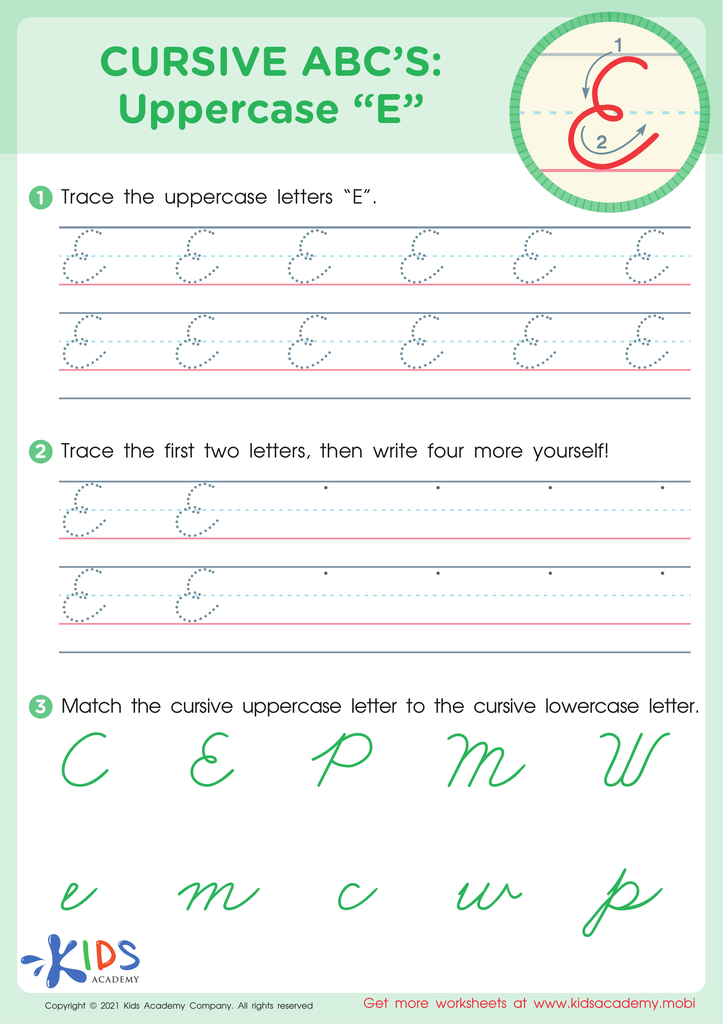
Cursive ABCs: Uppercase E
Ask your child if they can identify the letter 'E' and give examples. Each letter is unique, so provide coaching. Have them trace cursive 'E' to become familiar and boost confidence. Then, ask them to write it on their own.
Cursive ABCs: Uppercase E
Worksheet
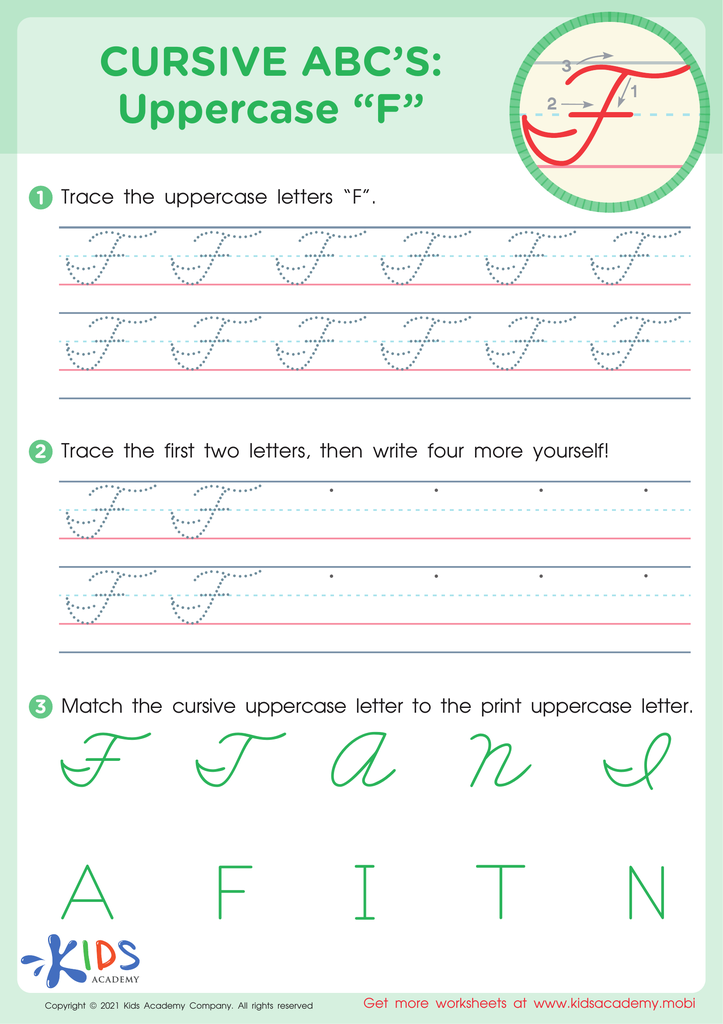
Cursive ABCs: Uppercase F
Help your kids trace the letters in these worksheets and watch their confidence grow as they learn to write cursive uppercase and lowercase letters. Ask them to identify the letters in words and give examples of words that start with an uppercase 'F', then have them write some letters on their own and assess their progress.
Cursive ABCs: Uppercase F
Worksheet
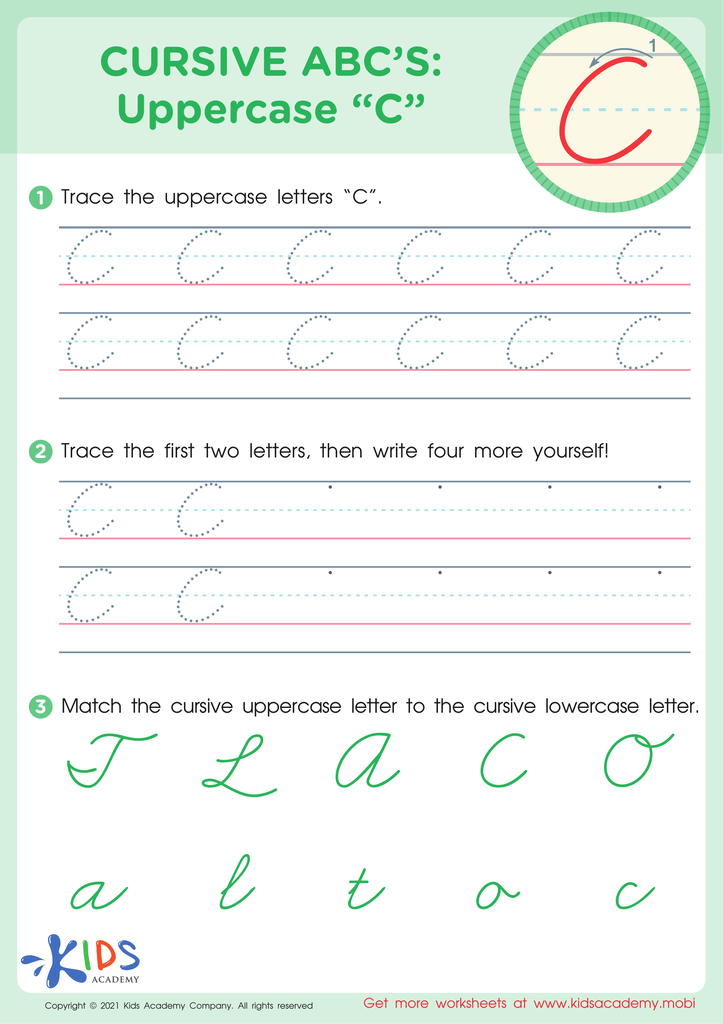
Cursive ABCs: Uppercase C
These worksheets are perfect for those wanting to improve their handwriting or learn letter recognition. The tracing exercises help younger students sharpen their writing skills and teach how to write the 'C' in cursive. First, they trace the given examples and then practice writing it solo. A letter recognition test is at the bottom of the page to check progress.
Cursive ABCs: Uppercase C
Worksheet
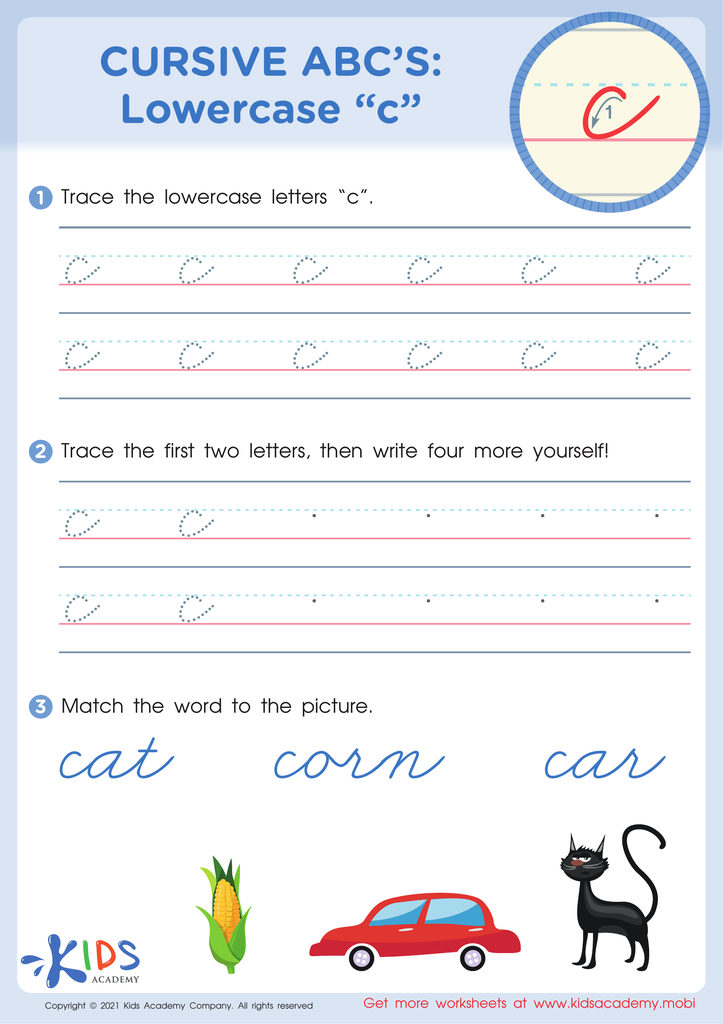
Cursive ABCs: Lowercase c
Once your child has successfully printed their letters, help them learn to recognize and write the alphabet in cursive. Struggling? This worksheet is perfect to assist them. Writing is an essential skill for kids to learn, so do all you can to help them. Use these tracing worksheets and guide them as they write the lowercase letter 'c' in cursive.
Cursive ABCs: Lowercase c
Worksheet
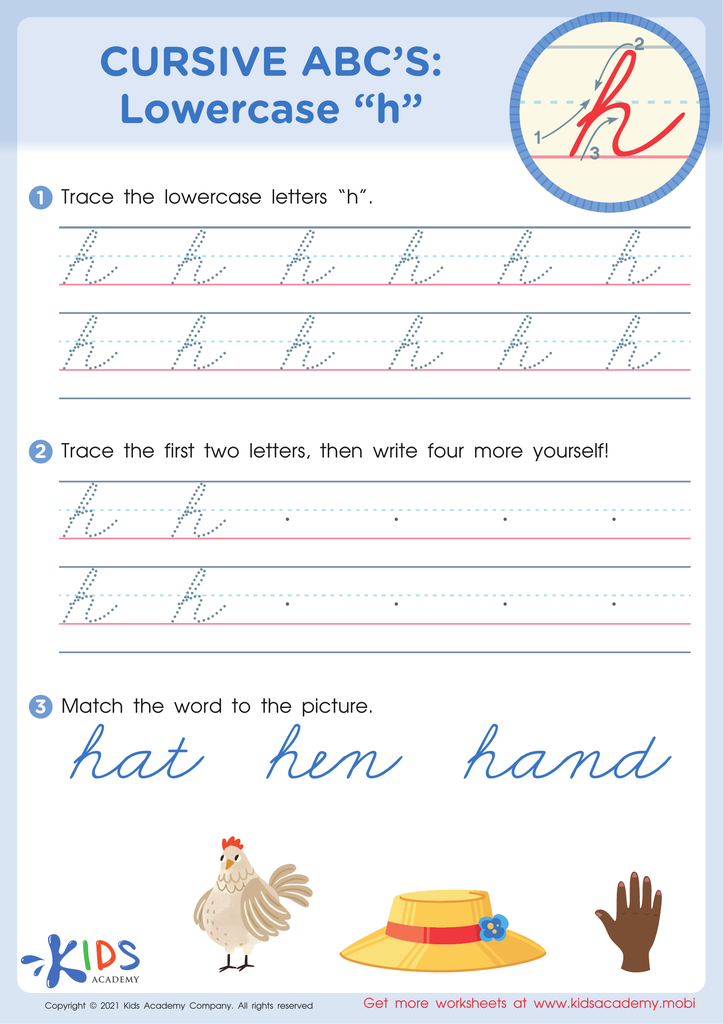
Cursive ABCs: Lowercase h
Your children will need more than just reciting the alphabet; they need to learn how to identify and write it. Cursive writing helps with neatness, and these tracing worksheets are great learning aids and offer exercises to practice writing lowercase 'h'. With these, your children get better writing skills and learn new words.
Cursive ABCs: Lowercase h
Worksheet
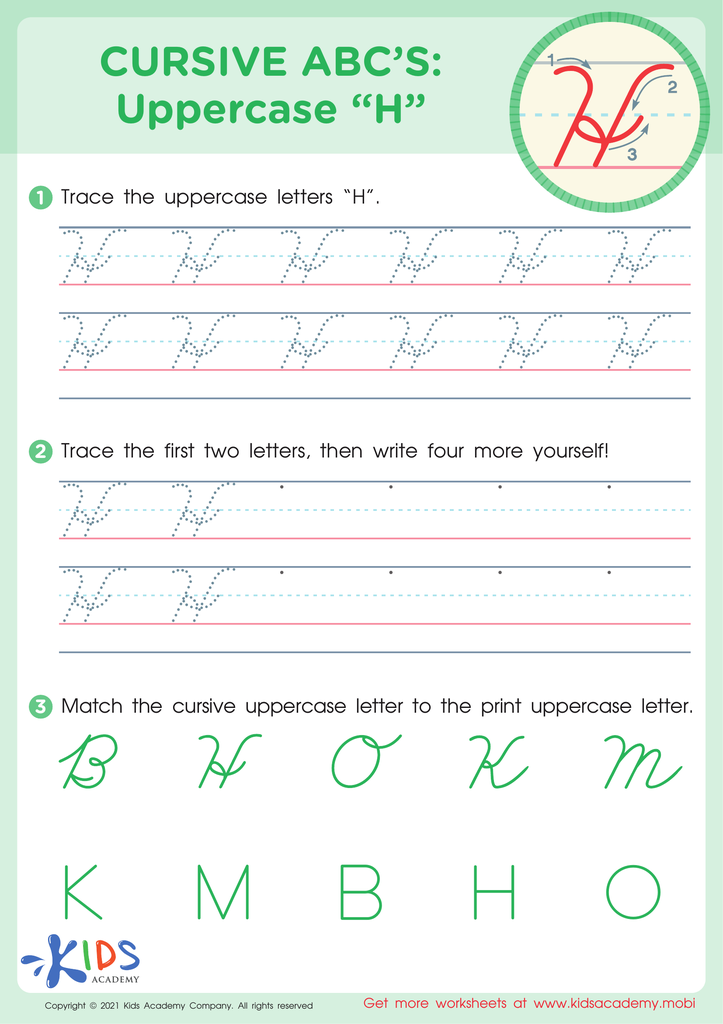
Cursive ABCs: Uppercase H
Have your child recite the alphabet and give you words beginning with H. This tracing sheet is perfect to help them improve their handwriting. Guide their hands as they trace the uppercase H, then have them practise writing it alone. At the bottom is an exercise to check their letter recognition.
Cursive ABCs: Uppercase H
Worksheet
Join Kids Academy for Free
Who is primarily going to use this learning content?




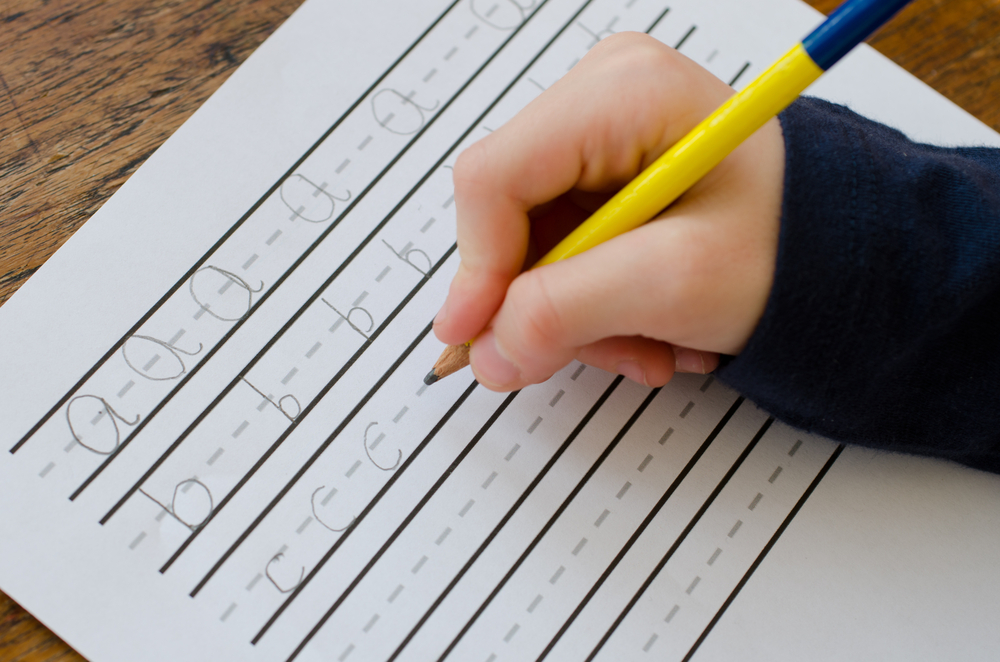
Hand-eye coordination is a vital skill for children, particularly at the ages of 8-9, as it significantly impacts their academic performance and daily activities. One engaging way to enhance this coordination is through the practice of cursive writing, specifically with the cursive alphabet.
At this developmental stage, children are processing and integrating a plethora of new information, and fine motor skills become critical for tasks such as writing, drawing, and certain sports. Cursive writing not only helps improve hand-eye coordination but also fosters muscle memory, allowing for smoother and more fluid writing movements. This form of writing promotes faster and more expressive written communication, which can enhance students' confidence in their abilities.
Moreover, engaging in cursive writing activities can also provide an opportunity for shared time between parents and children or an interactive group environment in classrooms, fostering social skills as they practice together. Teachers and parents who prioritize hand-eye coordination through cursive writing are equipping children with tools essential for success in school and life. By nurturing these skills early, we prepare children for more complex tasks and enhance their overall cognitive development, laying a solid foundation for future learning experiences.







