Word identification Elementary Phonics Worksheets for Ages 8-9
3 filtered results
-
From - To
Discover our engaging "Word Identification Elementary Phonics Worksheets" designed for children aged 8-9! Tailored to enhance reading skills, these worksheets help young learners master phonics while improving their word recognition abilities. Fun and interactive activities guide students through identifying and reading complex words, laying a solid foundation for advanced literacy skills. With a variety of exercises that challenge and entertain, our worksheets make phonics practice enjoyable. Perfect for use in classrooms or at home, these resources cater to diverse learning styles, ensuring every child can succeed in their reading journey. Empower your students to become confident readers today!
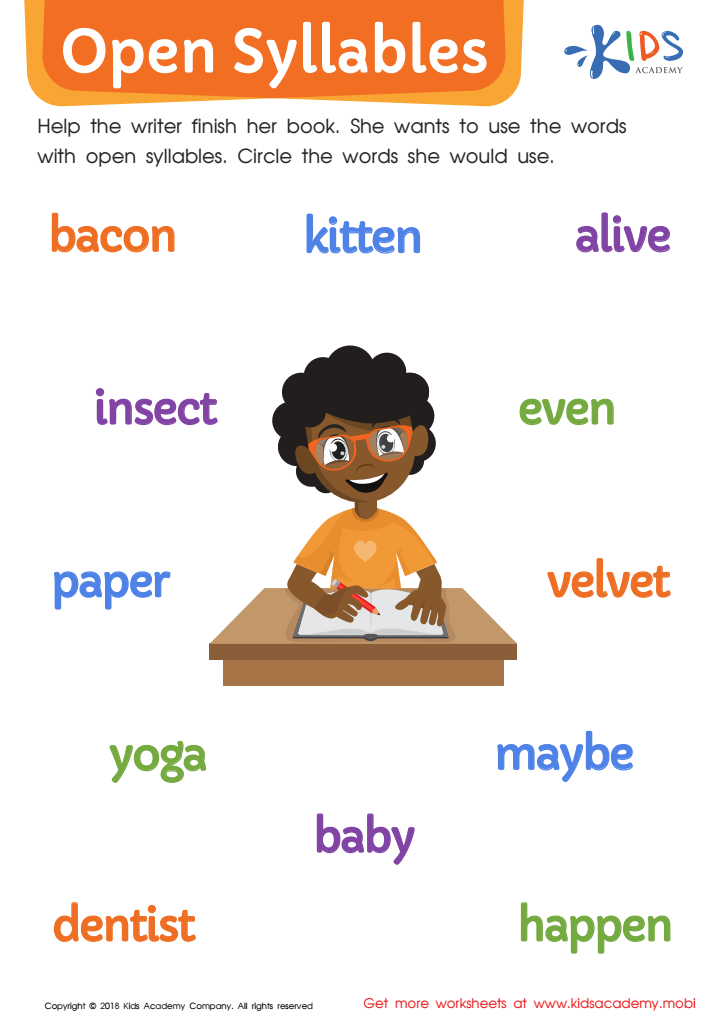
Open Syllables Worksheet
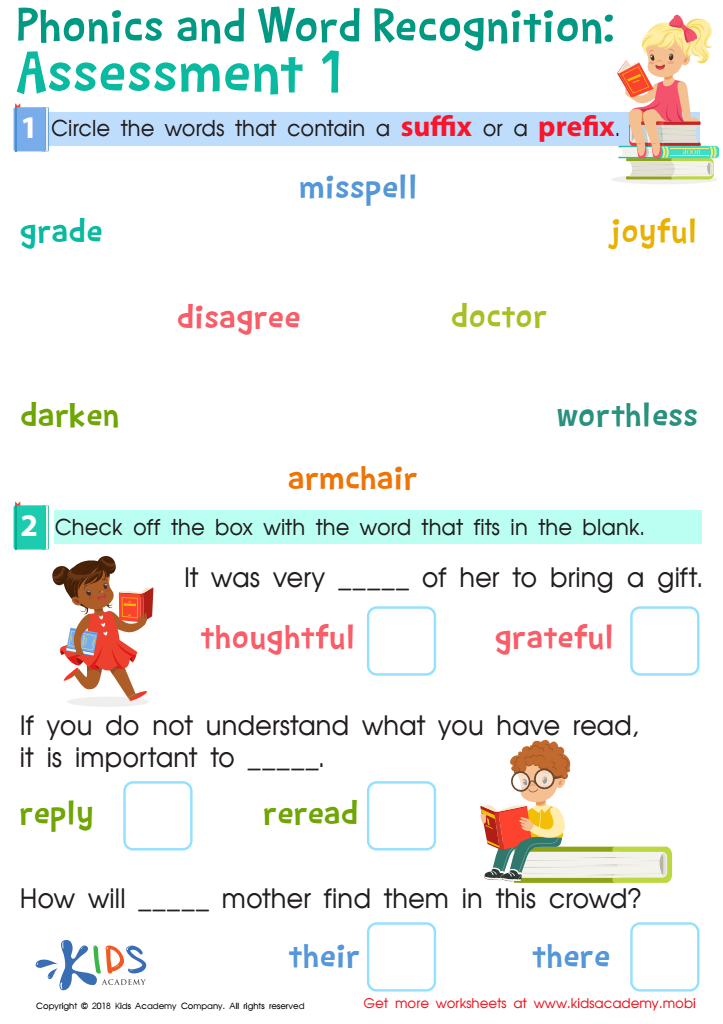
Phonics and Word Recognition: Assessment 1 Worksheet
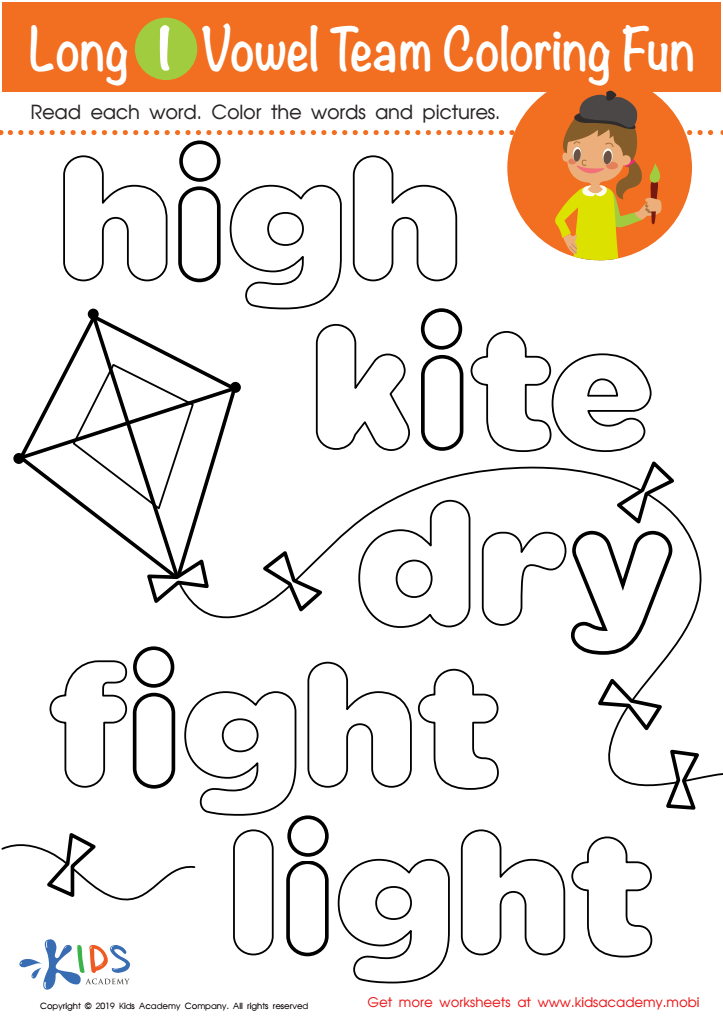
Long I Vowel Team Coloring Worksheet
 Assign to My Students




Word identification and phonics are critical components of literacy instruction for children aged 8-9. At this stage, children are transitioning from learning to read toward reading to learn, making strong word identification skills imperative for academic success. Understanding phonics helps children decode words, enhancing their ability to read fluently and comprehend texts.
By mastering word identification strategies, children can become more confident readers, which fosters a love for reading and learning. Improved reading skills contribute to better performance across subjects, as students engage more deeply with content. Teachers and parents play essential roles in reinforcing these skills through targeted practices and support, ensuring that children not only recognize words but also understand their meanings and contexts.
Moreover, a solid foundation in phonics reduces the risk of literacy challenges in later years. When teachers and parents actively engage in phonics activities, they provide essential tools that feed into children's vocabulary development, critical thinking, and overall educational experiences.
Finally, promoting word identification skills nurtures independent learners and prepares students for future academic endeavors, empowering them to navigate complex texts proficiently. Overall, prioritizing phonics instruction is essential for sustaining a child’s lifelong success in reading and education.







