
Alphabetical understanding Alphabet Worksheets for Ages 8-9
3 filtered results
Difficulty Level
Grade
Age
-
From - To
Subject
Activity
Standards
Discover the perfect Alphabet Worksheets for kids aged 8-9 to enhance their alphabetical understanding! These worksheets feature engaging activities aimed to develop essential literacy skills, including alphabetizing words, understanding alphabetical order, and recognizing letter patterns. Fun and educational, our carefully designed worksheets make learning enjoyable, promoting confidence and proficiency in young readers. With visually appealing exercises, children can practice alphabet skills in a clear and interesting way. Ideal for both classroom and home use, these resources are perfect for teachers and parents who seek to provide strong foundational learning experiences. Boost your child’s alphabet knowledge today!
Favorites
With answer key
Interactive
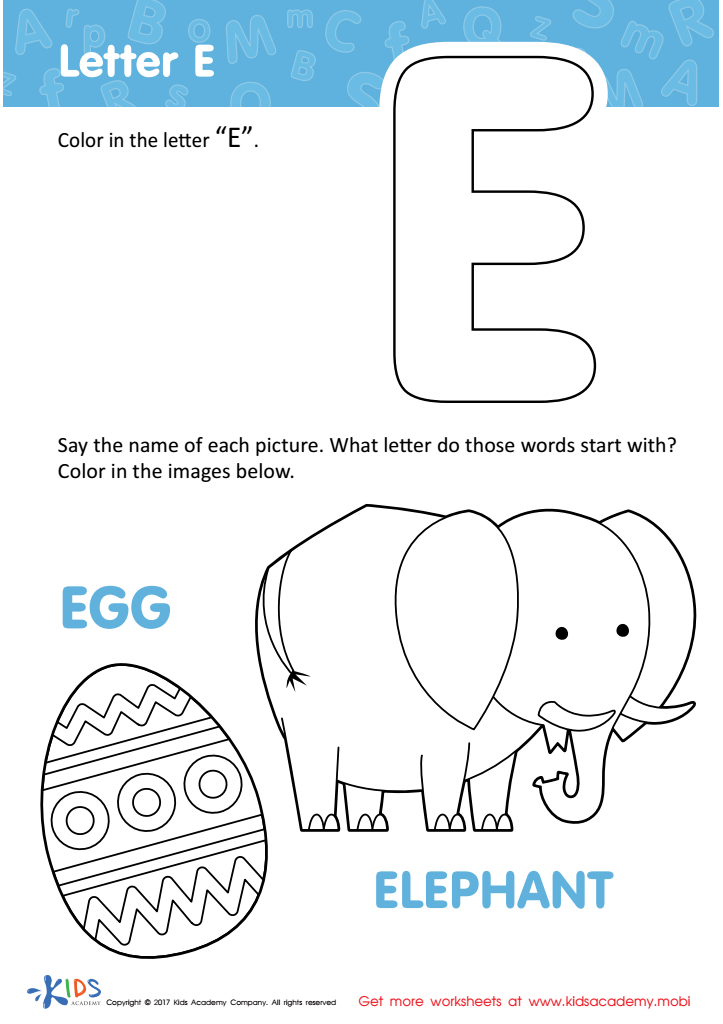
Letter E Coloring Sheet
Coloring pages are great for teaching kids the alphabet and words! This "E" page features a cute elephant and Easter egg. Kids will love it and learn the letter "E" at the same time. 80 words
Download (PDF)
 Assign to My Students
Assign to My Students
Letter E Coloring Sheet
Worksheet
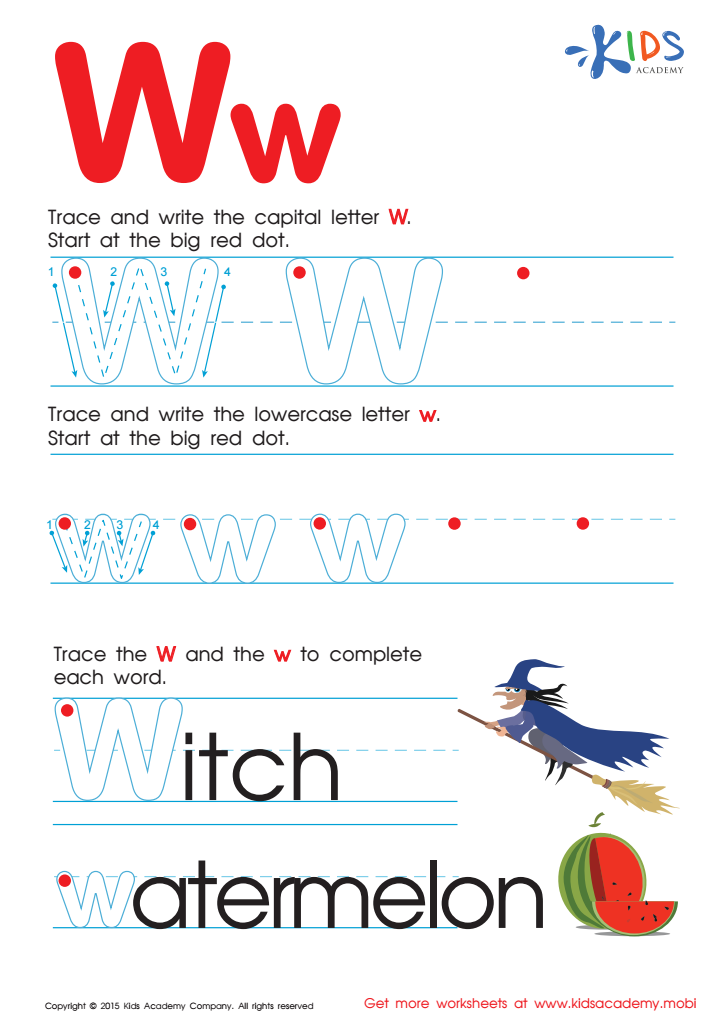
Letter W Tracing Page
Trace and write the capital and lowercase letter W with this free letter tracing worksheet by Kids Academy. Complete the words "Witch" (capital) and "watermelon" (lowercase). Check out our other kindergarten alphabet worksheets!
Letter W Tracing Page
Worksheet
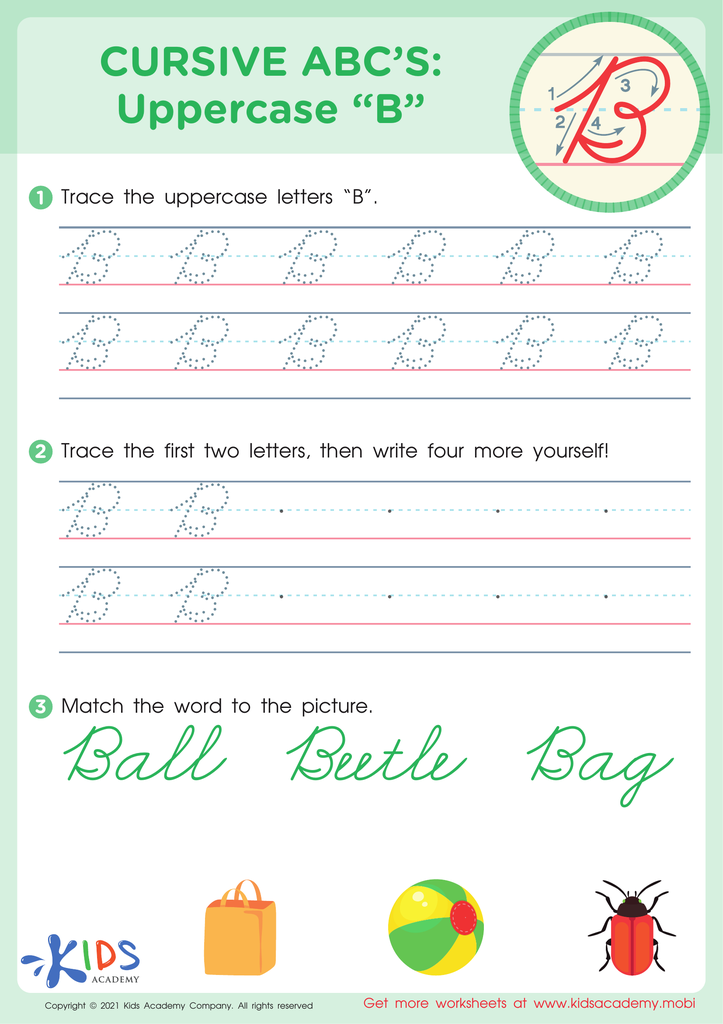
Cursive ABCs: Uppercase B
Help your kids learn the alphabet: have them identify, give examples and sound out letters, then use tracing worksheets to perfect cursive uppercase writing. Show them how to trace the letter ‘B’, then watch them write it on their own. This will give them the skills needed for further writing!
Cursive ABCs: Uppercase B
Worksheet
Join Kids Academy for Free
Who is primarily going to use this learning content?








Alphabetical understanding is fundamental for children aged 8-9 as it underpins essential literacy skills. At this age, kids are transitioning from simple word recognition to more fluent reading and writing. Knowing the alphabet is crucial because it helps children understand how letters combine to form words and sentences, laying the groundwork for reading proficiency. They start to alphabetize words, which assists in using dictionaries and understanding word order, critical for both independent learning and improving vocabulary.
For parents, fostering alphabetical understanding means supporting their child’s educational foundation. Engaging in alphabet-related activities can stimulate cognitive development and curiosity about language. Teachers benefit by addressing alphabetical knowledge in their curriculum, ensuring students can follow lessons and complete classwork effectively.
Moreover, mastering these skills boosts confidence and encourages a love of reading. As children become comfortable with the alphabet, they’re more inclined to explore books, enhancing their comprehension and critical thinking abilities. Literacy is linked to academic success across subjects like mathematics, science, and social studies. Thus, both parents and teachers must prioritize the development of alphabetical understanding, creating an enriching environment that nurtures a child's holistic educational growth.







